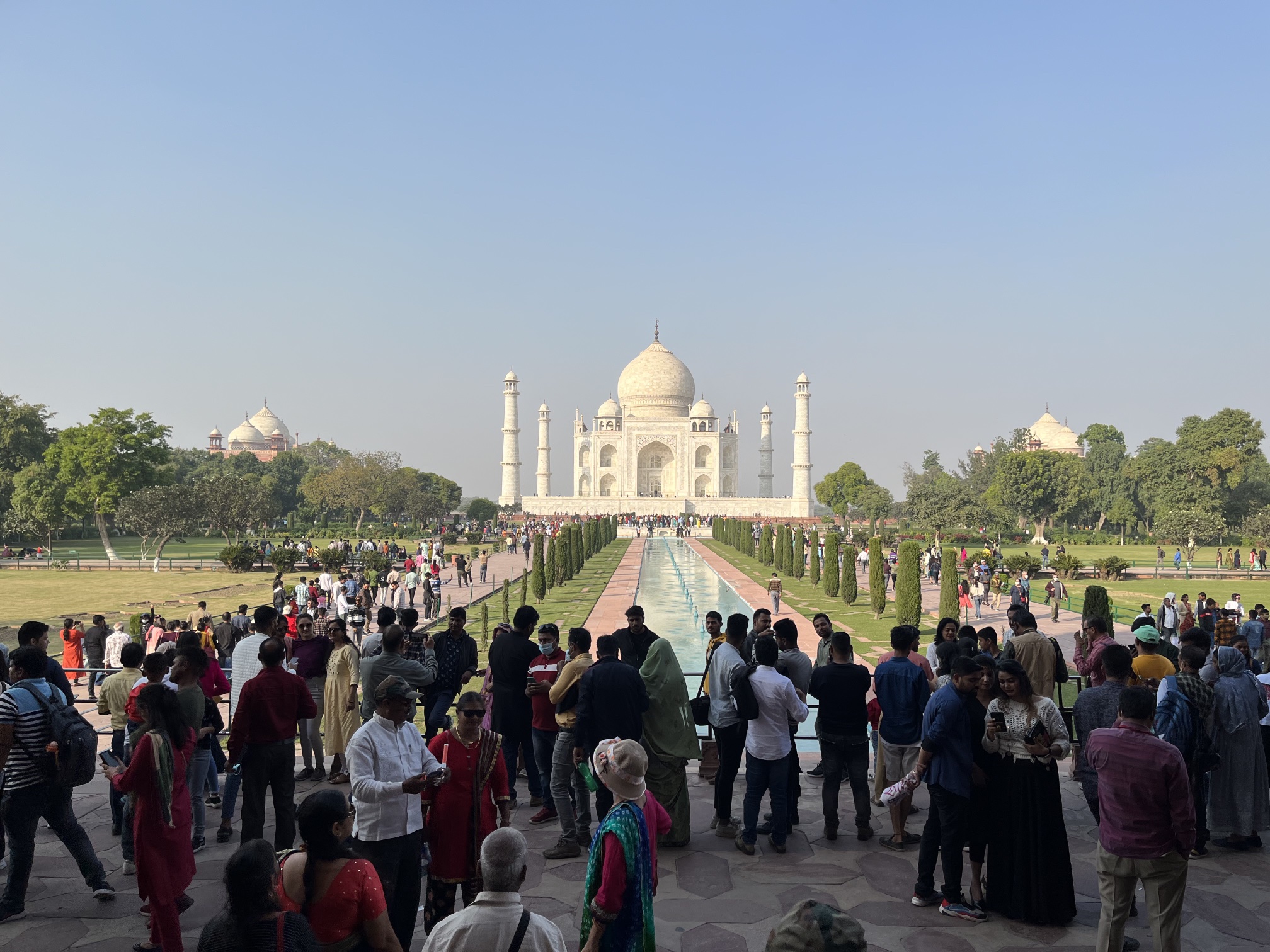

Of the fifteen monuments of India on this page, only one shuts on a fixed weekday, and it is the one everybody flies in for. The Taj Mahal closes every Friday. The Red Fort, which most lists still mark as closed on Mondays, has been open all seven days since an Archaeological Survey of India (ASI) order of 13 February 2026.
Fees have moved too: Rajasthan doubled the Amber Fort ticket on 1 January 2026. Old lists, including the old version of this page, get these things wrong, so every figure below is dated November 2026 and names where it came from.
The most famous monuments of India are the Taj Mahal and Agra Fort in Agra, the Red Fort, Qutub Minar and Humayun’s Tomb in Delhi, Amber Fort and Jantar Mantar in Jaipur, Konark Sun Temple in Odisha, Sanchi Stupa in Madhya Pradesh and Charminar in Hyderabad. Ten of the fifteen sites on this page are UNESCO World Heritage properties, and India has 45 such properties in all after Sarnath was inscribed on 25 July 2026.
This page is about the monuments of India themselves: who built them, what they cost to enter, which day they close and how to reach them. For a wider list that takes in hill stations, beaches and wildlife, read our Top 20 Indian tourist destinations guide and the older tourist places you should see when visiting India. Everything else we have written on the country sits in the India Travel section.
Monuments of India at a Glance (as of November 2026)
All fifteen monuments of India in one table. Fees are adult counter prices in rupees, Indian first, then other foreigners. Children under 15 enter free at every ASI monument. Where the fee is a state one (Jaipur) or there is none at all, the table says so. Sources for each line are in the monument’s own section below.
| Monument | City, state | Built | UNESCO | Entry (Indian / foreign) | Closed |
|---|---|---|---|---|---|
| 1. Taj Mahal | Agra, Uttar Pradesh | 1632 to 1653 | 1983 | Rs 50 / Rs 1,100, plus Rs 200 for the mausoleum | Friday |
| 2. Agra Fort | Agra, Uttar Pradesh | 1565 to 1573 | 1983 | Rs 50 / Rs 650 | Open daily |
| 3. Red Fort | Delhi | 1639 to 1648 | 2007 | Rs 50 / Rs 600 (Rs 35 / Rs 550 online) | Open daily since February 2026 |
| 4. Jama Masjid | Old Delhi | 1644 to 1656 | No | Free / Rs 400 | Prayer times |
| 5. Humayun’s Tomb | Nizamuddin, Delhi | 1565 to 1572 | 1993 | Rs 50 / Rs 600 (Rs 35 / Rs 550 online) | Open daily |
| 6. Qutub Minar | Mehrauli, Delhi | 1199 to about 1220 | 1993 | Rs 50 / Rs 600 (Rs 35 / Rs 550 online) | Open daily |
| 7. Amber Fort | Jaipur, Rajasthan | From 1592 | 2013 (Hill Forts of Rajasthan) | Rs 200 / Rs 1,000 (state fee) | Open daily |
| 8. Jantar Mantar | Jaipur, Rajasthan | 1728 to 1734 | 2010 | Rs 100 / Rs 600 (state fee) | Open daily |
| 9. Golden Temple | Amritsar, Punjab | 1581 to 1589, gilded 1830 | No | Free | Never |
| 10. Mamal Temple | Pahalgam, Jammu and Kashmir | 12th century or earlier | No | Free | Open daily |
| 11. Sanchi Stupa | Raisen district, Madhya Pradesh | 3rd century BCE | 1989 | Rs 40 / Rs 600 | Open daily (museum shut Friday) |
| 12. Konark Sun Temple | Puri district, Odisha | About 1250 | 1984 | Rs 40 / Rs 600 | Open daily |
| 13. Charminar | Hyderabad, Telangana | 1591 | No (Tentative List) | Rs 25 / Rs 300 | Open daily |
| 14. Gateway of India | Mumbai, Maharashtra | 1915 to 1924 | No | Free | Never |
| 15. Basilica of Bom Jesus | Old Goa, Goa | 1594 to 1605 | 1986 (Churches and Convents of Goa) | Free | Open daily |
What Applies at Every ASI Monument: Fees, Free Days and Online Tickets
The ASI protects about 3,700 monuments across the country, and the Ministry of Culture’s annexure of 30 March 2026, released through PIB, lists 143 of them as ticketed, spread over 34 circles. Uttar Pradesh alone has 743 centrally protected monuments, the most of any state. Eight of the fifteen monuments of India on this page are ASI ticketed monuments. The other seven are a working gurdwara, a working mosque, a village temple, two Rajasthan state monuments, a free waterfront arch and a basilica that charges nothing.
Three rules follow you to every ASI counter. Children under 15 enter free. Indian citizens and visitors from SAARC and BIMSTEC countries pay a lower rate than other foreigners. And an online ticket is cheaper than a counter one in Delhi, Rs 35 against Rs 50 for Indians and Rs 550 against Rs 600 for foreigners, per Delhi Tourism’s listing for the Qutub Minar. The old asi.payumoney.com address now redirects to the Heritage Monuments of India portal at eticket.webfront.in, so do not trust a bookmarked link from an older trip.
Two free days exist. The ASI waives entry at all its ticketed monuments on World Heritage Day, 18 April, and on one day during World Heritage Week, 19 to 25 November; Konark, for instance, was free for a day in November 2025. Expect crowds on both.
One thing to watch. On 9 September 2026 the ASI published a draft that sorts its ticketed sites into 30 Category A monuments (the Taj group, Agra Fort, Fatehpur Sikri, Red Fort, Qutub Minar, Humayun’s Tomb, Konark, Sanchi, Sarnath, Hampi, Khajuraho’s western group, Ajanta, Ellora, Elephanta and Mahabalipuram among them) and 136 Category B. It had a 45 day objection window and had not been gazetted as of November 2026, so the fees on this page may change once it is. Check the ticket portal in the week you travel.
For scale: the Taj Mahal drew about 6.26 million Indian and 0.645 million foreign visitors in FY 2024-25, according to the Ministry of Tourism’s compendium of 27 September 2025, the most of any ticketed monument. The Agra circle as a whole logged 10.45 million visitors and the Delhi circle 8.85 million that year, per the PIB annexure.
By ticket revenue in FY 2023-24, the Culture Minister told the Rajya Sabha, the Taj earned Rs 98.55 crore, Qutub Minar Rs 23.80 crore, Red Fort Rs 18.09 crore, Agra Fort Rs 15.27 crore and Konark Rs 12.66 crore.
One access change worth knowing: Noida International Airport at Jewar (airport code DXN) began commercial flights on 15 June 2026, IndiGo first and Akasa from the next day. By road it is 141 km, about two hours, from the Taj Mahal and 77 km from the Red Fort, which puts it between Delhi and Agra for anyone doing both.
1. Taj Mahal, Agra, Uttar Pradesh: The Monument Everybody Comes For
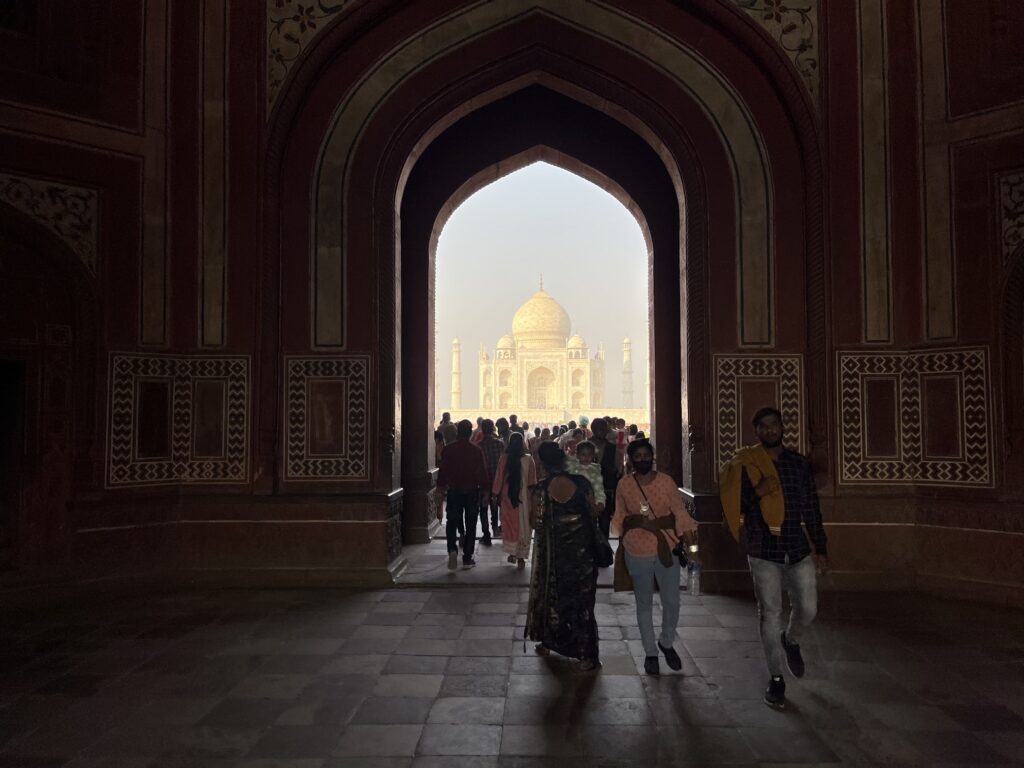
Shah Jahan built the Taj Mahal as the tomb of his wife Mumtaz Mahal, who died on 17 June 1631 giving birth to their fourteenth child. The mausoleum went up between 1632 and 1648 and the full complex was finished around 1653, with roughly 20,000 workers on site.
The white marble carries 28 types of precious and semi-precious stones inlaid in the pietra dura technique (the old text here said “28 precious stones”, which is not the same thing). The central dome is 23 m high, each minaret tops 40 m and the whole structure rises about 73 m. It became a World Heritage Site in 1983 and one of the New7Wonders of the World in 2007, and it remains the most visited of all the monuments of India.
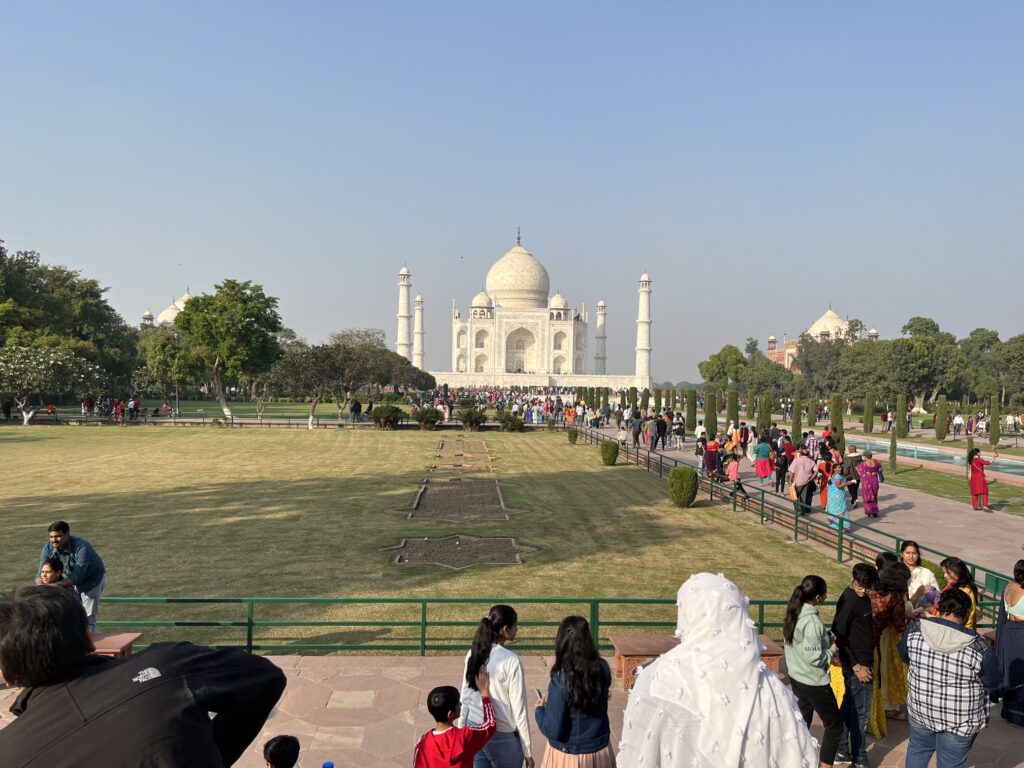
From my visit: I went to the Taj Mahal on Wednesday 24 November 2021 and was there around 3 pm. It was a winter afternoon with hazy light and big crowds, as my photos here show. I had a very good experience all the same.
Two honest warnings. Photography is banned inside the main mausoleum, and the official do’s and don’ts bar drones, tripods, food, tobacco, headphones, chargers and most electronics other than a camera; a water bottle is allowed. And the dawn slot in late December and January can be fog rather than sunrise.
If the moon dates suit, consider the night viewing instead: five nights a month (full moon, two before, two after), 8 pm to midnight, eight batches of up to 50 people for 30 minutes each, Rs 510 for Indians, Rs 750 for foreigners and Rs 500 for children aged 3 to 15.
You report at Shilpgram near the East Gate 30 minutes early with ID, and mobile phones and video cameras are banned at night. There is no night viewing on Fridays or during Ramzan. Our older post on tales of love and remembrance stays with the story behind the building.
- Built: 1632 to 1648 for the mausoleum, complex completed about 1653, by the Mughal emperor Shah Jahan for Mumtaz Mahal.
- UNESCO: World Heritage Site since 1983; New7Wonders of the World, 2007.
- Entry fee (November 2026): Rs 50 for Indians, Rs 540 for SAARC and BIMSTEC nationals, Rs 1,100 for other foreigners, plus Rs 200 for anyone entering the main mausoleum; children under 15 free; shoe covers come free with the foreigner ticket. Source: tajmahal.gov.in, the ASI’s official Taj site.
- Open: closed every Friday. Other days from 30 minutes before sunrise to 30 minutes before sunset; ticket windows at the East and West gates open one hour before sunrise and shut 45 minutes before sunset.
- Nearest airport and station: Agra (Kheria) airport 10 km with limited flights; Delhi IGI 214 km by the Yamuna Expressway, about 2 hours 45 minutes without traffic; Jewar 141 km, about 2 hours; Agra Cantt station 5.9 km, about 10 minutes.
- Best time: October to March. Agra’s 2025 monthly averages were 26/13 C in November, 22/10 C in December and 20/9 C in January, with fog risk in late December and January; May and June ran 39/27 C.
- Tip: Agra Fort is 3.6 km away by road and stays open on Fridays, so a Friday in Agra is not a wasted day; it is the fort day.
2. Agra Fort, Agra, Uttar Pradesh: Where Shah Jahan Watched the Taj From a Window
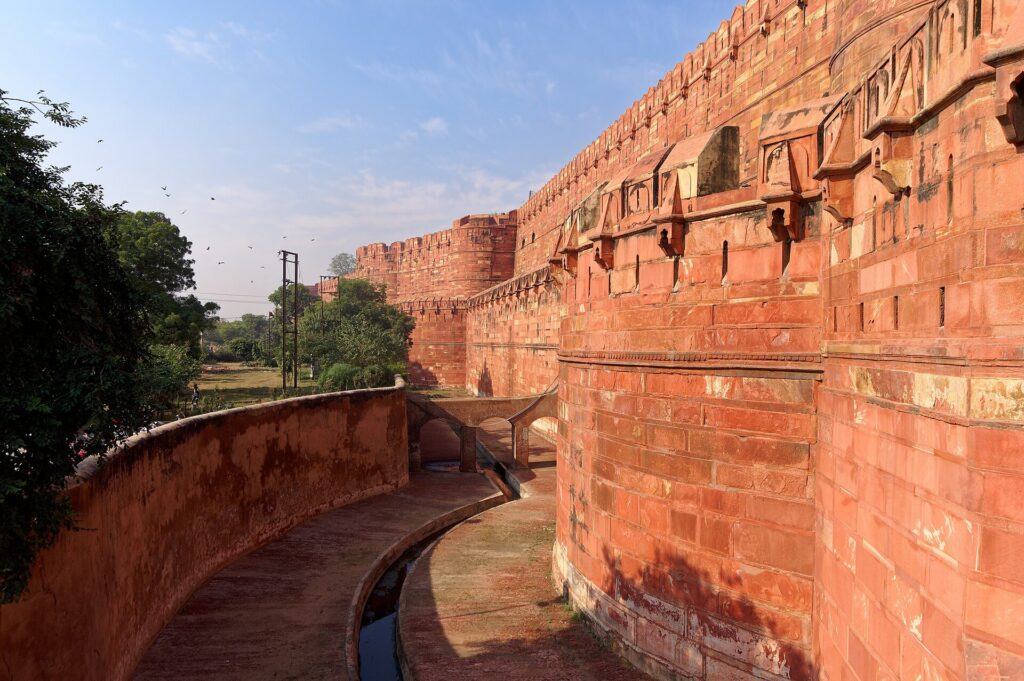
A brick fort called Badalgarh stood here by 1080 and Sikandar Lodi ran his capital from it, but the fort you walk through is Akbar’s. The old version of this page said the fort “was completed in 1080 AD”; that is the brick predecessor, not this building.
Akbar rebuilt it in red sandstone between 1565 and 1573 with about 4,000 workers a day on the job. Shah Jahan later added the white marble Diwan-i-Khas, Khas Mahal, Moti Masjid and Musamman Burj, and it was in this fort that Aurangzeb held him from 1658 until his death in 1666, within sight of the Taj.
The ramparts stand about 21 m high and enclose roughly 38 hectares on the west bank of the Yamuna, though a large part on the Delhi Gate side belongs to the Indian Army and stays closed.
- Built: the present fort 1565 to 1573 under Akbar; marble palaces added by Shah Jahan; a brick fort stood on the site by 1080.
- UNESCO: World Heritage Site since 1983.
- Entry fee (November 2026): Indians Rs 50 (Rs 40 on Fridays); SAARC and BIMSTEC Rs 90 (Rs 40 on Fridays or after visiting the Taj the same day); other foreigners Rs 650 (Rs 600 on Fridays or after the Taj the same day); under 15 free. Source: tajmahal.gov.in ticketing page.
- Open: every day including Friday, sunrise to sunset, per the Agra district administration.
- Nearest airport and station: the same as the Taj; Agra Cantt station is 5 to 6 km.
- Best time: October to March, the same as the Taj.
- Tip: foreign visitors should do the Taj first and the fort second on the same day; the Taj ticket earns the Rs 50 fort discount, and the Musamman Burj gives the view Shah Jahan had of his wife’s tomb.
Also Read: Visit Agra For Small Weekend Getaways in Winters
3. Red Fort (Lal Qila), Delhi: Open on Mondays Again
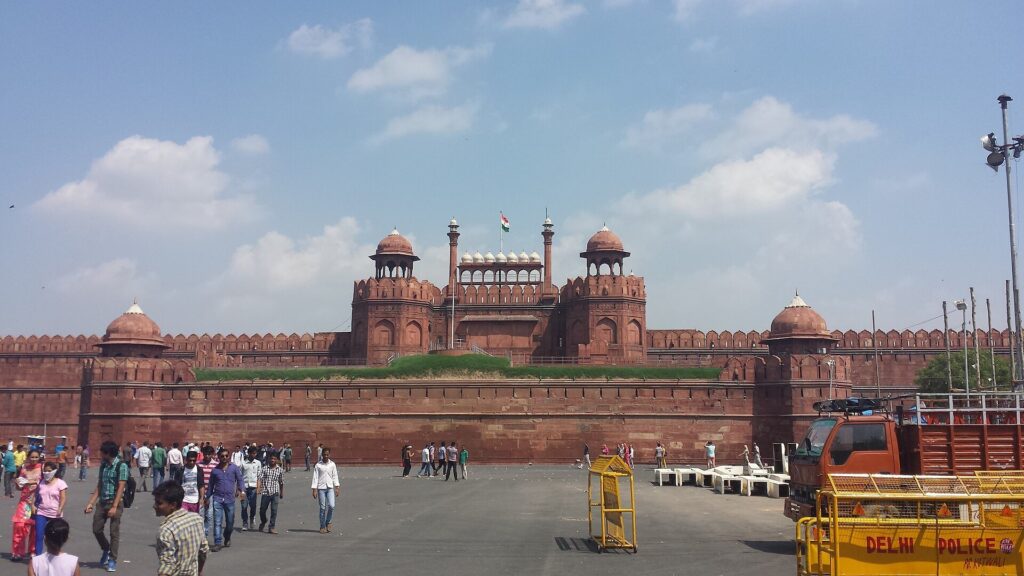
Shah Jahan commissioned the Red Fort, and work ran from 1639 to 1648 under the architect Ustad Ahmad Lahori; the walls run 2.41 km around 103 hectares. Nadir Shah looted it in 1739 and carried off the Peacock Throne, and after 1857 the British pulled down about 80 percent of the buildings inside, which is why the interior feels emptier than the walls promise. The old text’s line about jewels “peeled off as rulers were becoming poor” misses both events.
Since 1947 the Prime Minister has addressed the nation from its ramparts every Independence Day. Four museums opened in the old barracks in 2019, covering 1857, Jallianwala Bagh, Subhas Chandra Bose and the INA, and Indian art.
The big practical change: the Monday closure is over. Business Today reported an ASI order dated 13 February 2026 keeping the fort open seven days a week, and it was indeed open on Monday 16 February. Treat the “sunrise to 9 pm” timing quoted there as the complex and its museums; the ticket counters for the palaces have historically run about 9:30 am to 4:30 pm. Our separate guide to the Red Fort of Delhi goes building by building.
- Built: 1639 to 1648 by Shah Jahan; architect Ustad Ahmad Lahori.
- UNESCO: World Heritage Site since 2007 (Red Fort Complex).
- Entry fee (November 2026): Business Today lists SAARC and BIMSTEC visitors at Rs 50 cash or Rs 35 online and other foreigners at Rs 600 cash or Rs 550 online; the Indian rate follows the same Delhi ASI schedule (Rs 50 at the counter, Rs 35 online, per Delhi Tourism’s Qutub Minar page). Under 15 free.
- Open: all seven days since 13 February 2026; the complex is quoted as sunrise to 9 pm, palace ticketing roughly 9:30 am to 4:30 pm.
- Nearest airport and station: IGI airport 23 km, about 30 minutes without traffic but allow an hour; New Delhi station 4.9 km; Lal Qila metro on the Violet Line, or Chandni Chowk.
- Best time: October to March.
- Tip: Jama Masjid is 1.9 km away by road; pair the two in one morning and eat in the lanes between them.
4. Jama Masjid, Old Delhi: Shah Jahan’s Last Big Build
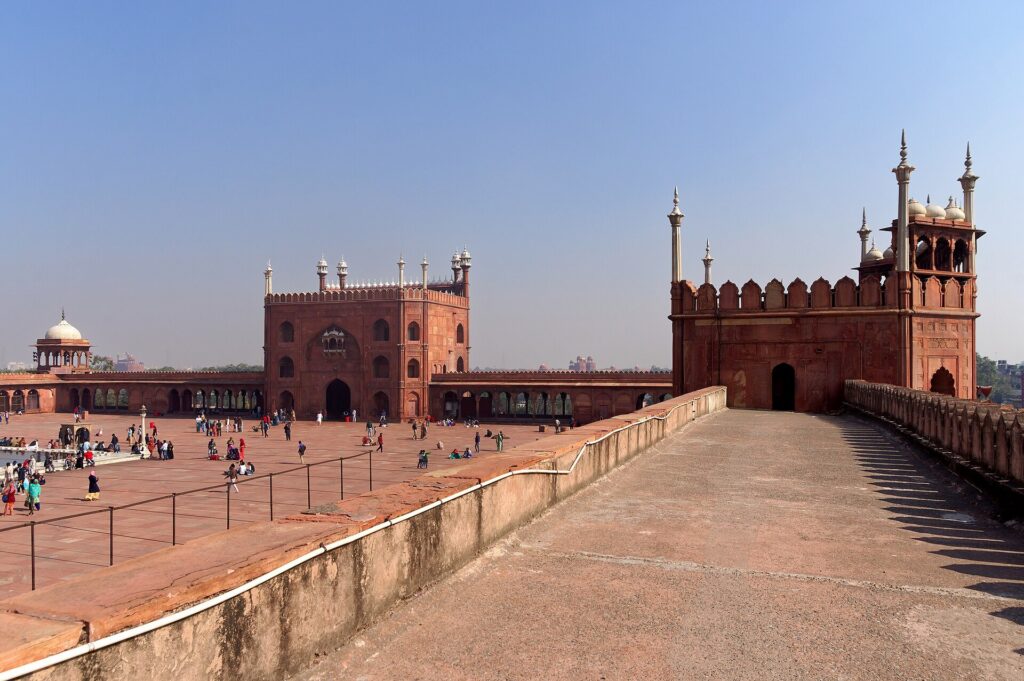
The Masjid-i-Jahan-Numa was Shah Jahan’s last major project. Delhi Tourism dates the start to 1644 and completion to 1656, at a cost of ten lakh rupees, with about 5,000 workers under the wazir Sadullah Khan. The courtyard holds 25,000 people, and the two minarets rise 41 m with 130 steps each.
It is red sandstone with white marble stripes, not the “white and pink” the old version of this page described. It is a working mosque run by the Waqf, not an ASI ticketed monument and not a World Heritage Site, so the rules are the mosque’s own. If mosque architecture is your interest, our guide to Taj-ul-Masajid in Bhopal covers another giant of the type.
- Built: 1644 to 1656 by Shah Jahan, per Delhi Tourism.
- UNESCO: not listed; a working mosque under the Waqf.
- Entry fee (November 2026): free for Indians, Rs 400 for foreign tourists (Delhi Tourism). Delhi Tourism lists photography as free, but most guides report a camera charge of around Rs 300 collected at the gate; the minaret climb is about Rs 100 per secondary sources.
- Open: foreign tourists 8 am to sunset, Indian tourists 11 am to sunset (Delhi Tourism); closed to tourists during the five daily prayers.
- Nearest airport and station: Chawri Bazaar or Jama Masjid metro on the Violet Line; the Red Fort is 1.9 km by road, so its airport and rail figures apply here too.
- Best time: October to March, in the late afternoon and outside prayer times.
- Tip: cover shoulders and knees; robes are for hire at the north gate.
5. Humayun’s Tomb, Nizamuddin, Delhi: The Garden Tomb That Taught the Taj
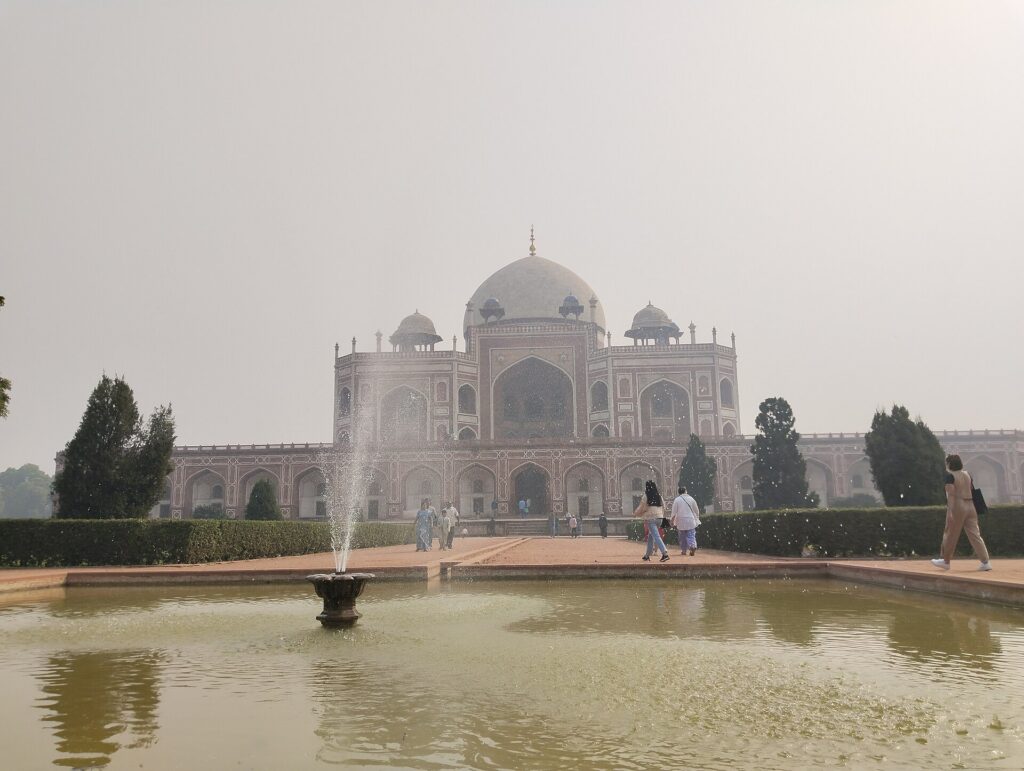
The old version of this page said Akbar ordered this tomb. He did not. It was commissioned by Bega Begum (Haji Begum), Humayun’s senior widow, and built between 1565 and 1572 by the architect Mirak Mirza Ghiyas and his son Sayyid Muhammad, at a cost of 1.5 million rupees that the empress paid herself.
It rises 47 m and was the first garden tomb in India, and its layout is the direct ancestor of the Taj Mahal. The Aga Khan Trust for Culture restored the gardens with the ASI between 1999 and 2003 and then renewed the whole Nizamuddin area around it.
Something new: the Humayun’s Tomb World Heritage Site Museum, described as India’s first sunken museum, opened on 29 July 2024, and since 15 June 2025 it stays open until 9 pm with last entry at 8 pm, which makes it one of the few Delhi monuments with an evening option. Read our full Humayun’s Tomb guide for the layout of the complex.
- Built: 1565 to 1572, commissioned by Bega Begum, Humayun’s widow.
- UNESCO: World Heritage Site since 1993, boundary extended 2016.
- Entry fee (November 2026): the ASI e-ticket portal charged Rs 35 for Indians and Rs 550 for foreigners online when we checked in November 2026, which is the Delhi ASI schedule whose counter rates are Rs 50 and Rs 600. Delhi Tourism’s page still shows an older Rs 40, so budget Rs 50 at the counter. Under 15 free. One guide quotes the museum at Rs 50 / Rs 300; treat that as unverified.
- Open: the tomb daily, sunrise to sunset. The complex is one of ten monuments allowed to stay open till 9 pm under a July 2019 Culture Ministry order, with limited access to the mausoleum after dark; the museum runs till 9 pm, last entry 8 pm.
- Nearest airport and station: Hazrat Nizamuddin station 3 km; IGI airport 21 km; JLN Stadium metro.
- Best time: October to March; a winter afternoon for the light on the red sandstone.
- Tip: go through the museum first; it explains what you are about to walk into.
6. Qutub Minar, Mehrauli, Delhi: 72.5 Metres You Cannot Climb
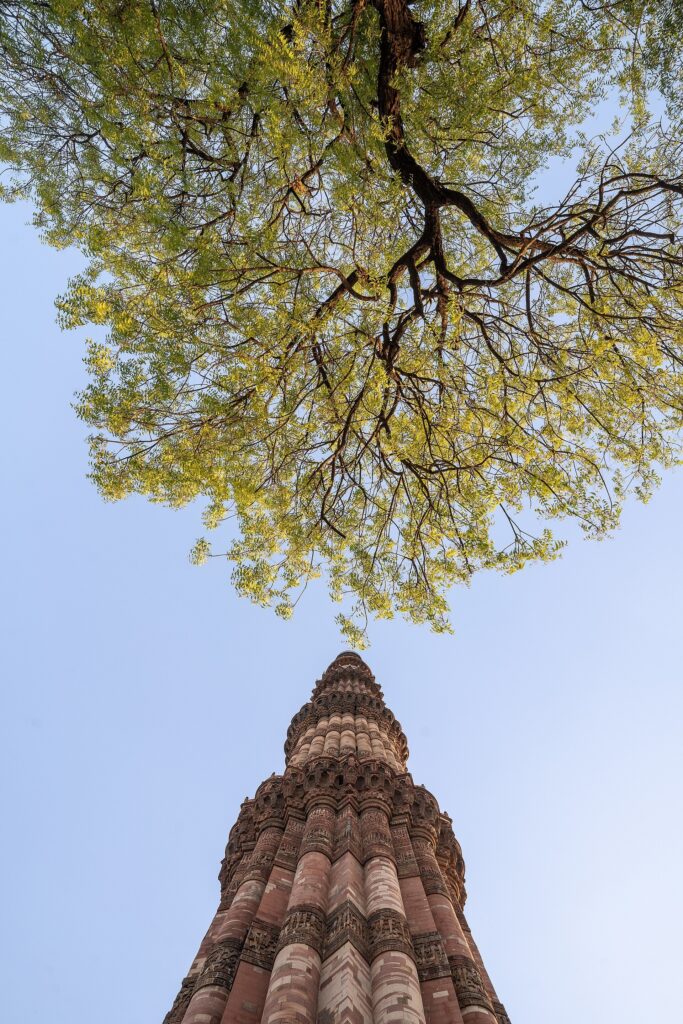
The Qutub Minar stands in Mehrauli in south Delhi, not “in the middle of New Delhi” as the old text here claimed, and it is 72.5 m tall (238 ft), not 240. Qutbu’d-Din Aibak laid the foundation and raised the first storey in AD 1199, Iltutmish added three more by about 1220, and Firoz Shah Tughlaq repaired the lightning-struck top in 1368 and added the fifth storey.
It is 14.3 m across at the base and 2.7 m at the top, with 379 steps inside that nobody has been allowed to climb since the stampede of 4 December 1981 killed 45 people, most of them schoolchildren. In the courtyard of the Quwwat-ul-Islam mosque stands the Iron Pillar with its 4th century Brahmi inscription. There is more in our Qutub Minar facts post.
- Built: 1199 to about 1220 under Aibak and Iltutmish; fifth storey added 1368.
- UNESCO: World Heritage Site since 1993 (Qutb Minar and its Monuments).
- Entry fee (November 2026): Rs 50 at the counter or Rs 35 online for Indians, Rs 600 or Rs 550 online for other foreigners; under 15 free. Source: Delhi Tourism.
- Open: daily, sunrise to 8 pm, per Delhi Tourism.
- Nearest airport and station: IGI airport 11.7 km, about 17 minutes without traffic, the closest major monument to the airport; Qutab Minar metro on the Yellow Line, about 1.5 km.
- Best time: October to March; the complex stays open till 8 pm, so it suits a late slot.
- Tip: with a late flight out of Delhi, see this one last; it is 17 minutes from the terminal on a clear road.
7. Amber Fort, Jaipur, Rajasthan: A Hill Fort With a 2026 Price Tag
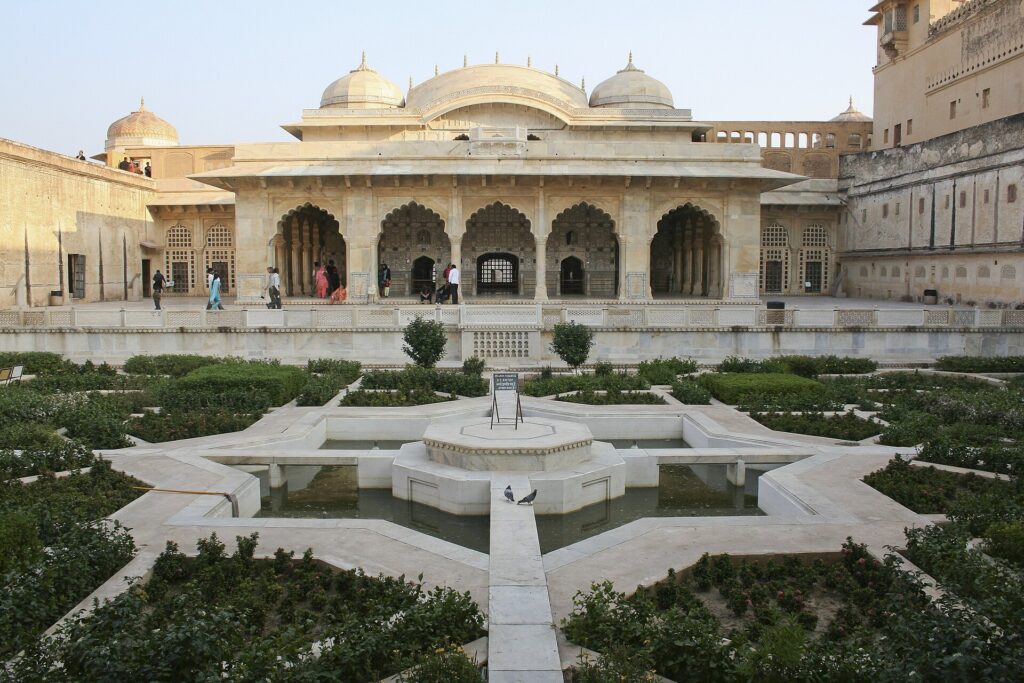
Raja Man Singh I of the Kachwahas began the present fort at Amer in 1592 by most accounts, Jai Singh I expanded it, and the court moved down to the new city of Jaipur under Sawai Jai Singh II in 1727. The hill stands at about 458 m. UNESCO listed Amber in 2013 as one of the six Hill Forts of Rajasthan, alongside Chittor, Kumbhalgarh, Ranthambore, Gagron and Jaisalmer; Jaipur city itself was inscribed separately in 2019. Pair it with the City Palace in Jaipur for a full Kachwaha day.
Amber is a Rajasthan state monument under the state Department of Archaeology and Museums, so none of the ASI rules above apply here, and the fee has jumped twice. From 1 August 2025 Indians paid Rs 150 and foreigners Rs 500; from 1 January 2026 it became Rs 200 and Rs 1,000. Jaipur local reports call these the first revisions since 2015.
A ten day statewide composite ticket, Rs 1,300 for Indians and Rs 5,500 for foreigners, came in at the same time. Elephant rides up the ramp still run but are limited and controversial; take the jeep or walk. The old guide fee of “around Rs 200” on this page is out of date, so agree a price before anyone starts talking.
- Built: from 1592 by Raja Man Singh I, expanded by Jai Singh I.
- UNESCO: 2013, as one of the six Hill Forts of Rajasthan.
- Entry fee (November 2026): Rs 200 for Indians, Rs 1,000 for foreigners since 1 January 2026 (Rajasthan state fee); ten day statewide composite Rs 1,300 / Rs 5,500. Sources: Pink City Post and Jaipur Stuff reports on the two hikes.
- Open: commonly 8 am to 5:30 pm with an evening light and sound show; the state has not published post-hike timings online, so confirm at the counter.
- Nearest airport and station: Jaipur airport 24 km, about 30 minutes; Jaipur Junction 14.4 km.
- Best time: October to March. Jaipur’s 2025 averages were 26/14 C in November and 21/10 C in January, against 39 C in April and May and 298 mm of rain in July.
- Tip: the composite ticket only pays off if you will visit several Rajasthan state monuments within ten days; add up the single tickets first.
8. Jantar Mantar, Jaipur, Rajasthan: A Sundial Accurate to Two Seconds
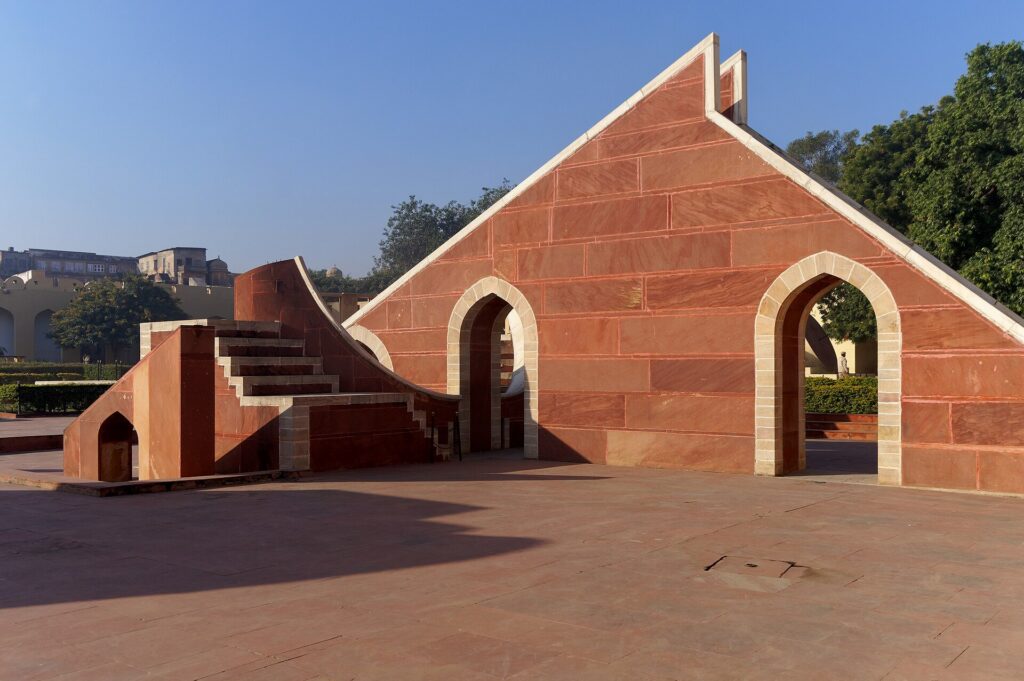
Sawai Jai Singh II built this observatory between 1728 and 1734 and kept adding instruments until 1738. It has 19 masonry instruments, the largest being the Vrihat Samrat Yantra, a sundial about 27 m high that reads local time to about two seconds. It is one of five observatories he built, the others being in Delhi, Ujjain, Varanasi and Mathura, and Jaipur’s was inscribed as a World Heritage Site in 2010.
The old text here called it “crystal gazing estimating gear”; it is astronomy, not astrology, and a guide who can show you how to read the shadows is worth paying for.
- Built: 1728 to 1734 by Sawai Jai Singh II.
- UNESCO: World Heritage Site since 2010.
- Entry fee (November 2026): Rs 100 for Indians, Rs 600 for foreigners since 1 January 2026 (it was Rs 50 / Rs 300 before August 2025). Sources: the same Jaipur fee reports as Amber.
- Open: daily 9 am to 4:30 pm; some sources say 5 pm.
- Nearest airport and station: Jaipur Junction 5.2 km; it sits beside the City Palace and Hawa Mahal.
- Best time: October to March, on a clear day; the instruments are useless under cloud.
- Tip: go late morning when the shadows are sharp, and ask the guide to show you the time on the Samrat Yantra against your phone.
9. Golden Temple (Sri Harmandir Sahib), Amritsar, Punjab: The One That Never Closes
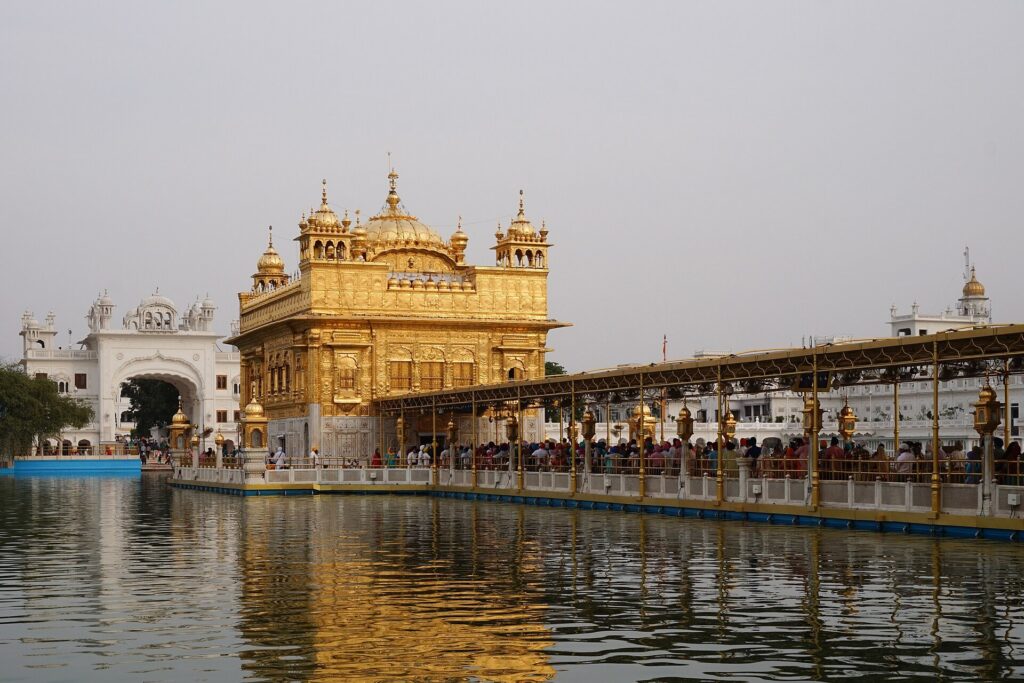
Harmandir Sahib is the temple’s own name, so calling it “the resting place of Harmandir Sahib”, as the old text did, made no sense. The Amrit Sarovar, the pool around it, was dug between 1573 and 1577 under Guru Amar Das and Guru Ram Das; Guru Arjan began the gurdwara in 1581 and finished the brick building in 1589, and the Adi Granth was installed on 16 August 1604.
Maharaja Ranjit Singh rebuilt it in marble and copper in 1809 and gilded the sanctum in 1830, with about 400 kg of gold on the dome and 750 kg on the upper level. Its four doors signal that it is open to every direction and every person.
It is a working gurdwara, not a monument in the ASI sense, and it is not on the UNESCO list. There is no ticket and no closing day, and the langar serves over 100,000 free vegetarian meals a day.
The SGPC winter timetable (18 December to 17 February) has the Asa di Var kirtan at 4 am, the Palki Sahib leaving the Akal Takht at 5 am and leaving Harmandir Sahib again at 9:45 pm; summer shifts the cycle by about an hour. For more places of this kind, see our list of the 20 most popular religious sites in India.
- Built: 1581 to 1589 under Guru Arjan; marble and gold work in 1809 and 1830 under Maharaja Ranjit Singh.
- UNESCO: not listed; a living gurdwara.
- Entry fee (November 2026): free; no ticket of any kind.
- Open: round the clock; the sanctum’s daily cycle runs roughly 4 am to 9:45 pm in winter per the SGPC timetable.
- Nearest airport and station: Sri Guru Ram Dass Jee airport 13.9 km, about 15 minutes; Amritsar Junction 2.3 km.
- Best time: October to March. Amritsar’s 2025 averages were 25/11 C in November and 19/7 C in January, with foggy dawns in December and January; August brought 470 mm of rain.
- Tip: cover your head (free scarves at the gate), remove your shoes, wash your feet at the channel, and carry no tobacco or alcohol anywhere in the complex.
10. Mamal Temple, Pahalgam, Jammu and Kashmir: The Odd One Out
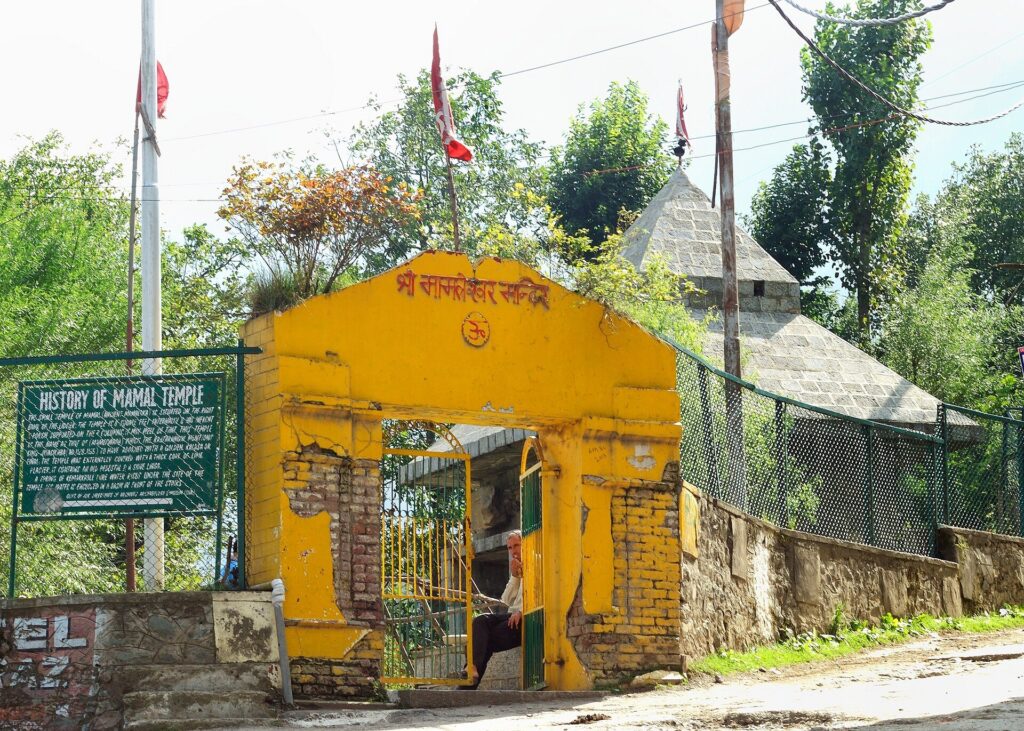
Every other entry on this list draws crowds; the Mamal (Mamleshwar) Temple is a small stone Shiva shrine on the Lidder river at Pahalgam, in Anantnag district, at about 2,150 m. Its claim to a place here is age and story. The Rajatarangini, the chronicle of Kashmir’s kings, records King Jayasimha fitting a golden kalasa (finial) on “Mammesvara”; Jayasimha of the Lohara dynasty reigned from 1128 to 1155, so the temple is at least 12th century and may be older.
You will see “built in 400 AD” on many travel sites. That traces back to one newspaper travel page with nothing behind it, so I would not repeat it. Inside is a linga and a two-faced Nandi. The legend says Parvati posted Ganesha here as doorkeeper, and “Mam Mal” is read locally as “don’t go”.
- Built: at least the 12th century (the Rajatarangini’s reference to King Jayasimha, reigned 1128 to 1155), possibly older.
- UNESCO: not listed; not an ASI ticketed site.
- Entry fee (November 2026): free.
- Open: daily; no fixed hours are published.
- Nearest airport and station: Srinagar airport about 100 km, 1 hour 25 minutes on an empty road but allow 2.5 to 3 hours; Jammu Tawi station about 227 km, allow 7 hours.
- Best time: April to June and September to October. Pahalgam’s 2025 averages were 21/7 C in May and 18/3 C in October, with January at 4/-8 C; July and August fall in the Amarnath Yatra season and the town fills up.
- Tip: treat this as a half hour stop inside a Pahalgam holiday, not a destination in itself; the river setting is the point.
11. Sanchi Stupa, Raisen District, Madhya Pradesh: The Oldest on This List
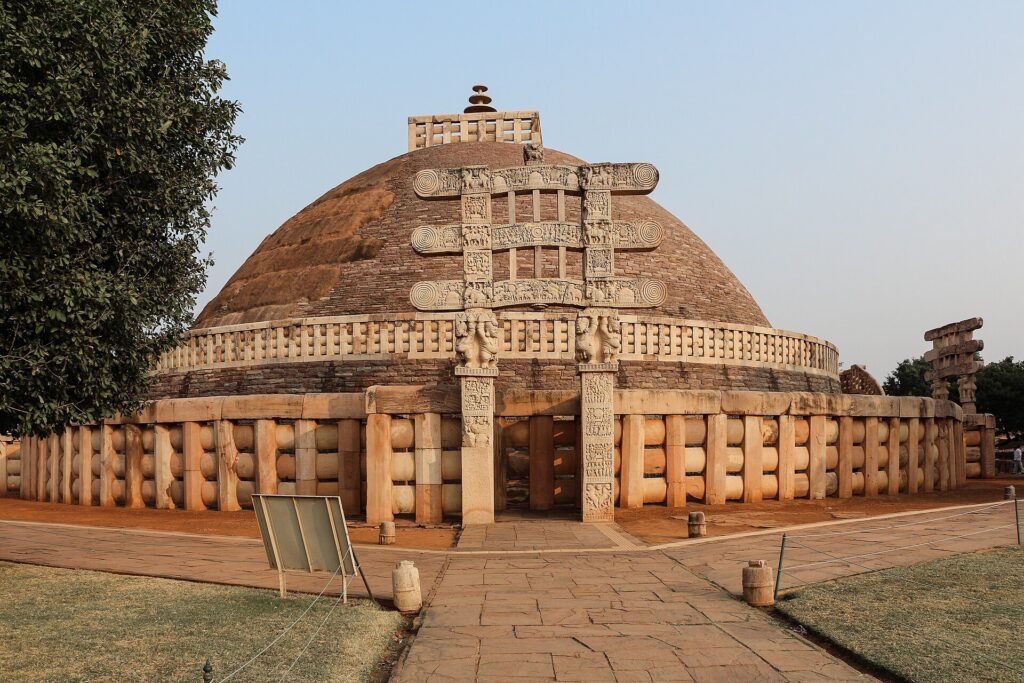
The Great Stupa at Sanchi is the oldest structure on this page by a wide margin, and among the oldest of all the monuments of India. Emperor Ashoka commissioned it in the 3rd century BCE; the Shungas encased it in stone in the 2nd century BCE and the four carved toranas (gateways) were added in the 1st century BCE. The dome is 16.46 m high and 36.6 m across, on a hill about 495 m above sea level, 46 km northeast of Bhopal and 10 km from Vidisha.
UNESCO inscribed the Buddhist Monuments at Sanchi in 1989. The old text called these “the most established stone structures in India”; “among the oldest stone structures in India” is the fair version.
The relics of Sariputta and Moggallana are brought out at the Chethiyagiri Vihara festival on the last Sunday of November, the one weekend a year Sanchi gets crowded.
- Built: 3rd century BCE under Ashoka; stone casing 2nd century BCE; gateways 1st century BCE.
- UNESCO: World Heritage Site since 1989.
- Entry fee (November 2026): Rs 40 for Indians and SAARC/BIMSTEC nationals, Rs 600 for other foreigners, under 15 free (consistent secondary sources; the ASI page was unreachable when we checked). The ASI museum at the foot of the hill has a separate ticket.
- Open: the site daily, sunrise to sunset, commonly given as 6:30 am to 6:30 pm; the museum is closed on Fridays.
- Nearest airport and station: Bhopal airport 57 km, about 50 minutes; Bhopal Junction 48 km; Vidisha station 9.7 km; Sanchi also has a small station of its own on the Bhopal to Bina line.
- Best time: October to March. Sanchi’s 2025 averages were 27/13 C in November and 24/9 C in December, against 39 to 40 C in April and May and 505 mm of rain in July.
- Tip: do it as a day trip from Bhopal, stupa in the morning and museum after lunch.
12. Konark Sun Temple, Puri District, Odisha: A Stone Chariot, and No Paintings
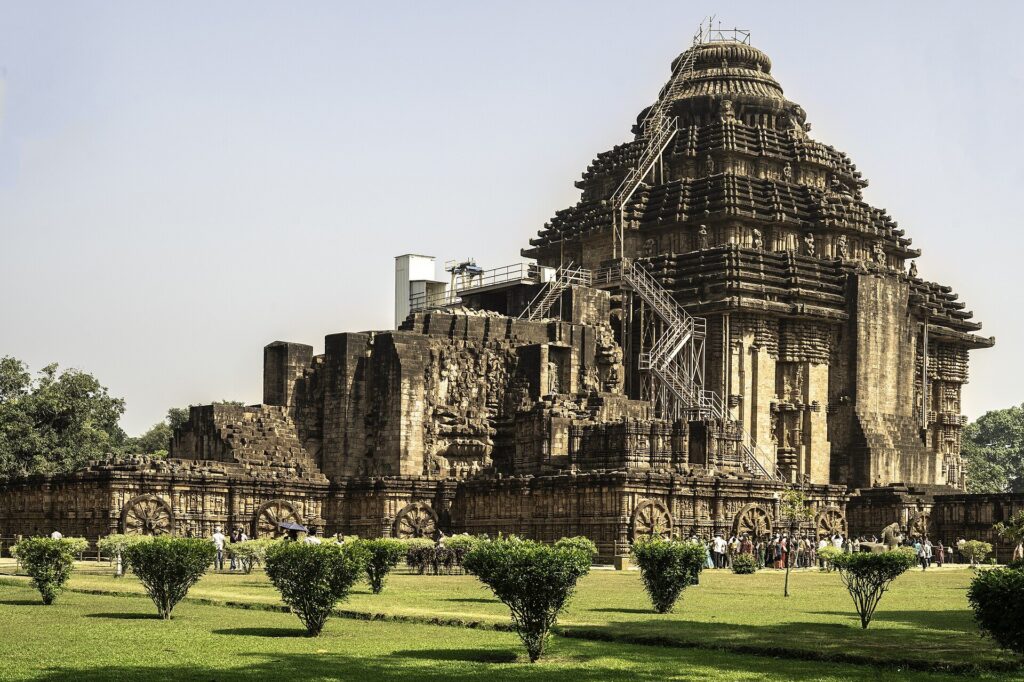
King Narasimhadeva I of the Eastern Ganga dynasty built the Sun Temple at Konark around 1250 as a stone chariot with 24 carved wheels drawn by seven horses. The main tower, estimated at 61 to 70 m, collapsed long ago; the surviving jagamohana is about 39 m. European sailors used it as a landmark and called it the Black Pagoda, a name recorded as early as 1676. UNESCO listed it in 1984. One correction to the old text: there are no “elegant paintings and canvases” here. Konark is stone sculpture, every surface of it.
A rule that changed in November 2025: after people fell and scratched the stone taking selfies, the ASI stopped visitors climbing onto the Nata Mandap (dance hall) platform. You now walk around it at ground level.
The light and sound show is a separate Rs 50 ticket with two shows after dark, 6:30 and 7:30 pm in winter, and Odisha Tourism’s Konark Festival of Odissi and other classical dance runs 1 to 5 December every year at the open-air auditorium; 2025 was its 36th edition. Temple lovers should add the Lingaraj Temple in Bhubaneswar on the way in.
- Built: about 1250 by Narasimhadeva I of the Eastern Ganga dynasty.
- UNESCO: World Heritage Site since 1984.
- Entry fee (November 2026): Rs 40 cash or Rs 35 by card for Indians, Rs 600 cash or Rs 550 by card for foreigners, under 15 free (ASI figures quoted in a January 2025 report; the online rates matched the ASI e-ticket portal in November 2026; December 2024 ticket revenue alone was Rs 1.48 crore).
- Open: daily, sunrise to sunset; 6 am to 6 pm in winter per a 2019 ASI timing change. One 2026 guide claims 8 pm, which we could not verify.
- Nearest airport and station: Bhubaneswar (Biju Patnaik) airport 63 km, about an hour; Puri station 36 km, about 30 minutes.
- Best time: November to February. Konark’s 2025 averages were 29/20 C in November and 26/18 C in January, while May to October brought 164 to 295 mm of rain a month.
- Tip: come for the 1 to 5 December festival if the dates fit; otherwise the late afternoon light on the carved wheels is the photograph.
13. Charminar, Hyderabad, Telangana: Open From 6 am Since May 2026
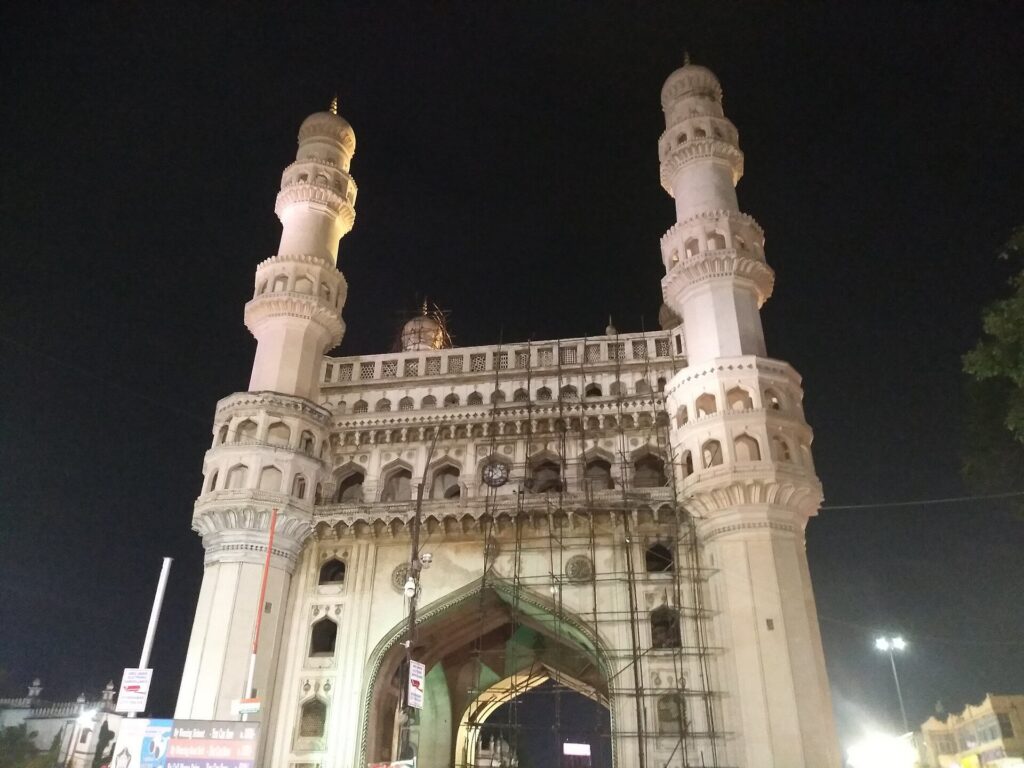
Muhammad Quli Qutb Shah, the fifth Qutb Shahi sultan, built the Charminar in 1591 to the design of Mir Momin Astarabadi; the ASI’s own account says it marks the end of a plague. It stands 56 m high with 149 winding steps and a mosque on the top floor, and its four arches face the four cardinal directions.
The old version of this page called it “one of the oldest monuments of India”. It is not; 1591 is young next to Sanchi (3rd century BCE) or Konark (about 1250). What it is, is the centre of a living old city, with the bangle sellers of Laad Bazaar at its feet.
Charminar is not a World Heritage Site, though it has sat on India’s Tentative List since 10 September 2010 as part of the Qutb Shahi Monuments of Hyderabad. Siasat reported that from 26 May 2026 both Charminar and Golconda Fort open at 6 am daily instead of 9 am; at Charminar only the ground level is open before 9 am, with the ticketed first floor from 9 am. Hyderabad circle’s three ticketed monuments drew 3,039,275 visitors in 2024-25 per the PIB annexure. Our Golconda Fort guide covers the other half of a Qutb Shahi day.
- Built: 1591 by Muhammad Quli Qutb Shah; architect Mir Momin Astarabadi.
- UNESCO: not listed; on India’s Tentative List since 2010.
- Entry fee (November 2026): Rs 25 for Indians and Rs 300 for foreigners at the counter (some guides give Rs 20 / Rs 250 online), under 15 free. Consistent across 2025 sources; the ASI Hyderabad circle page was unreachable.
- Open: daily from 6 am since 26 May 2026, ground level only until 9 am, closing commonly 5:30 pm. Some guides say “closed Friday” and others contradict them; expect the first floor to be restricted during Friday afternoon prayers rather than a full closure.
- Nearest airport and station: Rajiv Gandhi International Airport 19.7 km, about 25 minutes without traffic; Hyderabad Deccan (Nampally) station 5.3 km; MGBS bus station nearby.
- Best time: October to February. Hyderabad’s 2025 averages were 29/19 C in November and 28/17 C in December; August brought 207 mm of rain.
- Tip: the 6 am opening is the whole point; the square is empty, the light is soft and the traffic has not started.
14. Gateway of India, Mumbai, Maharashtra: Built for a Visit That Had Already Happened
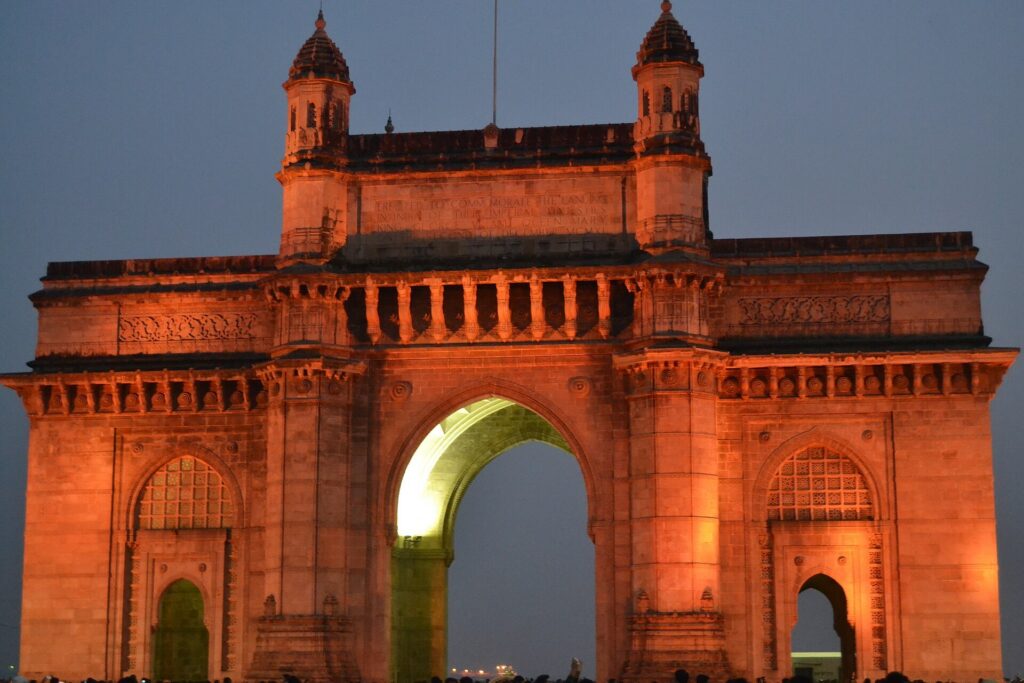
The Gateway of India commemorates the December 1911 visit of King George V and Queen Mary, but it did not “invite” them, as the old text put it. The foundation stone was laid on 31 March 1913, George Wittet’s Indo-Saracenic design was approved in August 1914, construction ran from 1915 to 1924 and the Viceroy Lord Reading opened it on 4 December 1924, thirteen years after the royal couple had come and gone.
It is 26 m high with a 15 m dome, in yellow basalt. The last British troops in India marched out through it on 28 February 1948. And no, it does not look onto the Taj Mahal; it faces the Taj Mahal Palace Hotel and the harbour.
- Built: 1915 to 1924 to George Wittet’s design; opened 4 December 1924.
- UNESCO: not listed; the nearby Victorian Gothic and Art Deco Ensembles (2018) and Chhatrapati Shivaji Maharaj Terminus (2004) are.
- Entry fee (November 2026): free.
- Open: 24 hours.
- Nearest airport and station: Chhatrapati Shivaji Maharaj Terminus 2.6 km; Churchgate about 2 km; the airport’s Terminal 2 is 25 km, 25 minutes on an empty road and well over an hour on a normal one.
- Best time: November to February. Mumbai’s 2025 averages were 32/23 C in November and 31/22 C in January; June to September brought 465 to 747 mm of rain a month.
- Tip: the ferries to the Elephanta Caves leave from the jetties here, about 50 minutes each way on a separate ticket; Elephanta is closed on Mondays, so keep that day for the city.
15. Basilica of Bom Jesus, Old Goa, Goa: Baroque, Free and Not the Cathedral
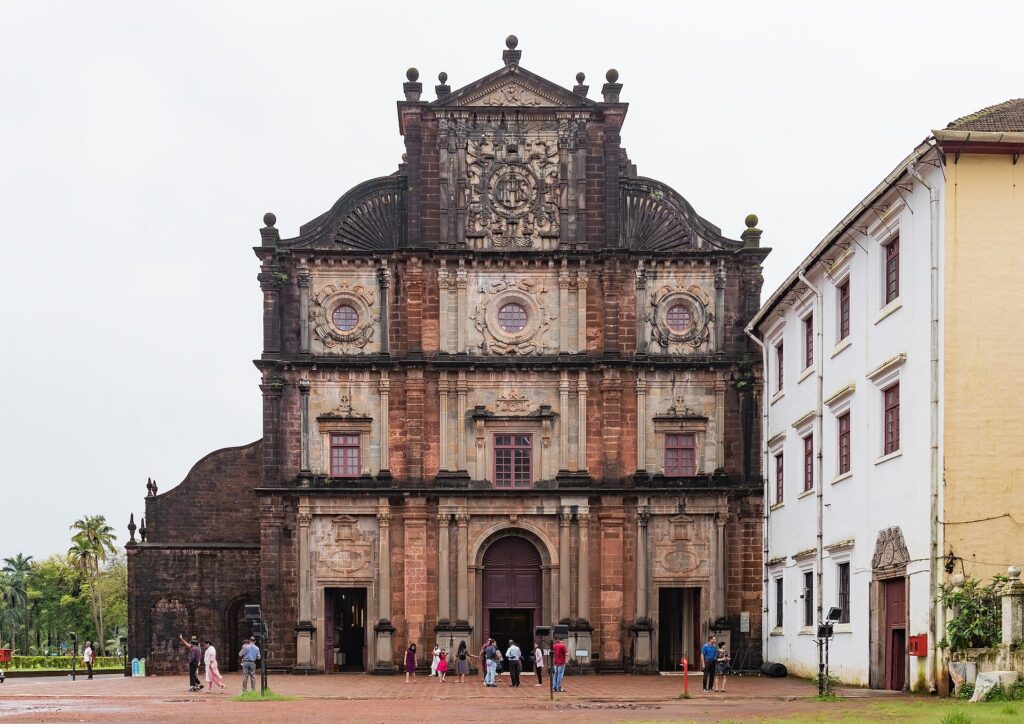
The foundation stone was laid on 24 November 1594 and the church was completed on 15 May 1605, consecrated by Archbishop Aleixo de Menezes. It is Baroque (the old text’s “florid style” was a translation of that word) and holds the relics of St Francis Xavier in a silver casket.
Two corrections. It is not “the main church in Goa”, since the Se Cathedral across the road is the cathedral. And the Exposition of the relics is a decennial event, not an annual one: the 18th ran from 21 November 2024 to 5 January 2025, and the next is expected around 2034-35 on the ten year cycle, though nothing has been announced. UNESCO listed it in 1986 within the Churches and Convents of Goa.
- Built: 1594 to 1605.
- UNESCO: 1986, as part of the Churches and Convents of Goa.
- Entry fee (November 2026): free.
- Open: weekdays 9 am to 6:30 pm, Sunday 10:30 am to 6:30 pm, per the Goa government’s page.
- Nearest airport and station: Karmali station 4.4 km; Dabolim airport 29 km, about 35 minutes; Mopa (Manohar) airport 41 km, about 50 minutes; Panaji about 10 km.
- Best time: November to February. Old Goa’s 2025 averages were 32/21 C in November and 34/20 C in January; June to August brought 800 to 880 mm of rain a month. 3 December is the saint’s feast day.
- Tip: the dress code is real: shoulders and knees covered, no beachwear.
Which Monuments of India Are Closed on Which Day?
Only the Taj Mahal has a fixed weekly closure, on Fridays. The Red Fort has been open on Mondays since 13 February 2026. The Sanchi museum (not the stupa) closes on Fridays, Jama Masjid closes to tourists at the five prayer times, and Elephanta, the boat trip from the Gateway of India, closes on Mondays. Every other one of the monuments of India on this page opens all seven days. So plan the Agra visit around the Friday, and give Friday itself to Agra Fort, which drops its Indian fee to Rs 40 that day.
A Route That Covers Eight of These Monuments of India in Four Days
Eight of these monuments of India sit in three cities: Delhi (Red Fort, Jama Masjid, Humayun’s Tomb, Qutub Minar), Agra (Taj Mahal, Agra Fort) and Jaipur (Amber Fort, Jantar Mantar). Delhi’s IGI airport to the Taj is 214 km on the Yamuna Expressway, about 2 hours 45 minutes without traffic, and Jewar’s new airport sits 141 km from the Taj and 77 km from the Red Fort.
Two days in Delhi, one in Agra and one in Jaipur covers all eight; our top 5 places to visit in Delhi post sorts the Delhi days. Fly for the rest. Amritsar, Bhopal (for Sanchi), Bhubaneswar (for Konark), Hyderabad, Mumbai and Goa each have an airport within about an hour of their monument, and only Pahalgam needs a long road day from Srinagar.
Beyond these fifteen, the places that appear on most lists but not this one are Hawa Mahal, India Gate, Mysore Palace, Ajanta and Ellora, Khajuraho, Fatehpur Sikri, the Meenakshi Temple, Victoria Memorial and Hampi, which we cover in our guide to the ruins of Hampi.
Two newer entries deserve a line. The twelve forts of the Maratha Military Landscapes became India’s 44th World Heritage property in July 2025 at the Paris session, and the Ancient Buddhist Site of Sarnath became the 45th on 25 July 2026 at the Busan session. Sarnath already sits on the ASI’s draft Category A list, so expect its fee to rise with it.
From my visit: The day after the Taj, Thursday 25 November 2021, I took a cab from Agra to Fatehpur Sikri, and it was a very good trip. One piece of advice from my side: do not rely on the guides. They generally fool you, and they take you to the shops and restaurants where they already have a commission. Do your own research instead, and choose shops and restaurants on the basis of their online reviews and whatever information is available on the internet. That is how you get the best trip.
Here is a short clip I recorded that day of a guide describing Fatehpur Sikri. It gives you a feel for the place before you go.
Best Time to Visit the Monuments of India
October to March for everything north of Hyderabad, November to February for the coasts, and April to June or September to October for Pahalgam. The numbers below are monthly averages for 2025 from the Open-Meteo climate archive, daily high over daily low in Celsius, which is a better guide than a generic “winter is best”.
| City (monument) | November | January | Monsoon peak |
|---|---|---|---|
| Agra (Taj Mahal, Agra Fort) | 26/13 C | 20/9 C, fog risk | July and August, 215 to 243 mm |
| Amritsar (Golden Temple) | 25/11 C | 19/7 C, foggy dawns | August, 470 mm |
| Jaipur (Amber Fort, Jantar Mantar) | 26/14 C | 21/10 C | July, 298 mm |
| Sanchi (Sanchi Stupa) | 27/13 C | 24/10 C | July, 505 mm |
| Konark (Sun Temple) | 29/20 C | 26/18 C | May to October, 164 to 295 mm a month |
| Hyderabad (Charminar) | 29/19 C | 29/18 C | August, 207 mm |
| Mumbai (Gateway of India) | 32/23 C | 31/22 C | June to September, 465 to 747 mm a month |
| Old Goa (Bom Jesus) | 32/21 C | 34/20 C | June to August, 800 to 880 mm a month |
| Pahalgam (Mamal Temple) | 13/-1 C | 4/-8 C | August, 136 mm |
Monuments of India FAQ
Which is the most famous monument of India?
The Taj Mahal. It drew about 6.9 million visitors in FY 2024-25 (6.26 million Indian and 0.645 million foreign, per the Ministry of Tourism’s compendium of 27 September 2025), more than any other ticketed monument, and it earned the ASI Rs 98.55 crore in ticket sales in FY 2023-24. It is also India’s entry in the New7Wonders of the World list of 2007.
How many monuments are there in India?
About 3,700 centrally protected monuments under the ASI (Parliament replies put the figure between 3,686 and 3,695), of which 143 are ticketed, plus the sites protected by state governments. Of these, 45 properties are on the UNESCO World Heritage List as of July 2026: 37 cultural, 7 natural and 1 mixed.
Which is the oldest monument on this list?
Sanchi’s Great Stupa, from the 3rd century BCE. Nothing else here comes close: the Qutub Minar dates from 1199, Konark from about 1250 and the Taj Mahal from 1632. India’s oldest protected sites are older still, such as the Bhimbetka rock shelters, but those are caves rather than built monuments.
How much does it cost to see the Taj Mahal?
Rs 50 for Indians, Rs 540 for SAARC and BIMSTEC nationals and Rs 1,100 for other foreigners, plus Rs 200 for anyone who wants to enter the main mausoleum, as listed on tajmahal.gov.in in November 2026. Children under 15 are free. Night viewing is a separate ticket, Rs 510 for Indians and Rs 750 for foreigners.
Can you climb the Qutub Minar?
No. The interior has been closed since the stampede of 4 December 1981, in which 45 people died. You can walk the whole complex, including the Iron Pillar and the Quwwat-ul-Islam mosque, but the 379 steps stay locked.
My Take: Which Five to See First
If you have one trip and limited days, I would take the Taj Mahal, Humayun’s Tomb, Qutub Minar, Konark and Sanchi, in that order. The Taj for the obvious reason. Humayun’s Tomb because it explains the Taj and now has a museum open till 9 pm. The Qutub because it is 17 minutes from the airport and open till 8 pm, so it fits any schedule. Konark and Sanchi because they are the two that show you India before the Mughals, and both are quiet on a weekday.
The ones I would hold for a second visit are the Gateway of India, which is a twenty minute stop unless you are catching the Elephanta boat, and Mamal Temple, which only makes sense inside a Kashmir holiday. The Golden Temple is in a category of its own; go for the langar and the 4 am kirtan, not to tick off a monument.
Whichever you choose, check the fee in the week you fly. The ASI’s Category A and B draft, Rajasthan’s hikes and the Red Fort’s new hours all landed within eighteen months of each other, and the monuments of India will keep changing their rules faster than the lists that describe them. This one will be updated as they do.