

Marrakesh is the most tiring city I have ever enjoyed. Within ten minutes of stepping into the old town somebody will tell you the road ahead is closed, somebody else will quote you four times the fair price for a lamp, and a scooter will miss your elbow by an inch. Go anyway. Marrakesh (you will also see it spelt Marrakech, the French way) gives back far more than it takes, provided you land knowing how the place works.
I have laid this guide out the way the city is, from the big square outward, with visa, flights and rupee costs at the end. One thing first. The earthquake of 8 September 2023 had its epicentre in the High Atlas, about 70 km south, and it cracked several monuments in Marrakesh. Bahia Palace, Badi Palace and the Saadian Tombs reopened within a month, and the Koutoubia mosque followed the next spring. Nothing on a normal itinerary is shut.
The Medina Core: Where Marrakesh Begins
The medina is a UNESCO World Heritage Site wrapped in roughly 19 km of pink mud-brick walls, hence the nickname Red City. The Almoravids founded it around 1070, and the street plan feels like nobody has tidied it since. Google Maps drifts badly in the covered lanes, so download an offline map.
Jemaa el-Fnaa by Day and by Night
By day the main square is honestly a bit flat. You get orange juice carts (about 10 dirhams a glass), snake charmers, men with chained monkeys, and a lot of hot tarmac. Please skip the animal photos. The handlers demand 50 to 100 dirhams after you click, sometimes aggressively.
Come back an hour before sunset. Over a hundred numbered food stalls are wheeled in and assembled from scratch every evening, smoke starts rising, and Gnawa drummers and storytellers pull circles of locals around them. UNESCO recognised the square’s oral traditions as intangible heritage in 2001.
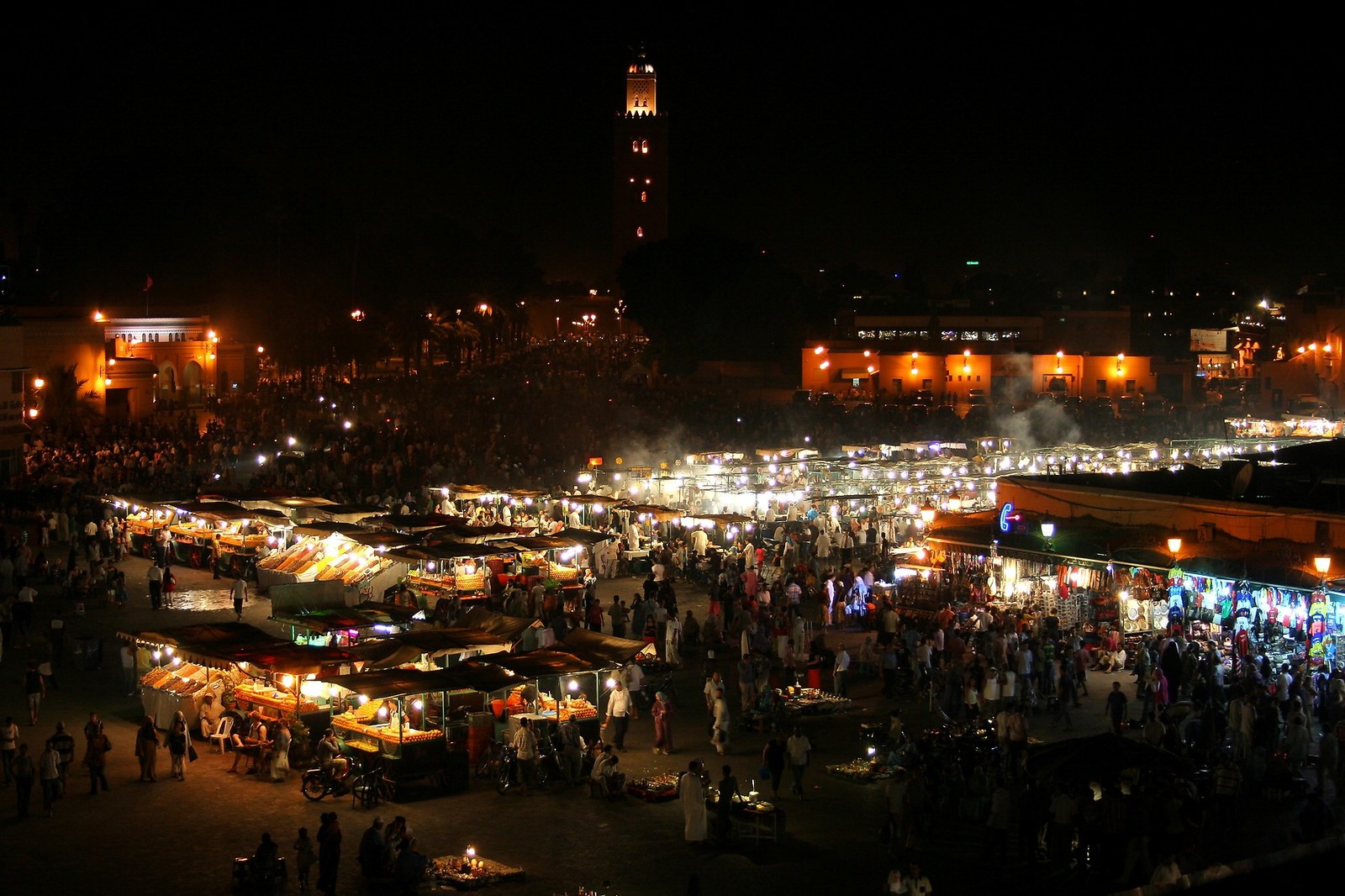
My routine was mint tea on a rooftop cafe at dusk (you must buy a drink to go up, usually 20 to 30 dirhams), then down into the stalls. Check the menu board for prices, and know that the bread and olives put on your table are sometimes billed separately.
The Souks North of the Square
Walk north from the square into Souk Semmarine, the main covered artery, where slatted roofing throws striped light on everything. Deeper in, the trades still cluster by craft. Blacksmiths hammer away in Souk Haddadine, dyed wool hangs drying in the dyers’ souk, and Rahba Kedima square sells spices and baskets.
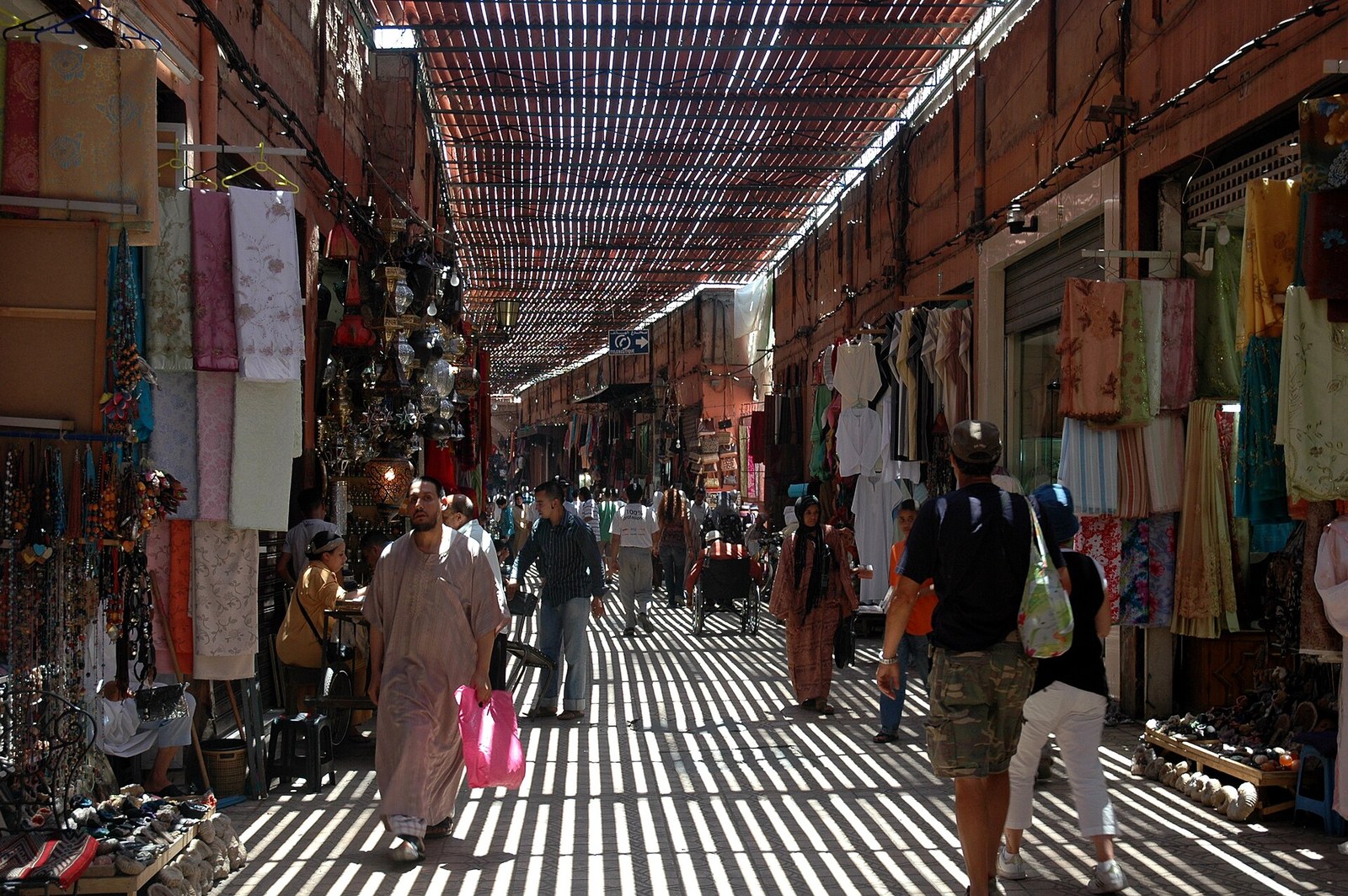
Prices nearest the square are the highest. For a benchmark before bargaining, visit the Ensemble Artisanal on Avenue Mohammed V, a government-backed craft complex with fixed, labelled prices. Note them down, then go haggle in the souks. Many shops shut for a few hours around Friday midday prayers.
Ben Youssef Madrasa
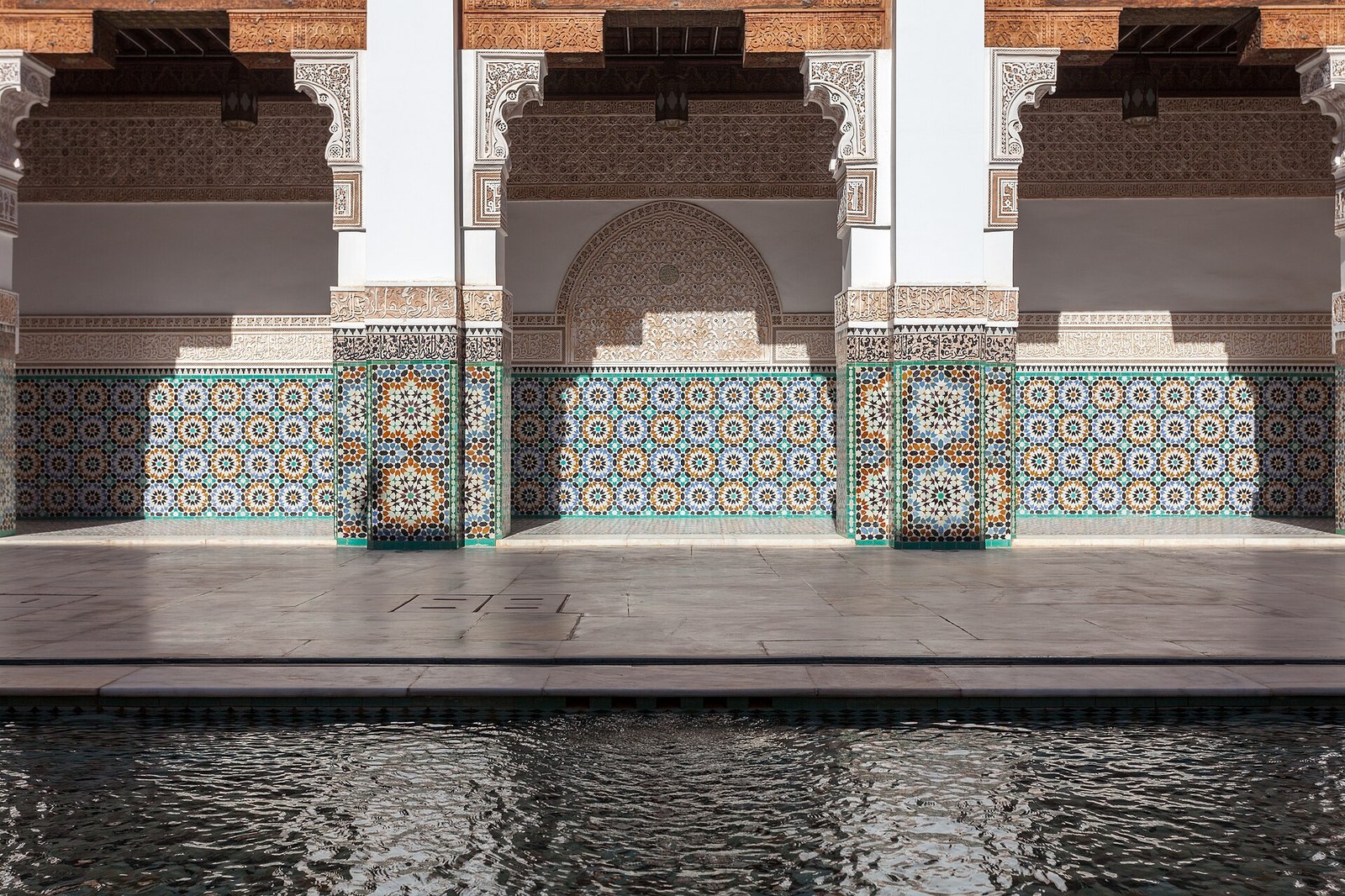
Ten minutes north of the souks is my favourite building in Marrakesh. Ben Youssef Madrasa was an Islamic college, rebuilt in its present form by the Saadian sultan Abdallah al-Ghalib in the 1560s. The courtyard is carved cedar, stucco and zellige tilework around a shallow pool, with some 130 tiny student cells upstairs. It reopened in 2022 after a long restoration, and entry is 50 dirhams. Go at 9 am when it opens, because by 11 the courtyard is a photo shoot.
Sleeping in a Riad, Scrubbing in a Hammam
Stay inside the medina, in a riad. That is a traditional house built around an inner courtyard, usually with a fountain or plunge pool and a roof terrace for breakfast. From the lane you see only a blank wall. Inside it is quiet enough to hear birds.
Decent mid-range riads cost 600 to 1,200 dirhams a night for a double with breakfast, so roughly Rs 6,000 to 12,000. Simple ones start near 350 dirhams. Two honest warnings from my side. Taxis cannot enter most lanes, so pick a riad within ten minutes’ walk of a gate and ask them to send someone to meet you. And riads have no central heating, so December and January nights are properly cold.
Then there is the hammam. A neighbourhood public bath costs 10 to 40 dirhams, plus a little extra if an attendant scrubs you with black olive soap and a rough kessa glove. Men and women bathe separately. Private hammams in riads and spas charge 300 to 500 dirhams, and that is the version most first timers should book.
South to the Kasbah: Koutoubia and the Palaces Quarter
The 77 metre minaret of the Koutoubia mosque is your compass in Marrakesh. The Almohads completed it in the 12th century. Non-Muslims cannot enter, but the gardens behind are free. The one Moroccan mosque that does admit visitors is the Hassan II Mosque in Casablanca.
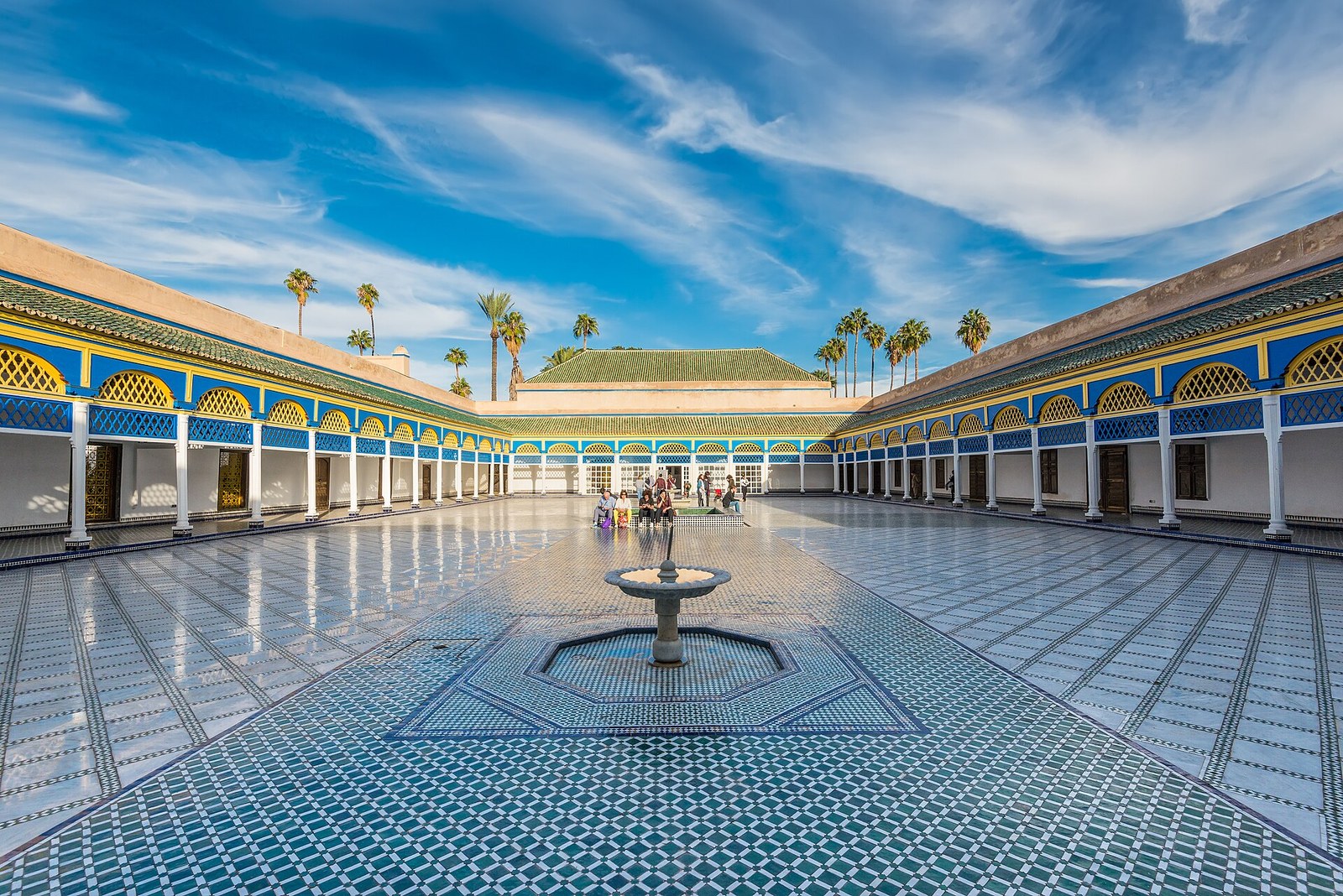
From here it is a 15 minute walk south-east to Bahia Palace. The grand vizier Si Moussa began it in the 1860s, and his son Ba Ahmed enlarged it in the 1890s. There are around 150 rooms across eight hectares. The painted cedar ceilings and the big marble courtyard justify the 100 dirham ticket. The rooms are unfurnished, so give it an hour, not a morning.
The Saadian Tombs sit further south in the Kasbah quarter. Sultan Ahmad al-Mansur built them in the late 1500s, a later ruler walled them up, and they stayed forgotten until a French aerial survey spotted them in 1917. Entry is 100 dirhams. The star is the Chamber of the Twelve Columns, but you view it from a single doorway and the queue can run 30 minutes. I found it beautiful and slightly overpriced. The ruined Badi Palace next door, with storks nesting on its walls, is the calmer visit.
Gueliz and the New Town: Majorelle Blue
North-west of the walls is Gueliz, the French-built new town with wide avenues, cafes, licensed restaurants and, frankly, room to breathe.
The big draw is Jardin Majorelle. The French painter Jacques Majorelle began planting it in 1923 and painted his studio an electric cobalt that is now simply called Majorelle blue. Yves Saint Laurent and Pierre Bergé bought the garden in 1980 to save it from developers.
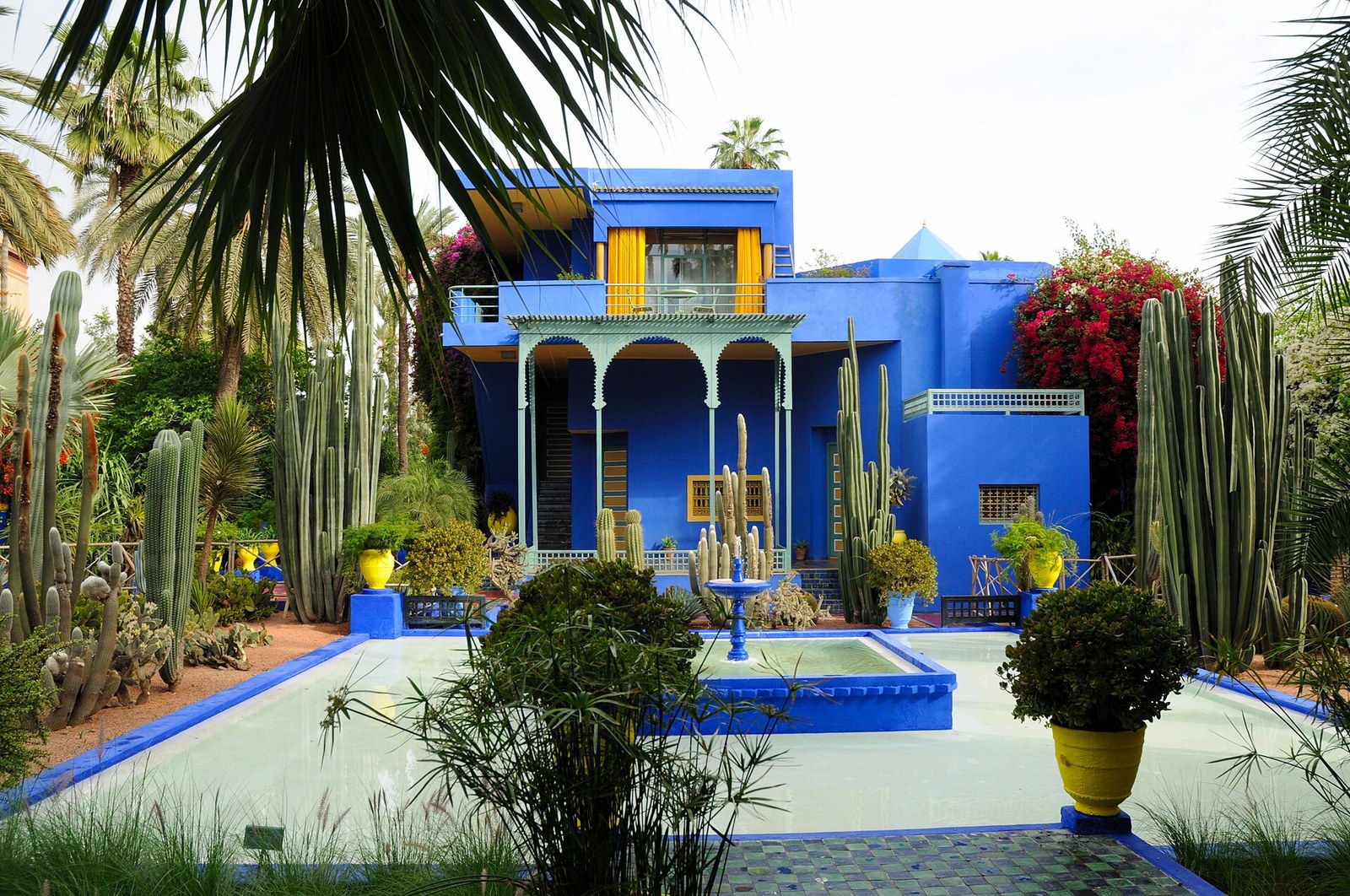
Tickets are sold online only, in timed slots, through the official site. The garden costs 170 dirhams, the small Berber museum inside adds 60, and the Yves Saint Laurent museum next door is 140. All three come to about Rs 3,700, which is a lot for a garden you can walk in 45 minutes. I would book the 8 am slot for the garden alone. Morning slots sell out days ahead in spring and autumn.
Eating Vegetarian in Marrakesh: The Honest Picture
It is manageable, not easy. Every menu lists a vegetable tagine and a vegetable couscous, but both are often cooked in meat stock, and harira soup can have lamb in it. Say “sans viande” when ordering and ask twice. Your riad cook is the most reliable option if told in the morning.
Safe bets include bissara (a thick fava bean soup), zaalouk (smoky aubergine salad), flaky msemen flatbread with honey, Berber omelette, olives and fresh bread. Some overlap with our list of Arab foods worth tasting. The medina has a couple of vegetarian cafes, and Gueliz has a few Indian restaurants, though check recent reviews first. Jain travellers should carry theplas and ready-to-eat packets, because onion and garlic are in nearly everything.
Scams, Touts and the Art of Haggling
None of this is dangerous, just relentless. Knowing the scripts helps.
- The closed road. A friendly young man says the street ahead is closed, or that the square is “this way”. It is not. He will walk you to a shop or demand 100 dirhams as a guide fee. Say “la, shukran” (no, thank you) and keep walking.
- Tannery touts. “Berber market, today only” is the classic line. You are led to the tanneries in the north-east of the medina, handed a sprig of mint for the smell, pushed into a leather shop and asked for a fat tip. Skip them, or go on your own.
- Henna grabbers. On Jemaa el-Fnaa, women with henna syringes will take your hand and start drawing before you agree, then ask for 200 dirhams or more. Keep your hands in your pockets. Some use black henna with chemical dye, which can burn the skin.
- Taxis without meters. Ask for “compteur” before getting in, or fix the price. Rides within town should be 15 to 30 dirhams. From the airport the posted fare to the medina is around 100 to 150 dirhams by day, more after 10 pm. Bus 19 does the same run for 30 dirhams.
On haggling in Marrakesh, my rule was to counter at about a third of the opening price and expect to settle near half. Never bargain for something you do not intend to buy, because backing out after agreeing a price is considered properly rude. Walking away before that is your best tool. We Indians are better trained for this than most visitors, so enjoy it.
Beyond the Walls: Atlas Villages, Ait Benhaddou and the Sahara Truth
Imlil and the High Atlas
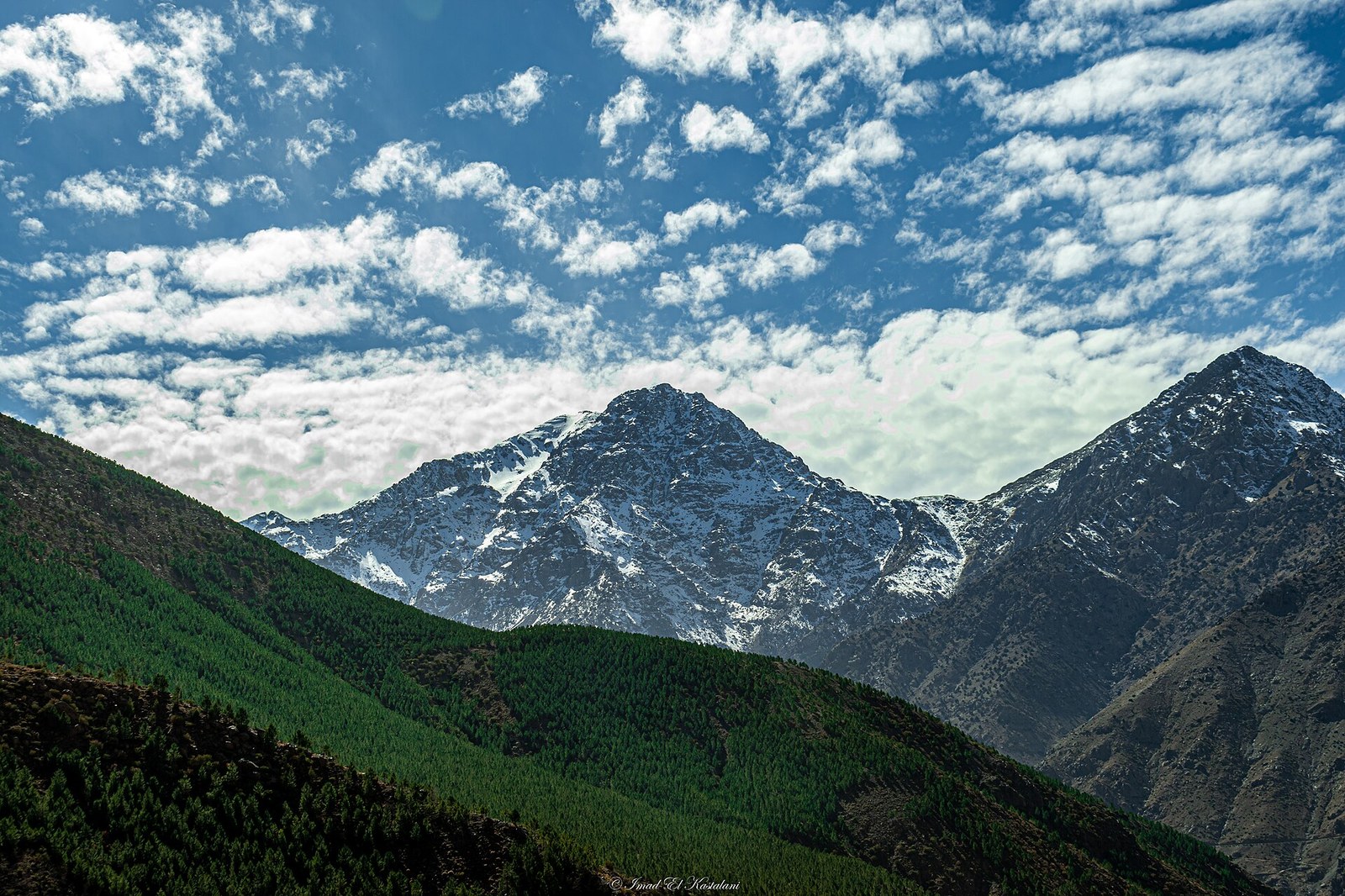
The best day out from Marrakesh is Imlil, a walnut-grove village at 1,740 metres, about 65 km and an hour and a half south. It is the trailhead for Jebel Toubkal (4,167 m), the highest peak in North Africa. Day visitors usually do a two to three hour guided walk to a nearby village, then a home-cooked lunch on a terrace facing the peaks.
This valley was close to the earthquake’s epicentre and lost homes and people. Guesthouses are open again and visitors are very much wanted.
Ourika Valley
Ourika is about 60 km away, ending at Setti Fatma and its chain of waterfalls. Group tours pad the day with argan oil and carpet stops. With only one mountain day, choose Imlil.
Ait Benhaddou
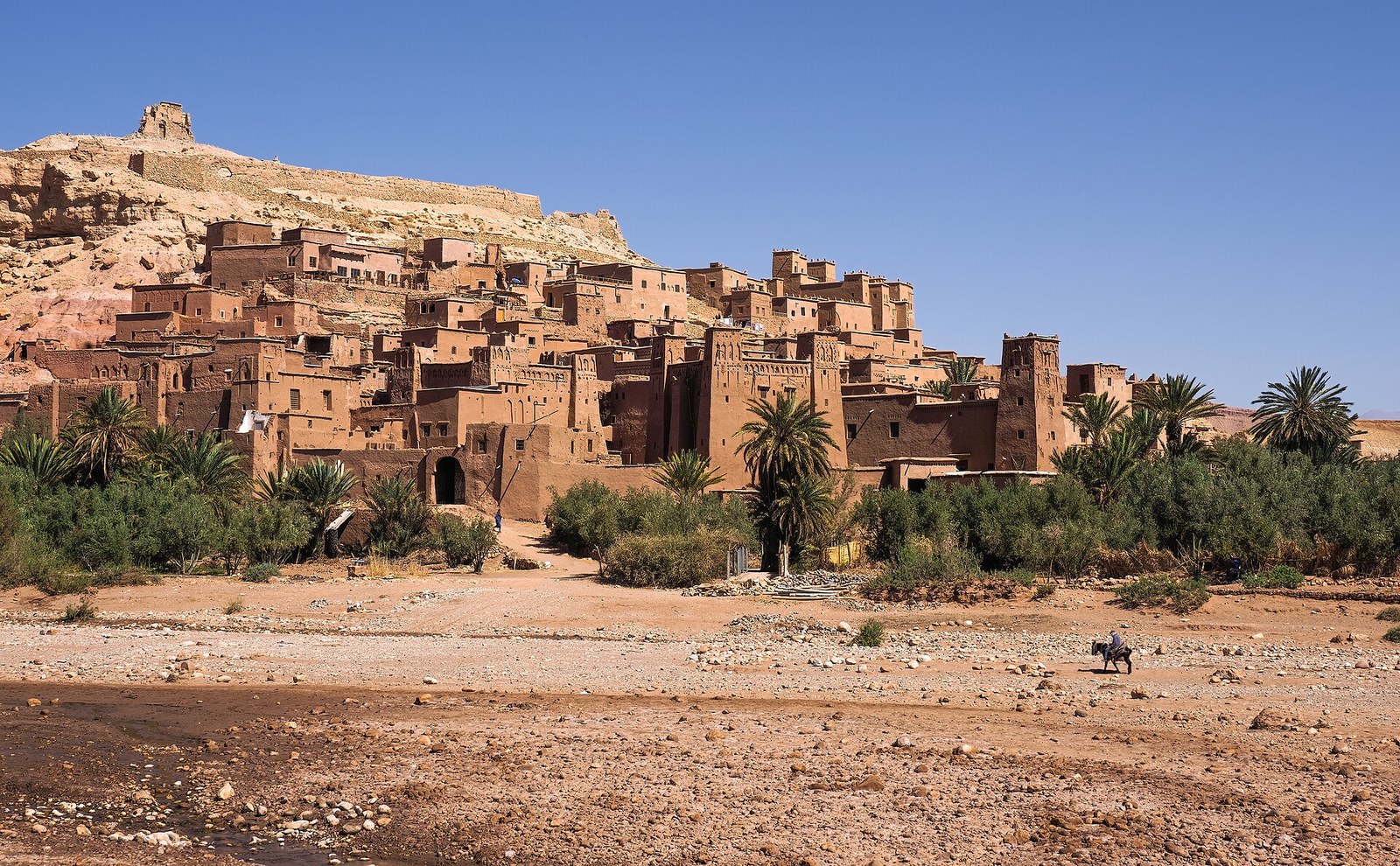
This mud-brick fortified village on the old caravan route is a UNESCO site and a film set regular, from Gladiator to Game of Thrones. It is also 180 km away over the Tizi n’Tichka pass at 2,260 metres. That means nearly four hours each way on a winding road and a 12 to 13 hour day. Group day trips cost 250 to 400 dirhams.
It works far better as an overnight stop on the way to the desert. If old cities of rock and mud are your thing, our Petra guide covers a similar kind of day.
Agafay Is Not the Sahara
Here is the part many tour sellers blur. The Agafay “desert”, 30 to 40 km from town, is a stony, rolling moonscape. There are no sand dunes. The sunset dinner packages (roughly 300 to 600 dirhams) are a nice evening out, but do not expect the golden dunes from Instagram.
Those dunes are at Erg Chebbi near Merzouga, about 560 km and nine to ten hours of driving from Marrakesh. It cannot be a day trip. The minimum sensible version is a three day, two night tour, with shared ones starting around Rs 9,000 to 12,000 per person, and most of days one and three go in a minibus. Decide before leaving India whether the Sahara is part of your trip.
Visa, Flights, Season and What Marrakesh Costs in Rupees
Visa. Morocco is not on any list of visa-free countries for Indians. The good news is that Indian ordinary passport holders are among the nationalities allowed to apply for the e-visa directly on the government’s Accès Maroc portal, without needing a Schengen, US or UK visa as a precondition.
It is a single-entry visa for a stay of up to 30 days, usable within 180 days of issue. The fee is 770 dirhams for standard processing (about three working days) and 1,100 dirhams for express (24 hours). Lookalike agent sites charge double. Rules do change, so run the portal’s eligibility check before paying for flights.
Flights. There are no nonstop flights from India to Morocco. The common one-stop routings into Marrakesh Menara airport are Turkish Airlines via Istanbul and Qatar Airways via Doha, where a long layover can become a short Qatar stopover. Return fares from Delhi or Mumbai usually sit between Rs 70,000 and Rs 85,000. The other option is a Gulf carrier to Casablanca and then the train, about 3 hours 20 minutes and 98 dirhams in second class.
Best months. March to May and late September to November, when Marrakesh days run between 20 and 30 degrees. July and August regularly cross 40. Winter days are sunny and around 18 degrees, but nights fall under 8. During Ramadan, which shifts about 11 days earlier every year, many medina eateries close through the day, so check the dates before you book.
Costs. One dirham is roughly Rs 10. The dirham is a closed currency, so carry euros or dollars to exchange on arrival, or use ATMs. A sit-down tagine meal costs 60 to 120 dirhams, a stall dinner on the square 80 to 150, and mint tea 15 to 25.
With a mid-range riad, good food, monuments and one day trip, I would budget Rs 9,000 to 13,000 per person per day. Backpackers can manage on about half. For a week including flights and visa, Rs 1.5 to 1.9 lakh per person is realistic. For the wider country picture, read our facts to know before travelling to Morocco.
So, Is Marrakesh Worth the Long Flight?
For me, yes, with conditions. Give it four full days: two for the medina and palaces, one easy day for Gueliz and Majorelle, one for the Atlas. Add three more only if the real Sahara matters to you. Do not come for a relaxing holiday, because this city does not do relaxing until the riad door closes behind you. Come for the evening when the square fills with smoke and drums, and you realise you have stopped minding the chaos and started bargaining back.
Also Read: Discover Ancient Egypt Via the Temples of Luxor