

India’s biggest Diwali is no longer in Jaipur, Varanasi or Amritsar. Since the Ram Mandir opened in January 2024 it is in Ayodhya, and by a wide margin. Biggest is not the same as best for you, though. So I have grouped the places below by the kind of Diwali they give you, with the crowd, the cost and the catch for each one.
Diwali 2026 Dates: The Five Days at a Glance
Diwali in 2026 falls on Sunday 8 November. The dates below follow Drik Panchang for North India, and two of them need a warning. Many websites still show Govardhan Puja on 9 November and Bhai Dooj on 10 November. The Drik Panchang Diwali calendar and the Uttar Pradesh holiday list both put them a day later, because the new moon runs till about noon on Monday.
| Date | Day | What happens |
|---|---|---|
| Fri 6 Nov | Dhanteras | Gold, silver and utensil shopping. Markets are at their most crowded. |
| Sat 7 Nov | Chhoti Diwali (Kali Chaudas) | Ayodhya Deepotsav in the evening. Bhoot Chaturdashi in Bengal. Narkasur parades through the night in Goa. |
| Sun 8 Nov | Diwali | Naraka Chaturdashi oil bath before sunrise (Deepavali in the South). Lakshmi Puja after sunset. Bandi Chhor Divas in Amritsar. Kali Puja at midnight in Kolkata. |
| Mon 9 Nov | Gap day | Amavasya ends around midday. Most markets stay shut. |
| Tue 10 Nov | Govardhan Puja (Annakut) | Bali Pratipada and Padwa in the West and South. |
| Wed 11 Nov | Bhai Dooj | Brothers and sisters. Trains and highways are packed again. |
One more date matters. Dev Deepawali in Varanasi is on Tuesday 24 November, the Kartik Purnima night. It is a different festival from Diwali, sixteen days later, and people mix up the two every single year.
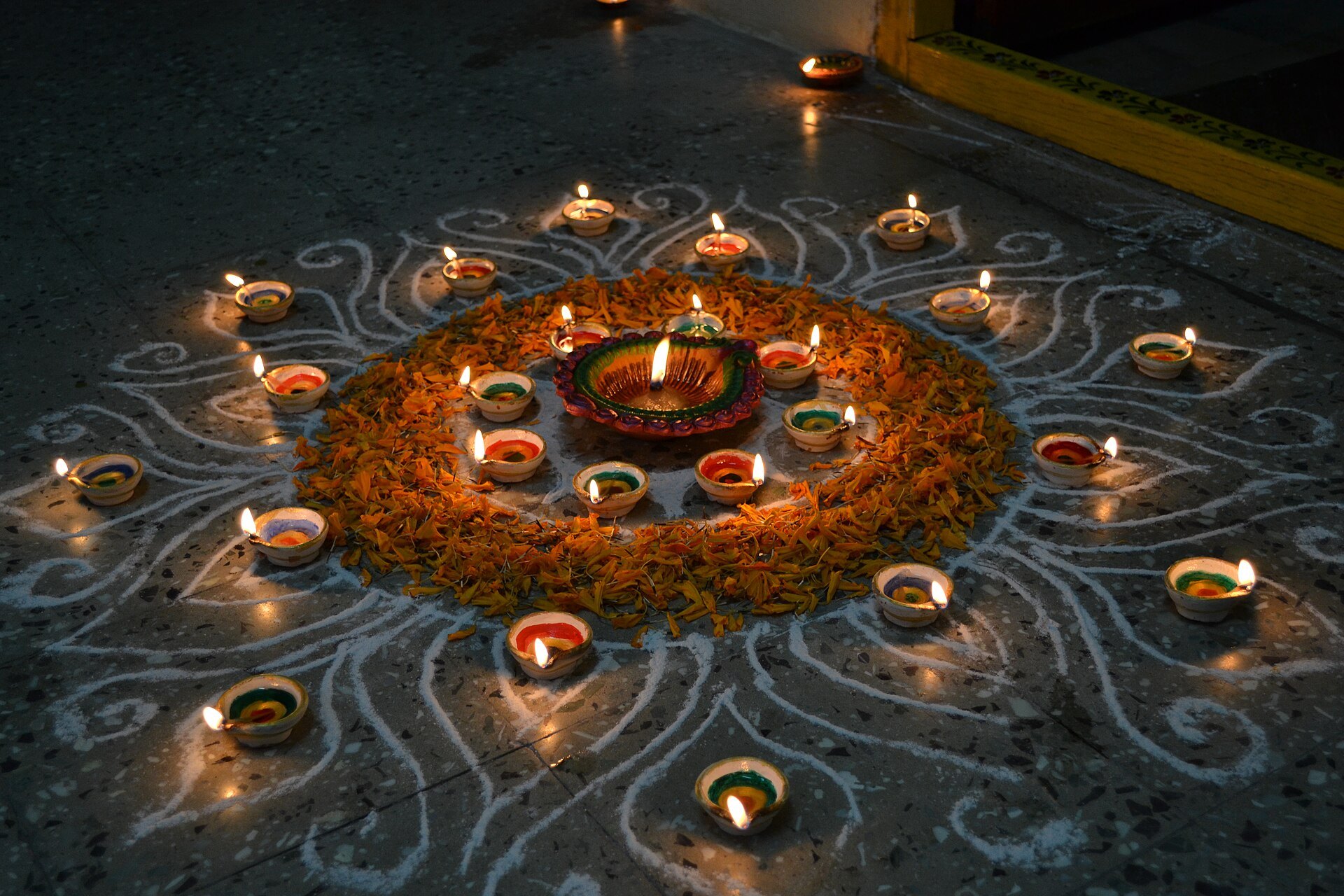
The Grand Spectacle: Diwali in Ayodhya
Deepotsav is held on the eve of Diwali, so the big evening is Saturday 7 November, and it will be the tenth edition. Volunteers spend two days laying diyas in patterns across Ram ki Paidi and the Saryu ghats, then light them together at dusk. Last year the count certified by Guinness World Records was 26,17,215 lamps across 56 ghats, with a second record for 2,128 people performing the Saryu aarti together. Officials are talking of around 30 lakh for 2026, but that is a target, not a result.
Now the part the photos do not tell you. Last year the Ram ki Paidi enclosure was open only to pass holders, volunteers and officials on the main evening. As far as I could find, passes were issued by the administration and never sold to the public. The 2026 arrangement was not announced when I wrote this, so do not pay any website offering a Deepotsav “e-pass”. The UP Tourism site and the Ayodhya district administration are the only sources I would trust.
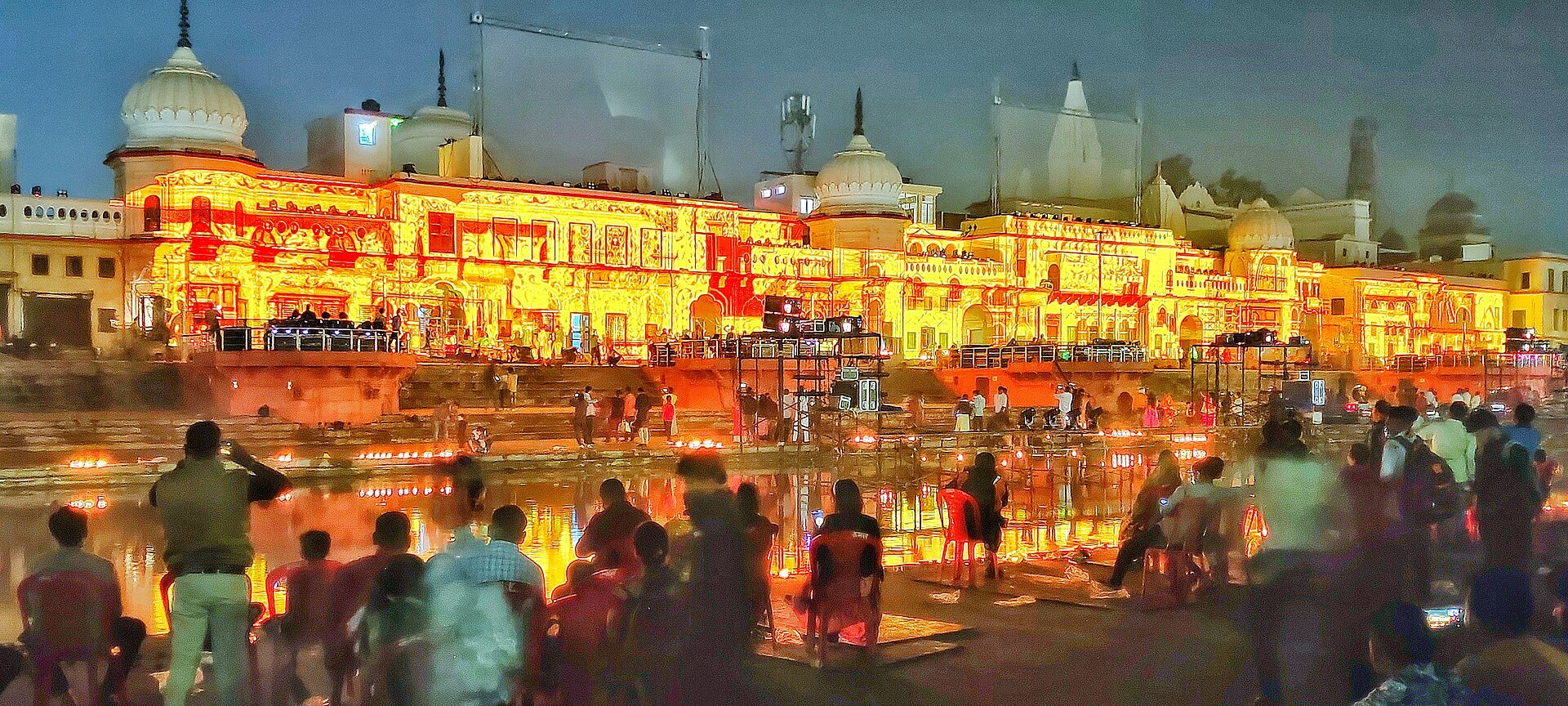
Without a pass, people gather on the Naya Ghat side and along the approach to the Saryu bridge for the long view of the lit ghats, and LED screens go up across town. My suggestion is to reach a day early. Last year the laser and drone show ran on three evenings, not one, and the evening before has a fraction of the crowd. This year officials have also spoken of repeating the drone show after Diwali.
Rooms are the real problem. Decent hotels near the temple are usually gone weeks ahead, and a room that costs Rs 2,000 to 4,000 on a normal night can ask Rs 6,000 to 12,000 for Deepotsav. The fallback is Faizabad, now called Ayodhya Cantt, about 7 km away. After that comes Lucknow, 135 km and roughly three hours by road, where a return cab costs around Rs 4,000 to 5,500. Read our older Ayodhya guide for the temples to see by day.
The Spiritual Diwali: Amritsar and Varanasi
Amritsar: Bandi Chhor Divas at the Golden Temple
Sikhs mark the same night as Bandi Chhor Divas. In 1619 Guru Hargobind walked out of Gwalior Fort with 52 imprisoned kings, each holding a tassel of his cloak, and reached Amritsar at Diwali. On 8 November the whole complex is outlined in lights, and families set diyas and candles along the marble parikrama around the sarovar. In recent years the SGPC has trimmed the fireworks to a short, low-smoke display of about ten minutes, so go for the lamps and the kirtan, not the sky.
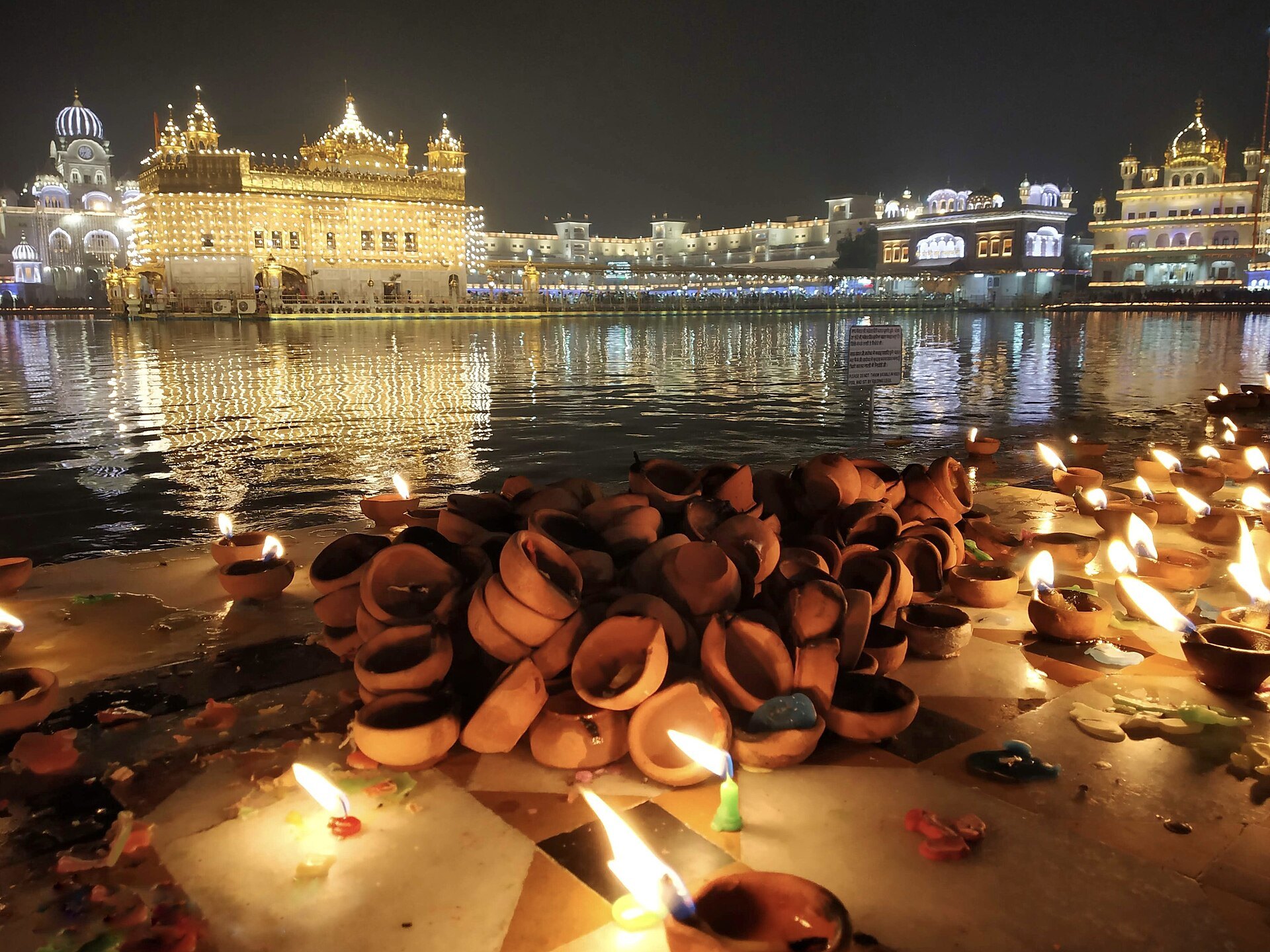
Stand on the parikrama near the Ghanta Ghar entrance by 5 pm. From there you get the shrine and its reflection in one frame. Skip the queue for the inner sanctum that evening, it can take two to three hours, and come back at 4 am instead. The langar feeds everyone free, all night. Hotels around Heritage Street run Rs 3,000 to 7,000 on this weekend, and the SGPC sarais cost a fraction if you book early. Our Amritsar guide covers the rest of the city.
Varanasi: Lovely on Diwali, Unreal on Dev Deepawali
Diwali night in Varanasi is good. The evening Ganga aarti at Dashashwamedh happens around 6 pm as usual, the old city’s rooftops fire rockets over the river, and families float leaf lamps from the steps. It is also far cheaper and calmer than what follows. But I will be honest. The night that fills the posters is Dev Deepawali on 24 November, when all the ghats are lined with lamps. Last year that meant about 25 lakh diyas and a laser show at Chet Singh Ghat.
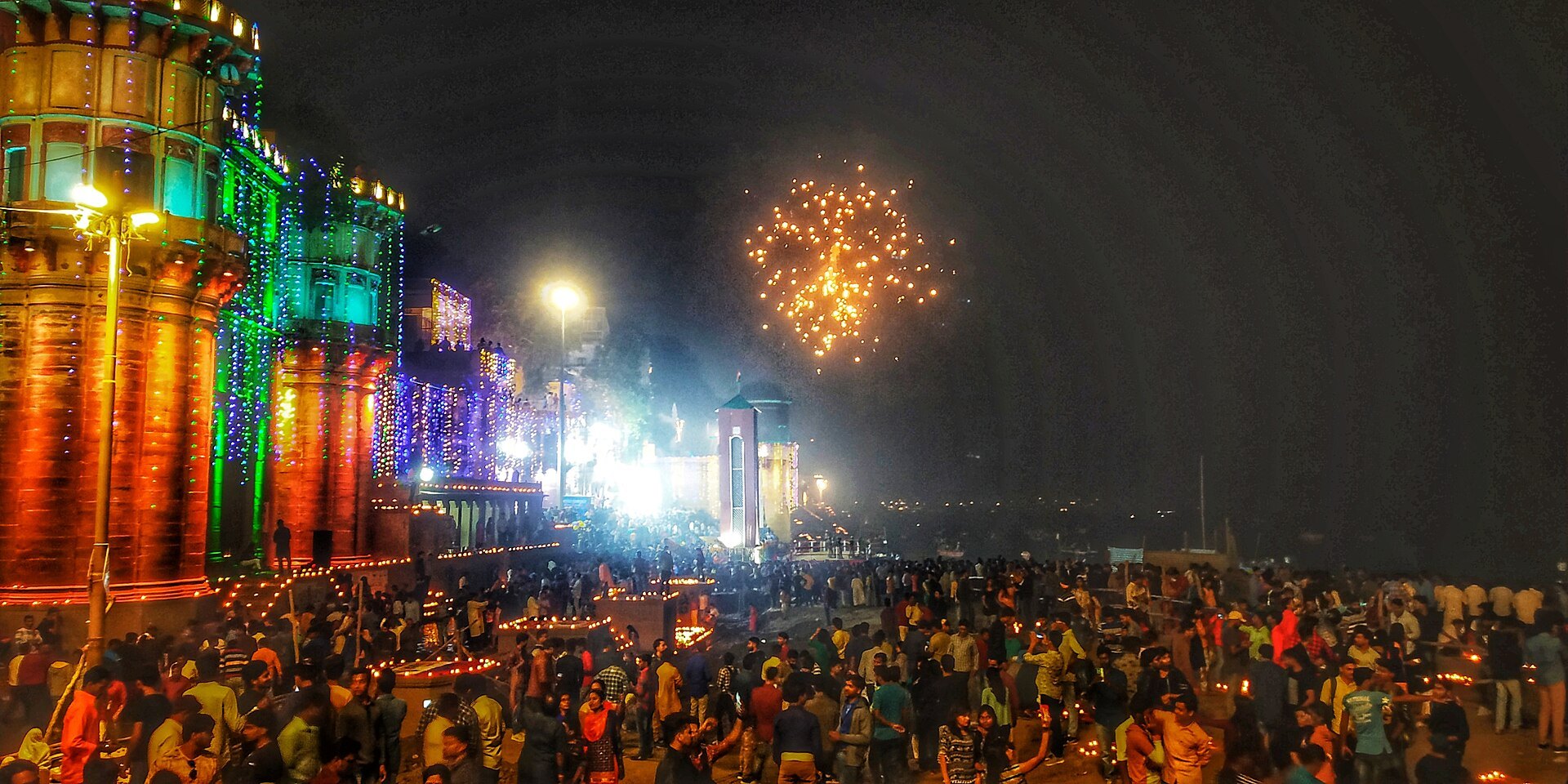
If Dev Deepawali is what you actually want, book now. Boat operators are already quoting from about Rs 4,000 per seat on a shared boat for that evening, and private boats cost many times more. Ghat-facing rooms go months ahead. For Diwali itself, an ordinary shared boat at dusk is enough, and you can simply walk the stretch from Assi to Dashashwamedh. Our piece on the ghats of Varanasi tells you which ones are worth stopping at.
Royal Cities Under Lights: Jaipur and Udaipur
Jaipur: The Bazaars Compete
Jaipur treats Diwali as a contest. Each market’s traders’ body, the vyapar mandal, lights its own bazaar on a theme and competes for the best illuminated market. The custom goes back to around 1980, when chief minister Bhairon Singh Shekhawat pushed traders to light up the walled city for tourism. Johari Bazaar, Bapu Bazaar, Tripolia, Chandpole and MI Road are the ones to walk. Themes can be odd. One election year, Johari Bazaar was done up to remind people to vote.
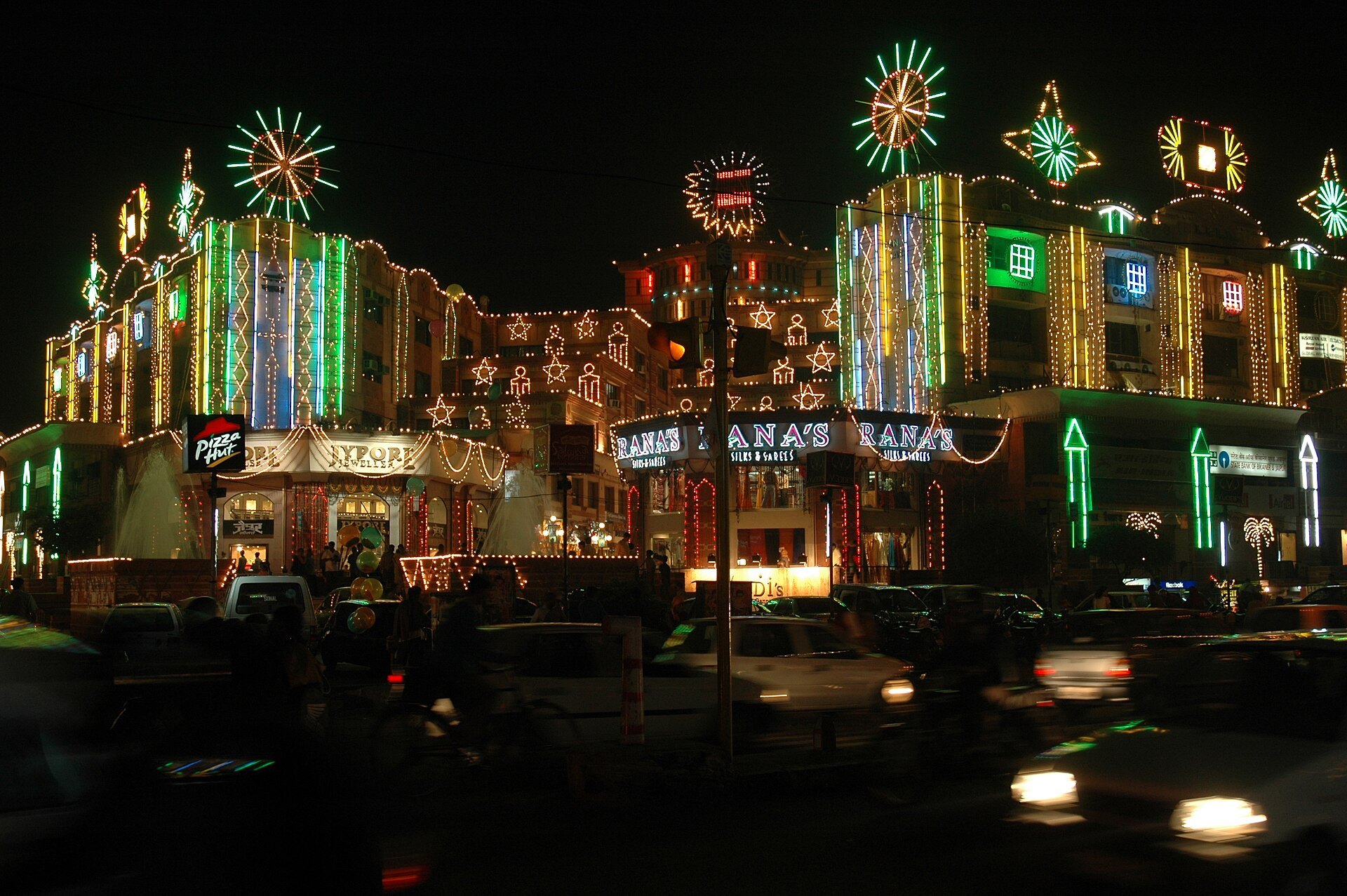
The lights are usually on from Dhanteras, so go on 6 or 7 November. On Diwali night itself the shopkeepers are busy with their own puja and the shutters come down early. Leave the car outside the old city and walk. For the whole city at once, take a cab up to Nahargarh Fort before sunset and keep the driver waiting, because the road down is dark and winding. Mid-range hotels ask Rs 3,500 to 8,000 over the long weekend.
Udaipur: Everything Twice, Once in the Water
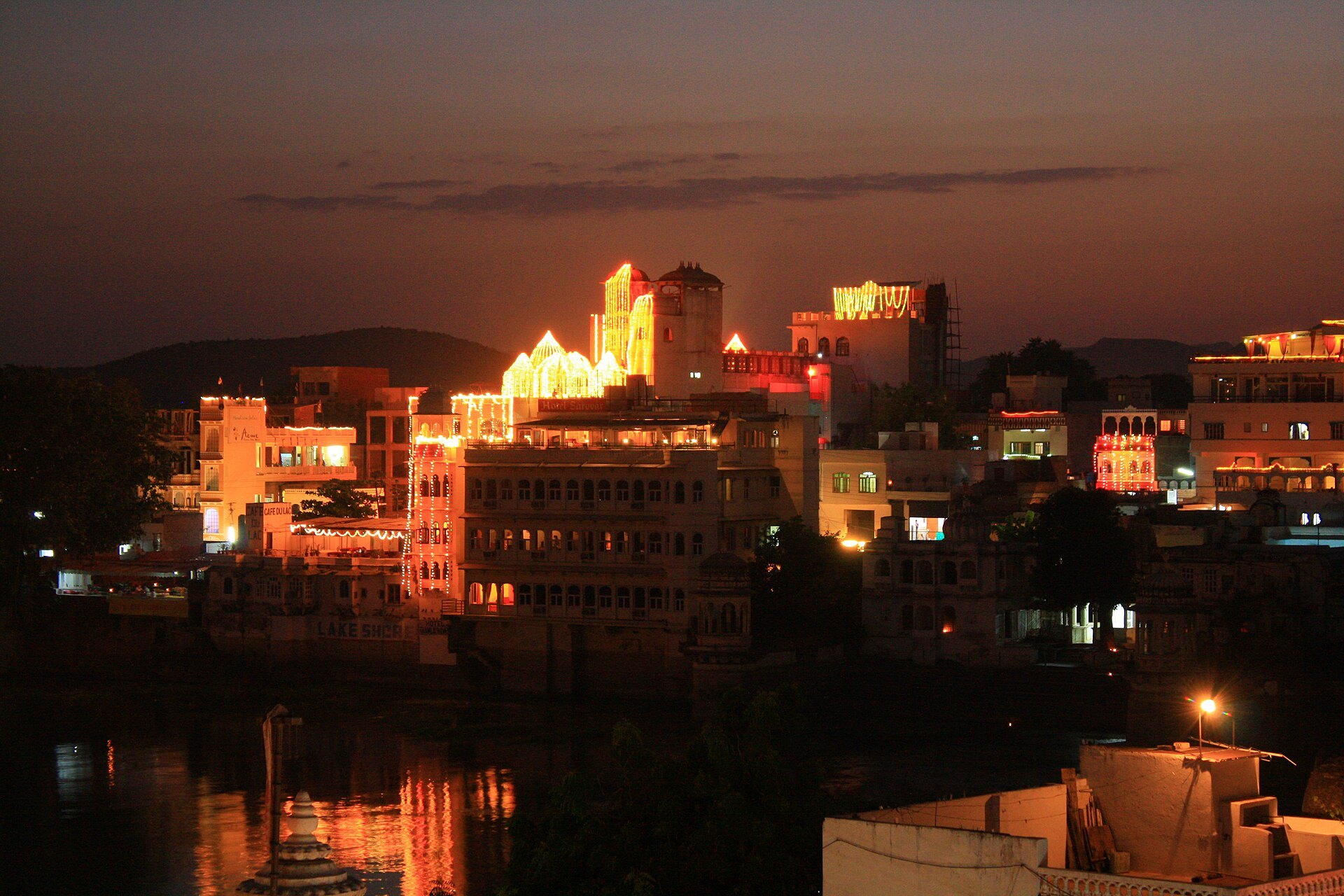
Udaipur is smaller and softer. The City Palace, the havelis and the hotels around Lake Pichola are strung with lights, and the lake doubles all of it. Gangaur Ghat and Ambrai Ghat are the free viewpoints. The sunset boat from the City Palace jetty costs roughly Rs 500 to 900 per person. Locals queue for hours at the Mahalaxmi temple in Bhatiyani Chohatta. Lake-facing rooms start near Rs 5,000 and climb fast, so see our Udaipur guide and book the room before the train.
Same Night, Different Stories: Kolkata, Goa and the South
Kolkata: Kali Puja at Midnight
Bengal finished its Lakshmi Puja a fortnight earlier, right after Durga Puja. On the Diwali new moon it worships Kali, and the puja happens at midnight. The evening before is Bhoot Chaturdashi, when homes light fourteen lamps and cook fourteen kinds of greens. At Kalighat there is a twist I like. On this one night the goddess is worshipped as Lakshmi. Dakshineswar has queues of several hours but sits on the metro line. The giant themed pandals are in Barasat and Naihati, north of the city.
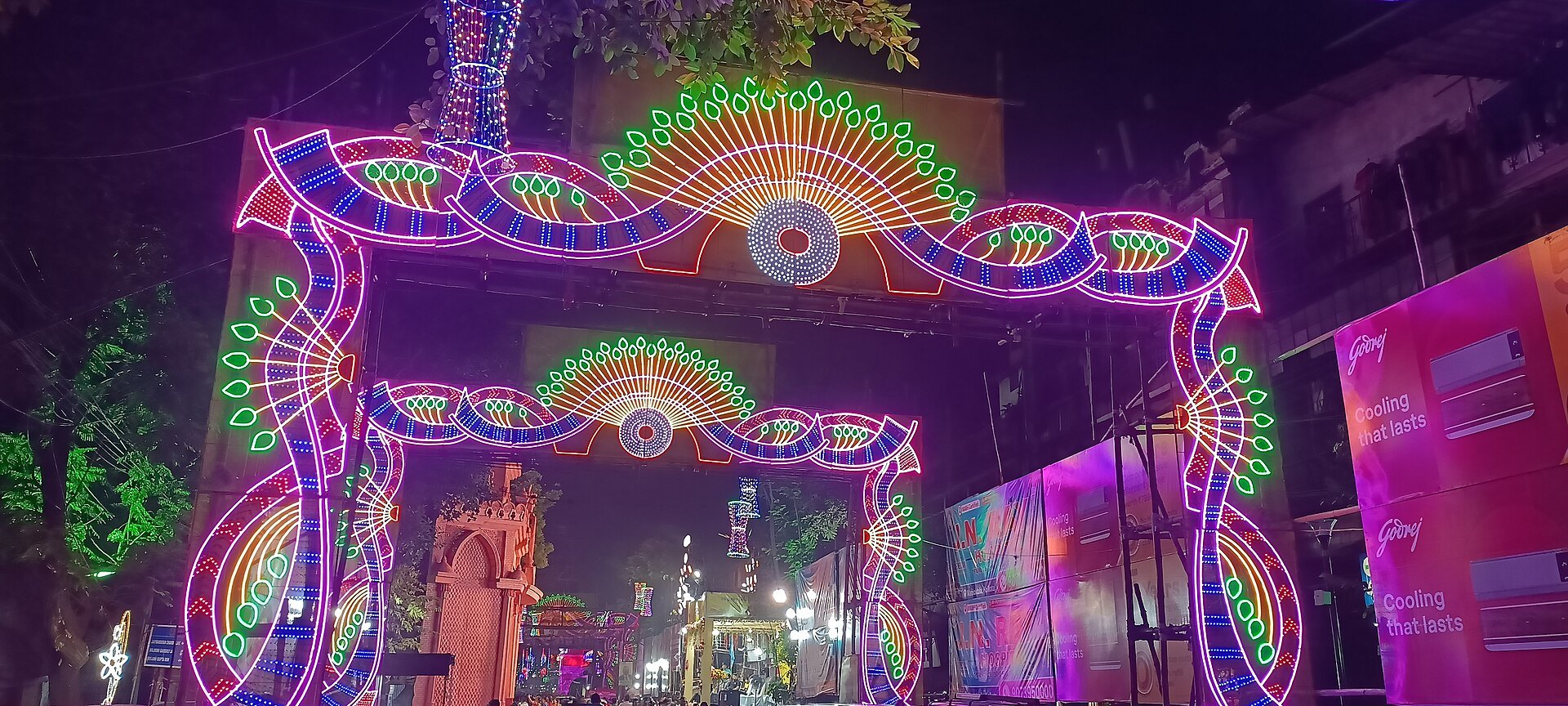
Hotel rates stay sane, Rs 2,500 to 5,000 for a good room, nothing like the Durga Puja surge. Last year crackers were allowed only from 8 pm to 10 pm, and only green ones. Pair the night with our Kolkata city guide for the daytime.
Goa: The Demon Burns Before Dawn
In Goa the hero of the festival is Krishna, and the villain gets all the attention. Every ward builds a Narkasur effigy, some two storeys tall, and parades it with music on the night of 7 November. Panaji, Margao and Vasco hold big competitions. The effigies are burned before sunrise on the 8th. Then comes an oil bath, a bitter karit fruit crushed under the heel, and a breakfast of fov, beaten rice made four or five ways.
The honest warning is noise. The music goes on well past midnight, roads into Panaji jam up, and there have been court petitions against the competitions. Early November is before peak season, so rooms are still Rs 2,500 to 6,000. Our Goa guide will help you pick a base.
Chennai and Tamil Nadu: Deepavali Is a Morning Festival
In the South, Deepavali is celebrated on Naraka Chaturdashi at dawn, which is normally the day before North India’s Lakshmi Puja. Not in 2026. Chaturdashi runs from 10:47 am on 7 November to 11:27 am on 8 November, so the Tamil Nadu government lists Deepavali on Sunday the 8th as well. The South celebrates at sunrise and the North after sunset on the same date.
Expect the oil bath called Ganga snanam, new clothes, a spoon of herbal legiyam, and crackers. Last year the state allowed them only from 6 to 7 am and 7 to 8 pm.
The Quiet Diwali: Purushwadi and the Hills
Not everyone wants to share the evening with lakhs of people. Purushwadi is a Mahadev Koli village in the Sahyadris of Ahilyanagar district, around 200 km from Mumbai. Here Diwali means children walking house to house at dusk, singing, with lamps mounted on bundles of sticks. Each family pours a little oil into the lamp. That is all, and it is enough. Village stays are run through Grassroutes. Budget roughly Rs 3,500 to 6,000 per person for two days with meals, and confirm the current rate first.
The other escape is altitude. A small hill town in Himachal or Uttarakhand has clean air, a few sparklers and star-filled skies. I would choose this with a dog or a newborn, because pets suffer badly in cracker cities.
Smoke, Sold Out Trains and Shut Shops
Air first. Delhi woke up to an AQI of about 350 to 400 the morning after Diwali last year, and Lucknow, Jaipur and Amritsar are not clean either. Carry N95 masks for elders and anyone with asthma. On crackers, the rules change every year. Last Diwali the Supreme Court allowed only approved green crackers in Delhi-NCR, for a few days and within fixed hours, and most states notify their own time window. This year’s orders were not final when I wrote this, so check your destination’s pollution board notice in the last week.
Trains open 60 days ahead, so seats for 6 to 8 November went in the first week of September. What remains is Tatkal, one day before travel at 10 am for AC classes, and the festival specials. Railways announced over 12,000 special trips for last year’s Diwali and Chhath rush. Their numbers begin with 0 and they open for booking later.
Flights to Lucknow, Varanasi, Patna and Kolkata can double in the final ten days. And plan your meals. On Diwali day and the day after, many restaurants and most shops in North Indian cities are closed by afternoon.
Pick Your Diwali by the Kind of Traveller You Are
- Family with elders: Udaipur. Flat walks, cleaner air, hotels with lake views so nobody has to stand in a crowd.
- Couple: Udaipur again, or Jaipur if you like shopping more than sunsets.
- Photographers: Ayodhya on the evening before Deepotsav, Jaipur’s bazaars at blue hour, and Varanasi on 24 November.
- First-time foreign visitor: Jaipur or Amritsar. Easy to reach from Delhi, easy to understand, and the langar is an experience in itself.
- Avoiding crowds: Purushwadi, a hill town, or Goa once the effigies are ash.
If you have been following our festival calendar through Ganesh Chaturthi and Navratri and Dussehra, you already know the rule. Book the room first, then the transport.
So, Where Should You Light Your Diya?
My own answer changes with who is coming along. With my parents I would pick Udaipur and a balcony over the lake. Alone with a camera, I would stand in Ayodhya on the evening before Deepotsav and come home before the real crush. And if someone told me I could travel only once this season, I would skip Diwali week, light my diyas at home, and take the train to Varanasi for 24 November.