

A British Council study once put the size of Kolkata’s Durga Puja economy at over Rs 32,000 crore, bigger than the annual GDP of some Indian states, all of it spent on five days of a goddess visiting her parents. UNESCO added the festival to its list of the world’s intangible cultural heritage in 2021, the first festival in Asia to get there. And yet most Indians outside Bengal have never been, because nobody tells them how to actually do it.
This is that guide. Durga Puja 2026 runs from Maha Shashthi on Saturday 17 October to Vijayadashami on Wednesday 21 October, with the four core days of pandal hopping from Saptami on the 18th. It is a walking festival in a crowded city at the tail end of the monsoon, and the difference between a wonderful trip and a miserable one is almost entirely timing: which pandals, in which zone, at which hour.
I have laid it out day by day, from the pre dawn hymn on Mahalaya to the river immersion on Dashami, with the zones, the rituals worth getting up early for, the transport tricks and the costs. One honest warning up front: the hotels are the year’s most expensive and the crowds between 7 pm and midnight on Ashtami are genuinely dense. Plan around both and Kolkata will give you its best week.
Before Durga Puja Starts: Mahalaya and Kumartuli
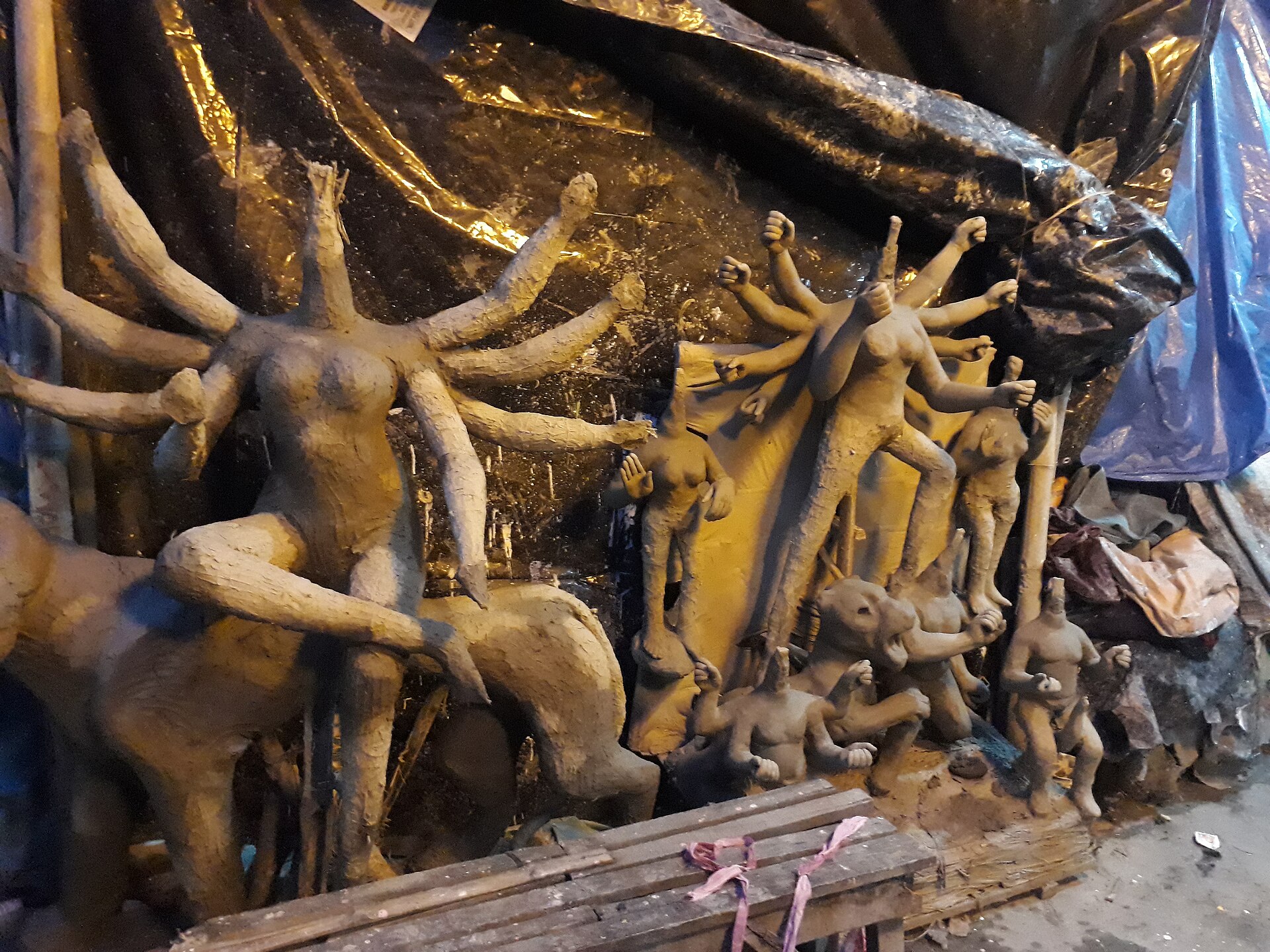
Mahalaya, on 10 October this year, is the day the countdown becomes real. At 4 am half of Bengal wakes to Mahishasura Mardini, a 1931 radio recitation that All India Radio still broadcasts and that families now play from phones. Later in the morning the idol makers of Kumartuli paint the goddess’s eyes in a ritual called chokkhu daan, the moment she is considered alive. If you reach Kolkata a day early, this is the morning to spend in the potters’ lanes.
Kumartuli itself, the riverside quarter in north Kolkata where a few hundred families have sculpted idols from Hooghly clay for two centuries, is open to visitors through the year and at its busiest from August. Walk in after midday, when the workshops prefer visitors, tip the artisan if you photograph him, and do not touch the straw frames drying in the lane. The idols leave for their pandals on trucks in the days before Shashthi, so by the festival proper the lanes are quiet and half empty.
Understanding the Durga Puja Pandal Map
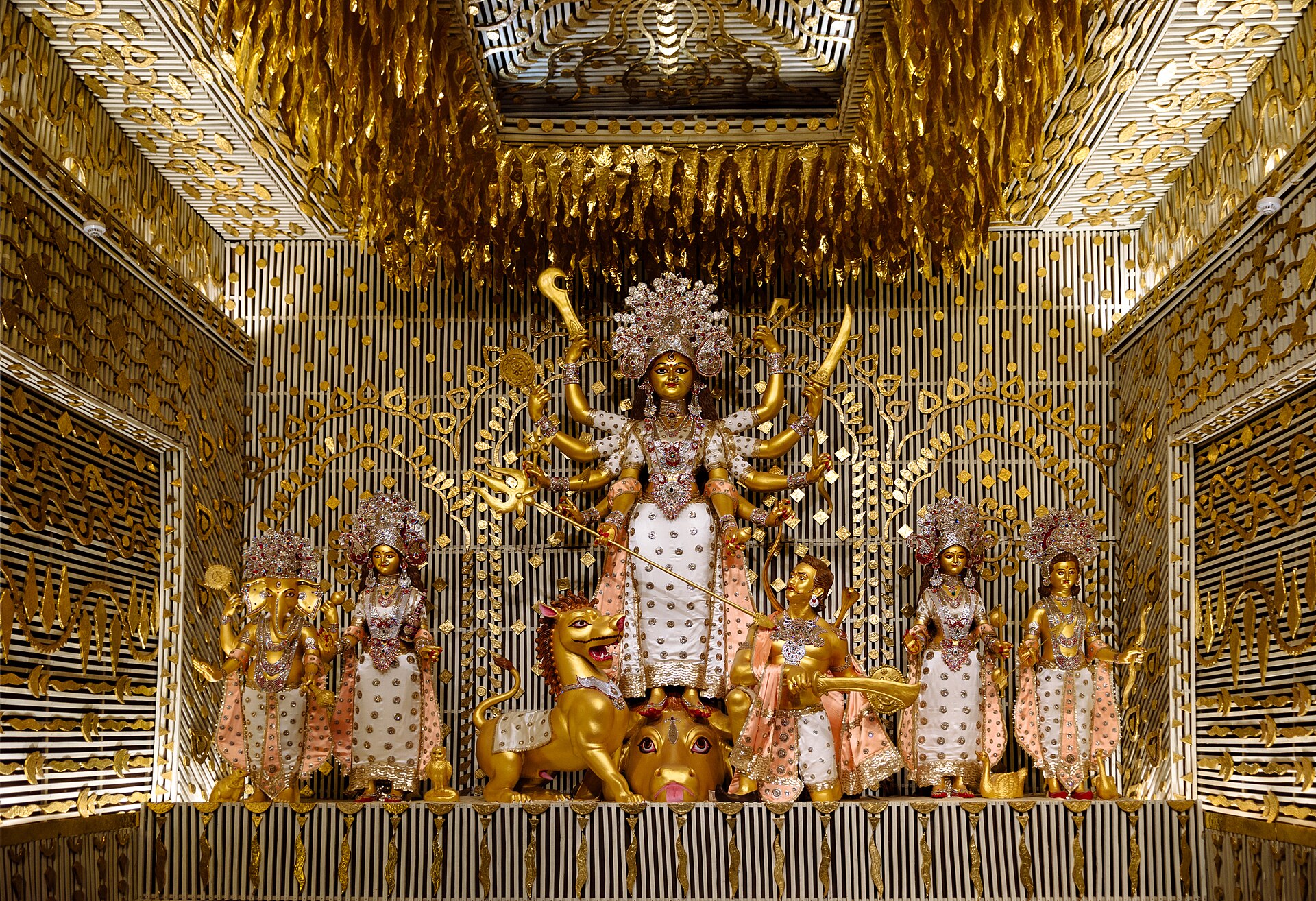
There are close to 3,000 community Durga Puja committees in the city, and you will see perhaps 25 in four days if you are disciplined. Think in zones rather than names, because the famous names change with each year’s themes.
North Kolkata: the old city and the traditional houses
Bagbazar Sarbojanin, Kumartuli Park, Ahiritola and Hatibagan sit in narrow lanes off the river and are the closest thing to how the festival looked a century ago. This is also where the bonedi bari pujas are, the old aristocratic households that have worshipped in their own courtyards since the 1700s. Sovabazar Rajbari opens its doors to the public, and it is the single most atmospheric place in the city on Ashtami morning.
Central: College Square and the giants
College Square’s pandal stands beside a pool, so the reflection doubles the lighting. Santosh Mitra Square, Md Ali Park and Chaltabagan draw the biggest queues in the city, and they are the ones to see after midnight rather than in the evening crush.
South Kolkata: the theme pandals
This is where the artists compete. Ballygunge Cultural, Ekdalia Evergreen, Singhi Park, Deshapriya Park, Tridhara Sammilani, Mudiali, Suruchi Sangha, Chetla Agrani and 66 Pally are within a few kilometres of each other around Rashbehari and Kalighat, and several win the year’s awards. A south Kolkata evening walk from Rashbehari metro can cover eight of them in four hours, which is the most efficient route in the city.
Salt Lake: the crowd magnet
Sreebhumi Sporting Club builds a replica of a world monument each year, and has drawn crowds so large that the police have restricted entry more than once. FD Block and the other sector pujas around it are calmer. Go on Shashthi or Saptami before the city fills.
Saptami and Ashtami: The Days to Get Up Early
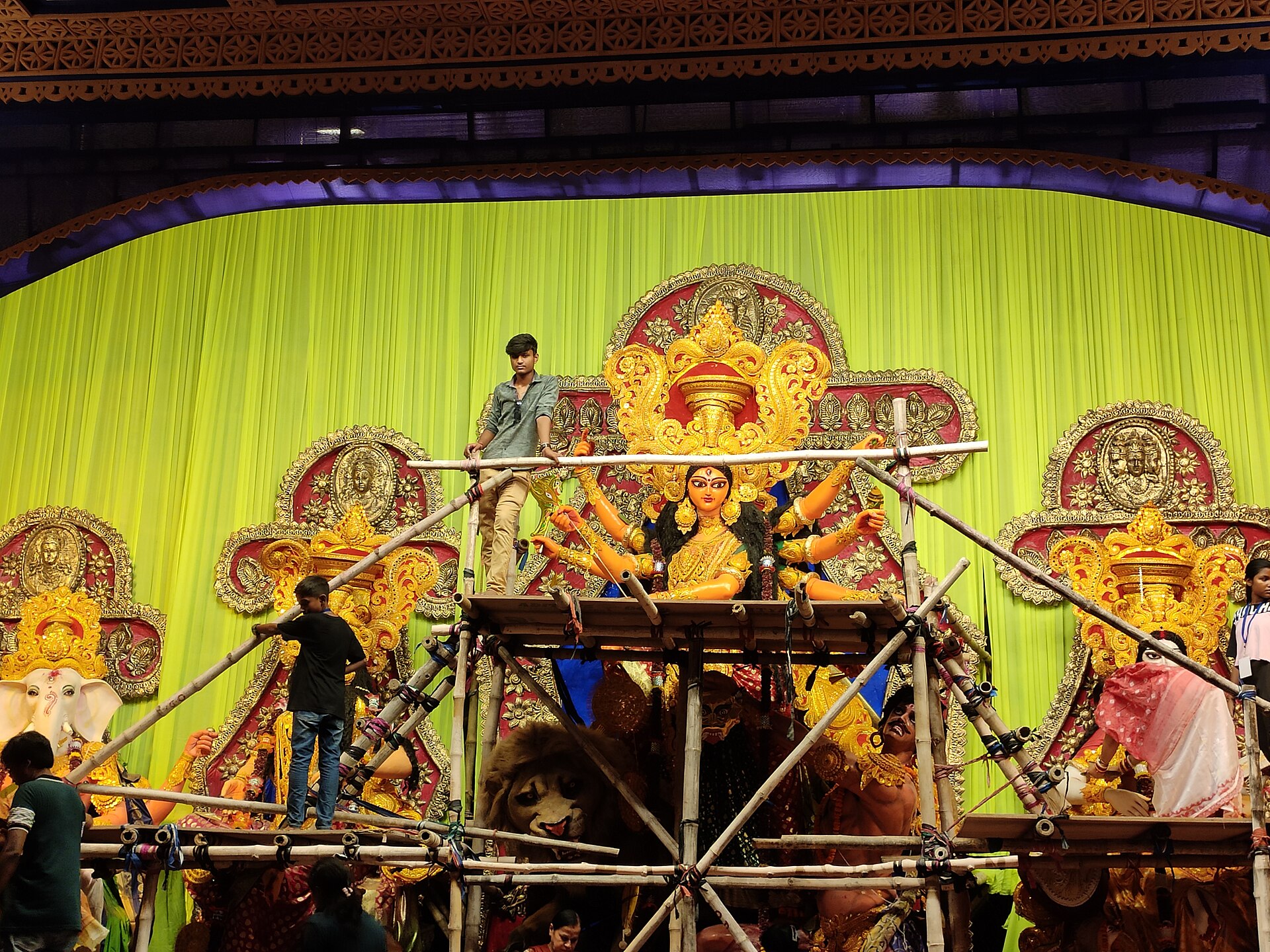
Saptami morning, 18 October, begins with the kola bou, a banana plant bathed in the river at dawn and dressed as a bride, which you can watch at any ghat near Bagbazar around 6 am. The real prize is Ashtami, 19 October. Pushpanjali, the offering of flowers with the priest’s chant, happens at every pandal through the morning, and visitors are welcome to join if they arrive freshly bathed and modestly dressed. Sandhi puja, at the exact junction of Ashtami and Navami, is marked with 108 lamps and 108 lotuses; the timing changes yearly and is posted at each pandal, and in 2026 it falls on the evening of the 19th.
Two things nobody mentions. Belur Math across the river performs Kumari Puja on Ashtami morning, worshipping a young girl as the goddess, and it is one of the most moving rituals in the city, free to attend if you can reach the monastery by 8 am. And bhog, the khichuri and vegetable meal cooked by the community, is served at most pandals after the midday offering; join the queue, it is free, and it is often the best meal of the day.
When to Walk: The Durga Puja Hourly Strategy
Durga Puja has three usable windows and one to avoid. Early morning, 6 to 9, gives you empty pandals, soft light on the idols and priests mid ritual. Afternoon, 2 to 5, is hot but quiet and good for the theme pandals in the south. After midnight, from about 12.30 to 4 am, is when serious pandal hoppers move, because the queues that ran two hours at 9 pm have halved and the lighting is at full effect. The window to avoid is 7 pm to midnight on Ashtami and Navami, when the whole city is out and a single famous pandal can mean a 90 minute line.
The metro is the reason Durga Puja night hopping works. In recent years the Blue Line from Dakshineswar to New Garia has run through the night on Saptami, Ashtami and Navami with a small surcharge on tickets, and the Green Line has run until well past midnight. The 2026 timetable is announced a week or so before Puja, so check it, but assume the pattern holds. Above ground, taxis and app cabs surge hard and many roads around big pandals are pedestrian only after 4 pm; the yellow Ambassador cabs will still take you, at a price you negotiate first.
Dashami: Sindoor Khela and the River
Vijayadashami, the last day of Durga Puja, is 21 October in 2026, a day after the rest of India’s Dussehra, and it begins with sindoor khela: married women offer sweets to the goddess and smear vermilion on her face and then on each other until everyone is red. It happens at pandals through the morning, and the bonedi houses of north Kolkata are the best place to see it. Women visitors are often welcomed in; men watch from the edges. Wear something you do not mind staining.
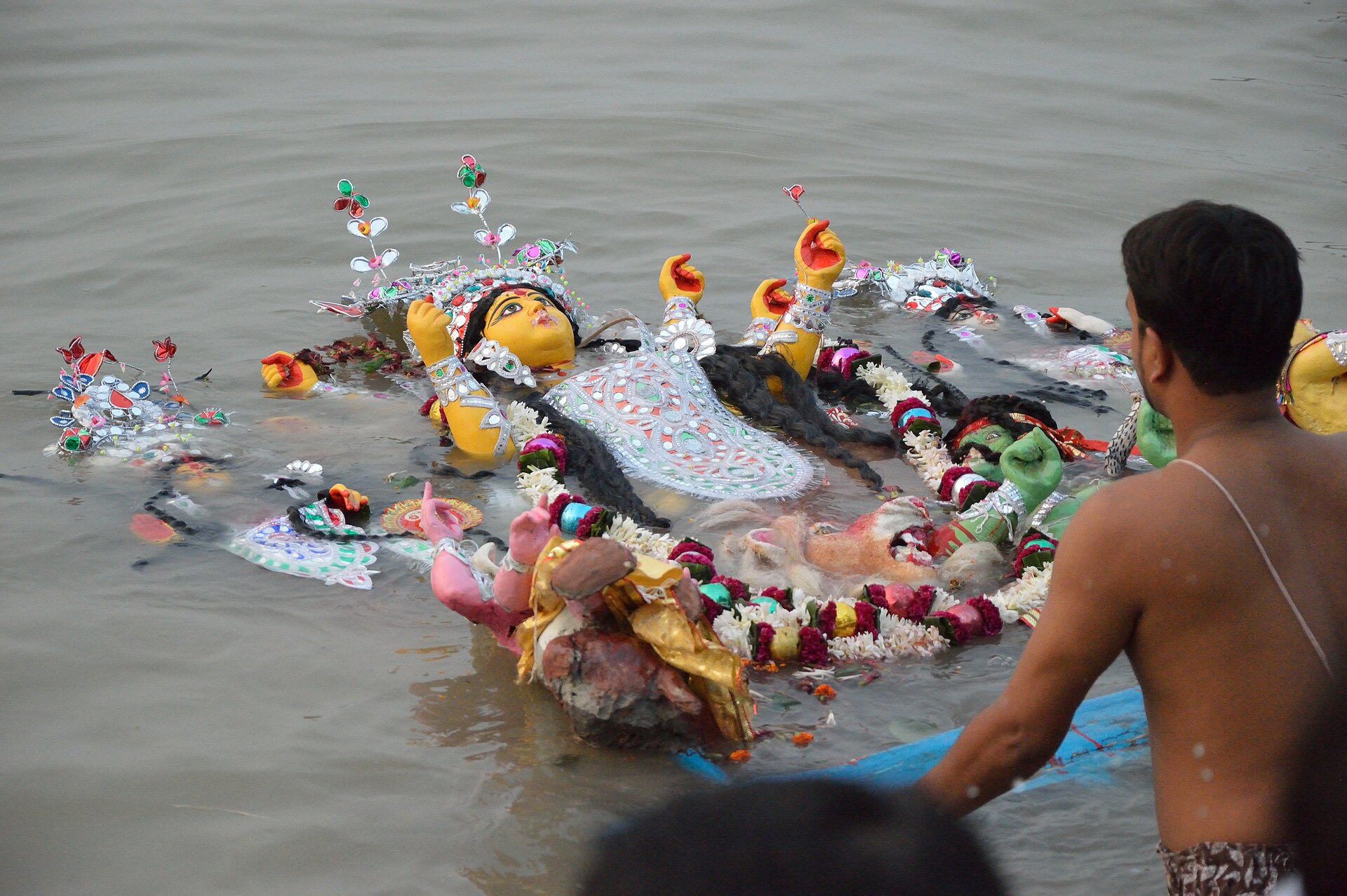
By afternoon the idols leave for the river. Bagbazar ghat and Babughat are the main immersion points, and the Bagbazar Sarbojanin idol’s procession through the north Kolkata lanes, with dhaak drummers and dhunuchi dancers swinging clay pots of burning incense, is the finest single spectacle of the five days. The immersions run into the night and continue for two more days for pujas that were granted later slots. Then comes Bijoya, the greeting season, when everyone visits everyone and eats too much sandesh.
A few days after Dashami, usually the following weekend, the state government stages a carnival on Red Road where the award winning pujas parade their idols and performers before the final immersion. It is ticketed for seated areas and free along the barricades, and the date is announced each year. If your flights are flexible, staying for it gives you the whole festival in one evening.
Where to Stay for Durga Puja and What It Costs
Book Durga Puja week by early September or accept what is left. Central hotels around Park Street and Esplanade give you the metro and the best food, and run Rs 6,000 to 15,000 in Puja week for anything decent. North Kolkata heritage guesthouses put you in walking range of Bagbazar and Kumartuli for Rs 3,000 to 6,000, and I would choose one of those every time. Salt Lake is quieter and cheaper but needs a cab to reach anything else. Avoid anything south of Garia unless you are visiting family there.
Everything else about Durga Puja is cheap. Pandals are free, bhog is free, metro tickets are under Rs 30, and a full day of eating well costs Rs 800 to 1,200 if you follow the locals: kathi rolls at Nizam’s, mutton at Golbari in Shyambazar, biryani at Arsalan, fish fry at any para stall, and mishti doi wherever you see a queue. Carry cash, because the stalls do not take cards and the ATMs near famous pandals empty out. Carry a small umbrella too; October rain is short but real, and 2025 saw a serious downpour on the eve of the festival.
Kolkata beyond the pandals is in my Kolkata city guide, and the West Bengal roundup covers where to go afterwards, including a recovery day at Digha beach. For the same five days elsewhere in India, my Navratri and Dussehra guide compares Gujarat’s garba, Mysore’s procession and the north’s Ramlila with what happens here. If you liked the state by state approach in the Ganesh Chaturthi guide, this is its Bengali chapter, and the wider festivals of India list places it in the year. Official festival notices are published by West Bengal Tourism.
The Sound the City Keeps
What stays with you is not a pandal. It is the dhaak, the drum that plays from Shashthi to Dashami without seeming to stop, in every lane, at every hour, until the immersion procession carries it down to the water and the last one fades somewhere over the river. Kolkata spends the rest of the year waiting for that sound to come back. Spend one October here and you will understand why.