
An Indonesian government delegation is the guest of honour at a fair in Cuttack this November. That is not a typo. Bali Jatra, the week-long trade fair on the sand of the Mahanadi river, drew about 65 lakh visitors and over Rs 400 crore of business last year by the Chief Minister’s own count, and for 2026 Odisha has named Indonesia the official partner country. The reason is roughly two thousand years old, and I will get to it.
The practical point is simpler. Bali Jatra runs from 26 November to 1 December 2026, the Konark Dance Festival opens on 1 December, and the two sit 90 km apart with Puri in between. That is one unhurried six day trip, laid out here in calendar order, Cuttack first and Konark last. The fair’s dates move with the lunar calendar, so check them before booking.
The Dawn Before the Fair: Boita Bandana on Kartik Purnima
Kartik Purnima falls on Tuesday, 24 November 2026. Before sunrise that morning, across Odisha, people walk to the nearest water with a tiny boat made from banana stem or sola pith, though paper and thermocol have crept in. Inside go a lit diya, betel leaves, areca nut, a few coins and flowers. You set it on the water, push gently, and chant “aa ka ma bhai, pana gua thoi, pana gua tora, masaka dharama mora”.
Those first four syllables are the clever bit. Aa, Ka, Ma and Bai stand for Ashadha, Kartika, Magha and Baisakha, the four holy months of the Odia year, and the chant asks the boat to carry the family’s merit of those months. It is a send-off, the way Odia families remembered the men who sailed away in this season. Bali Jatra, the fair, grew out of this morning.
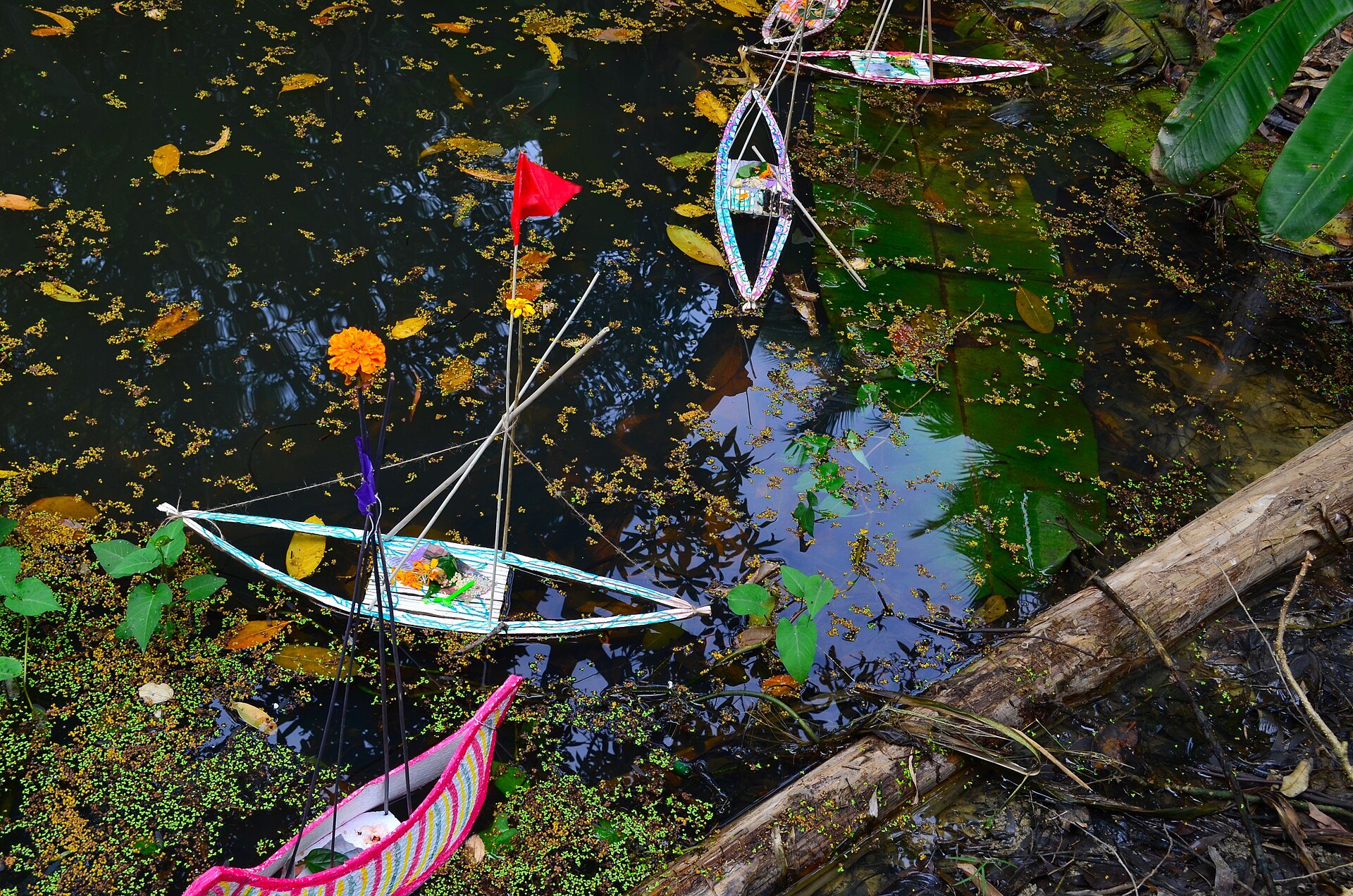
In Cuttack the gathering is at Gadagadia Ghat, where the fair ground sits; Puri uses the beach, Bhubaneswar the Bindusagar tank beside Lingaraj. Reach by 5 am. By 6.30 the light is up, the crowd has thinned and the boats are drifting. It is quieter and more domestic than the Chhath ghats of Patna, and that is its charm.
One honest scheduling note. In 2026 the fair opens two days after the full moon and the dance festival ends on 5 December, so Boita Bandana and the Konark performances are eleven days apart and do not fit one six day trip. Pick Bali Jatra week plus the dance festival, as my plan does, or come early for the boats and skip Konark.
Bali Jatra Ground, from Barabati Fort to the River
The fair spreads over two grounds between the ruined Barabati Fort and the river: the Upper ground by Barabati Stadium and the Lower ground running down to Gadagadia Ghat. Last year there was a court-supervised tussle over whether stalls could use both grounds, and reports on the final arrangement conflict, so expect both to be in use but check. Expect well over a thousand stalls, often a laser or drone show over the river, and a wall of sound from the giant wheel operators.
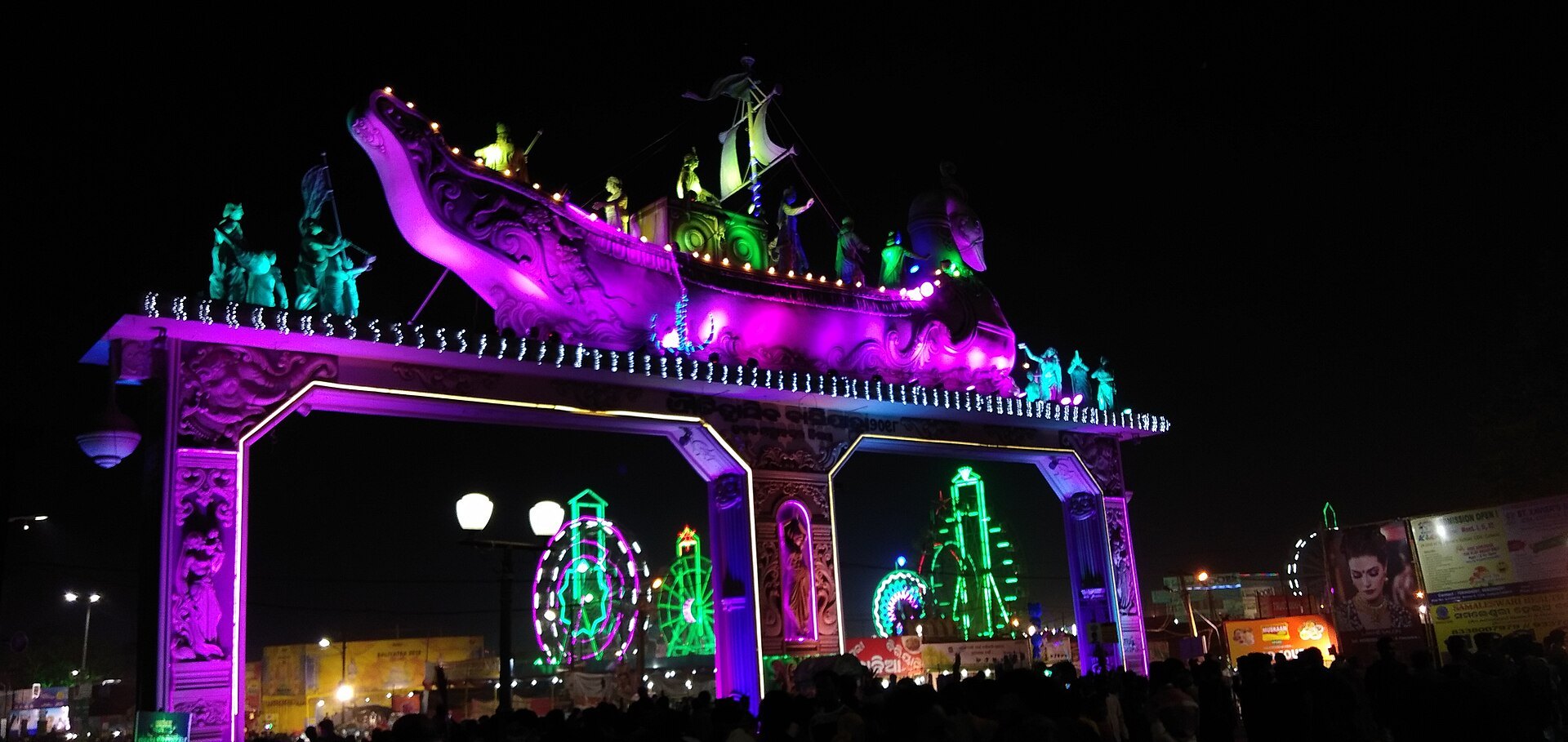
You enter under an enormous lit gateway shaped like a sailing boat. After that Bali Jatra is a mela: handloom from Sambalpur and Berhampur, brass from Balakati, Pipili applique, stone carvers from Lalitgiri, Pashmina that may or may not be Pashmina. The government ORMAS stalls sell self-help-group products at fixed prices, a relief after the bargaining elsewhere.
Food is why Cuttack people come every single night. Thunka puri, a puffed puri the size of a dinner plate that deflates with a thunk, served with ghuguni. Dahibara aloodum, Cuttack’s own obsession, the bara soaked in thin spiced curd under potato curry and sev; Rs 40 to 60 a plate at the fair, double the street price. Eat early. By 8 pm the queues at the famous stalls are long.
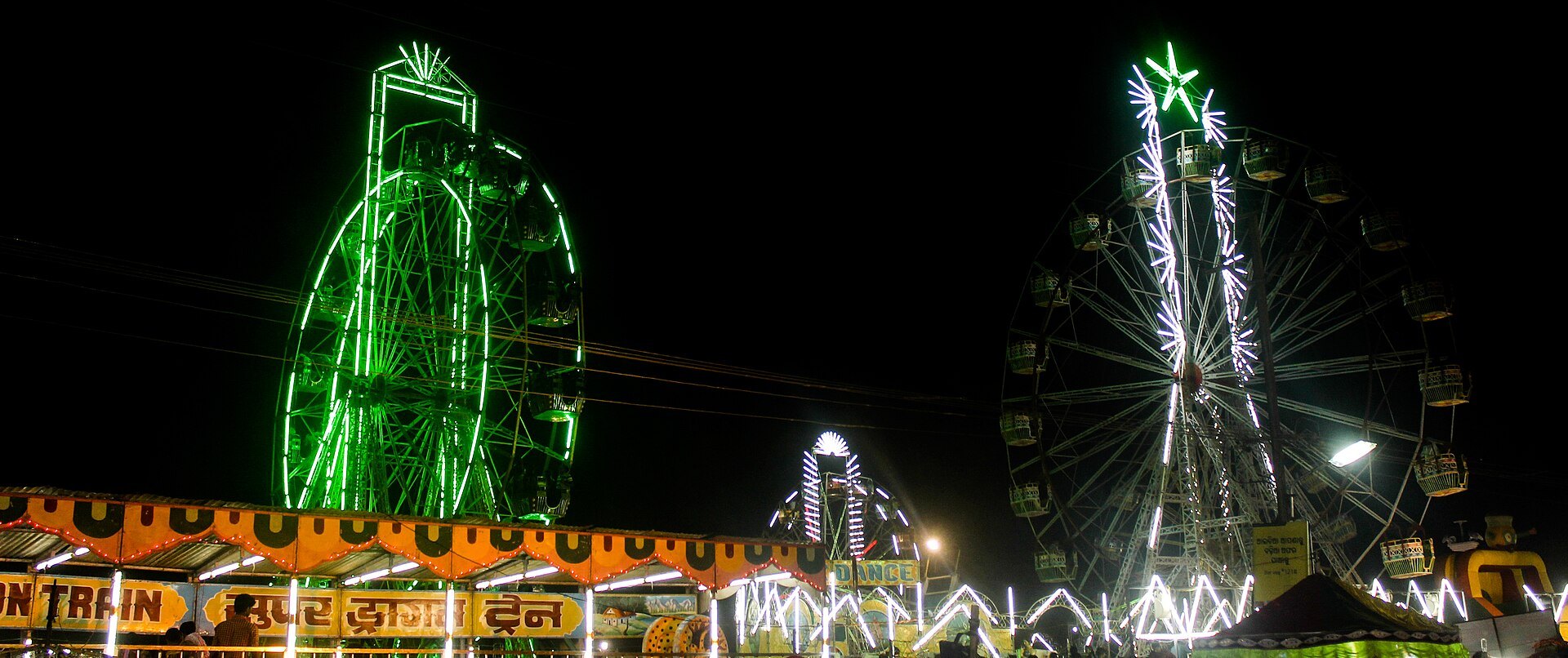
Now the honest part. The ground is river sand, and after three days of a few lakh feet it becomes fine dust that hangs in the lights and gets into everything, your camera included. Parking is chaos; the official lots fill by 6 pm and the approach roads crawl for a kilometre. Take an auto from Cuttack station (Rs 100 to 150) or, better, come by train from Bhubaneswar and walk.
Weekends and the final two nights are the worst; weekday evenings between 4 and 7 pm are genuinely pleasant. Bollywood and Ollywood singers headline the main stage on alternate nights, and the fair often gets extended by a day when the crowds keep coming, as in 2025. In 2022 Bali Jatra entered the Guinness World Records when over 2,100 schoolchildren folded more than 22,000 paper boats in 35 minutes at Barabati Stadium.
Why the Sadhabas Sailed to Bali
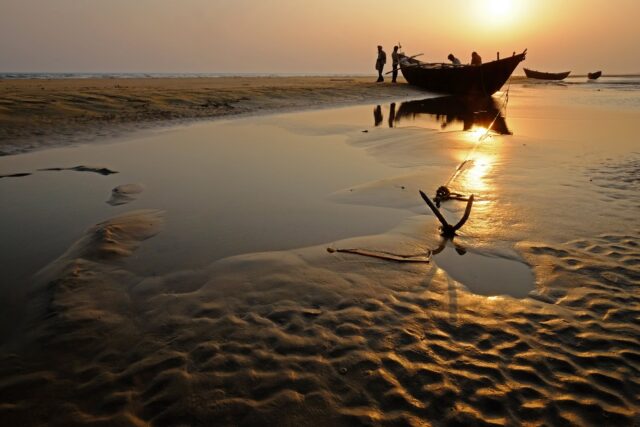
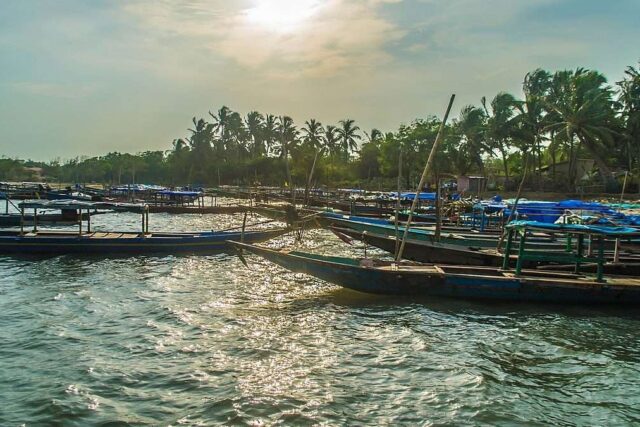
Bali Jatra means “voyage to Bali”. From roughly the third century BCE, Kalinga’s merchant class, the Sadhabas, loaded rice, textiles, ivory and pepper onto boitas and left the Mahanadi delta on the north-east monsoon winds around Kartik Purnima. They traded in Bali, Java, Sumatra and Borneo and came home on the reversed winds months later. The women floating lamp-boats were seeing them off.
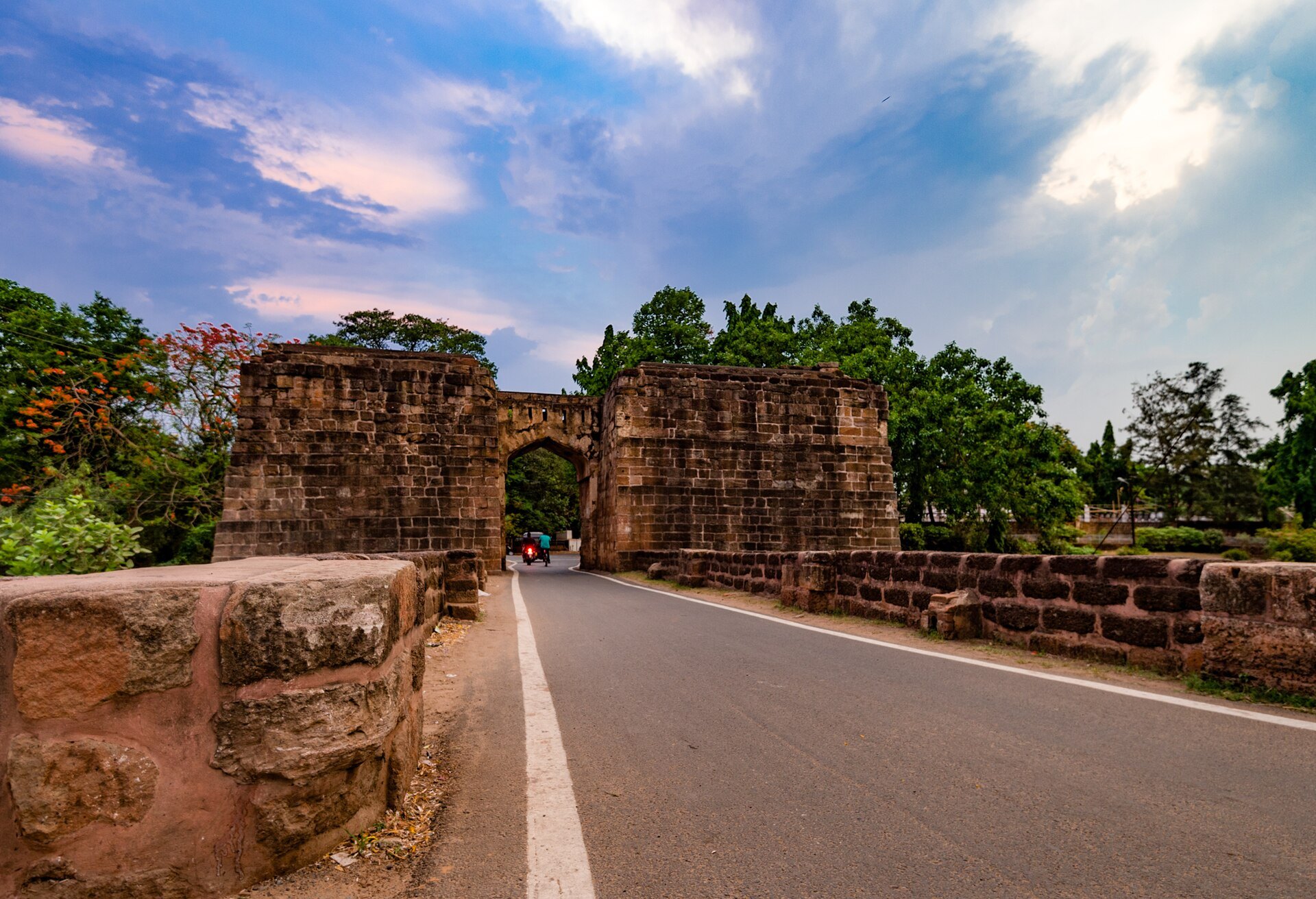
That is why Bali has temple forms, a script lineage and a boat-floating ritual that Odia historians like to claim as cousins. Whether Odisha gave Bali its Hinduism is argued over; that the trade was real and old is not. Hence an Indonesian delegation at a Cuttack fair, and a return “Taking it to Bali” mission by the state. Barabati Fort itself, beside the Upper ground, is a 14th century Ganga dynasty ruin worth 20 minutes in daylight.
Bhubaneswar: Fly In, Sleep Here, Day-Trip to Cuttack
Biju Patnaik International Airport has direct flights from Delhi, Mumbai, Bengaluru, Hyderabad, Kolkata and Chennai. Cuttack is 28 km north, 40 to 60 minutes by cab (Rs 700 to 1,000 last season) or 30 minutes by any of the twenty-odd daily trains. For Bali Jatra I strongly suggest the train. Cuttack hotels sell out and double their rates in fair week; Bhubaneswar has ten times the stock.
Lingaraj temple in Old Town is 11th century and still a working shrine; non-Hindus are not allowed inside, but a viewing platform by the north wall shows you the 55 metre deul. The Udayagiri and Khandagiri caves, 2nd century BCE Jain cells with King Kharavela’s Hathigumpha inscription, are 7 km west; Rs 25 for the Udayagiri side, Khandagiri free.
Ekamra Walks, the Sunday heritage walk, now runs as seasonal trails rather than a standing weekly walk; check ekamra-walks.com before planning around it. Pahala, on the highway to Cuttack, is a strip of rasagola shops; the Odisha Rasagola got its GI tag in 2019 after a long argument with Bengal.
Puri Between the Two Festivals
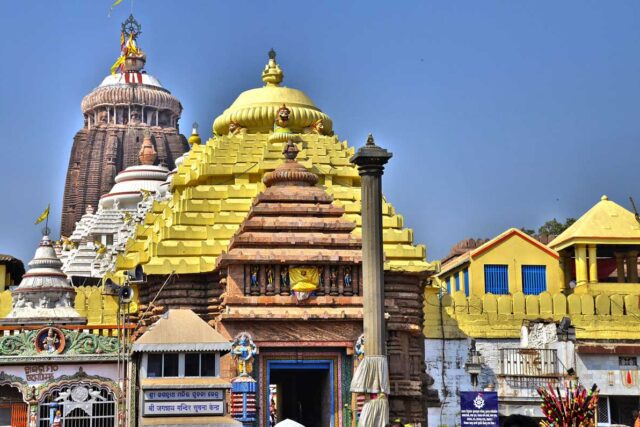
Puri is 60 km south of Bhubaneswar, two hours by train or a Rs 1,200 to 1,800 cab last season. The pull is the Jagannath temple, and its rules are strict. Only Hindus are admitted. Phones were banned outright from October 2025, along with cameras, leather and bags, with lockers near the Singhadwara for Rs 20 to 50. Go before 9 am or after 6 pm. Eat Mahaprasad at Ananda Bazar inside, sold by weight on leaf plates.
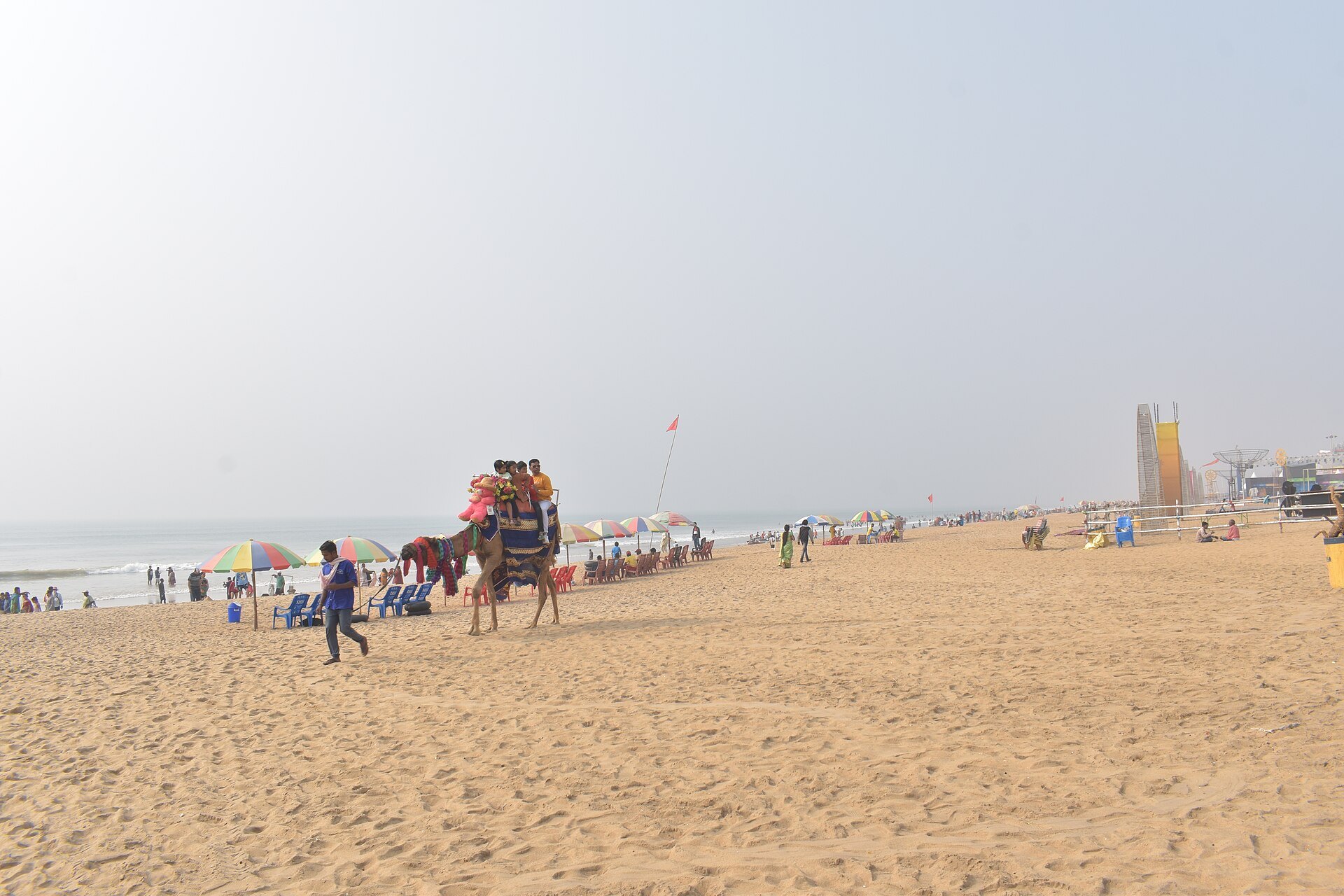
The main Swargadwar stretch of beach is crowded, but walk a kilometre east towards the lighthouse and it opens up. Swim only where the nolia lifeguards in conical hats sit. Our Odisha beaches guide covers the quieter options. Marine Drive hotels run from Rs 1,500 for a clean guesthouse to Rs 5,000 to 7,000 for sea-facing mid-range, and they fill for the dance festival week. Book by mid-November.
Raghurajpur, about 14 km north of Puri, is the heritage crafts village where every house front is painted and every family makes Pattachitra or palm-leaf engravings. It is also the birthplace of the Odissi guru Kelucharan Mohapatra. A palm-size palm-leaf piece is Rs 300 to 800. The site’s older Odisha top five covers the rest of the golden triangle.
Marine Drive to Konark, and the Sun Temple
The 35 km Puri to Konark Marine Drive is the prettiest road in coastal Odisha, casuarina on both sides and the sea glimpsed on the right. Stop at Ramchandi temple and at Chandrabhaga beach, 3 km before Konark. A Puri taxi for the round trip with waiting was Rs 1,500 to 2,200 last season; an auto does it for Rs 900 to 1,200 but is slow and cold coming back at night.
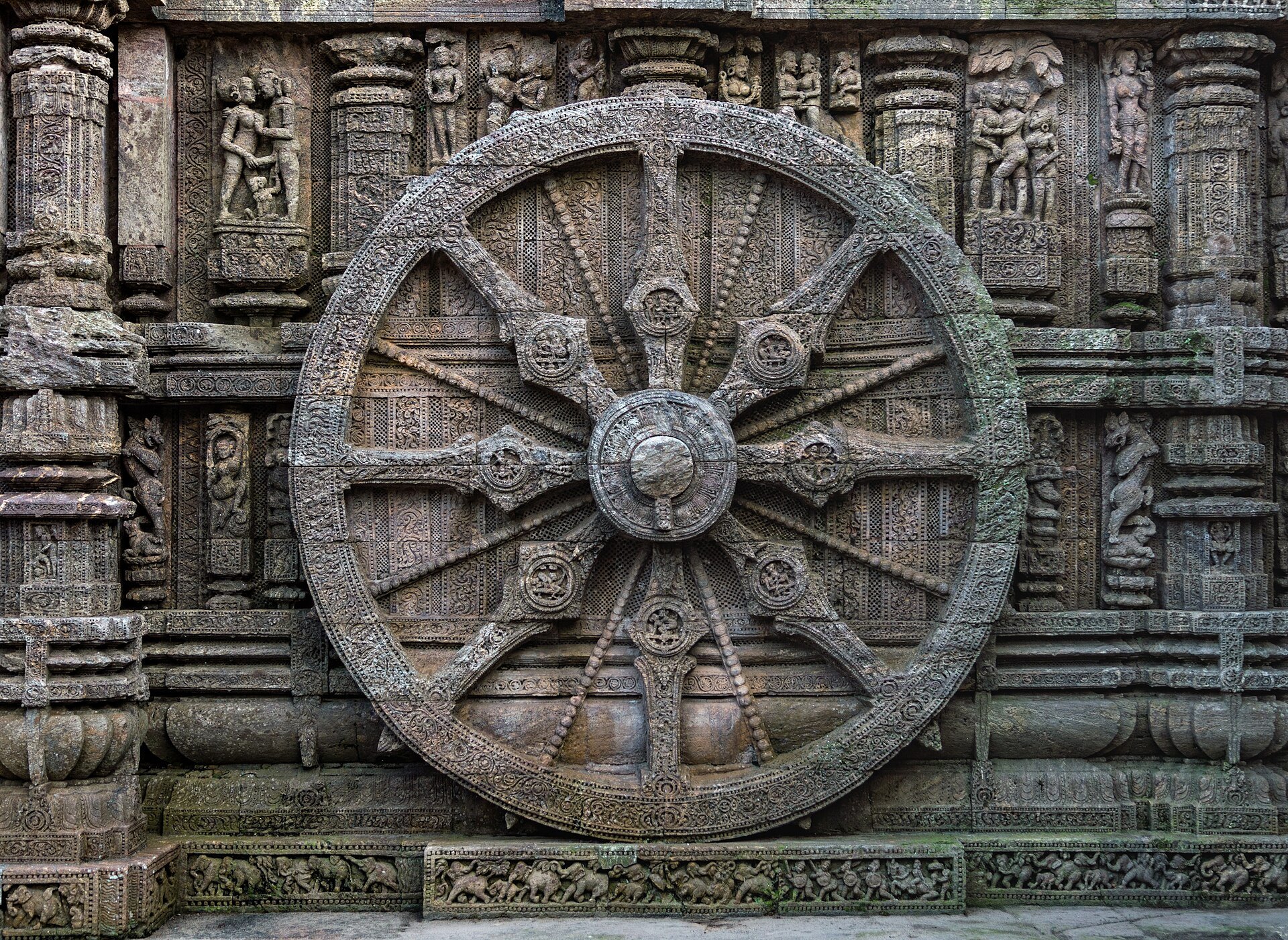
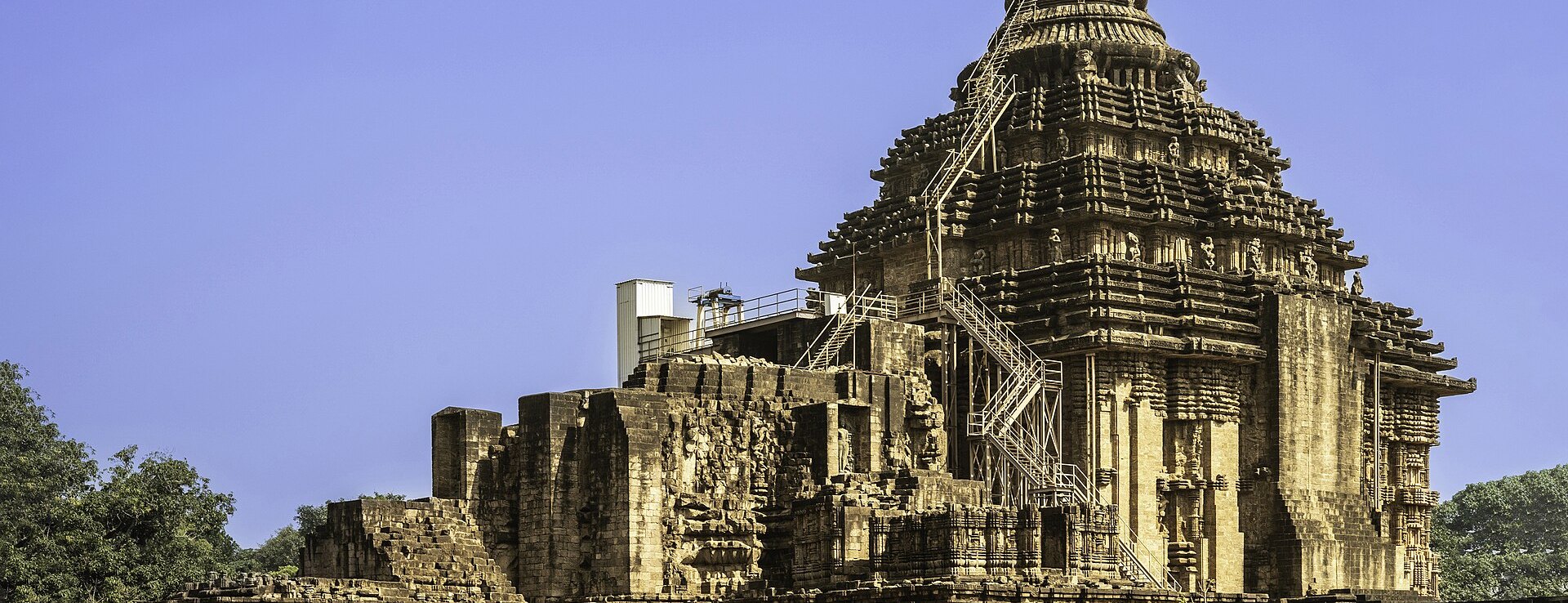
The Sun Temple was built around 1250 by Narasimhadeva I as a chariot for Surya, with twelve pairs of carved wheels and seven horses, most now gone. The main tower collapsed centuries ago and the jagamohana is filled with sand and sealed, yet it remains one of the most astonishing stone buildings in India. ASI entry has been Rs 40 for Indians and Rs 600 for foreigners at the last published rates; buy online to skip the counter. Go at 7 am, before the coaches.
Chandrabhaga beach hosts the International Sand Art Festival on the same dates, 1 to 5 December, with Sudarsan Pattnaik’s students and invited artists from several countries sculpting through the day. Entry is free and the light is best from 9 am to sunset.
Evenings at the Konark Dance Festival
Odisha Tourism has run the Konark Dance Festival since 1986. The venue is the open-air auditorium beside the temple compound, with the Sun Temple floodlit behind the stage. Performances run roughly 6.30 to 9.30 pm, two or three troupes a night: Odissi always, then Bharatanatyam, Kathak, Kuchipudi, Manipuri or Sattriya in rotation.
In past editions, entry was reportedly through passes handed out by Odisha Tourism, effectively free, with seating first come first seated behind the invitee blocks. Incredible India’s listing for 2026 says ticketed, with no price given. At the time of writing, the 2026 programme and ticketing had not been published. Watch odishatourism.gov.in in late November, and arrive by 5.30 pm either way.
Carry a shawl; Konark drops to 14 to 16 degrees after 8 pm and the auditorium is open to the sea breeze. And do not confuse this with the Konark Dance and Music Festival held every February at Konark Natya Mandap, a gurukul 3 km away; that is a separate, privately run event, usually around 19 to 23 February.
The Konark Problem, and What to Eat on the Way
Konark has perhaps a dozen places to stay worth the name: the OTDC Panthanivas and Yatrinivas (Rs 1,500 to 3,000) and Lotus Eco Beach Resort out at Ramchandi (Rs 6,000 to 10,000 in festival week), all booked by dancers and officials well before December. Most visitors, sensibly, stay in Puri and drive back after the show; fix the return cab in the morning, because finding transport at the Konark bus stand at 10 pm is miserable. Cuttack in Bali Jatra week has the same problem, which is why I keep saying sleep in Bhubaneswar.
An Odia thali is the baseline: rice, dalma (arhar dal cooked with raw papaya, pumpkin and brinjal), a saga, a bhaja, machha besara if you eat fish, and khatta. Rs 150 to 300 at a mess, Rs 400 to 600 where a hotel does it properly. Chhena poda, the baked, caramelised cottage cheese cake from Nayagarh, is sold by weight everywhere; the good ones have a dark, almost burnt top.
Six Days, Bhubaneswar to Konark, With Costs
This plan catches the last three nights of Bali Jatra and the first evenings of the dance festival. If the fair is extended by a day, it only gets easier.
- Day 1, Sunday 29 November: Fly into Bhubaneswar by noon, Lingaraj and the Old Town temples in the afternoon. Evening train to Cuttack, Bali Jatra from 5 to 9 pm, last train back around 10.30 pm.
- Day 2, Monday 30 November: Udayagiri caves, Pahala for rasagola on the way to Cuttack, the Maritime Museum at Jobra, then a longer second evening at the fair.
- Day 3, Tuesday 1 December: Train or cab to Puri, check in on Marine Drive, evening darshan at Jagannath. The dance festival opens tonight; go for the inaugural if you are keen.
- Day 4, Wednesday 2 December: Sunrise on the beach, Raghurajpur by 9. Leave Puri at 3 pm via Marine Drive, Chandrabhaga sand art at golden hour, Konark Dance Festival 6.30 to 9.30 pm, back in Puri by 11.
- Day 5, Thursday 3 December: Sun Temple at 7 am before the coaches, the beach, and a second night of dance.
- Day 6, Friday 4 December: Puri to the airport, 1 hour 45 minutes by cab (Rs 1,500 to 2,000), afternoon flight home.
Costs per person, two sharing, excluding flights: a budget version with trains, lodges and messes comes to Rs 14,000 to 18,000 for six days; a mid-range version with a sea-facing Puri hotel, cabs for the Konark runs and proper restaurants lands at Rs 28,000 to 38,000. Shopping at Bali Jatra is where budgets die; set a limit before the handloom stalls.
If you have eight days, come two days earlier for Boita Bandana on the 24th. If you have only four, do Days 1, 2, 4 and 6 from a Bhubaneswar base. Either way, go while the Pushkar fair crowd is still posting its camel pictures; same full moon, same week, and almost nobody outside Odisha knows this one exists.
Bali Jatra is loud, dusty and built for people who live within an hour of it, and that is what makes it worth the trip. For one week the largest open-air trade fair in Asia is a neighbourhood mela with a two thousand year old excuse, and then the lights go off, the sand is swept back towards the river, and 90 km away a floodlit chariot is waiting for the dancers. I would not change the order.