

Rs 18,000 a night. That is what a decent luxury tent outside Pushkar was quoting for fair week last year, for a canvas room that goes for a third of that in the quiet weeks of December. The Pushkar Camel Fair is the one week when this temple town of about 20,000 people takes in a few lakh visitors, and everything from a cup of chai to a camel cart ride gets repriced. So the real question for 2026 is not whether to go. It is which days to pick.
Two Fairs Sharing One Week
The Pushkar Camel Fair is really two gatherings that overlap on one calendar. The first is a livestock market. Herders from Bikaner, Jaisalmer, Nagaur and the villages around Ajmer walk their camels, horses and cattle to the sandy ground west of town, pitch tarpaulins, and trade. The second is a pilgrimage. Kartik Purnima, the full moon of the Kartik month, is the day a dip in Pushkar lake is believed to wash away a lifetime of sins, and lakhs of pilgrims arrive for it.
Here is the part most guides get backwards. The animal trade peaks in the first days, before the official cultural programme even starts. Herders arrive early because the serious buyers come early, and an animal sold on day two means a week less of fodder and water bills. By the time the stage shows and competitions are in full swing, many traders have packed up. On Purnima itself the trading ground is thin and the town belongs to the pilgrims.
If you want camels, come for the opening days. If you want the holy dip and the lake lit with lamps, come for the last two. If you want both, you need five to seven nights, which very few people budget for. My suggestion for a first visit: arrive two or three days before the official programme opens and leave the morning after the first competitions.
Pushkar Camel Fair dates for 2026
The fixed anchor is Kartik Purnima, which falls on Tuesday, 24 November 2026 according to Drik Panchang; the Purnima tithi begins late on the night of 23 November and runs till about 8.20 pm on the 24th. Rajasthan Tourism had not published the official programme when I wrote this. It usually runs the week up to Purnima, so expect roughly 17 to 24 November, and check the Rajasthan Tourism page before booking anything non-refundable.
Last year the cattle fair opened on 22 October while the official programme ran from 30 October to 5 November, so the camels were on the ground eight days before the first stage show. Plan 2026 the same way: the animals will be there from about 15 or 16 November, whatever the brochure says.
The Week, Day by Day
Early days: the trading ground
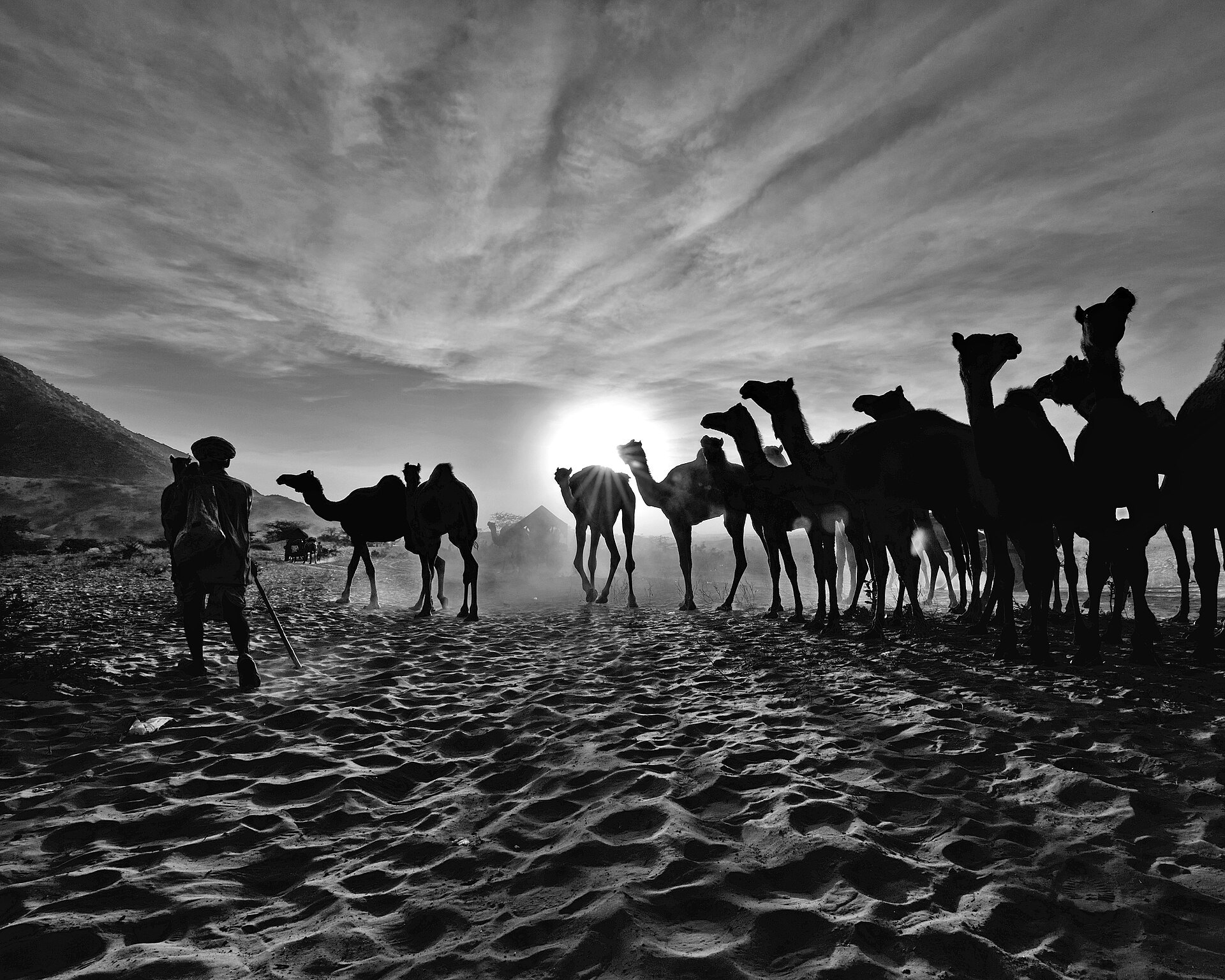
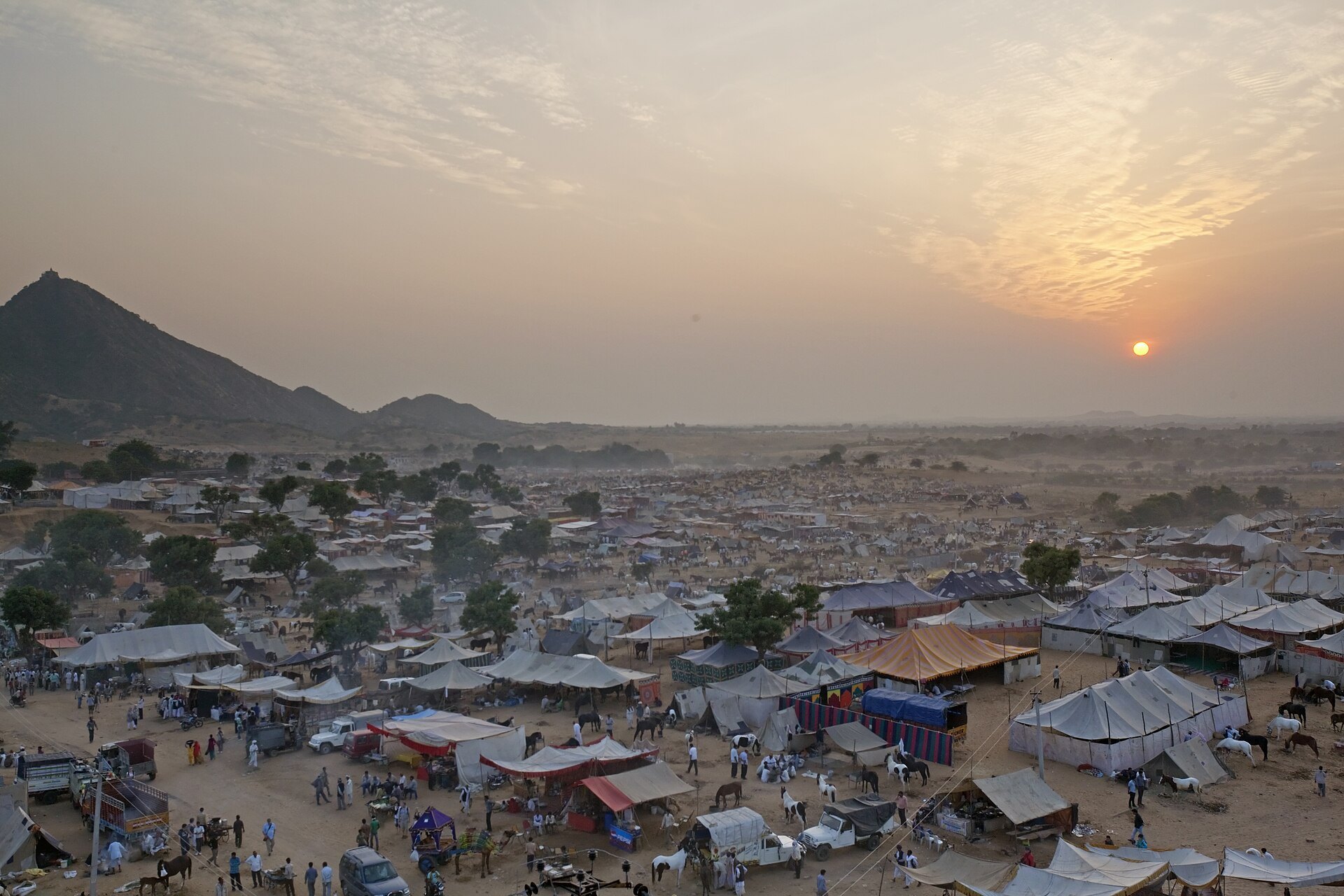
Walk west from the lake past the bus stand and the ground opens up, a flat stretch of sand with the Aravalli ridge behind it. In the first days this is where the Pushkar Camel Fair earns its name. Camels sit in rows with their legs folded, herders squat around small fires, and buyers go from group to group pressing thighs and checking teeth. Nobody is performing for you here. This is work.
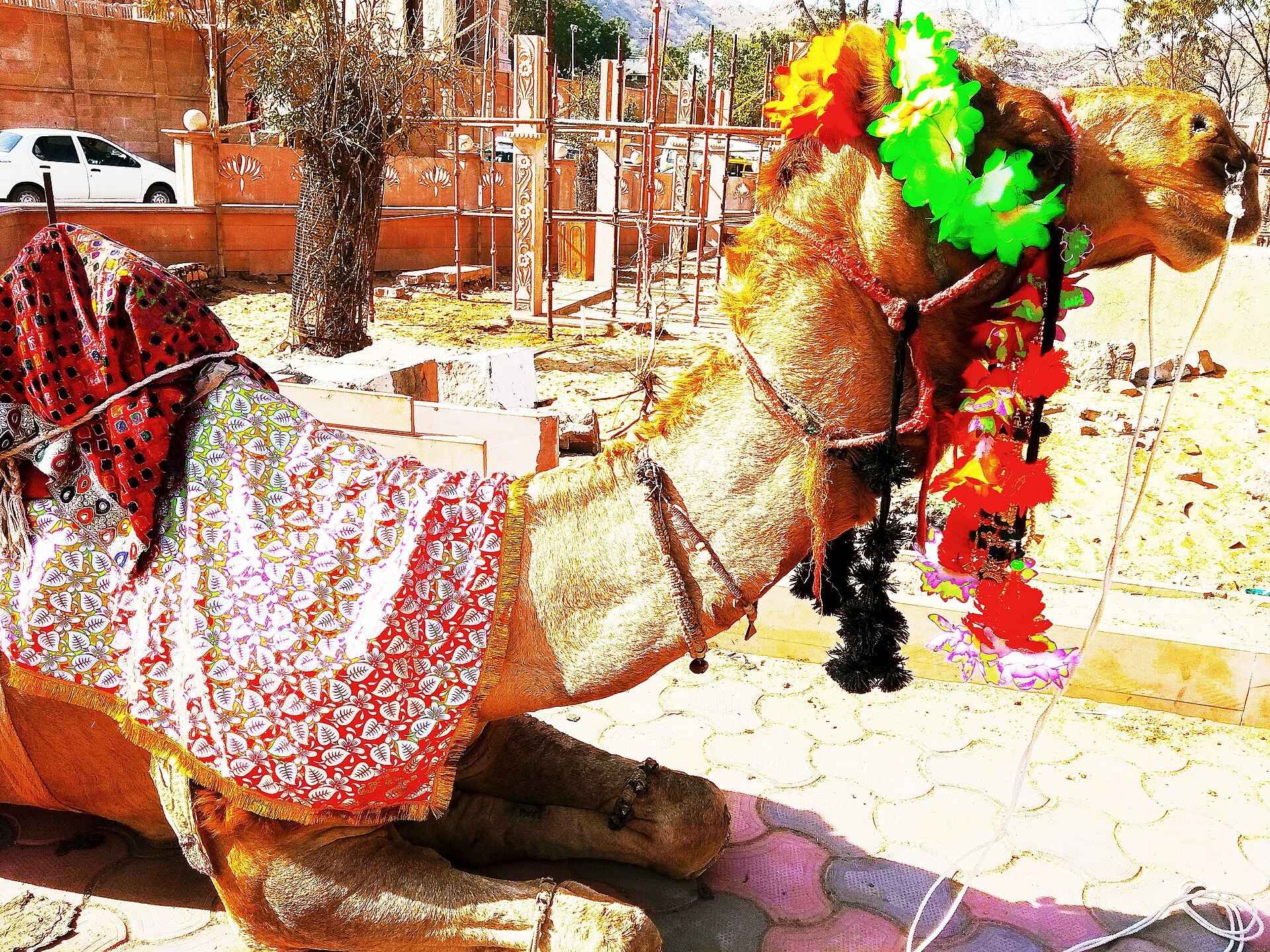
The decoration starts here too, and it is older than any tourism contest. A camel for sale gets shorn with patterns clipped into its coat, then dressed: cowrie-shell necklaces, tassels on the bridle, a nose peg with a tuft of coloured wool, bells on the ankles, an embroidered cloth on the hump. A well turned out camel fetches more. Later in the week the tourism department holds a best decorated camel contest on the same idea.
Photography etiquette matters most on these days. Ask before you point a camera at a herder or his family. Most will say yes, and many expect a small tip of Rs 20 to 50, which is fair when a stranger is making pictures of your workplace. Never walk between a herder and the animal he is negotiating over.
The best hour of the whole fair, for me, is dawn on the low dunes behind the mela ground. Sunrise in late November is late, about 6.50 to 6.57 am, so you do not need a brutal alarm. Walk out at 6.15 with a shawl, because the sand holds the cold, and watch the camels being led out to graze with the dust glowing orange. The light is gone by 7.30.
Middle days: the programme on the Mela Maidan
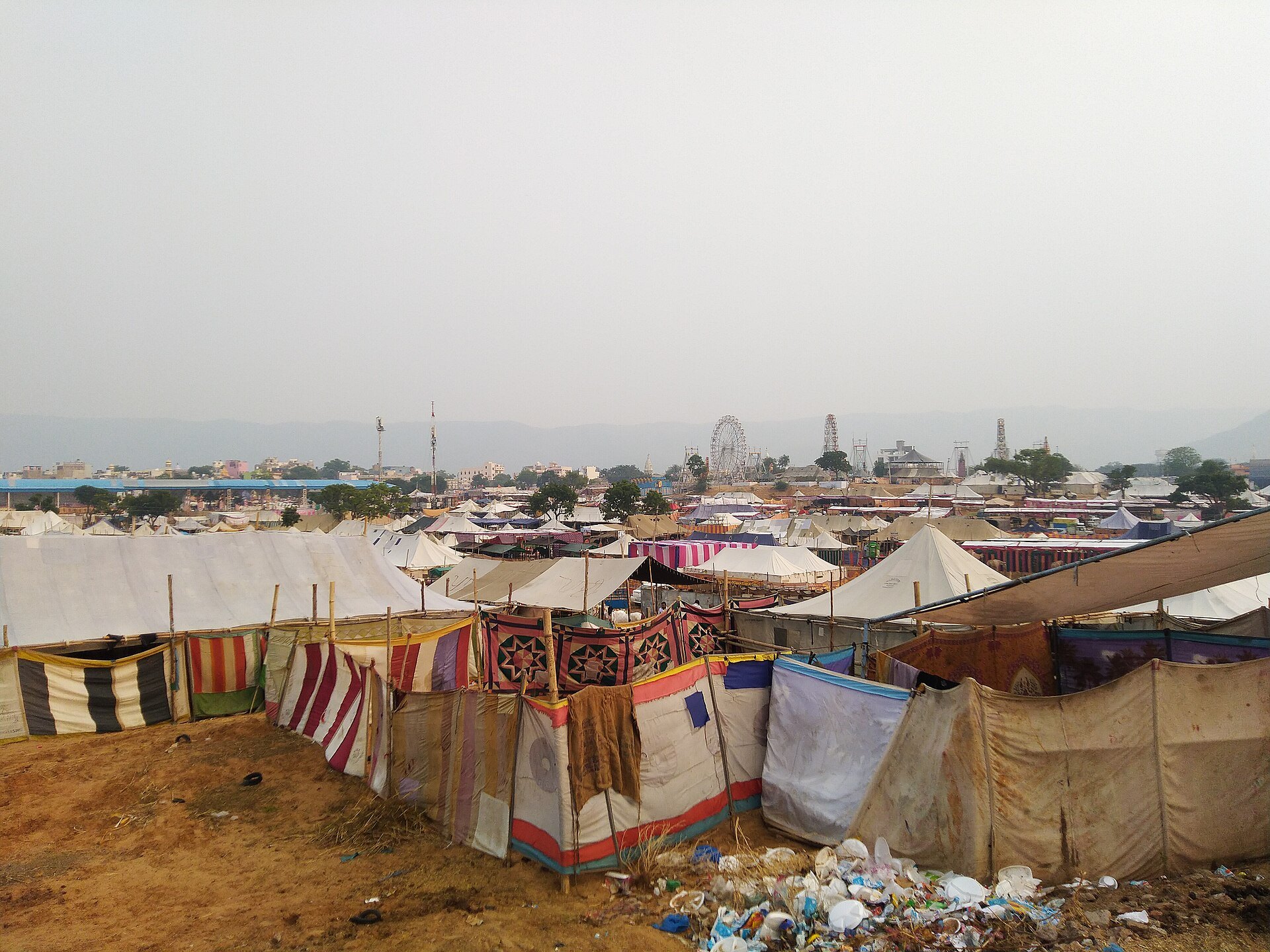
Once the official programme opens, the action shifts to the arena the tourism department sets up and to the Mela Maidan with its ferris wheels, giant swings and rows of stalls selling bangles, camel-leather bags and hot jalebis. Expect a camel race on the opening day, then a daily rotation of competitions: the longest moustache contest, turban tying for foreigners, a tug of war between visitors and locals, matka phod, and a bridal competition where tourist women are dressed in full Rajasthani wedding finery and judged on it.
Hot air balloon flights run from the Pushkar Camel Fair ground in the early morning and again before sunset, weather permitting. Operators quote around Rs 12,000 per person during fair week for a flight of roughly 45 minutes to an hour, often on a request basis, so book before you reach Pushkar. The view of the whole camp sprawled under the hills is the one thing I would not try to save money on.
The last days: temple, ghats and the Purnima dip
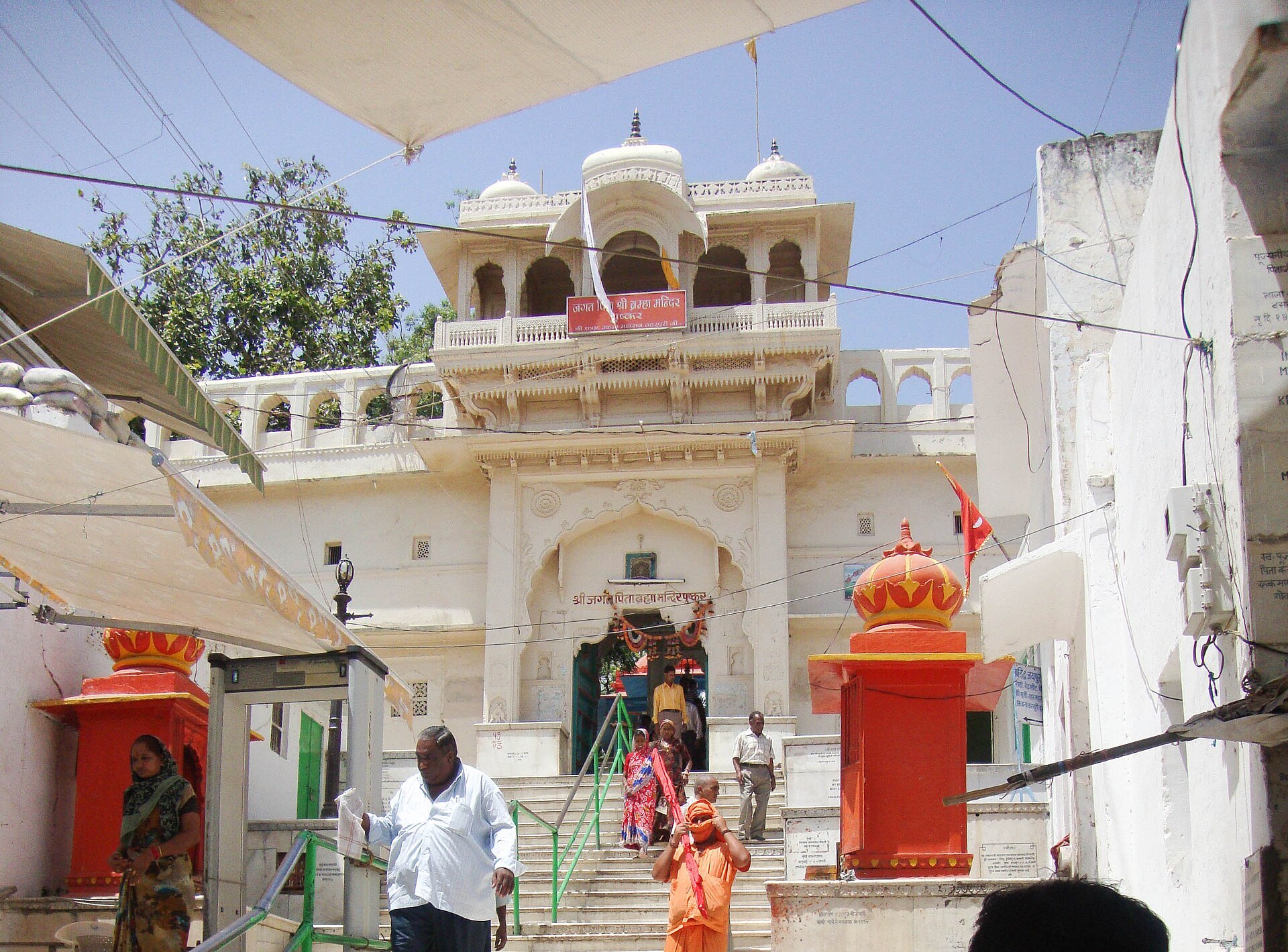
The Jagatpita Brahma Mandir is the reason Pushkar exists as a pilgrimage town. Brahma temples are rare across India, and this red-spired one is the most important of them. Entry is free, winter hours are roughly 6 am to 1.30 pm and 3 pm to 8.30 pm, and cameras, leather belts and bags are not allowed inside. The queue on Purnima morning stretches down the street, so for a calm darshan go on an earlier day around 7 am, after the morning aarti.
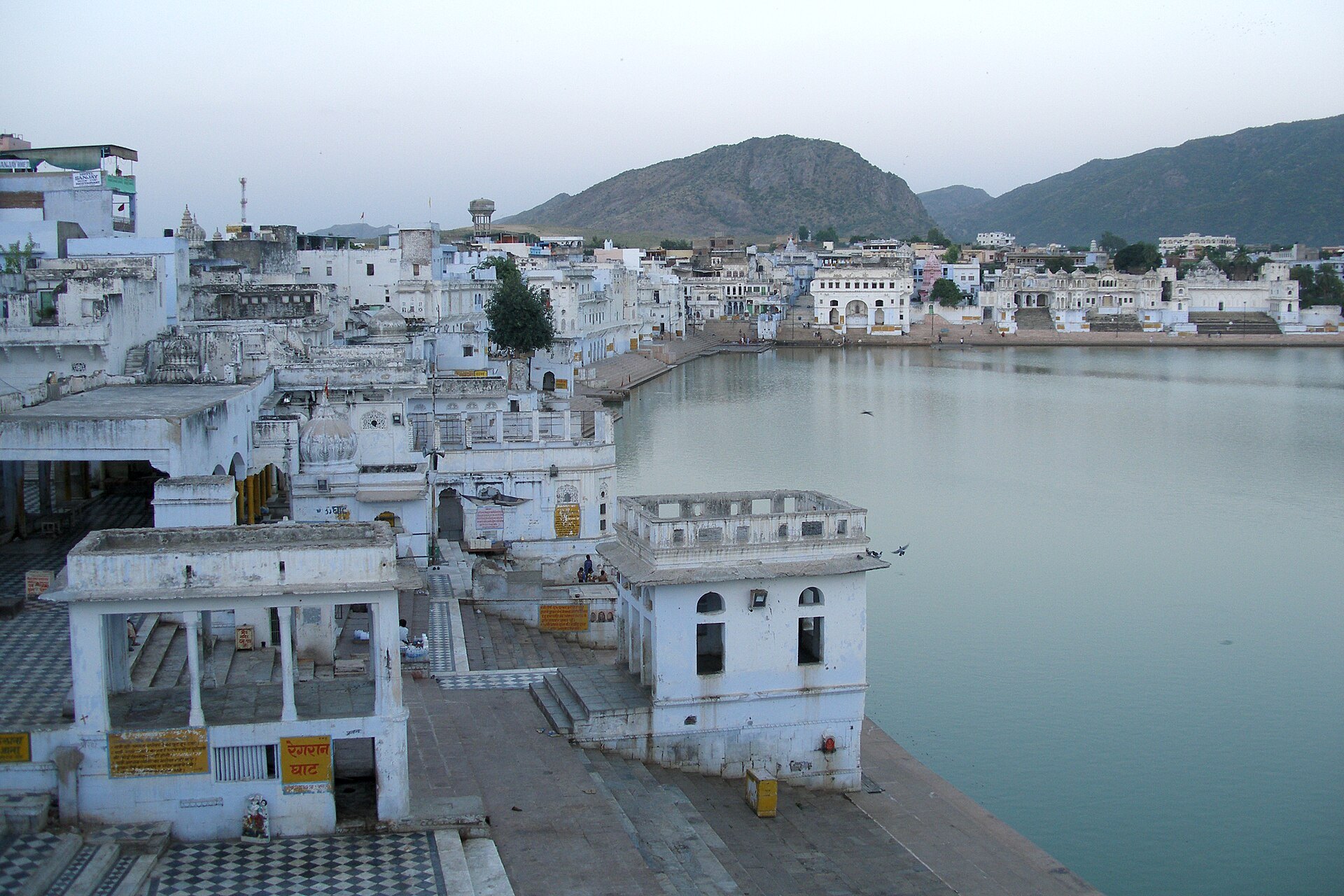
Pushkar lake has 52 ghats, and from Kartik Ekadashi, about four days before Purnima, the bathing crowds grow every morning. The most auspicious dip is between about 3 am and 6 am on Purnima day. Shoes come off well before the water, and photography on the bathing steps is prohibited and enforced with some energy. The priests who approach with a thali will expect a donation for the red thread they tie on your wrist. Decide beforehand what you will give. Rs 100 is plenty.
Some pilgrim groups also walk a parikrama circuit of the town’s sacred sites during the Kartik days; I could not pin down a fixed schedule, so ask at your guesthouse if you want to join. The evening aarti at the lake, with lamps floated on the water and the ghats lit up, is the gentlest end to any day here; the quieter ghats on the far side give the same view as crowded Varah Ghat.
Fewer Camels, More Horses
I want to be honest about what has changed. The Pushkar Camel Fair of old photographs, with 20,000 or more camels covering the ground, does not exist any more. Rajasthan’s camel count fell from about 3.25 lakh in the 2012 livestock census to about 2.13 lakh in 2019, and breeders say the real figure is lower. In 2019 the Pushkar Camel Fair displayed only 3,000 to 4,000 camels, and for the first time horses outnumbered them on the trading ground.
Tractors and pickup trucks replacing the camel on farms is part of it. A bigger part, breeders will tell you, is the Rajasthan Camel Act of 2015, which tried to protect the state animal by banning slaughter and restricting sales outside Rajasthan. Shutting the biggest buyers out of the market crashed prices instead. A camel that fetched Rs 40,000 to 80,000 before 2015 now goes for a fraction of that, and many herders stopped breeding them.
The horse trade has filled the gap. Last year there were over 4,500 horses at the Pushkar Camel Fair, Marwari stallions with the curled ears, and most sales were in the Rs 2 lakh to Rs 10 lakh band. You will read about horses priced at Rs 15 crore; those were asking prices for show, and the animal husbandry department said nothing sold for even Rs 1 crore. Come for a livestock fair, not a camel postcard.
Where to Stay for the Pushkar Camel Fair
Fair week has four kinds of beds, and they fill in this order. First the private luxury camps on the roads out of town: Swiss tents with attached bathrooms, hot water, a campfire and folk music, at roughly Rs 15,000 to 25,000 a night for two with meals last year. These sell out by August or September. Basic Swiss tents at Rs 5,000 to 8,000 a night go next.
Second is the RTDC tourist village, the state’s own tent city on the mela ground, with huts, Swiss tents, ordinary tents and dormitories. It is the closest you can sleep to the animals and the only place the dawn walk starts from your door. Booking goes through RTDC and the tourism department, and the tariff was not online when I checked, so call RTDC in September and be persistent.
Third are the guesthouses in town, which are what I would pick on a budget. A clean double that costs Rs 800 to 1,200 in December gets quoted at Rs 1,500 to 3,000 during the Pushkar Camel Fair, and most want a deposit. Book by early October. Fourth is Ajmer, 15 km away, where hotels at Rs 1,500 to 3,000 stay available much later. If everything in Pushkar is gone, Ajmer and a morning taxi is a perfectly good plan.
Pack for two seasons. Days still touch 28 degrees in mid November, but by Purnima week nights drop to around 10 to 14 degrees, and the dust is constant. Bring a shawl for dawn and evening, closed shoes you do not mind ruining, a scarf for your face, and a torch for camp toilets. Leave the shorts; this is a pilgrimage town.
What three days at the Pushkar Camel Fair cost
| Per person, 3 days | Budget | Mid-range | Luxury camp |
|---|---|---|---|
| Stay (3 nights) | Rs 3,000 to 4,500 (guesthouse) | Rs 9,000 to 15,000 (hotel or basic tent) | Rs 25,000 to 40,000 (luxury tent, meals included) |
| Food | Rs 900 to 1,200 | Rs 2,000 to 3,000 | Mostly included |
| Getting around | Rs 300 (bus, walking) | Rs 1,500 (autos, one taxi) | Rs 4,000 (private car) |
| Fair extras | Rs 500 (camel cart, tips) | Rs 2,500 (camel safari, show seats) | Rs 14,000 (balloon, safari) |
| Rough total | Rs 4,700 to 6,500 | Rs 15,000 to 22,000 | Rs 43,000 to 60,000 |
These exclude the journey to Ajmer or Jaipur. If you are folding the Pushkar Camel Fair into a longer circuit, our guide to the top places in Rajasthan covers the next stops, and Udaipur is an easy overnight train from Ajmer. For the other big tent-city event of the season, see our Rann Utsav guide; many people try to do one after the other.
Reaching Pushkar, and the Station Nobody Uses
Jaipur airport is the usual door. It is about 145 km and two and a half to three hours by road on NH48 via Ajmer, and a pre-booked sedan one way costs around Rs 2,800 to 3,500 including tolls. Kishangarh airport is far closer, about 40 km and under an hour by taxi for Rs 1,300 to 1,500, but it has only a handful of flights, so check what is operating in November.
By train, book to Ajmer Junction, which has good connections from Delhi, Mumbai, Jaipur and Ahmedabad. Pushkar is 15 km from there over a low pass in the Nag Pahar hills. Shared autos and local buses cost Rs 20 to 40, a private auto Rs 200 to 300, and a taxi Rs 500 to 600. During fair week the road backs up in the evenings, so leave buffer time if you have a train to catch.
Pushkar does technically have its own station. Pushkar Terminus opened in 2012 at the end of a short branch line from Ajmer and sees a couple of slow passenger trains a day. Almost nobody uses it, because the bus is faster and the station sits outside town. Coming from Jaisalmer or Bikaner, there are direct trains and overnight buses to Ajmer; the herders you meet have very likely walked from those same districts.
Eating in a Town With No Eggs
Pushkar is a strictly vegetarian and dry town. Meat, fish, eggs and alcohol are not sold within the town because of the lake’s holy status, and the rule is painted on notice boards at the ghats. Some cafes quietly serve beer in teapots; I would not bother, the fine is yours, not theirs. The flip side is that the vegetarian food is excellent and cheap. A Rajasthani thali near the bus stand costs Rs 120 to 200, and the lassi shops around the bazaar open early.
The thing to eat is malpua. Pushkar’s version has rabdi and mawa worked into the batter instead of water, is fried in ghee, dropped into cardamom sugar syrup and eaten the moment it comes out. Halwai Gali near Gau Ghat has the old shops. One is a snack, three are a meal. If Rajasthani food is new to you, our guide to Rajasthani cuisine sets expectations for the dal baati on every menu.
Go Early, Not on Purnima
My verdict is simple. Arrive four or five days before Kartik Purnima, when the ground is full of animals and the hotels still have rooms, and leave as the stage shows start to repeat. You will miss the biggest bathing morning, which is a crush most visitors do not enjoy anyway, and you will have seen the Pushkar Camel Fair that the herders see. It is smaller than the legend now, and more honest for it. Book the tent in August, pack a shawl, and ask before you shoot.