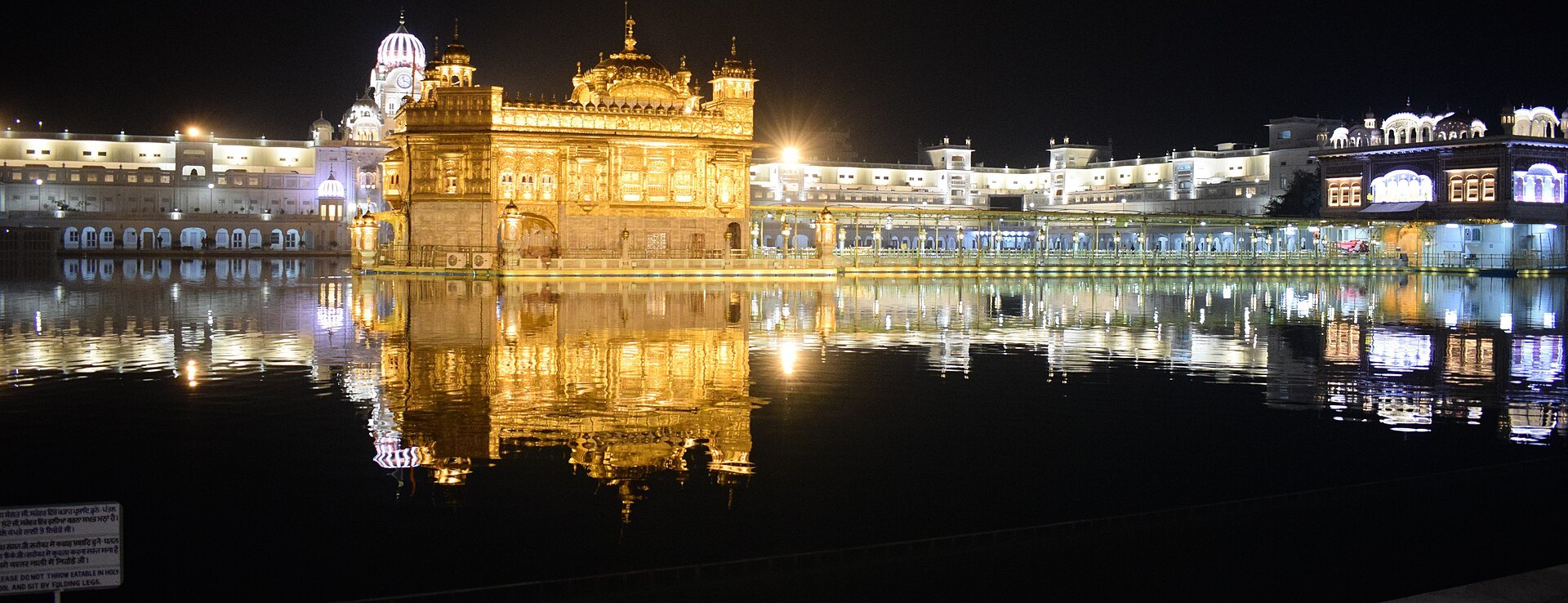

Rs 100. That is the refundable deposit for a bed at Sri Guru Ram Das Niwas, two minutes from the Golden Temple, during Guru Nanak Jayanti week in Amritsar. The room is free. The three meals a day at the langar are free. The only thing you really pay for is the auto from the station. A few hundred metres away on Heritage Street, hotels that take Rs 2,000 to 3,500 in a normal week were quoting Rs 5,000 to 9,000 for the same nights last year, and the better ones simply said “full”.
Guru Nanak Jayanti in 2026 falls on Tuesday, 24 November, the full moon of Kartik. It is the 557th Prakash Utsav, counting from Guru Nanak’s birth in 1469 at Talwandi, now Nankana Sahib in Pakistan. Ignore the 5 November pages (last year’s) and the 8 or 25 November ones (wrong). One Nanakshahi listing prints 23 November, but the SGPC and Harmandir Sahib go by Kartik Purnima, the 24th.
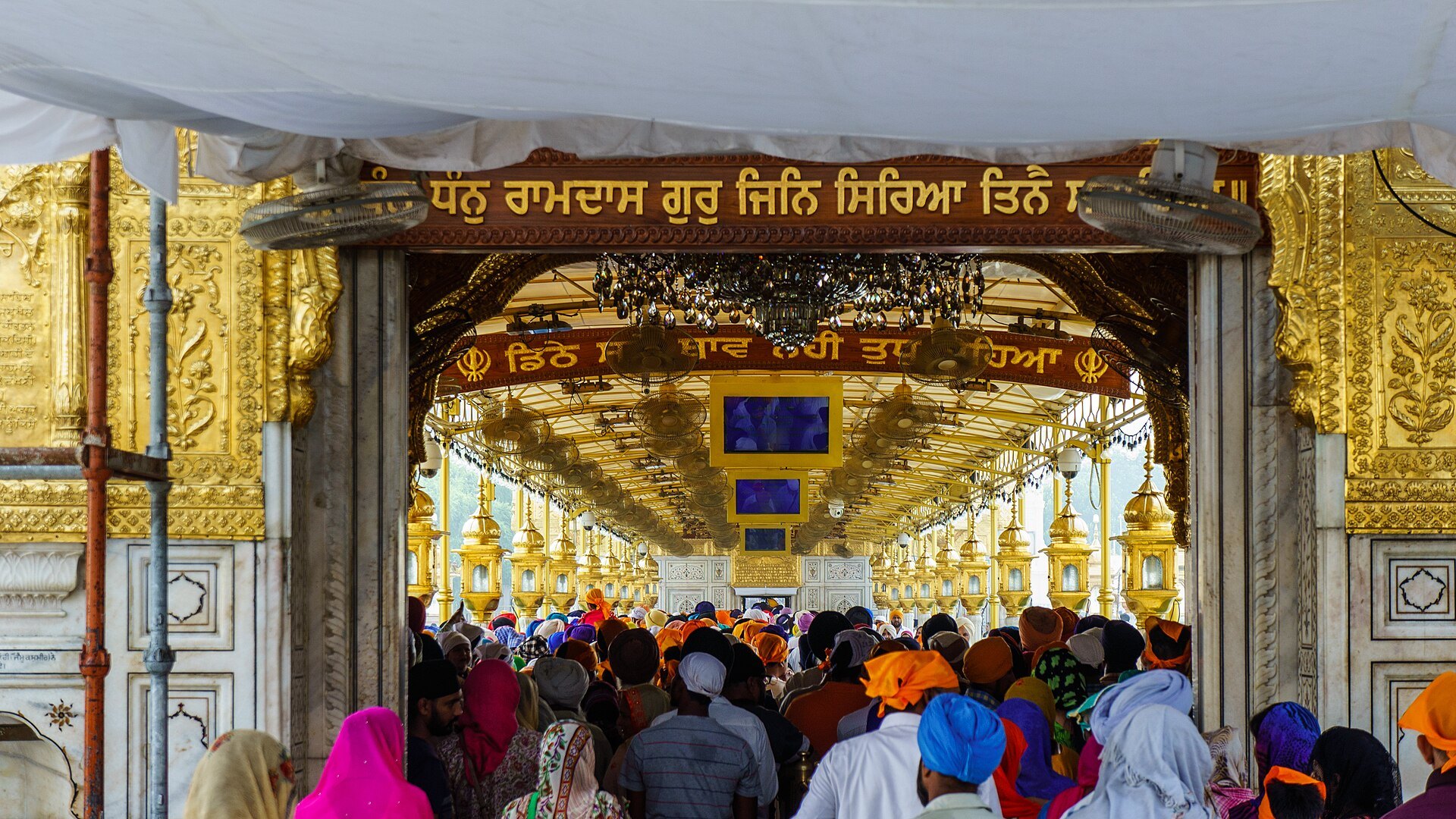
And a plain note before the detail: Harmandir Sahib is open to everyone, of every faith and none. Cover your head, take off your shoes, wash your feet in the channel, carry no cigarettes or alcohol. That is the whole entry test.
Three Days, Not One: What Actually Happens When
Guru Nanak Jayanti at the Golden Temple is a three-day affair, and if you only arrive for the main day you have missed the half that locals care about most. The 2026 programme had not been published when I wrote this, so treat the hours below as the SGPC’s usual pattern and check its notice board for final timings.
Two days before: the Akhand Path begins
Around 22 November, an Akhand Path starts inside Harmandir Sahib: an unbroken reading of the Guru Granth Sahib that runs for roughly 48 hours. For a visitor this is the quietest window of the week: the darshan queue is an hour or so, and the sarovar has that still, early-winter light that makes the gold look heavier than it is.
The day before: Nagar Kirtan
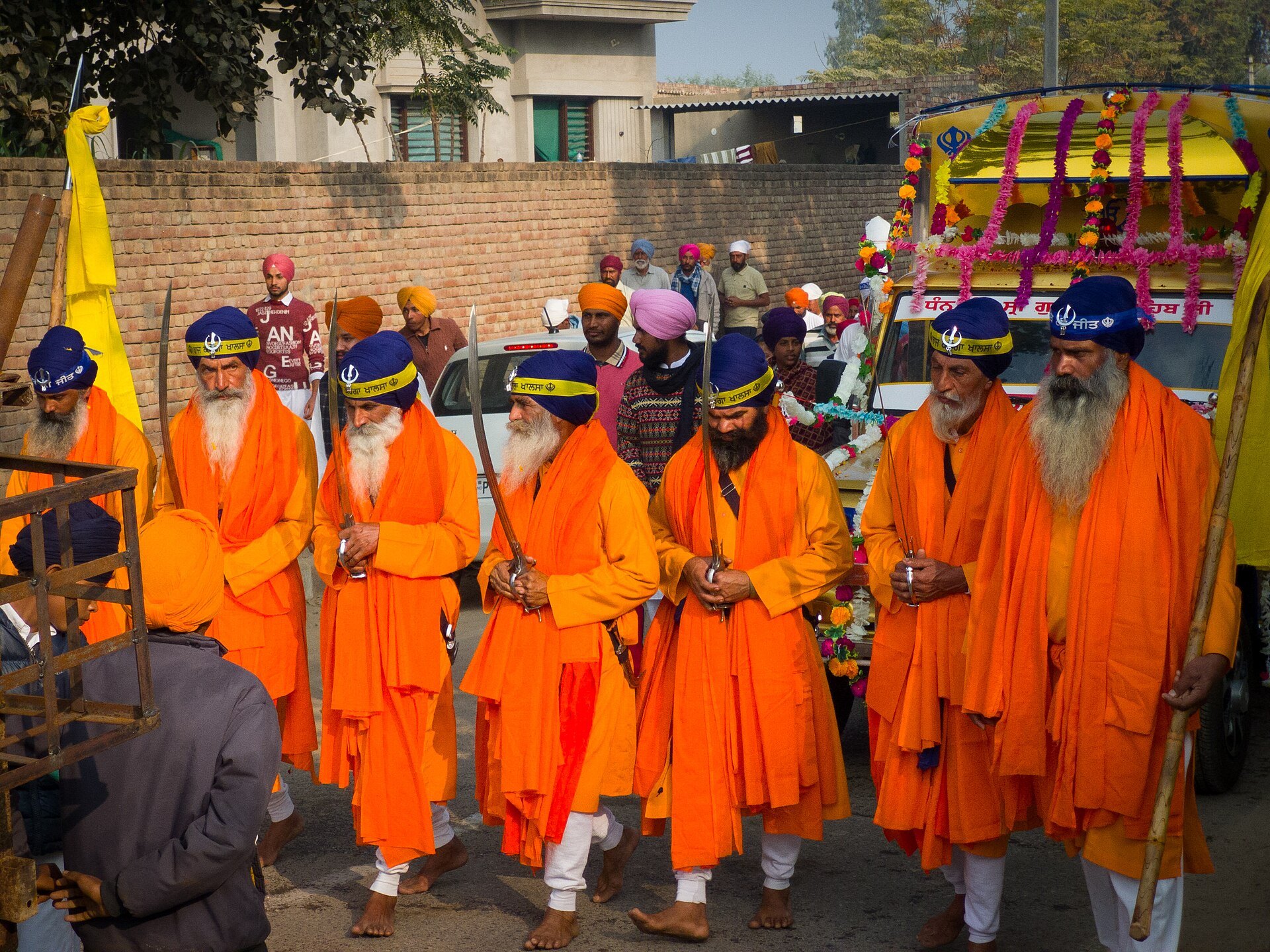
On 23 November, by early afternoon, the Nagar Kirtan leaves from Sri Akal Takht Sahib. The Panj Pyare walk in front in saffron with drawn kirpans, then the palki carrying the Guru Granth Sahib on a flower-covered float, then gatka troupes, school bands and kirtani jathas on trucks. Sewadars sweep and sprinkle the road ahead, and stalls along the route hand out tea, pakoras and kheer to anyone who stops.
The route loops through the walled city and returns by evening. The best watching spots are near Hall Gate and the Heritage Street plaza, where the procession slows. Ask before pointing a camera at the Panj Pyare up close; it is not a parade in the touristic sense.
The main day: from Asa di Var to the fireworks
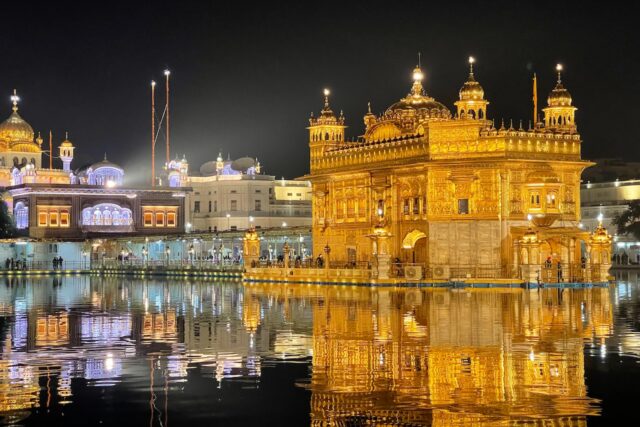
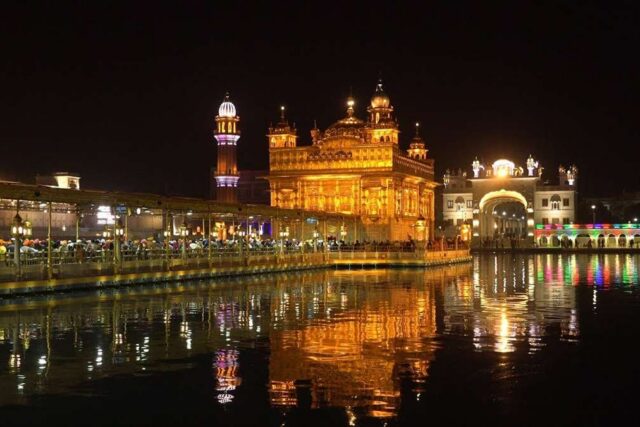
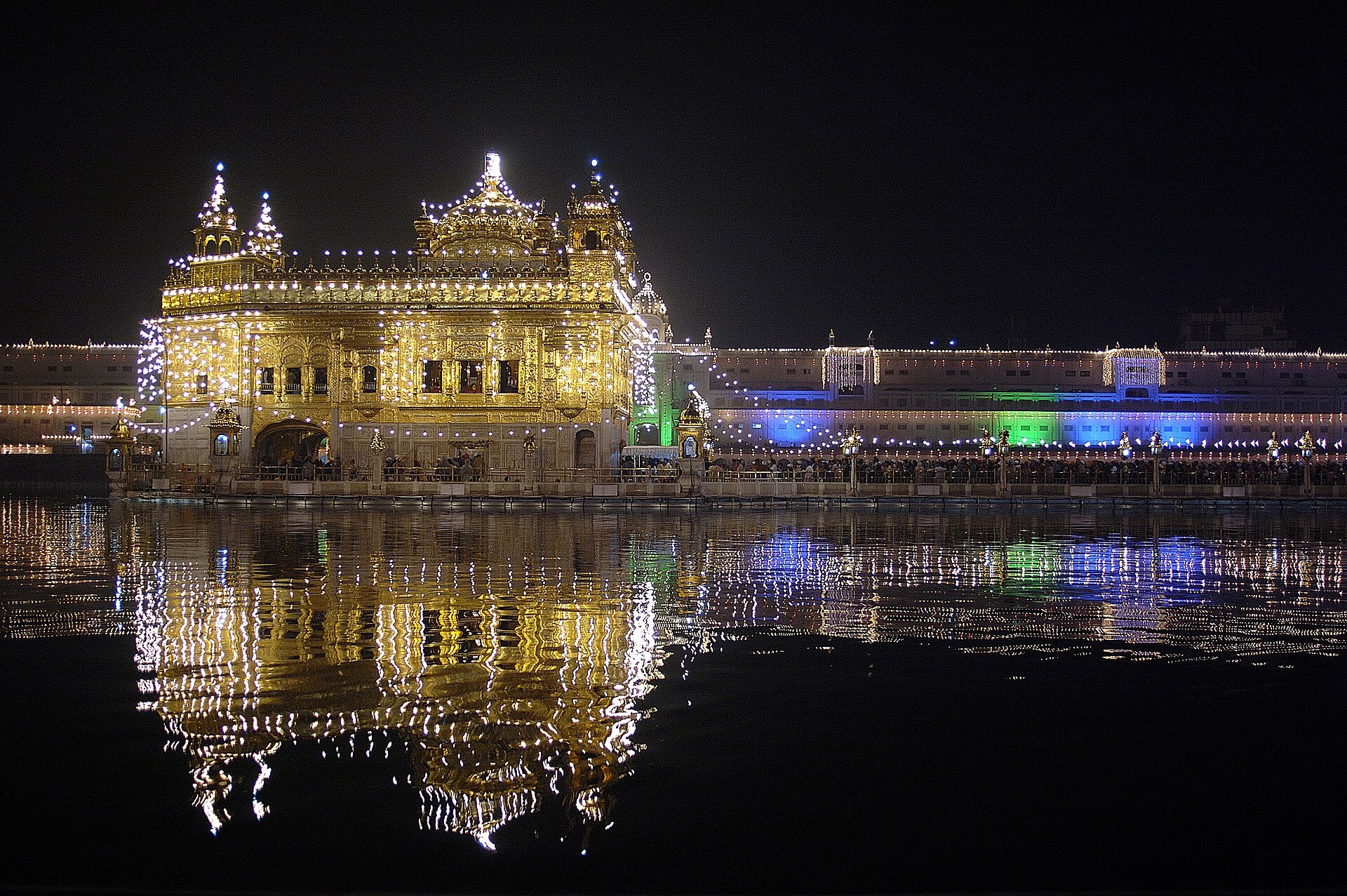
Prabhat Pheris start before dawn on 24 November, small groups walking the mohallas singing shabads. Inside, Asa di Var kirtan begins around 3 am and the Akhand Path reaches its bhog in the morning. After Rehras Sahib at sunset the lights go on, diyas are set along the marble, and fireworks go off over the sarovar, usually between 7 and 8 pm. That evening is what everyone travels for.
Where to Stand When the Lights Come On
Honest answer first: nowhere comfortable. On Guru Nanak Jayanti evening the parikrama holds more people than it was built for, and movement is one slow clockwise shuffle.
The classic view is from the north parikrama, directly opposite the causeway, where the sanctum sits dead centre in its reflection. Arrive by 4 pm and settle on the marble against the wall. The Guru Ram Das Niwas side, near the langar hall, is less crowded because most visitors never walk that far round.
The rooftop restaurants of the small Heritage Street hotels sell the view differently: you pay for a dinner and watch from above the crowd. With elderly parents or small children, that is worth the markup for one evening.
Now the queue. On the main day the sanctum queue runs to several hours, and accounts of longer waits are common. There is no VIP line. If the inner darshan matters to you, do it on the Akhand Path day or at 3 am on the main day, when the wait drops to under an hour.
Pack for cold. Late November nights in Amritsar fall to 8 to 12 degrees, fog comes in after midnight, and you are barefoot on marble for hours. Socks are allowed but get wet at the foot-wash channel, so carry a dry pair.
Langar: One Lakh Plates and the Rules Nobody Prints
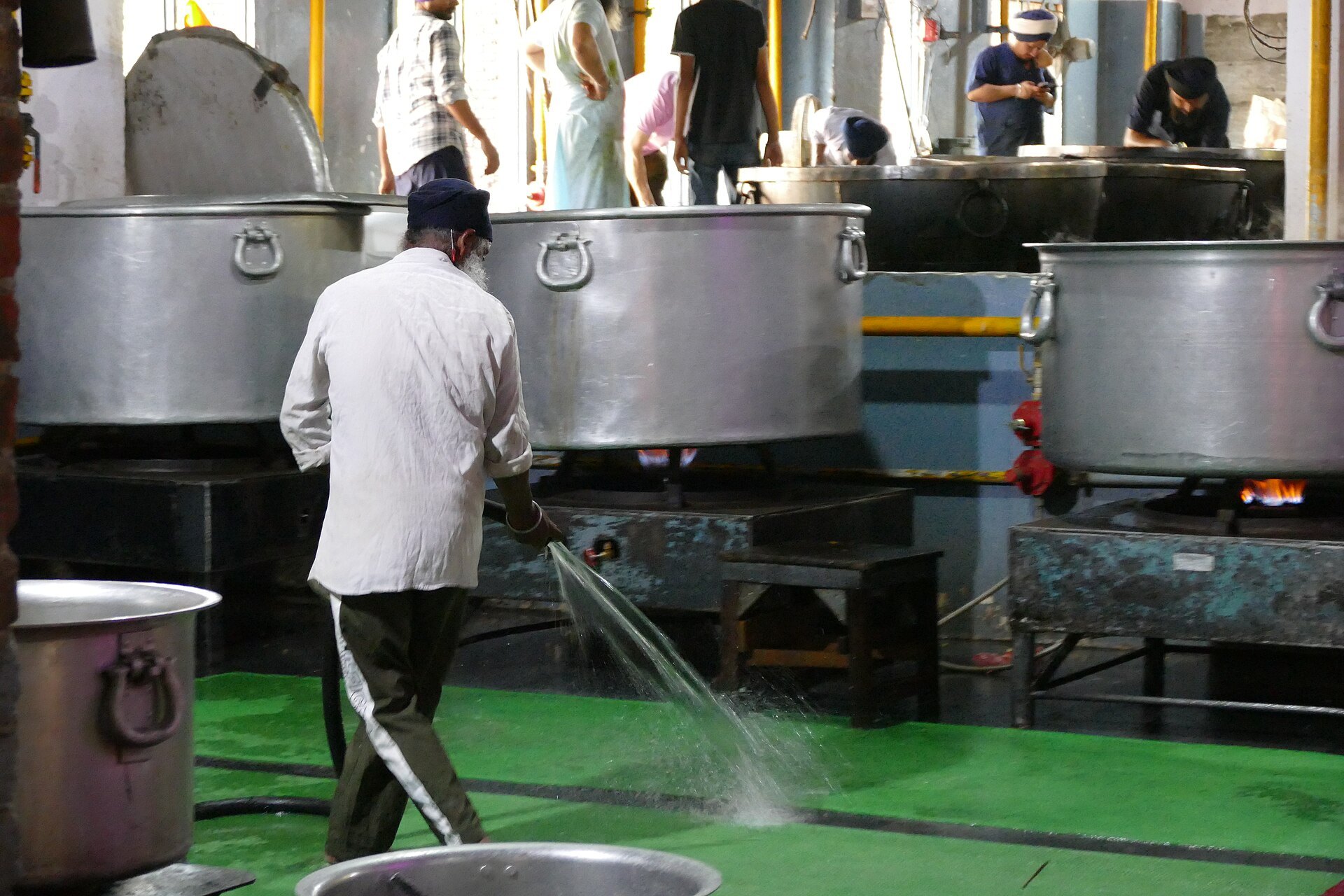
The Guru Ram Das Langar Hall runs round the clock and feeds anyone who walks in. On ordinary days the figure quoted is 50,000 to 1 lakh plates. During Guru Nanak Jayanti the reported numbers run well past a lakh a day. Treat both as reported figures, not audited ones, but the scale is real: the dal is cooked in cauldrons you could stand in.
How it works. You collect a steel thali, a bowl and a spoon at the entrance, walk in when the doors open for the next sitting, and sit cross-legged in a row on the long mats. Volunteers walk the rows with buckets and ladles. Hold your thali out with both hands. Say “bas” or raise a palm when you have had enough; nothing is forced and nothing should be wasted.
When your row finishes, carry your plate to the washing area. Then, if you want, join the washing line for half an hour. That is seva, and it is the best thing most first-time visitors do in Amritsar.
The etiquette is simple and strictly observed. Head covered, shoes off at the jora ghar outside, no alcohol or tobacco on your person, and no photographing people while they eat. Everyone sits on the floor in the same row regardless of who they are. Do not try to tip anyone. In festival week, mid-morning and after 10 pm are the easiest sittings.
Amritsar Beyond the Parikrama
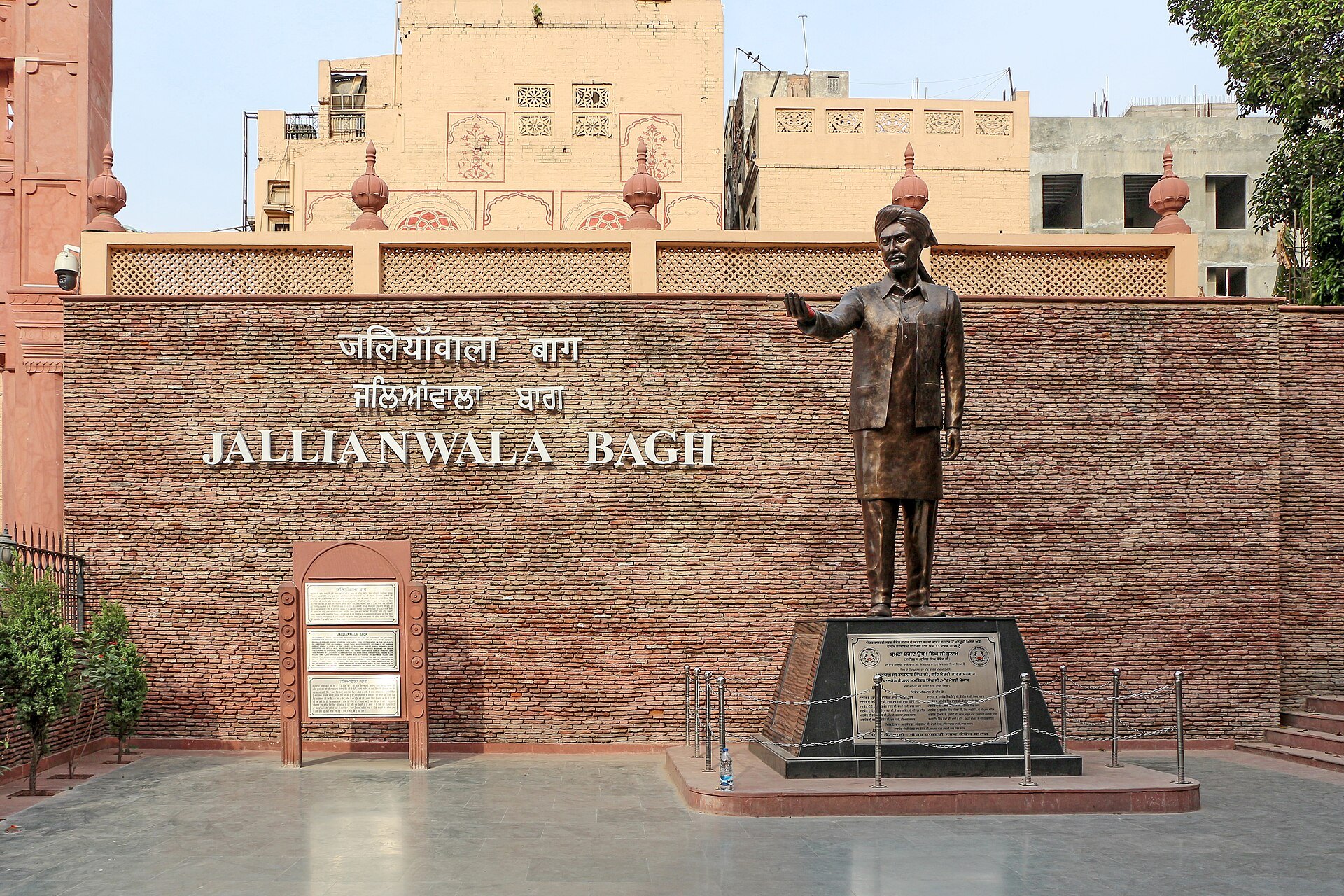
Jallianwala Bagh is 400 metres from the clock tower entrance, free, and open from roughly 6:30 am to 7 pm with seasonal shifts. Go at opening time; by 10 am in Guru Nanak Jayanti week it is a tour-group corridor.
The Partition Museum sits in the Town Hall on Heritage Street, 10 am to 6 pm, Tuesday to Sunday, closed Mondays. The ticket for Indians has been Rs 10 for years, though check the board because prices move. Give it two hours, and do it before Wagah rather than after.
Wagah, or Attari on the Indian side, is 30 km west. From 16 October 2026 the BSF moved the Beating Retreat to 5:00 to 5:30 pm, half an hour earlier than before. There are no tickets, no online passes that I could find, and no entry fee. Arrive by 3 pm, clear security with only a phone and a wallet (no bags in the stands), and sit on concrete.
Since May 2025 the ceremony has run in a scaled-down form, with the gates shut and no handshake at the time of writing, so it is more one-sided than the videos you remember. A shared taxi costs Rs 350 to 600 per seat return, a private cab Rs 1,500 to 2,200. For the city outside the festival, the older post on things to explore in Amritsar with the Golden Temple covers Gobindgarh Fort and Durgiana Temple, and the top places to visit in Punjab piece shows how Amritsar sits against the rest of the state.
Kulcha, Lassi and the Vegetarian Rule
Since December 2025 the Punjab government has banned the sale of meat, alcohol and tobacco inside Amritsar’s walled city, which includes Heritage Street. It does not matter this week, because the two best meals in the city were always vegetarian.
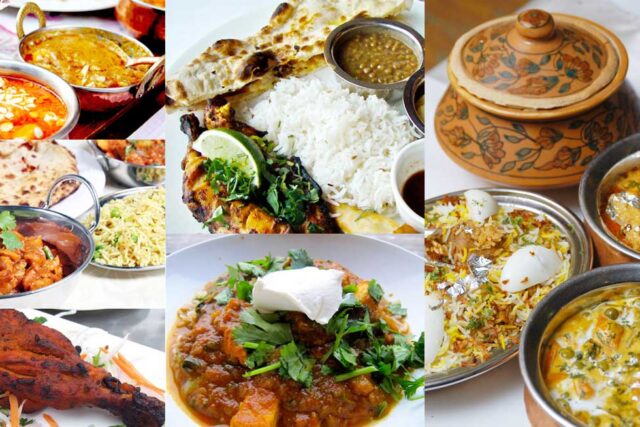
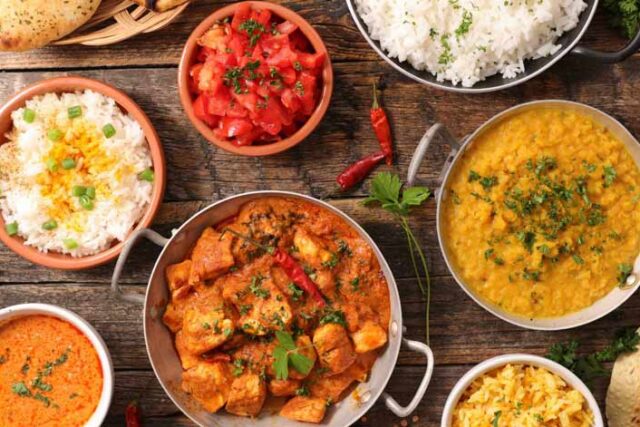
Kesar da Dhaba, down a lane in Chowk Passian, has made dal makhani the same way since 1916: slow-cooked overnight, finished with white butter, served with a lachha paratha that shatters. The thali runs Rs 300 to 400. Bharawan da Dhaba on Town Hall Chowk is bigger and faster, thalis Rs 320 to 360. Both get a lunch queue in Guru Nanak Jayanti week, so eat at 11:30 or after 3.
Amritsari kulcha is the breakfast, and the famous shops are outside the walled city on the Ranjit Avenue side: one aloo kulcha with chhole is Rs 60 to 100, a lassi thick enough to hold a spoon upright Rs 60 to 90. Our Punjabi food guide goes deeper on each dish.
Sultanpur Lodhi, Dera Baba Nanak and the Closed Corridor
Sultanpur Lodhi is about 80 km south-east of Amritsar, around two hours by road. Guru Nanak lived here for 14 years, and it was in the Kali Bein stream here that he disappeared for three days and emerged with the words that open the Guru Granth Sahib. Gurdwara Ber Sahib stands on that bank. On Guru Nanak Jayanti the town runs its own nagar kirtan and langars, far calmer than Amritsar. A cab day trip costs Rs 2,500 to 3,500.
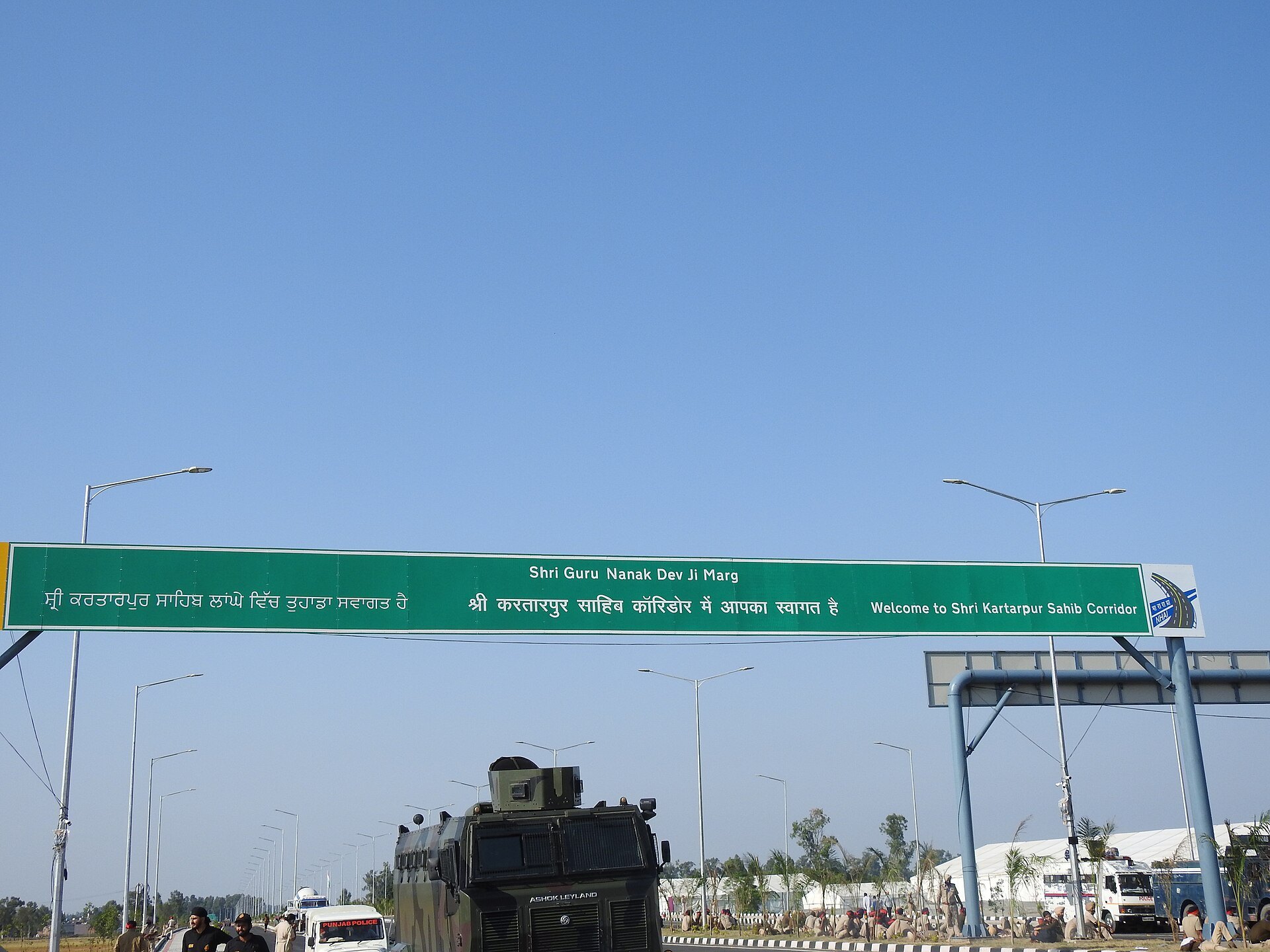
Dera Baba Nanak, 50 km north, faces Kartarpur Sahib across the Ravi, where Guru Nanak spent his last 18 years. The visa-free Kartarpur Corridor has been closed since 7 May 2025, after the Pahalgam attack. As of early November 2026 it is still closed: the Ministry of External Affairs reaffirmed the suspension in Parliament in July and August 2026, the Home Ministry repeated it in September, and a Punjab Assembly resolution of 27 October 2026 asking for reopening has changed nothing so far.
So do not plan a Kartarpur crossing for this Gurpurab. What you can still do is stand at the Darshan Sthal viewpoint in Dera Baba Nanak and look across 4.5 km of farmland to the white dome through the BSF’s binoculars. Nankana Sahib, the birthplace, is reached only on the SGPC’s annual jatha, which needs both governments’ clearance each year.
A 3-Day Guru Nanak Jayanti Plan With Real Costs
Getting in. Sri Guru Ram Dass Jee International Airport is 11 to 13 km from the Golden Temple; a prepaid taxi is Rs 350 to 500. Amritsar Junction is 2 km away, Rs 100 to 150 by auto. From Delhi, the morning Shatabdi (12031) leaves New Delhi at 7:20 and reaches Amritsar at 1:30 pm; the Vande Bharat (22487) leaves Delhi Junction at 3:15 pm and arrives at 8:45 pm. Check the running days and book six to eight weeks out for Gurpurab week.
By road it is 450 km on NH44, seven to eight hours; the Delhi-Amritsar-Katra expressway is only partly open, with NHAI targeting March 2027 for the full corridor. Ambala is the natural halt, and Chandigarh works if you add a day.
Where you sleep. The SGPC runs eight niwas around the complex, bookable through the official SGPC sarai page or at the round-the-clock counter in Guru Arjan Dev Niwas. Guru Ram Das Niwas has 228 rooms, free, Rs 100 refundable deposit, shared bathrooms. Guru Arjan Dev, Guru Hargobind and Mata Ganga Ji Niwas have attached bathrooms with geyser or AC at Rs 500 a night plus a Rs 1,000 deposit.
Online bookings are limited and go fast in Gurpurab week, so walking in at odd hours is often the realistic route. Book only through sgpc.net; copycat booking sites with QR codes exist. For a hotel, Ranjit Avenue and Lawrence Road, 3 to 4 km out, kept sane rates last year at Rs 2,500 to 5,000, while the Heritage Street lanes went to Rs 5,000 to 9,000.
Day 1 (22 November): arrive by early afternoon, drop bags, do your sanctum darshan while the queue is short. Evening langar, then the parikrama after 9 pm. Rs 300 to 500 outside the gurdwara.
Day 2 (23 November): Jallianwala Bagh at opening, Partition Museum from 10, lunch at Kesar da Dhaba, then your Nagar Kirtan spot near Hall Gate by 2 pm. Skip Wagah today; roads are blocked anyway. Rs 600 to 900.
Day 3 (24 November, Guru Nanak Jayanti): Asa di Var at 3 am if you can wake for it. Sleep again, breakfast kulcha, then be on the parikrama by 4 pm for the lights and fireworks. Dinner is langar. Rs 300 to 600, or Rs 1,500 to 3,000 a head for a rooftop table.
Day 4 (25 November): Wagah at 5 pm if you leave late, or a Sultanpur Lodhi detour on the way to Delhi. Rs 1,500 to 3,500.
Sarai-based, the three Guru Nanak Jayanti days cost Rs 2,500 to 5,000 per person plus fare; hotel-based, Rs 15,000 to 25,000 for two. The comparison worth making is with Bandi Chhor Divas at the Golden Temple during Diwali, a month earlier, and with the shrines on our 20 most popular religious sites in India list, or the wider religious festivals of India.
My Take on Guru Nanak Jayanti Week in Amritsar
I would not send a first-time visitor to the Golden Temple for the main evening alone. The crowd, the cold and the queue are real, and you will see the sanctum better on a quiet Tuesday in February. But Guru Nanak Jayanti is about a city that feeds a lakh strangers a day without asking their names, and a 3 am kirtan under fog that nobody who has sat through it forgets. Come for the three days, not the one. Take the free bed if you can get it. And bring the dry socks.