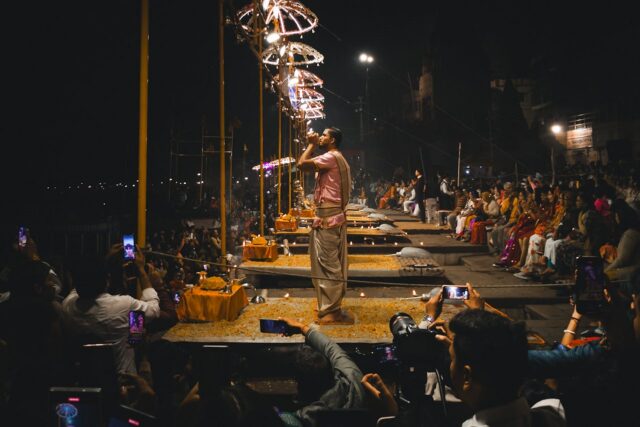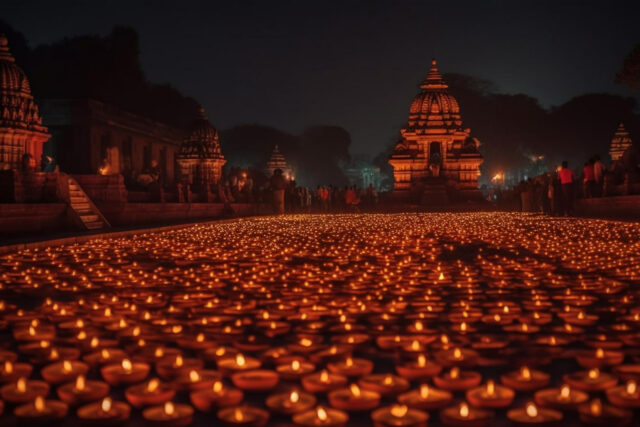
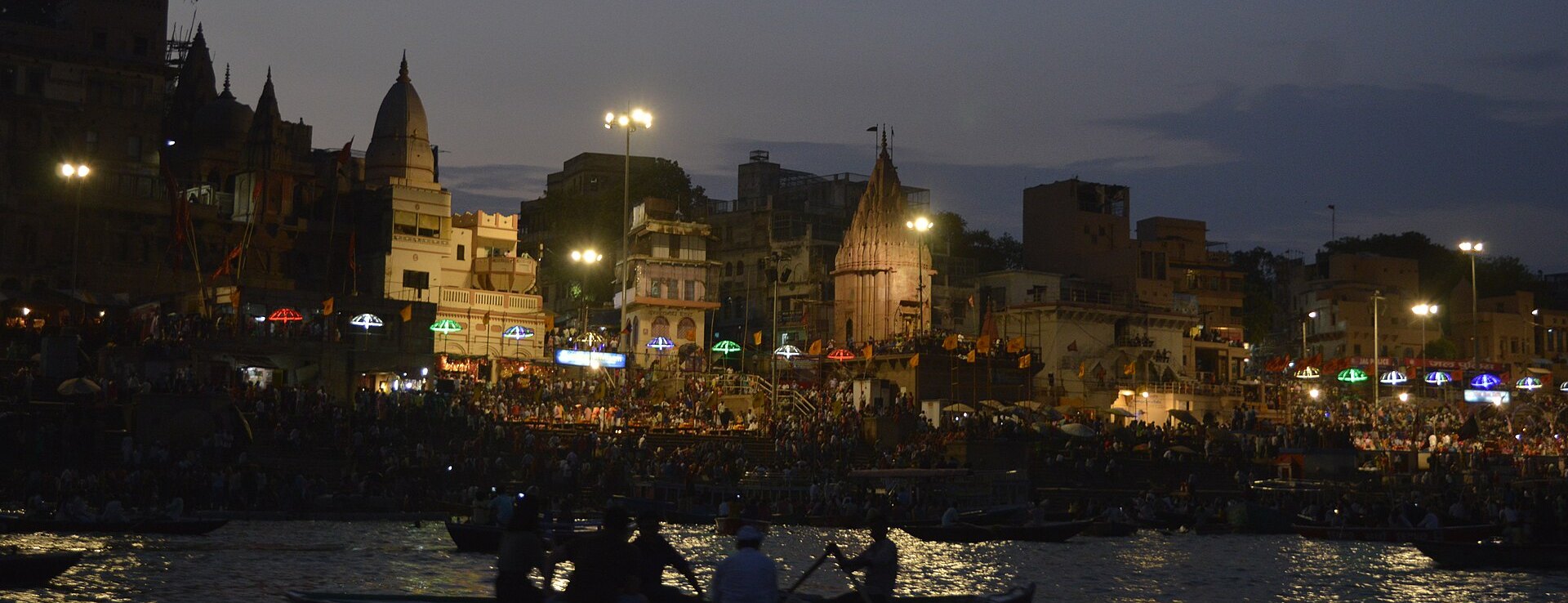

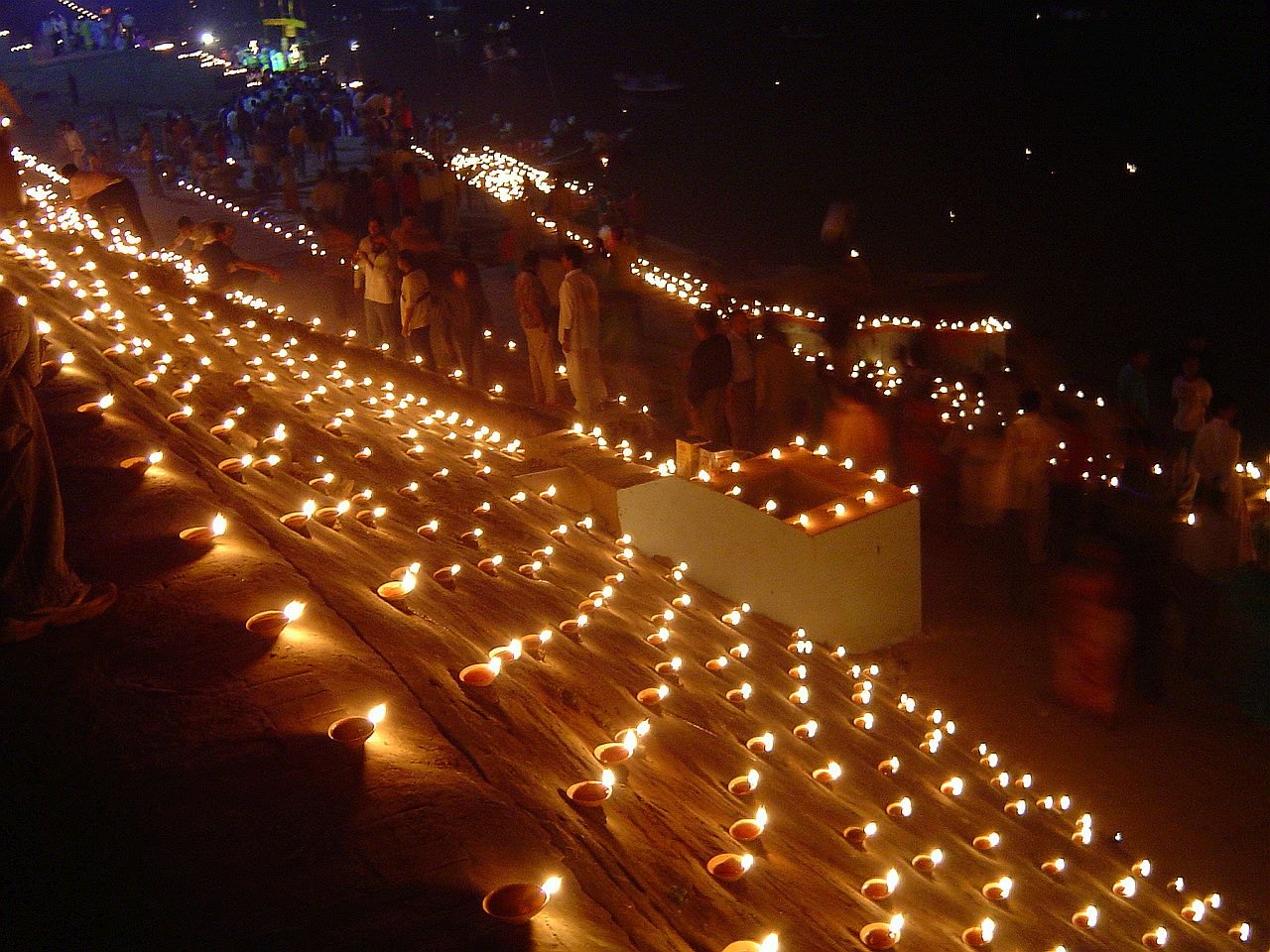
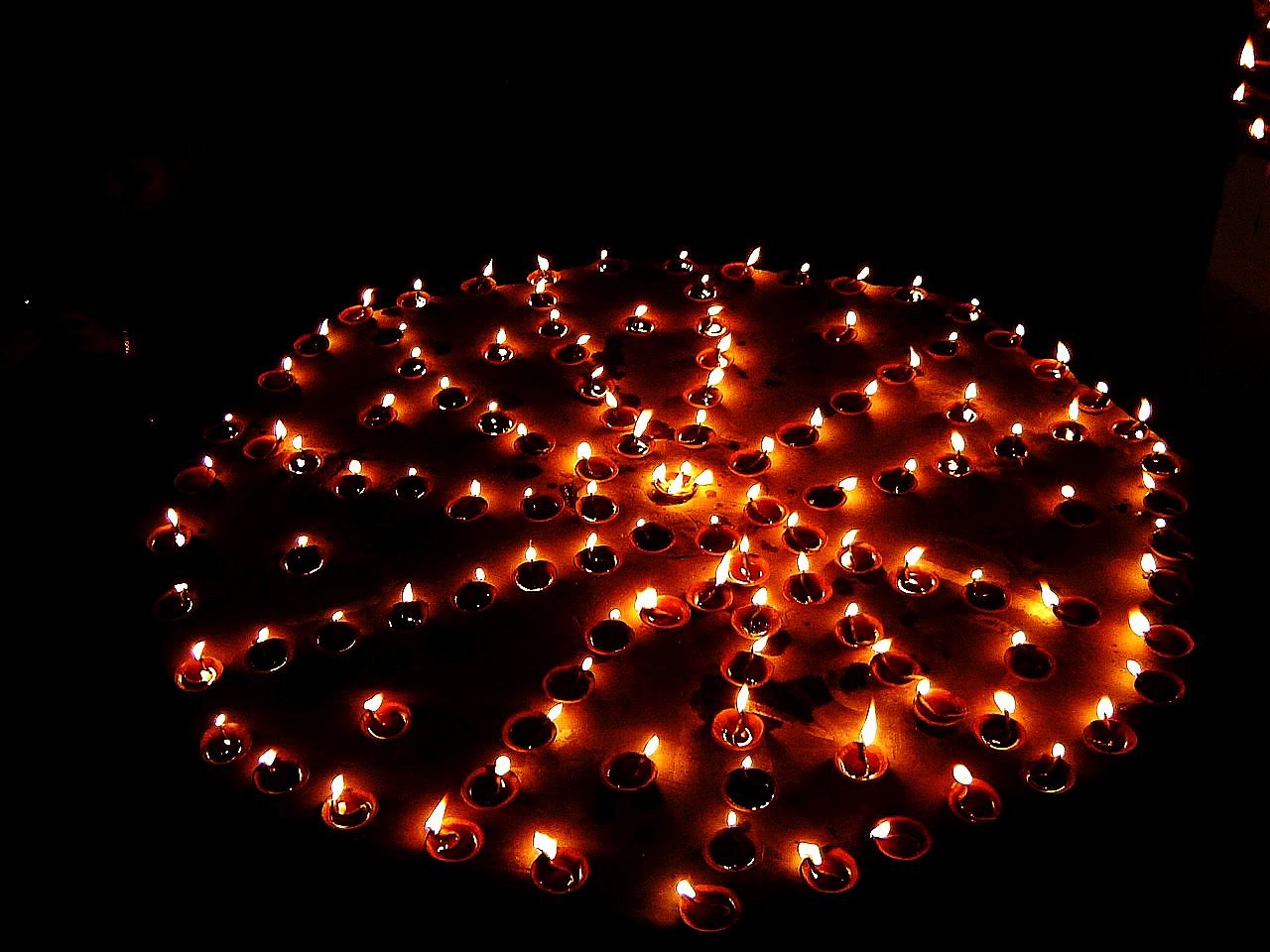
The most photographed night in Varanasi is not Diwali. It is Dev Deepawali, a fortnight later, when every step of every ghat from Assi to Rajghat carries a clay lamp and the whole seven kilometre curve of the river burns orange for about three hours. In 2026 that night falls on Tuesday, 24 November. Most first-timers do it badly. This guide is the plan.
One warning before anything else. This is the most crowded evening of the Varanasi year, last year’s coverage put the crowd on the ghats and in the lanes behind them in the lakhs. If you want to see lakhs of diyas lit at once and are willing to stand four hours for it, read on.
Two Diwalis, Sixteen Days Apart
Readers mix these up every year, so plainly: Diwali 2026 is on Sunday, 8 November, the Kartik Amavasya night. Dev Deepawali is on Kartik Purnima, the full moon that follows, which in 2026 is Tuesday, 24 November. The Purnima tithi runs from roughly 11:42 pm on 23 November to about 8:23 pm on the 24th, and the lamps are lit at dusk on the 24th, sunset being around 5:07 pm. A few websites list 25 November, and one or two have copied the Diwali date. Both are wrong.
The story behind it is short. Shiva killed the demon Tripurasura on this Purnima and the gods came down to Kashi to celebrate with lamps, which is why the night is also called Tripurotsav, the Diwali of the gods. Kartik Purnima is a bathing day across north India anyway, the same full moon that closes the Pushkar fair in Rajasthan.
The ghat-wide lighting in the photographs is not ancient. It began at Panchganga Ghat in the mid 1980s with a few local young men and donated oil and reached Dashashwamedh in 1991 under Ganga Seva Nidhi; the state took it over as a tourism event much later.
UP Tourism’s Ganga Mahotsav, the classical music festival at Rajghat, runs from Prabodhini Ekadashi to Kartik Purnima and ends on Dev Deepawali night. Last year it was held from 1 to 4 November. In 2026 the Ekadashi falls on 20 November, so expect it between the 20th and the 24th, though the programme was unannounced when I wrote this.
Between the two Diwalis sits Chhath on 15 and 16 November, which also fills the Varanasi ghats at sunset and dawn, so hotel prices never really come down for the whole fortnight. Our Diwali guide covers the 8 November options, including Ayodhya’s Deepotsav, a different event on a different night.
Picking Your Ghat for Dev Deepawali
All eighty-odd ghats are lit, so the question is not where the lamps are but what else you want: the big aarti, breathing room, or the oldest version of the ritual. The ghats guide walks the full stretch; here I will only talk about the five that matter on this night.
Dashashwamedh and Rajendra Prasad Ghat
The main Ganga aarti happens here, scaled up for the night with far more priests than the usual seven, and Rajendra Prasad Ghat next door hosts the martyrs’ tribute at the Amar Jawan Jyoti before the lamps go on. It is the best show and the worst crowd. By 4 pm there is no sitting space on the steps. By 6 pm the approach from Godowlia crossing is a slow-moving wall. Come here only if you are seated by 3 pm or you hold a confirmed boat.
Assi Ghat
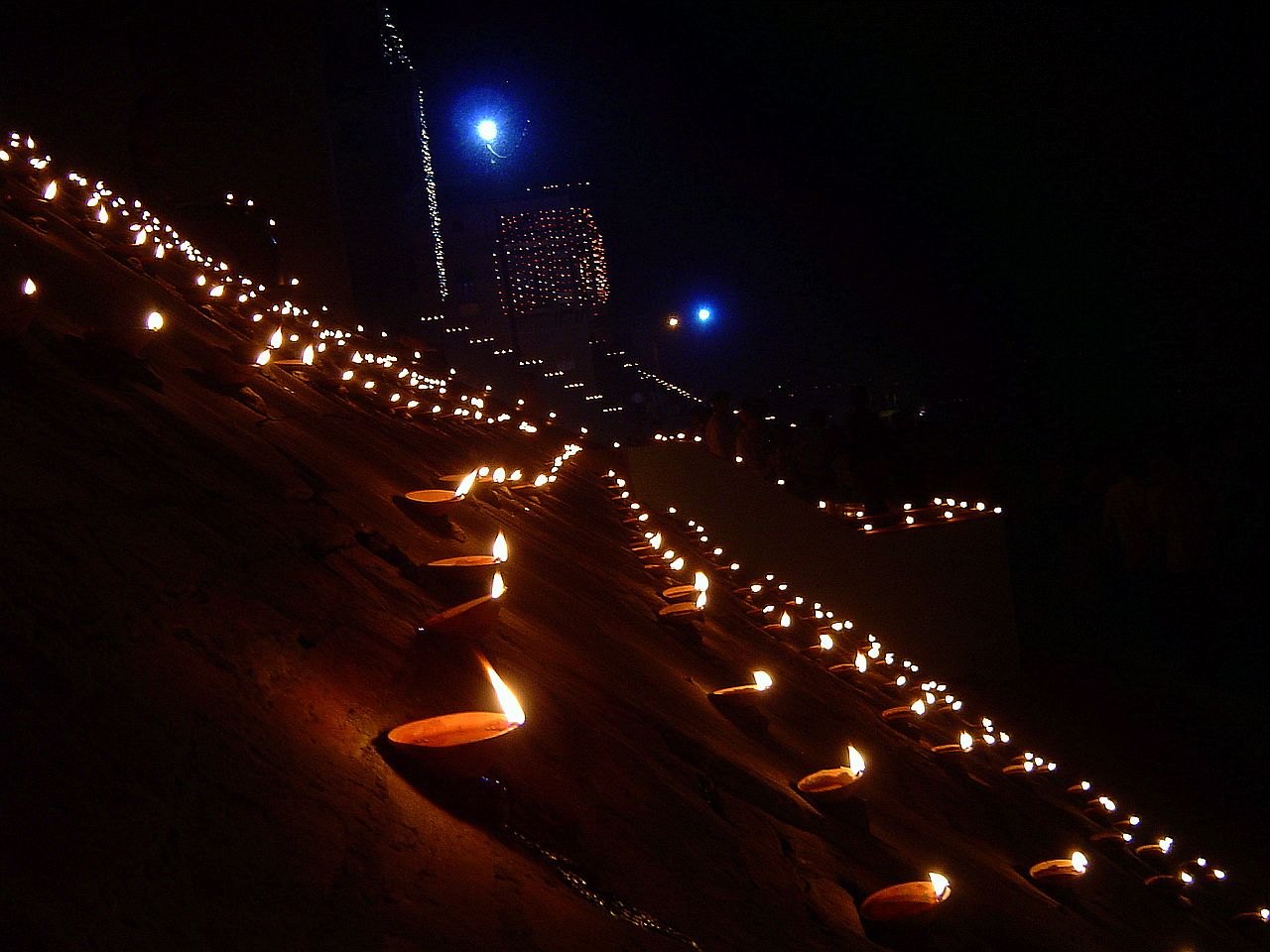
The southern end, wide and flat, with its own aarti. Diyas cover the whole platform, and because the ghat is broad you can actually move. Families with children and anyone nervous of crowds should pick Assi. The downside is that you see one ghat, not the curve of the city, unless you walk north along the river before dark.
Panchganga Ghat
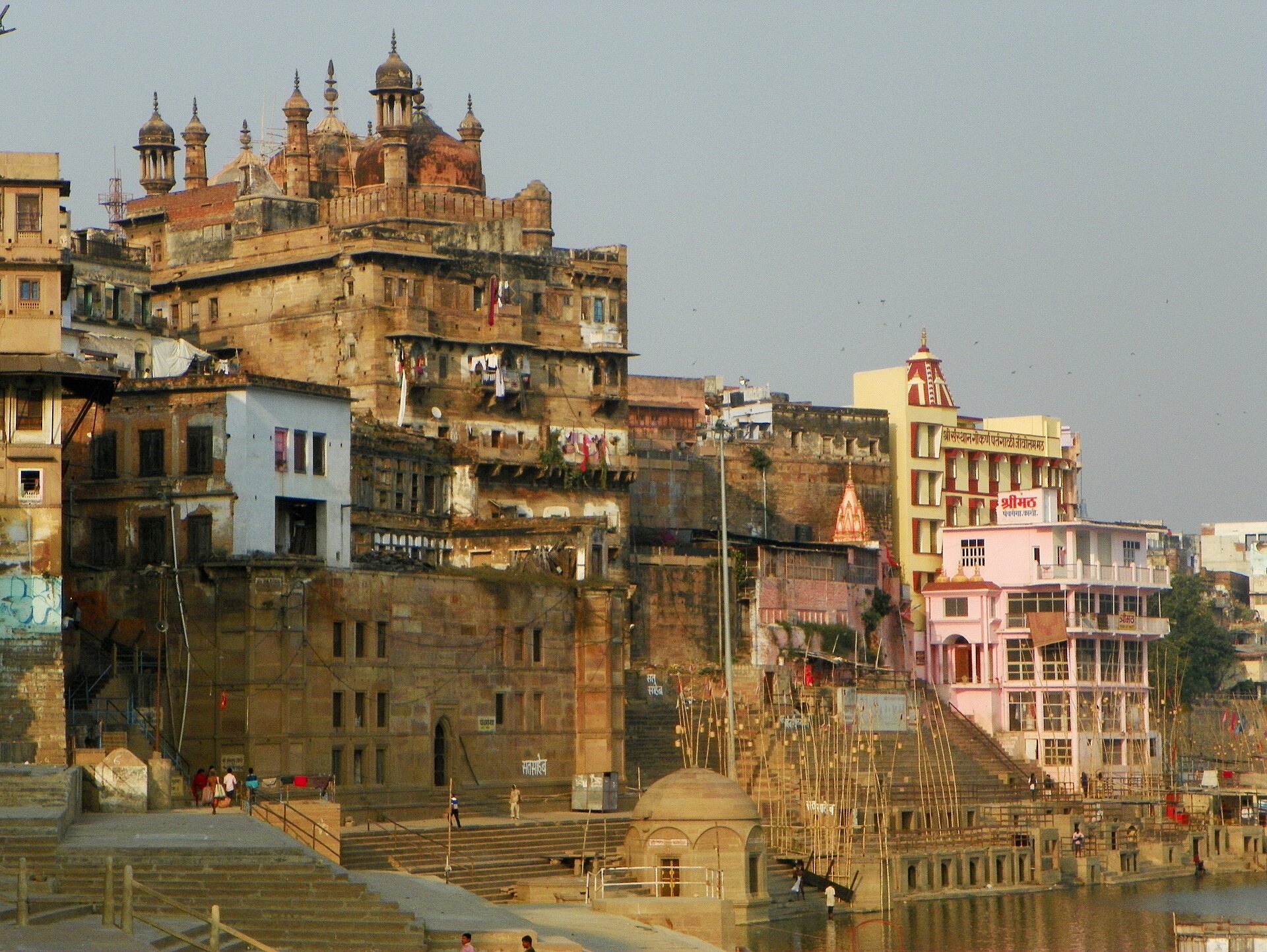
This is where the modern tradition started, below the Alamgir mosque, and it still lights the Hazara, a stone lamp pillar holding roughly a thousand wicks that goes up before the rest of the riverfront follows. Reaching it means a long walk through the lanes north of Chowk, which is exactly why it is less crowded. For me this is the most atmospheric place to be on Dev Deepawali.
Chet Singh Ghat
The fort walls at Chet Singh, between Assi and Harishchandra, were the screen for last year’s 25-minute laser and projection show, run three times through the evening. If 2026 repeats it, the ghat gets busy after 7 pm but is comfortable earlier.
Namo Ghat
The redeveloped Khidkiya Ghat at the northern end, with the giant folded-hands sculptures, is now the administration’s big-event venue; at last year’s Dev Deepawali the chief minister lit the first lamp here before the rest of the city followed. It is also the farthest point from the old city, so treat it as an either-or with Dashashwamedh, not both.
The Boat Question
Everybody wants to watch Dev Deepawali from the water. Three honest points about that.
First, the price. On an ordinary November evening a shared rowboat from Dashashwamedh to Assi and back costs Rs 150 to 300 a head and a private boat Rs 800 to 1,500 an hour. Last year on the festival night the same boatmen were quoting Rs 1,500 to 3,000 a head for a shared seat, and private motorboats for a group at Rs 3,000 to 6,000 per person. Packaged rides sold online with a hotel pickup were Rs 3,500 to 8,000 a person.
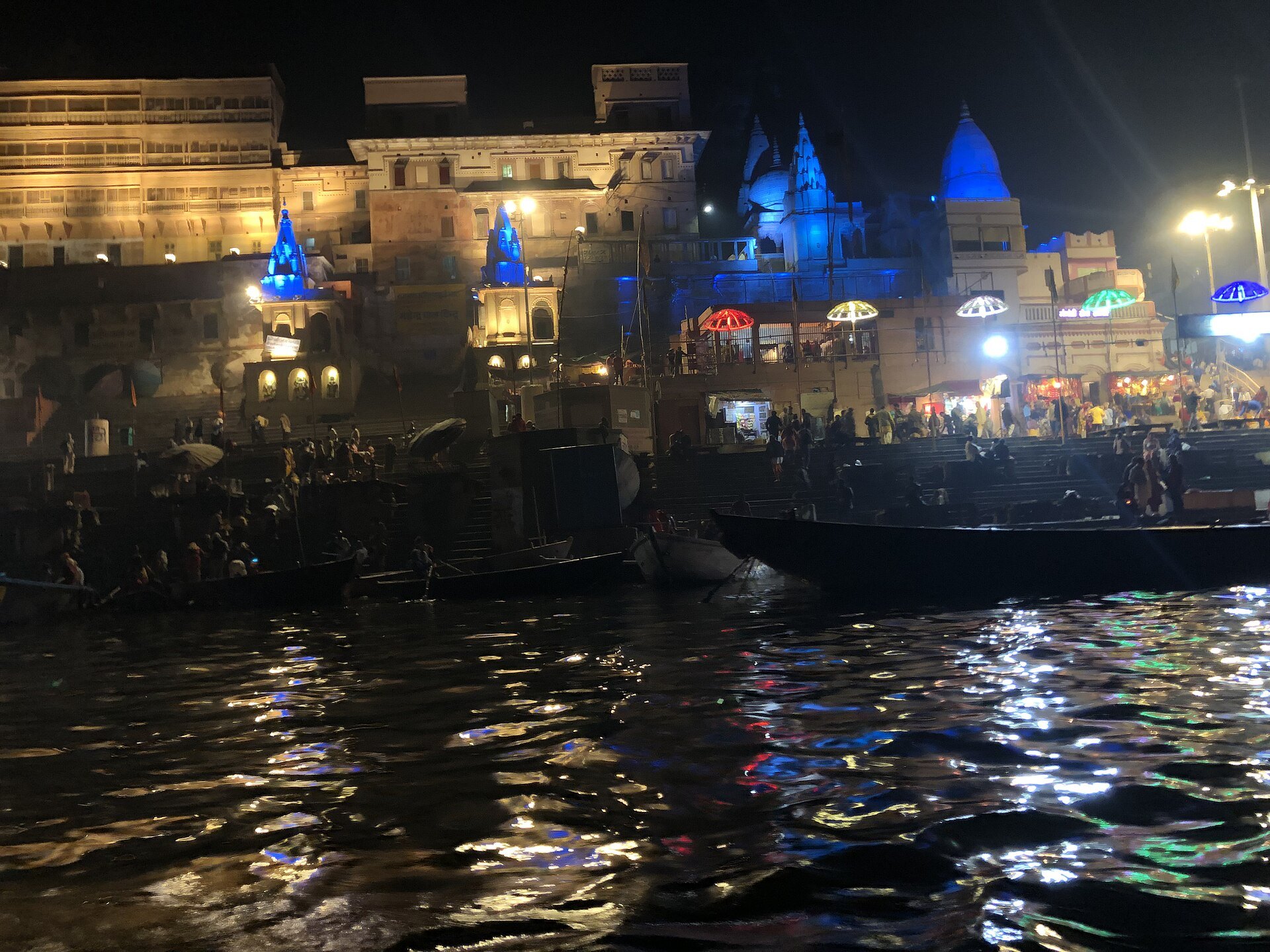
Second, the rules. The river is divided into police sectors for the night with NDRF and water police patrols, boats from outside the district were barred in 2021, overloaded boats are turned back, and the water police announced a standing 8:30 pm cut-off on boating in May 2024. Whether that is relaxed for the festival is decided locally each year, so ask the boatman what time he must be back before you pay. Refuse a boat without life jackets.
Third, the view. From the water you see the curve of lit ghats, the famous photograph. You do not see the aarti properly; boats jostle in front of Dashashwamedh and block each other. My advice: book a boat for 5 to 7 pm through your hotel or a named operator a month ahead, land at Assi by 7:30 pm, and skip the aarti crush. Shared boats go early in the afternoon; there is no walk-up option worth counting on.
Three O’Clock Is Late
The ghats fill through the afternoon, not at dusk. Volunteers start placing diyas around noon, roads into Godowlia and Maidagin are closed to vehicles from early afternoon, and by 3 pm the prime steps at Dashashwamedh are taken. Be at your chosen ghat by 2:30 pm with water, a shawl and a charged phone. Mobile networks sag under the load from about 5 pm, so agree a meeting point with your group before that.
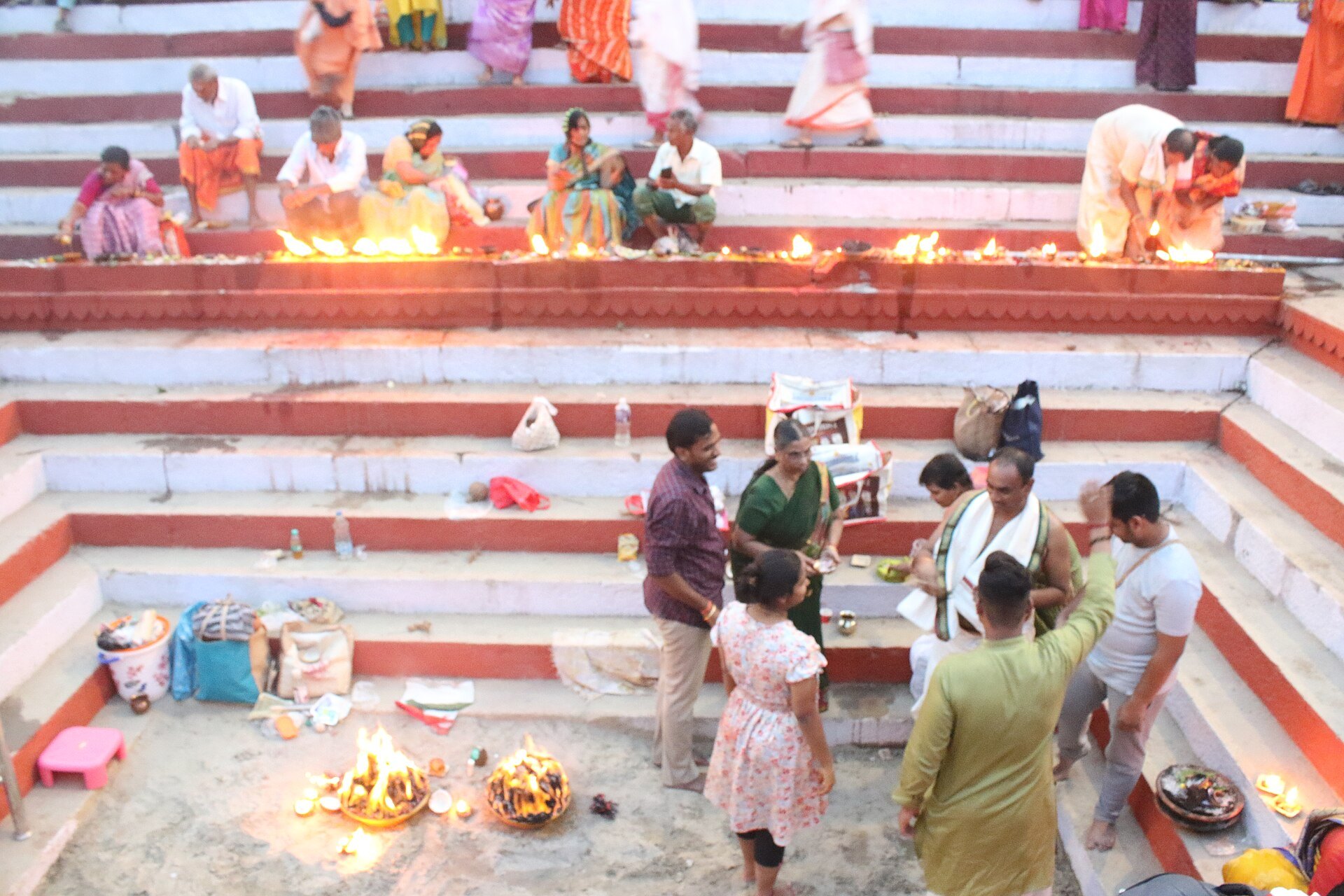
The lamps go on around 5:15 pm, just after sunset, and the ghats look their best between 6 and 7:30 pm. Leaving is the hard part. From Dashashwamedh the walk back to Godowlia, normally five minutes, can take the better part of an hour. Elderly relatives and small children should do Assi or Namo Ghat, which empty faster.
A note for women travelling alone or in a small group: the crush between 7 and 9 pm in the lanes behind Dashashwamedh is where this night stops being pleasant. Stay on the ghat steps until the crowd thins instead of joining the exit surge, keep your back to a wall or to your own group, and use the Assi end if you have the choice. Find the nearest police post on your ghat when you arrive, before the crowd builds.
Sleeping Four Kilometres From the River
Ghat-side guesthouses in Bengali Tola, Shivala and around Assi are the romantic choice for Dev Deepawali, and they are booked out months ahead. Last year local reports had rooms near the ghats unavailable even at Rs 10,000 to 15,000 a night, two to five times the normal November tariff. If you still find one in the final week, check that it is a room and not a mattress in a corridor.
The sane option is the Cantonment, the hotel belt around Varanasi Junction, roughly 4 km from Godowlia. The big hotels there (Taj Ganges, Radisson, Clarks, Ramada and a dozen mid-range places) charge festival rates too, but they hold rooms until closer to the date. Sarnath, 10 km north, is the budget alternative with a calmer evening; getting an auto back after 10 pm is the catch.
Whichever you choose, book the nights of the 23rd and the 24th. Checking out on the 25th means you can do the dawn Ganga snan, the actual religious observance of Kartik Purnima.
Trains, Flights and a Ropeway That May Not Be Running
Lal Bahadur Shastri International Airport at Babatpur is about 25 km from the ghats, 45 minutes to an hour and a half by taxi depending on the hour; airport taxis to the Cantonment were running Rs 800 to 1,200 last year.
By train you have two stations: Varanasi Junction, which everyone calls Cantt, and Banaras station, the old Manduadih, about 5 km from Godowlia. The Vande Bharat from New Delhi takes about eight hours. Confirm which station your train uses; several Mumbai and Delhi trains now terminate at Banaras.
The Cantt to Godowlia ropeway, 3.75 km with five stations and a published fare of Rs 50, was in trial runs when I wrote this, with an official target of late November 2026. That target has slipped at least three times, so do not build your plan around it. If it does open before the 24th it will be the best way from the station to the ghats. Check the district administration’s site, varanasi.nic.in, for the official Dev Deepawali programme and traffic plan, which usually appear two to three weeks before.
Malaiyo Season Starts Now
Late November is when Varanasi’s winter food appears. Malaiyo, the saffron milk froth set overnight in the dew and sold only on cold mornings, starts turning up in Chowk and Thatheri Bazaar around this week, in kulhads of Rs 40 to 80. Eat it before 9 am.
Breakfast is kachori sabzi and jalebi at Ram Bhandar in Thatheri Bazaar, Rs 60 to 100 for a full plate, eaten standing. The Blue Lassi Shop in Kachori Gali near Manikarnika does thick lassi in a kulhad for Rs 80 to 150. Thandai at the Godowlia and Chowk shops is the evening drink.
Our Banarasi food guide goes deeper, and the wider Uttar Pradesh food list covers what to eat on the way in from Lucknow or Prayagraj. On Dev Deepawali night itself, eat early: everything near the ghats is shut or mobbed from 5 pm. Carry dry snacks and water onto the ghat and have dinner back in the Cantonment after 10 pm.
Two Days in Kashi, Costed
Day one, 23 November: arrive by noon, check in at the Cantonment, auto to Sarnath for the afternoon (Rs 300 to 400 each way, Rs 5 to 25 for the museum and stupa entries), then the regular evening aarti at Assi Ghat around 6 pm, a calmer rehearsal for the next night. Dinner at the Cantonment. Confirm your boat and your meeting point.
Day two, 24 November: Subah-e-Banaras at Assi at dawn, Kashi Vishwanath darshan through the corridor before 9 am (free; the sugam darshan ticket is Rs 250 if you want to skip the general line), breakfast at Ram Bhandar, walk the ghats north to Panchganga and back by noon, lunch, rest, and be on your chosen ghat by 2:30 pm. Lamps at 5:15, aarti at 6, leave after 8 pm or when the crowd thins.
Costs for two, excluding travel to Varanasi, at last year’s prices: a Cantonment mid-range room for two nights Rs 12,000 to 24,000 at festival rates, a shared boat seat Rs 1,500 to 3,000 each, autos and food Rs 3,000 to 4,000. Call it Rs 20,000 to 35,000 for a couple. A budget version, a shared guesthouse in Sarnath and no boat, can be done in Rs 6,000 to 8,000. With a third day, the Uttar Pradesh list and our Ayodhya guide cover the obvious add-ons.
The Short List of Don’ts
No drones. Varanasi was a declared no-fly zone for Dev Deepawali last year and police act on them. Do not push to the front during the aarti; the people there have been sitting since lunch. Do not photograph Manikarnika or Harishchandra Ghat. Both burn through the night, lamps or no lamps, and the families there are not part of your festival. Do not float plastic; diyas in leaf cups cost Rs 10 to 20. Do not try to see all five ghats in one evening. Pick one, two at a stretch, and stay.
Is One Night Enough?
For the lamps, yes. The lighting lasts about three hours and there is no second night; by the 25th morning the diyas are being swept into sacks. But one night in Varanasi for Dev Deepawali, with the crowd and the closed roads, shows you almost nothing of the city. Give it the two days above, and if you can stretch to four, arrive for the start of Ganga Mahotsav around the 20th, when the boatmen are still quoting normal prices.