

Rs 6,500. That was the price of last year’s Dasara Gold Card, and it is the number most people searching for Mysore Dasara are really trying to find. It buys a seat in front of the palace for the Jamboo Savari, a place at the torchlight parade that evening, and entry to every major sight in the city for the full ten days. Whether it is worth it, what the cheaper options are, and how to see the rest of the festival for nothing is what this guide is for.
Mysore Dasara 2026 runs from Sunday 11 October to Wednesday 21 October. The Wodeyar kings staged it for four centuries, Karnataka has staged it as the state festival since 1971, and it remains the only place in India where the festival still ends with a goddess riding through the city on an elephant. Around a million people come for the final day. This is also the festival that put my home state on the map, and I have watched it grow from a royal ritual into a ten day city takeover.
It runs in order: the Chamundi Hills opening, ten evenings of the lit palace and concerts, then the procession. So this guide runs in order too, from the first day to the last night, with the ticket maths in the middle where you need it.
Day One, 11 October: It Starts on the Hill
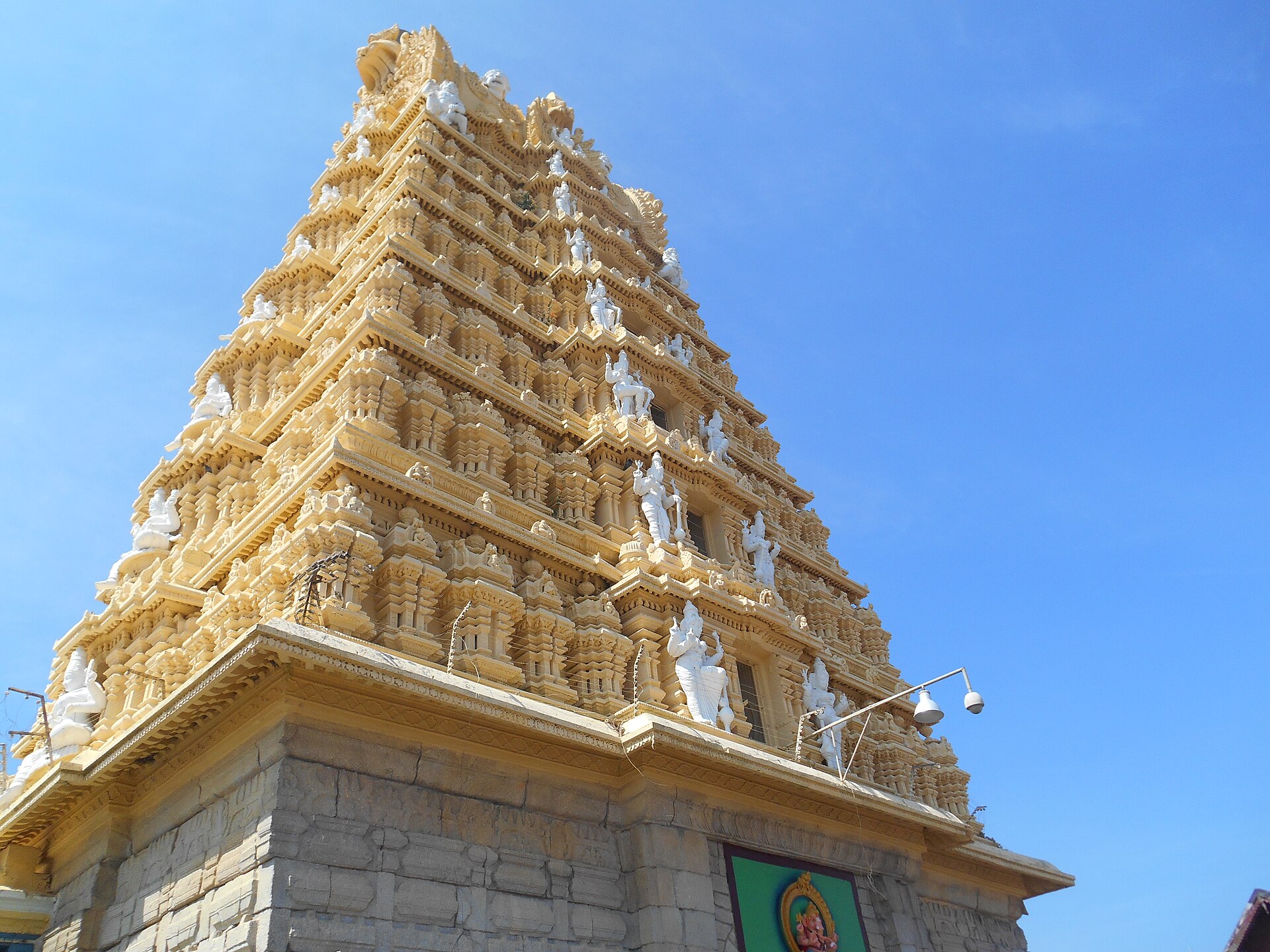
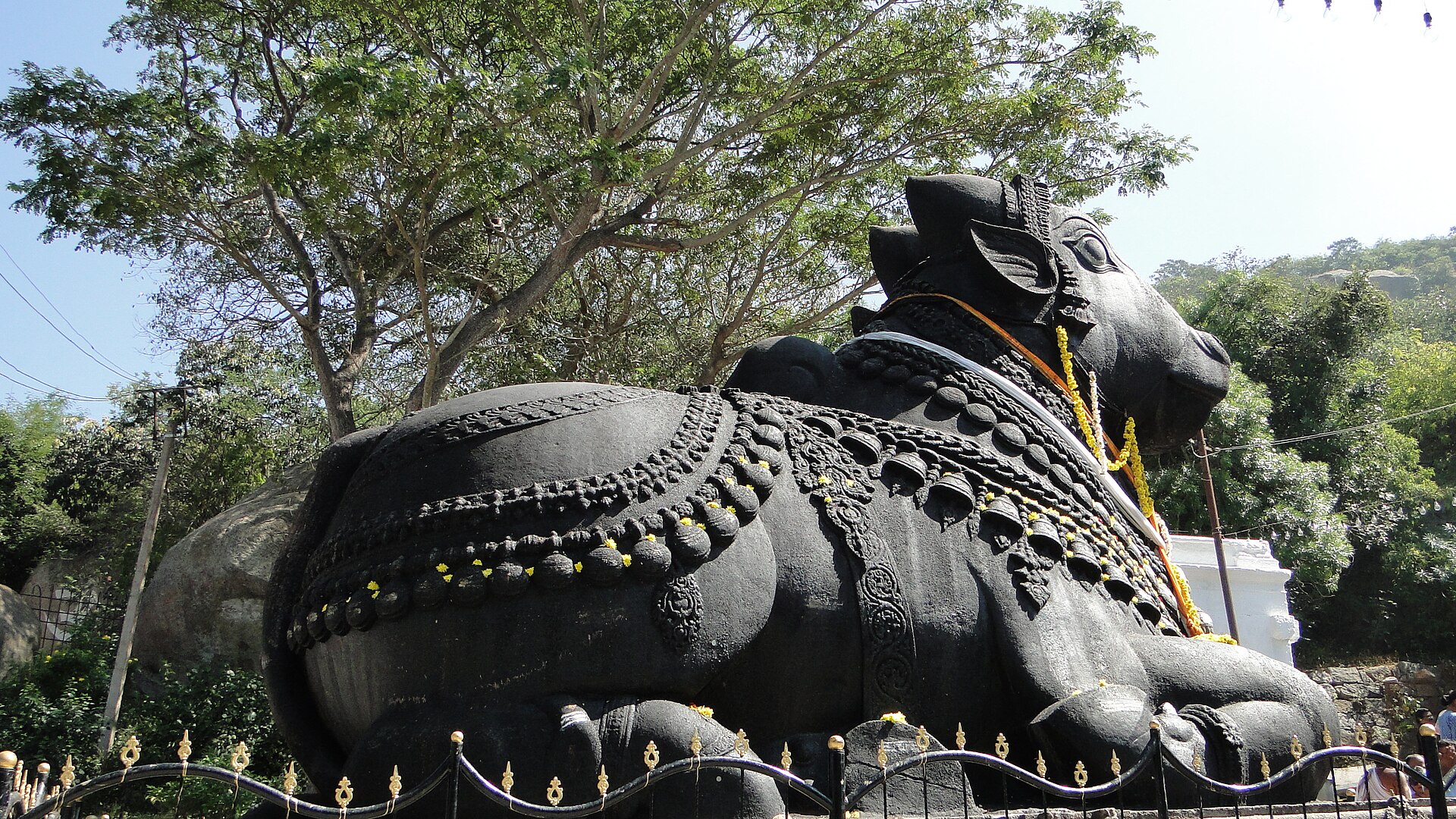
Dasara opens not at the palace but at the Chamundeshwari temple on Chamundi Hills, 1,000 metres above the city, where the goddess who killed the demon Mahishasura is worshipped. A chief guest, usually a writer or musician, performs the inaugural puja in the morning, and from that moment the festival is on. Go up the hill on day one, ideally by 7 am before the road jams, or climb the 1,000 old steps from the base for the view over the palace domes. The 5 metre Nandi bull carved from a single rock two thirds of the way up is the stop everyone makes.
Back in the city, the palace grounds fill with the Dasara Exhibition, a two month funfair and trade show on the Doddakere grounds that locals treat as the real festival and tourists ignore. Rs 30 gets you in, and the Ferris wheel view of the illuminated palace at night is genuinely the best photograph in Mysore.
Ten Evenings of Mysore Dasara: The Palace Under 100,000 Bulbs
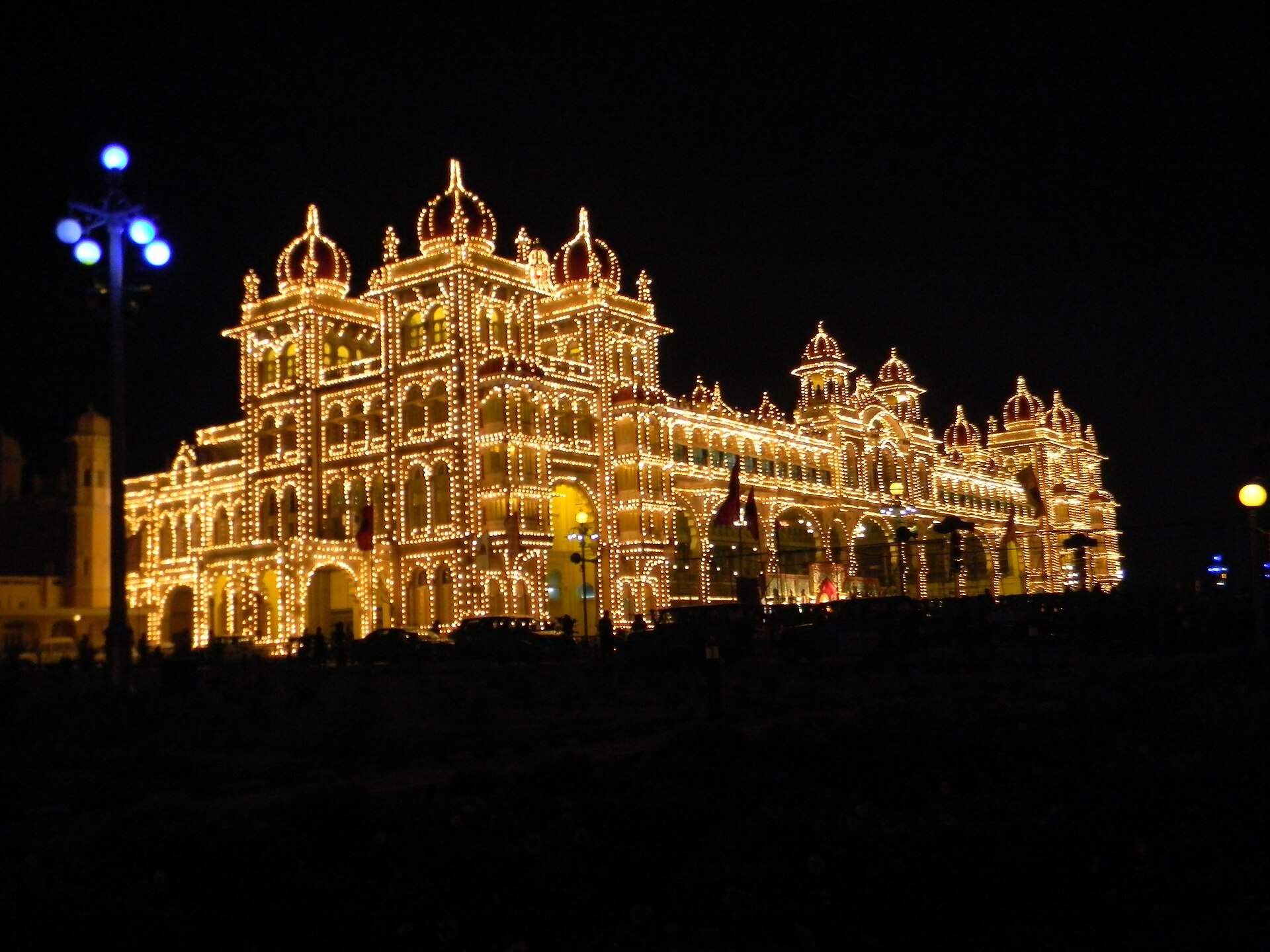
Every evening of the festival, from 7 to 9 pm, the palace is lit by close to a hundred thousand bulbs, the same incandescent outline that has drawn crowds since the 1930s. It is free to watch from the palace gardens, which open to the public each night, and this is the single experience I would tell a first time visitor not to miss. Arrive by 6.30 to get a spot on the lawn in front of the main facade, because by 7.15 it is standing room. The lighting continues on Sundays and holidays through the year, but only at Dasara does it run for ten nights straight with a crowd to match.
Inside the grounds, the Dasara cultural programme brings a different classical or film music act to a stage in front of the palace each evening, free with the crowd. The schedule is published on the official Mysore Dasara site a few days before opening. Yuva Dasara, the youth festival with big film and pop acts, runs at the Maharaja’s College grounds and needs a separate, cheap ticket. Ahara Dasara, the food festival, sets up at the Scouts and Guides grounds and is where to eat Mysore pak from the source rather than a sweet shop chain.
Mysore Dasara Ticket Maths: Gold Card Versus Everything Else
There are three ways to see the Jamboo Savari on the final day of Mysore Dasara. The Gold Card, sold by the Dasara authority to tourists and priced at Rs 6,500 in 2025, gives VIP seating on the palace lawns for the procession, a seat at the torchlight parade at Bannimantap that night, and free entry to the palace, zoo, Chamundi temple, KRS Brindavan Gardens, the rail museum and the rest for all ten days. Sales open online a couple of weeks before the festival and close when the limited seats are gone.
Second, the general grandstand tickets, sold in tiers that in past years ran from a few hundred rupees to around Rs 3,000, for seats along the procession route and at Bannimantap. These are cheaper, they go on sale later, and they sell out in a day.
Third, the free option: stand along the 5 km route from the palace to Bannimantap, anywhere on Sayyaji Rao Road, from about noon. You will be six deep and see the elephants for two minutes each, but you will see them, and the atmosphere in the crowd is the festival at its most honest.
My advice: buy the Gold Card if you are here for the whole ten days and will use the museum entries, since the palace and zoo tickets alone add up to nearly Rs 1,000; buy a grandstand seat if you only care about the procession; stand on the road if you are a tight budget and a patient person.
21 October: Vijayadashami and the Jamboo Savari
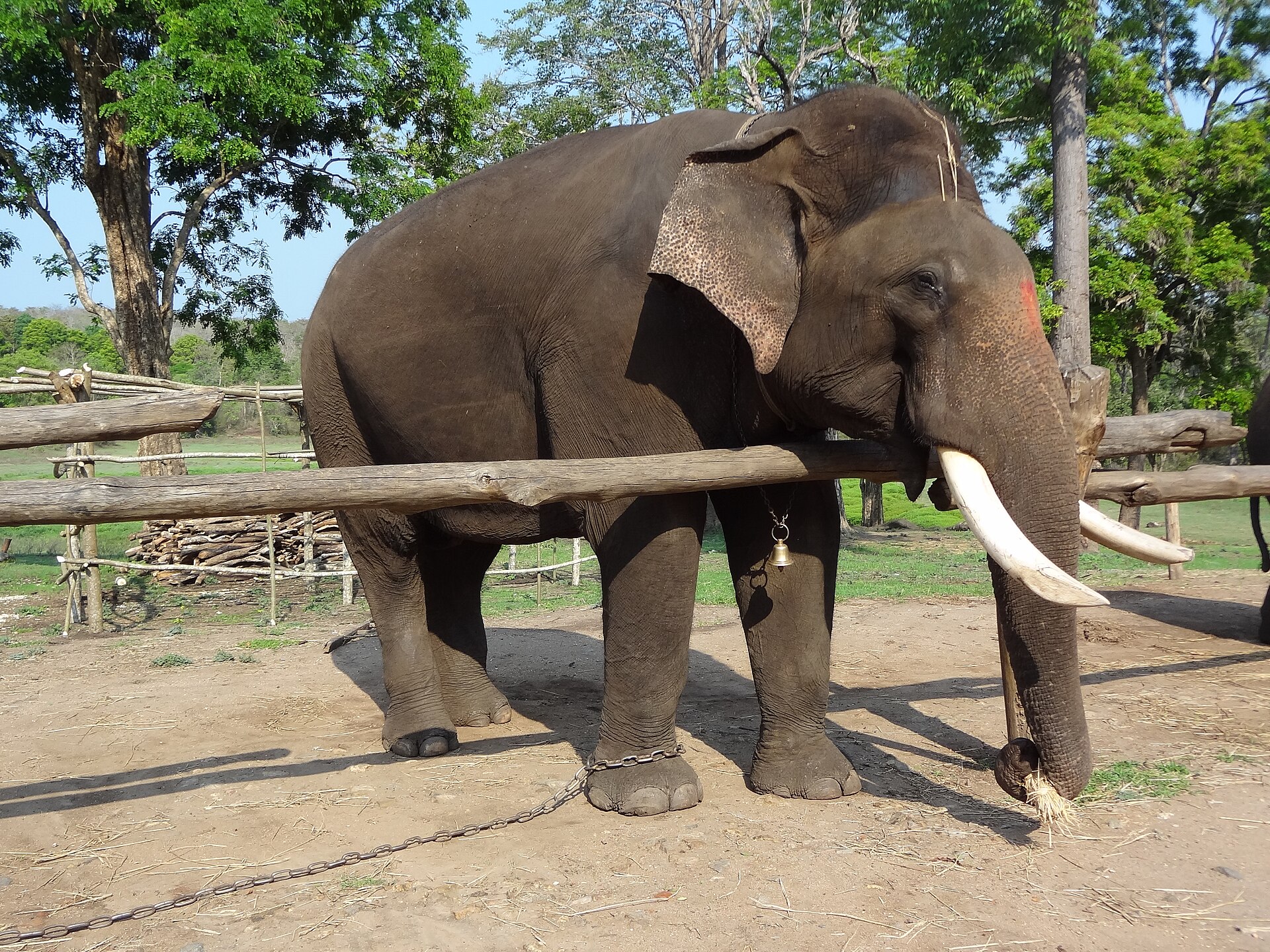
The final day begins with the royal family’s private durbar and the Ayudha Puja inside the palace, then in the afternoon the Jamboo Savari sets out from the palace’s Balarama gate. The lead elephant carries the 750 kg golden howdah with the idol of Chamundeshwari inside; the state’s chief minister offers flowers to it before the gates open. Behind come a dozen other elephants, folk dancers, mounted police, tableaux from every district, and brass bands, moving at walking pace toward Bannimantap in the north of the city. The procession usually leaves between 2 and 4 pm depending on the astrological timing, and the exact hour is announced a few days ahead.
At Bannimantap that evening the torchlight parade closes the festival: mounted stunts, motorcycle acrobatics from the police, and fireworks, all after dark from about 7 pm. It is ticketed, and it is the second half of what the Gold Card buys. Two honest notes. The elephants are captive working animals from the state’s forest camps, and if that troubles you, the parade and the palace lights give you plenty without it. And the crowd on the route is dense enough that children under ten will see nothing without a seat.
Where to Stay and How to Reach Mysore
Mysore is 145 km from Bengaluru, two and a half hours by road on the expressway or two hours on the Shatabdi and the Vande Bharat trains, both of which sell out for the procession day within days of bookings opening. Mysore has its own small airport with limited flights; Bengaluru’s is the practical one. KSRTC runs extra buses through the festival and the Bengaluru to Mysore Volvo is Rs 400 to 500.
Mysore Dasara hotels are the year’s most expensive during the final weekend and cheap for the rest of the festival. Anything within a kilometre of the palace runs Rs 4,000 to 12,000 on the last three nights; the same rooms are Rs 2,000 a week earlier. If you can only come for the Jamboo Savari, consider staying in Bengaluru and taking the 6 am train. The rest of the year, my Mysore city guide covers the palace, the market and the day trips, and Coorg is two hours west for a recovery day among the coffee.
One timing bonus. Dasara ends exactly as the state’s tiger reserves reopen for the season; Bandipur and Nagarhole are both under two hours from Mysore, and the national park reopening guide explains the safari booking. Pair three days of festival with two days of forest and you have the best week Karnataka offers.
Small Rules That Save the Day
Photography is banned inside the palace rooms, shoes come off at the entrance, and large bags are turned away, so travel light for the interior visit and save the camera for the grounds. October in Mysore Dasara week is 28 to 32 degrees by day with a chance of a late afternoon shower, so carry water and a light rain layer for the procession wait. Cash still matters at the exhibition stalls and the food festival, and ATMs near the palace run dry on the last two days. Book the KSRTC bus or train home before you arrive, because the evening of the Jamboo Savari sees the fastest sell out of the year.
How Mysore Dasara Compares to the Rest of India
The same ten days are Navratri in Gujarat and Durga Puja in Bengal, and the differences are worth knowing before you choose. Kolkata’s festival is bigger, denser and more exhausting; my Durga Puja guide covers it. Gujarat’s is participatory, you dance rather than watch. Mysore is the one you sit down for, and it is the only one with a single unmissable moment on a single known date. The Navratri and Dussehra guide compares all of them, and the festivals of India roundup puts the season in context. Karnataka’s hill country, from Sakleshpur to Coorg, is at its greenest right after the monsoon, which makes October the month to build a longer trip around this one.
Go for the ten days if you can, or at least for the last three. Watch the lights come on from the lawn on your first evening, take the early train back if you must, and buy the seat for the procession rather than hoping the crowd parts. It will not. A goddess on an elephant, in front of a palace lit like a birthday cake, with a million people holding their phones up at once: some things are worth a ticket.