

Somewhere around step 1,400 below Tyrna, my knees began sending complaints, and a Khasi woman overtook me with a full cane basket hanging from a strap across her forehead. She did not even slow down. That is the trail to Nongriat in one picture, and it is also why the living root bridges of Meghalaya stay with you long after the photos are forgotten.
This guide covers how they are grown, the trek to the Umshiang double decker and Rainbow Falls, the easier bridges for those who cannot do thousands of steps, and the costs from Shillong. It runs from hardest to easiest, so stop at the one that suits your legs.
What the Living Root Bridges Actually Are
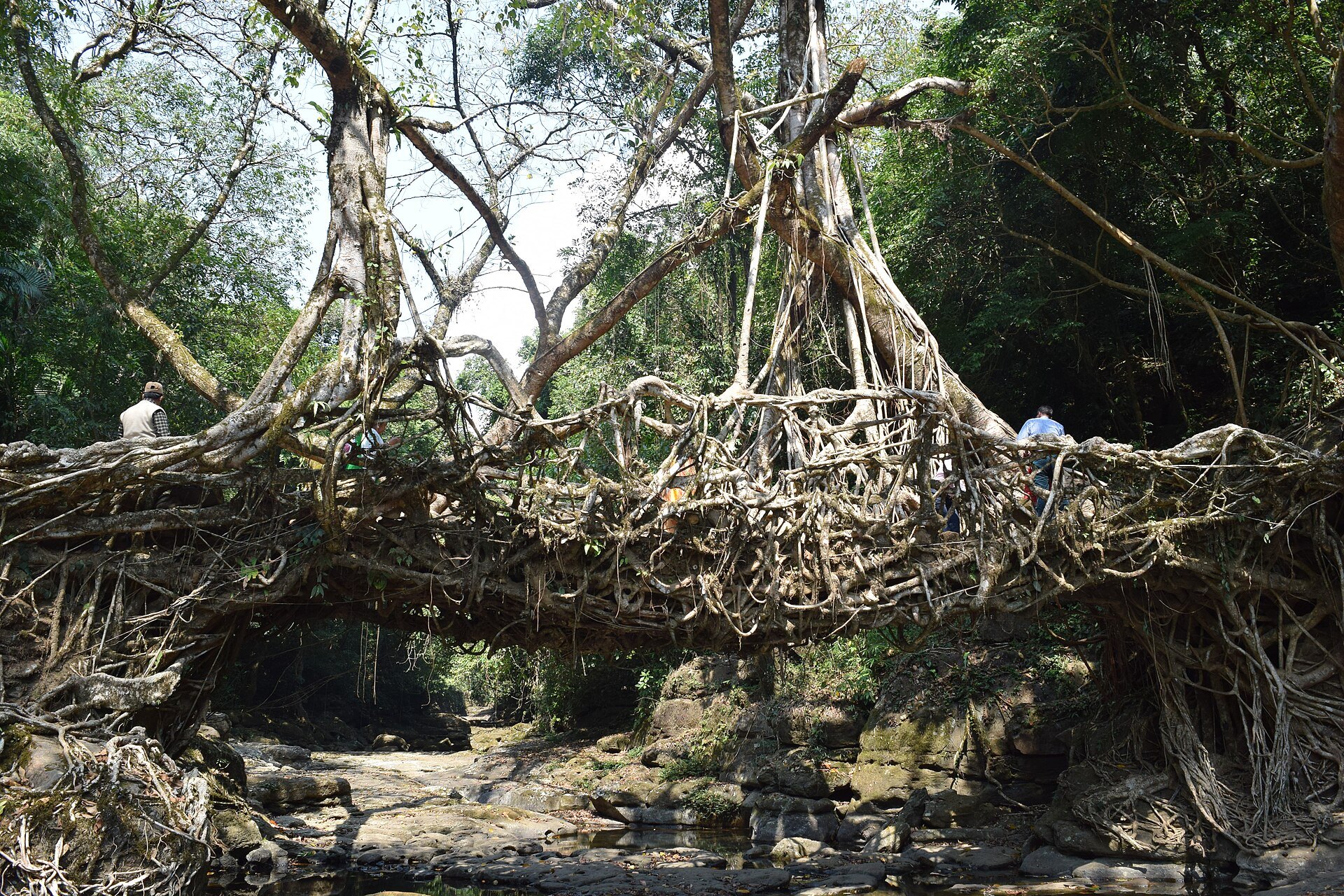
In Khasi they are called jingkieng jri, which simply means rubber tree bridge. Nobody builds them. The War Khasi and War Jaintia people of Meghalaya’s southern slopes grow them, by guiding the aerial roots of the Indian rubber fig, Ficus elastica, across a stream until the roots take hold on the other bank.
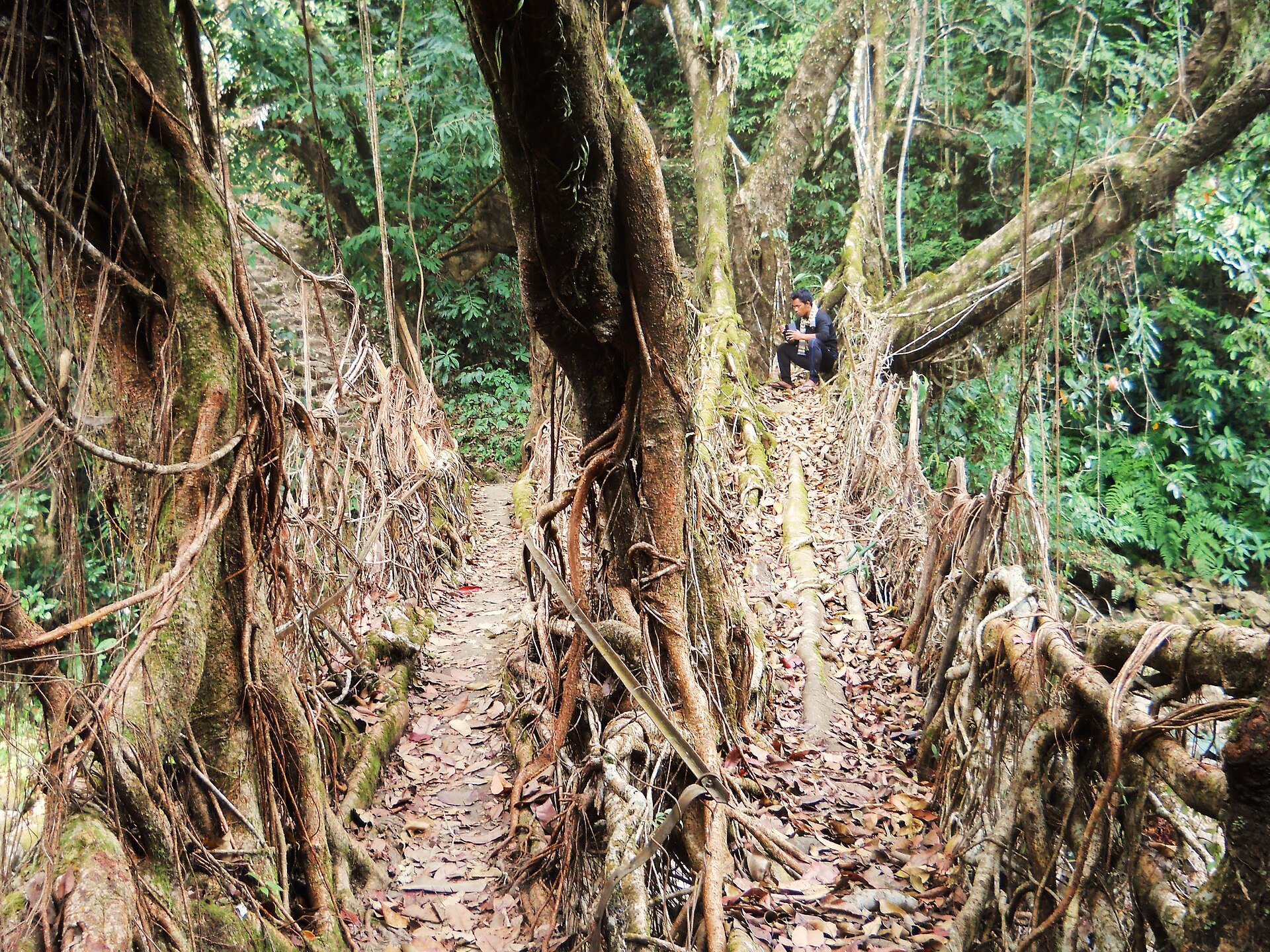
Young roots are fragile, so villagers thread them through hollowed-out areca palm trunks, or tie them along a bamboo scaffold laid across the water. Bamboo rots fast in this rain, so the scaffold is replaced again and again while the roots thicken. A bridge needs 15 to 30 years before it can take regular foot traffic. The person who plants it is usually a grandparent by then.
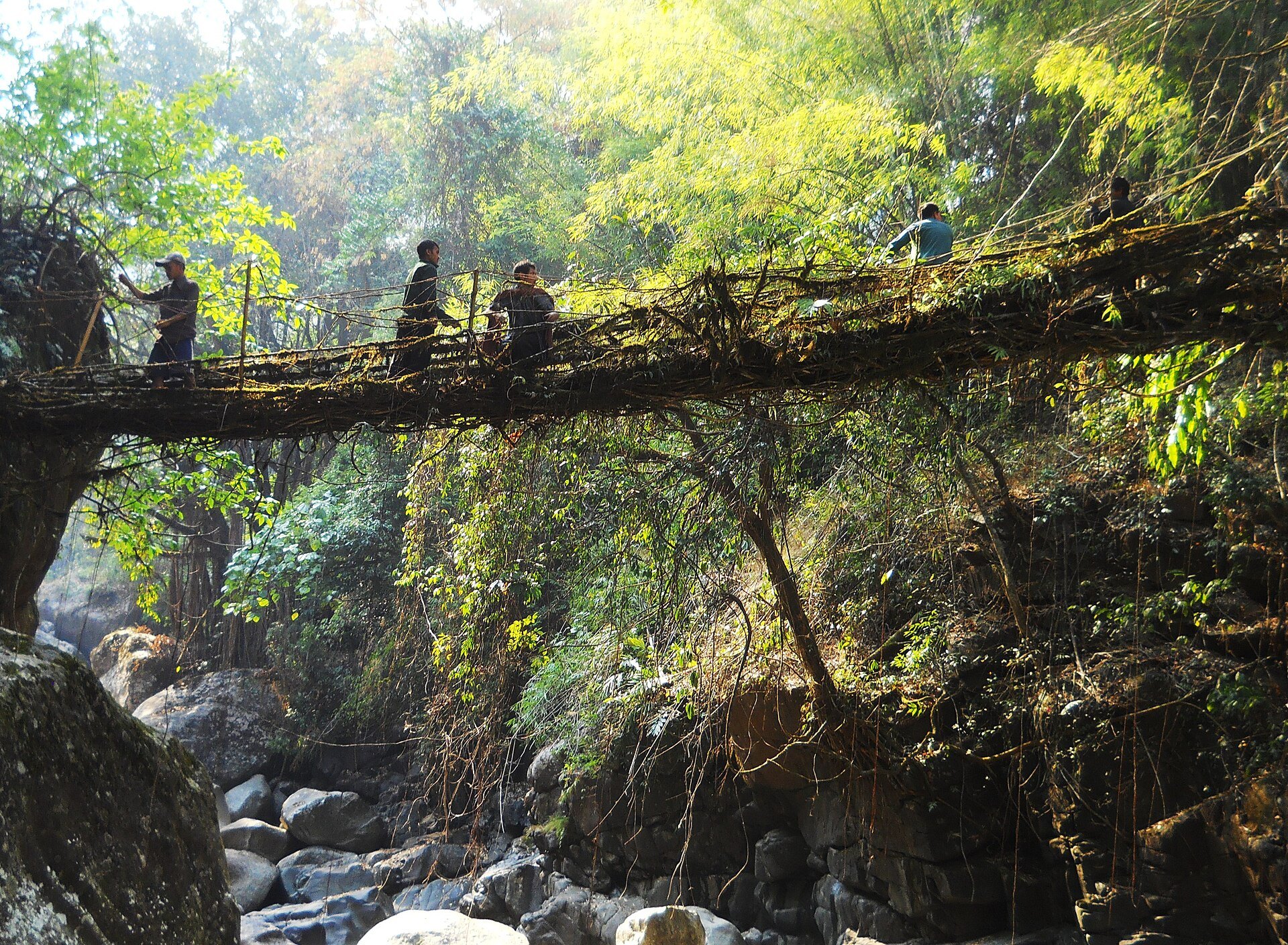
A mature bridge carries 50 people at a time. 500 years is the lifespan usually quoted, though nobody has a birth certificate for a tree. And this is not a dead craft. Rangthylliang, which has the longest known bridge at over 50 metres, and several other villages are training new living root bridges right now.
On UNESCO, be careful with what you read online. The bridges have been on India’s UNESCO tentative list since March 2022, and in January 2026 India submitted the full nomination dossier for the 2026-27 evaluation cycle. As I write this, they are not an inscribed World Heritage Site. Any blog that says so is ahead of the facts.
The Hard One: Nongriat and the Umshiang Double Decker
The most photographed of all the living root bridges is at Nongriat, a village with no road. You walk in from Tyrna, which is 12 to 15 km and about 40 minutes by taxi from Sohra, the town most of us still call Cherrapunji. The town’s own waterfalls and caves are in our older post on reasons to explore Cherrapunji.
Tyrna to Nongriat: The Steps
The number everyone quotes is 3,500 steps each way. Meghalaya Tourism says 3,000 to 3,500, and after the first thousand you stop caring. It is about 3 km one way, almost all concrete staircase, with a steep drop first and a short climb at the end.
The first stretch falls through betel nut plantations to Nongthymmai village, roughly 1,500 steps and 45 minutes down. After that come the steel-wire suspension bridges over the river. They sway, the floor is a narrow strip of steel rods, and you can see the boulders far below between your shoes. Cross one or two people at a time. For anyone with vertigo this is harder than the steps.
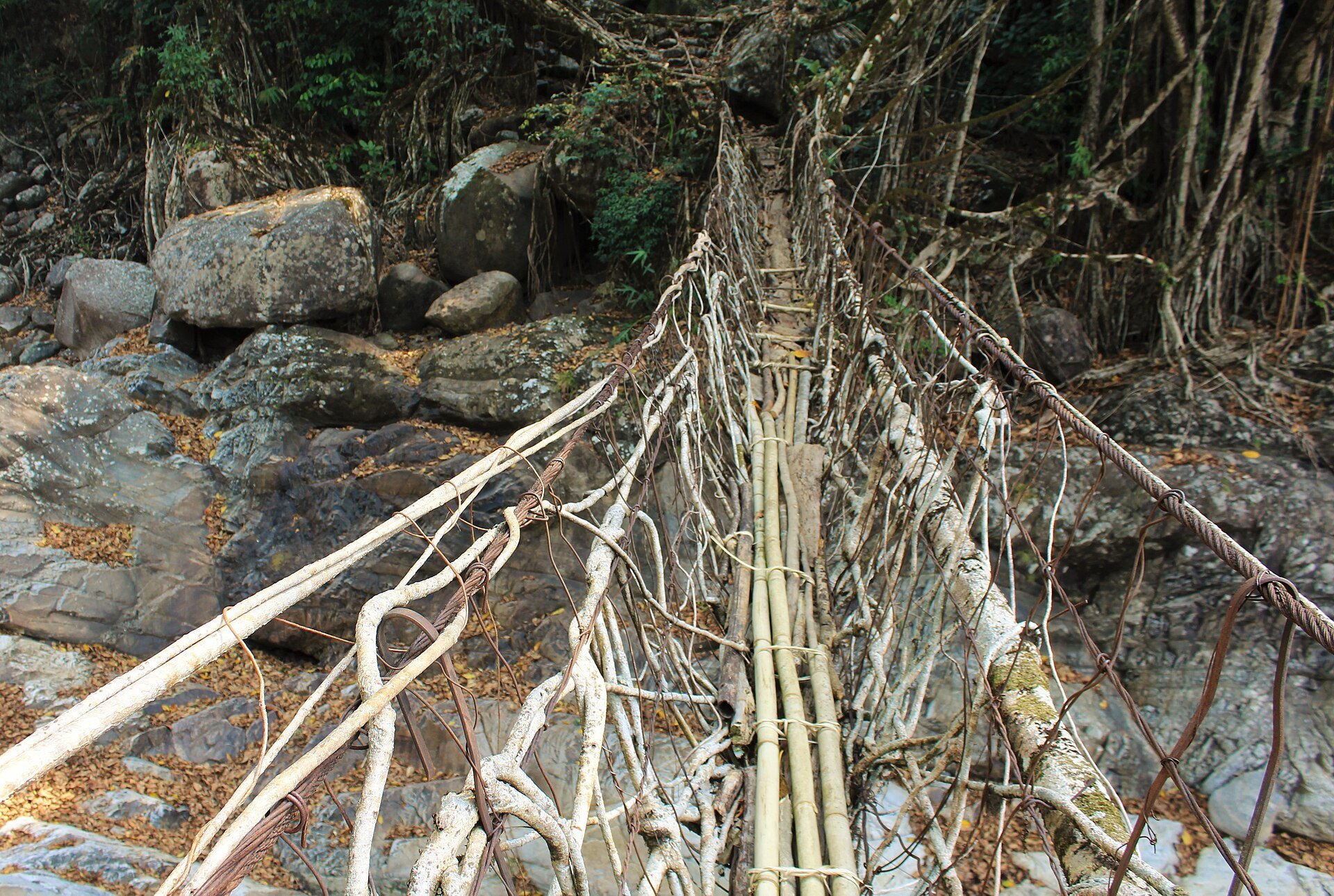
Near Nongriat, look for fig roots tied along one of these wire bridges. That is a new bridge being grown, with steel doing the bamboo’s job.
Going down takes 1.5 to 2 hours. Coming back up takes 2.5 to 3 hours, and 4 if your legs have given up. Start by 8 am. In winter the valley is dark by 5 pm, and these are not steps for a phone torch.
At the Double Decker
The double decker crosses the Umshiang stream at the far end of the village. The story told in Nongriat is that a monsoon flood once rose over the lower deck, so the village trained a second one higher up from the same tree. Locals put its age at around 200 years. Standing under it, with roots as thick as my thigh knotted overhead, I believed every year of it.
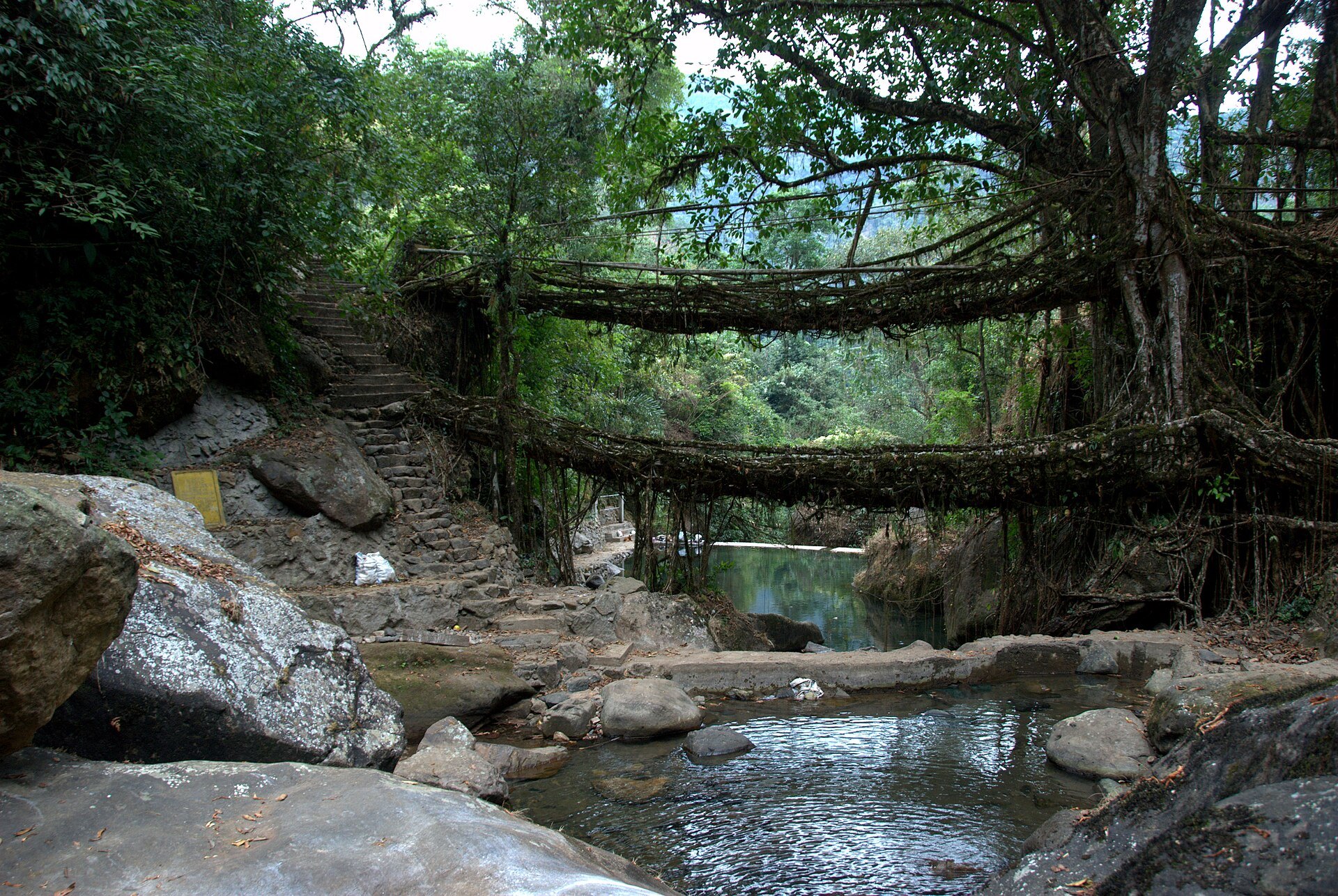
Entry is a small village fee, Rs 20 to 50 per person depending on whom you ask, plus about Rs 20 for a camera. Small fish in the pool below will nibble at your feet for free. Come before 10 am. By noon both decks fill with day-trippers posing.
About guides: the path is impossible to lose, but since 30 June 2025 the East Khasi Hills administration has made a registered guide compulsory on treks in the district, Nongriat included. Ask at Tyrna. Reported rates are Rs 800 to 1,500 for a group, more with Rainbow Falls.
Sleeping in Nongriat
Do not do this as a day trip unless you must. The living root bridges are at their best at 7 am, with nobody else on them. Nongriat has around ten simple homestays, Serene being the best known. Rooms go for roughly Rs 500 to 1,000 a night and dorm beds for less. One bill reported in 2025 was Rs 1,000 for the room and Rs 300 for dinner.
Dinner is rice, dal, a vegetable and maybe egg or chicken, cooked once for everybody, so order by late afternoon. Hot water comes in a bucket if you ask. Everything here came down those same steps on somebody’s back, so do not argue over Rs 20. Airtel and Jio usually work in Sohra and around Tyrna. Down in the valley both fade, BSNL sometimes catches a bar, and UPI is useless. Carry cash.
Further In: Mawsaw Bridge and Rainbow Falls
Rainbow Falls is the bonus for people who came for the living root bridges and still have legs left. A rougher trail continues up the valley from the double decker. In 20 to 30 minutes you reach the Mawsaw root bridge, a single span with natural pools far nicer for swimming than the crowded one in the village. Many people turn back here.
The falls are roughly 3 km beyond Nongriat, mostly uphill over rocks and more wire bridges, 1 to 1.5 hours each way. There is no entry fee. The pool is so blue it looks edited, and the spray throws a rainbow when the sun hits it directly. In this deep gorge that means roughly 10 am to 2 pm on a clear day. Cloudy day, no rainbow.
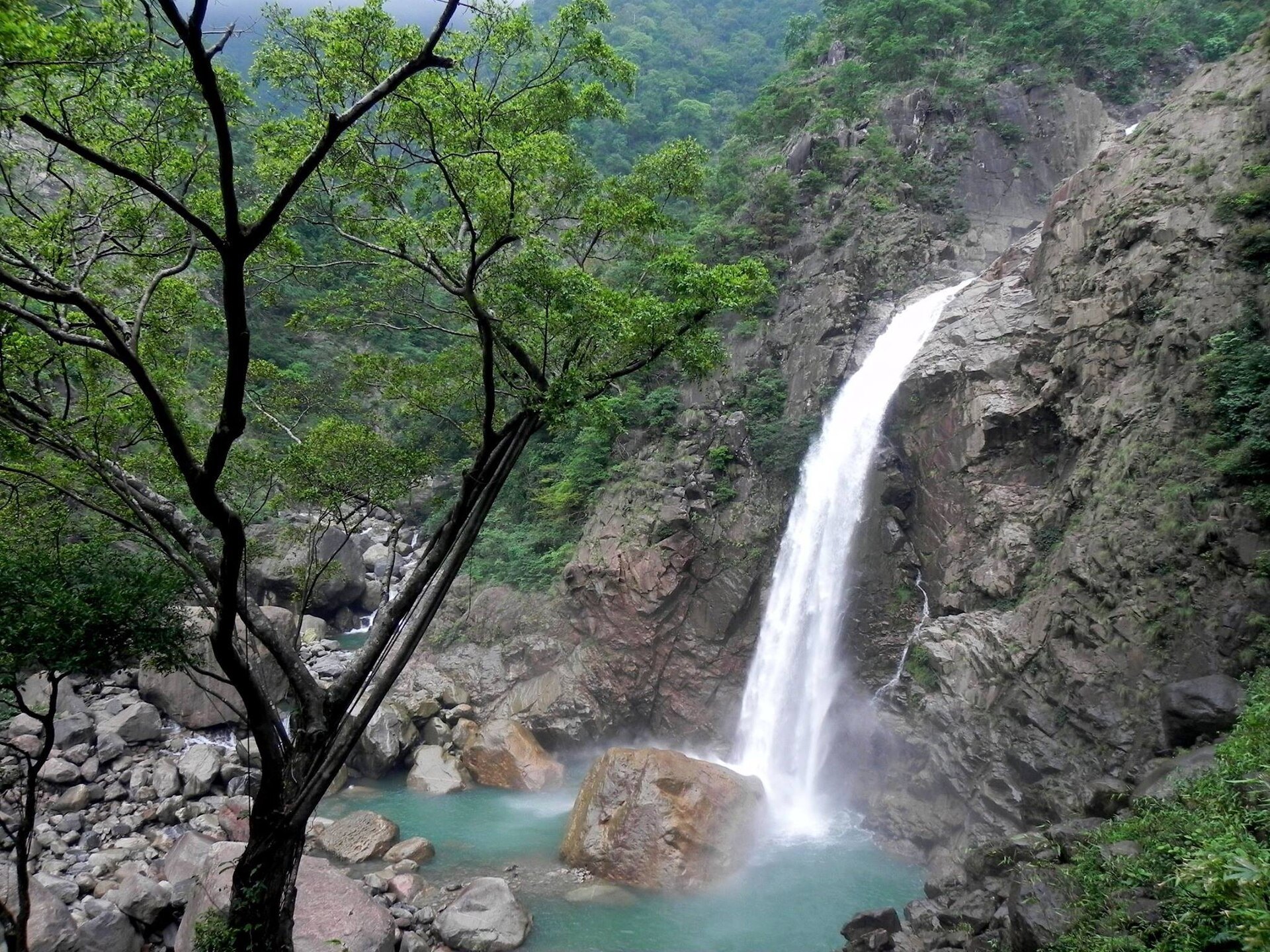
Two honest warnings from my side. The pool under the falls is not a swimming pool. The current near the drop is strong, and in the monsoon nobody should enter the water at all. Also, Tyrna to Rainbow Falls and back in one day means 8 to 9 hours of hard walking. Sleep in Nongriat and go the next morning.
Half the Steps: Ritymmen and Ummunoi
Not all living root bridges demand 3,500 steps. Ritymmen is on the Nongriat trail itself, a short detour at Nongthymmai village. It is a single span of about 30 metres, the longest in this valley, and to my eye more graceful than the double decker. It means 1,500 steps down and the same back, 2.5 to 3 hours in total. The village fee was Rs 10, plus Rs 20 for a camera, at last report.
Ummunoi is reached from Siej, a hamlet below Laitkynsew village, about 15 km from Sohra. The bridge is around 17 metres long and counted among the oldest in the region. The walk is 2 to 3 km of steps and forest path each way, so keep three hours. Hardly anyone goes.
The Easy Living Root Bridges: Riwai and the Jaintia Hills
Riwai, Near Mawlynnong
Plenty of people will never do Nongriat: parents with bad knees, families with toddlers. Riwai, the easiest of the living root bridges to reach, is for them. The village is a few minutes’ drive before Mawlynnong, about 80 km and three hours from Shillong. From the parking it is a 10 to 15 minute walk down a paved stone path with some 300 steps. Entry is Rs 30 to 50. The bridge, locally called Jingmaham, is wide and solid enough for grandparents and small children.
The downside is crowds. Every Dawki day tour stops here between 11 am and 3 pm, and the bridge can feel like a railway platform. Come before 10 am. Mawlynnong features in our list of rural tourism destinations in India, and the usual circuit with Dawki is in our places to visit in Meghalaya for a weekend.
Nongbareh, Kudeng Rim and Padu
The living root bridges of the Jaintia Hills are for people who dislike crowds more than they dislike driving. All three villages are around Amlarem, 85 to 90 km and over three hours from Shillong, on the Dawki side.
Kudeng Rim is the gentlest: a 20 minute forest walk to a wide, stepped waterfall with a two-level root bridge close by. Padu, about 10 km from Amlarem, has a double bridge among orange orchards. Nongbareh, 25 km past Amlarem, has an unusual double-span bridge, but reaching the riverbed takes an hour of descent, so it is easy only by Nongriat standards. Take a local guide, since signboards are few.
Pick Your Bridge
All the living root bridges from this post, hardest first. Times include the walk back to the road.
| Bridge | Nearest village | Effort | Time needed |
|---|---|---|---|
| Mawsaw and Rainbow Falls | Nongriat | Very hard | 2 days |
| Umshiang double decker | Nongriat, from Tyrna | Hard, 3,500 steps each way | 5 to 7 hours |
| Ritymmen | Nongthymmai, from Tyrna | Moderate, 1,500 steps each way | 2.5 to 3 hours |
| Ummunoi | Siej, Laitkynsew | Moderate | 3 hours |
| Nongbareh | Nongbareh, past Amlarem | Moderate | 2.5 to 3 hours |
| Kudeng Rim | Kudeng Rim, near Amlarem | Easy, 20 minute walk | 1 to 1.5 hours |
| Riwai | Riwai, near Mawlynnong | Easy, 300 steps | 45 minutes |
Getting to Sohra and Tyrna
Guwahati, with its airport and railway station, is the gateway for the living root bridges. Shillong is about 100 km and 2.5 to 3.5 hours away, and shared sumos and taxis from Paltan Bazar or the airport charge Rs 300 to 500 a seat. With a spare day, see our places to visit in Assam, and give Shillong a night of its own.
From Shillong, Sohra is 54 km and about two hours. Shared sumos go from the Bara Bazar stand. Seat fares are quoted anywhere from Rs 70 to Rs 200, so ask before you sit. A private cab is Rs 2,000 to 3,500 one way. The drive is half the fun, as our piece on riding the roads of Cherrapunji will tell you.
Sohra to Tyrna is the awkward bit. Shared vehicles are irregular, so most people reserve a taxi for Rs 500 to 800 one way and fix the return pickup time in advance. Sleep in Sohra or Tyrna the night before. Starting from Shillong the same morning is too late.
What Two or Three Days Cost From Shillong
For two days, with a night in Sohra and a night in Nongriat, a budget traveller on shared transport should keep Rs 3,500 to 5,000 per person. Roughly: Rs 800 to 1,500 on transport, Rs 900 to 1,700 for the two beds, Rs 600 to 900 on food, about Rs 100 on entry and camera fees, and your share of the guide.
With a private cab split between two and a third day for Riwai and Dawki (a full-day cab is Rs 3,500 to 4,500), the figure climbs to Rs 8,000 to 11,000 per person. Withdraw cash in Shillong. Sohra’s ATMs run dry, and beyond Sohra there is nothing.
October to April, and Why Not July
The dry months, October to April, are the season for the living root bridges. October and November are my pick. The rain has mostly stopped, the falls are still heavy, and the pools have turned glass-blue. December to February is colder, with thinner waterfalls.
Sohra is among the wettest places on earth, and from June to September it shows. The steps grow moss and turn slick, leeches wait on every damp leaf, and swimming is out of the question. The reward is that every waterfall is at full power. If you do go then, carry salt for the leeches and add an hour to every time estimate here.
Knees, Shoes and Village Rules
You do not need trekking experience for Nongriat. You need working knees and patience. The descent punishes the knees, the climb back punishes the lungs, and your calves remember both for two days. Anyone who walks 5 km daily will manage, and our best treks in India by difficulty shows where it ranks. People with knee injuries, heart trouble or a real fear of heights should choose Riwai or Kudeng Rim without any guilt.
Wear shoes with proper grip that are already broken in. A bamboo stick costs Rs 20 to 50 at Tyrna and saves your knees on the way down. Carry two litres of water, a rain jacket, quick-dry clothes for the pools, a torch and a power bank. Leave the suitcase in Sohra.
The rules at all the living root bridges are simple, and the villages are serious about them. Do not hang from, swing on or jump on the roots. Spread out on the deck instead of crowding the middle for a group photo. I could not find any official daily cap on visitors, so the restraint has to come from us. Carry every plastic wrapper and bottle back up. Sunday is church day here, and many counters and shops stay shut.
Planted for Grandchildren
On the climb out I kept thinking about whoever first tied a root across the Umshiang. That person knew they would be old, or gone, before the bridge could carry a loaded basket. They tied it anyway. The living root bridges of Meghalaya are a quiet argument for the long view, and that is what I carried back up the steps along with two very sore legs.
Go slowly, pay the village fees gladly, and leave the roots as you found them. Somebody’s grandchildren are going to need them.