

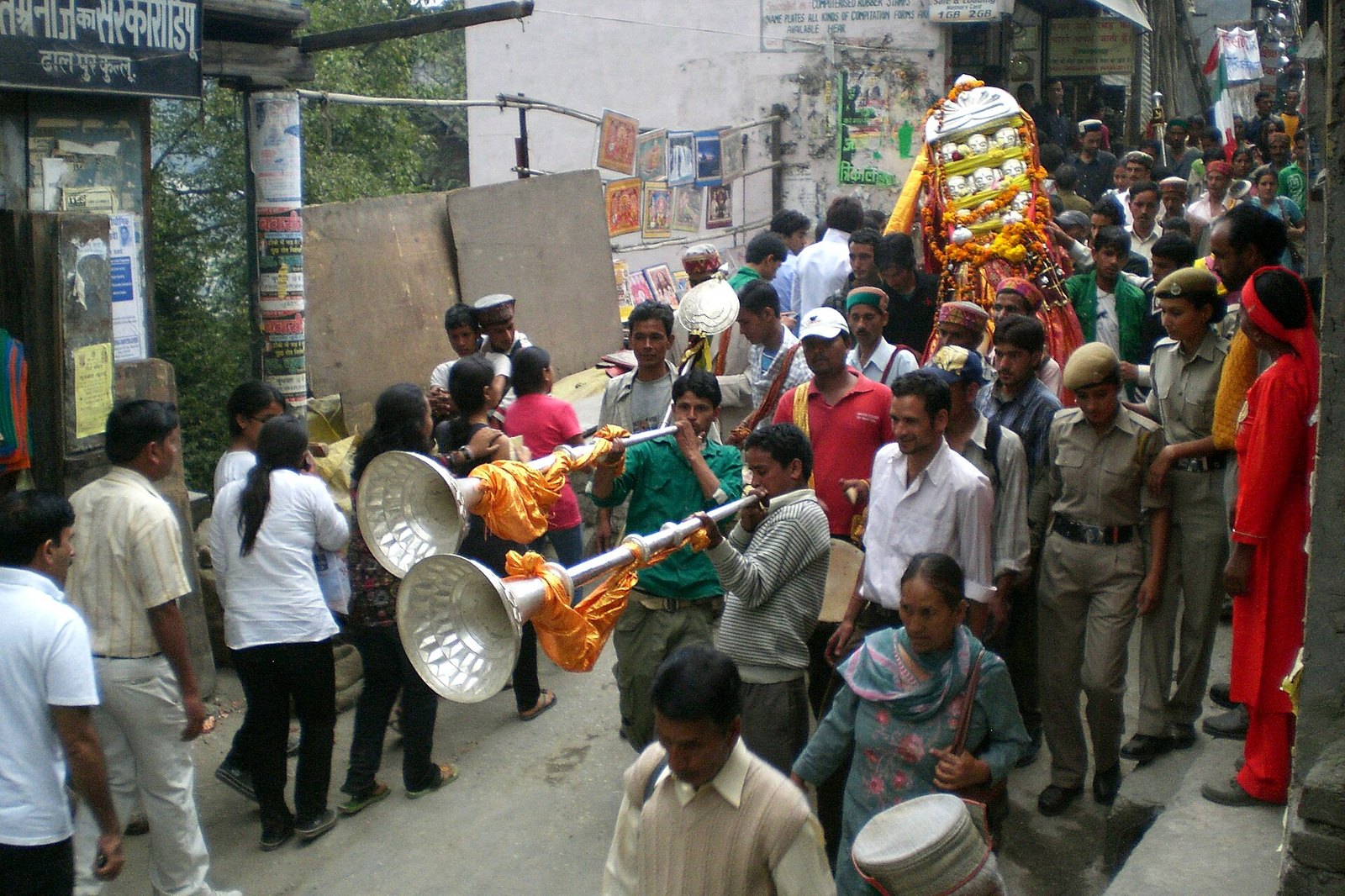
You hear it before you see it. One long brass note from up the road, another answering it from across the river, then drums, none of them keeping time with the others. A palanquin comes round the bend above Akhara Bazaar on the shoulders of men in grey woollen coats, its silver faces flashing in the October sun, and an entire village walks behind it. This is how Kullu Dussehra begins, on the very day the rest of India is sweeping up the ash of its Ravana effigies and going back to work.
The festival runs for seven days from Vijayadashami on Dhalpur Maidan, the big open ground in the middle of Kullu town, at about 1,220 metres on the right bank of the Beas. There is no Ramlila here and no ten headed effigy stuffed with crackers. Kullu Dussehra 2026 is expected from 20 to 26 October. The Himachal government had not put out the official programme when I last checked, so confirm with Himachal Tourism or the official festival website before you pay for anything non refundable.
Still deciding where to be for the nine nights? Our Navratri and Dussehra guide compares Gujarat, Bengal, Mysore and the north.
A King, a Curse and a Thumb Sized Idol from Ayodhya
The story goes back to Raja Jagat Singh, who ruled Kullu from 1637 to 1662. He was told that Durgadatta, a Brahmin in the village of Tipri, owned a bowl of fine pearls. The king wanted them and sent word that he would collect them on his way back from Manikaran. By most tellings they were only pearls of knowledge. With nothing to hand over, Durgadatta set fire to his house with his family inside it, cursing Jagat Singh as he burned.
The curse was specific. Whenever the king ate, his rice would look like worms, and his water would look like blood. A guilt sick raja went to a saint named Krishnadas Payahari, who told him the only cure was to bring the idol of Raghunath, Lord Rama, from the Tretnath temple in Ayodhya and hand the kingdom over to it. A disciple called Damodar Das was sent. He served in the temple for months and then, to put it plainly, stole the idol.
According to the official festival record the idol reached Kullu in 1650, travelling through Manikaran, Vashisht and Naggar before it was installed at Sultanpur, the old palace quarter above the town. It is tiny, about the size of a thumb. Jagat Singh placed it on the throne and declared himself its chharibardar, the staff bearer who rules on the god’s behalf. His descendants still hold that title. The current one, Maheshwar Singh, is a former MP, and you will see him in a palanquin every day of Kullu Dussehra.
Every village in Kullu already had its own devta, with its own temple, oracle and opinions. Jagat Singh ordered all of them to come to the capital once a year and pay respects to Raghunath. That annual summons is the festival: a royal court where the courtiers happen to be gods.
Two Hundred Gods on Foot
A devta here does not sit in a temple waiting for you. It travels. Each one has a rath, which in Kullu means a palanquin on two long poles, draped in silk and marigolds and fitted with mohras, the metal face masks in silver, brass and sometimes gold that are the deity’s visible form. When the devta is pleased the palanquin sways and lunges, and the bearers insist they are not the ones moving it.
The district administration sends formal invitations to more than 300 devtas, and in a normal year somewhere between 200 and 300 turn up. Those from Outer and Inner Seraj walk for days to get here, with their musicians, their gur (the oracle) and villagers carrying rations. Each devta has a fixed camping spot on Dhalpur that has belonged to it for generations.
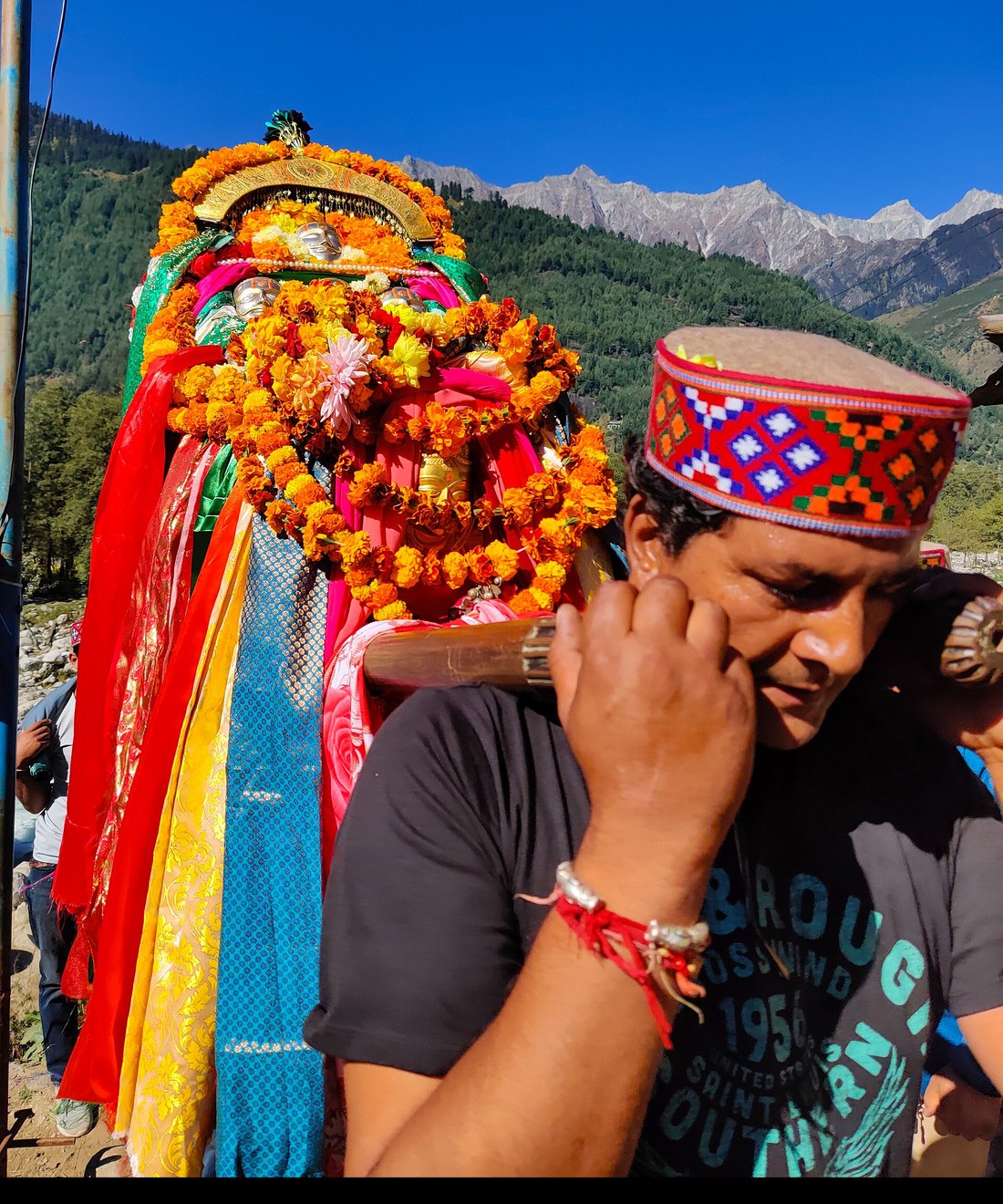
Ground rules from my side: do not touch a palanquin or step across its poles, and ask before you photograph a gur in trance. When a rath comes charging through the crowd, move. Nobody is going to steer it around you.
The Seven Days of Kullu Dussehra, in Order
Day One: Hadimba Arrives, Then the Rath Moves
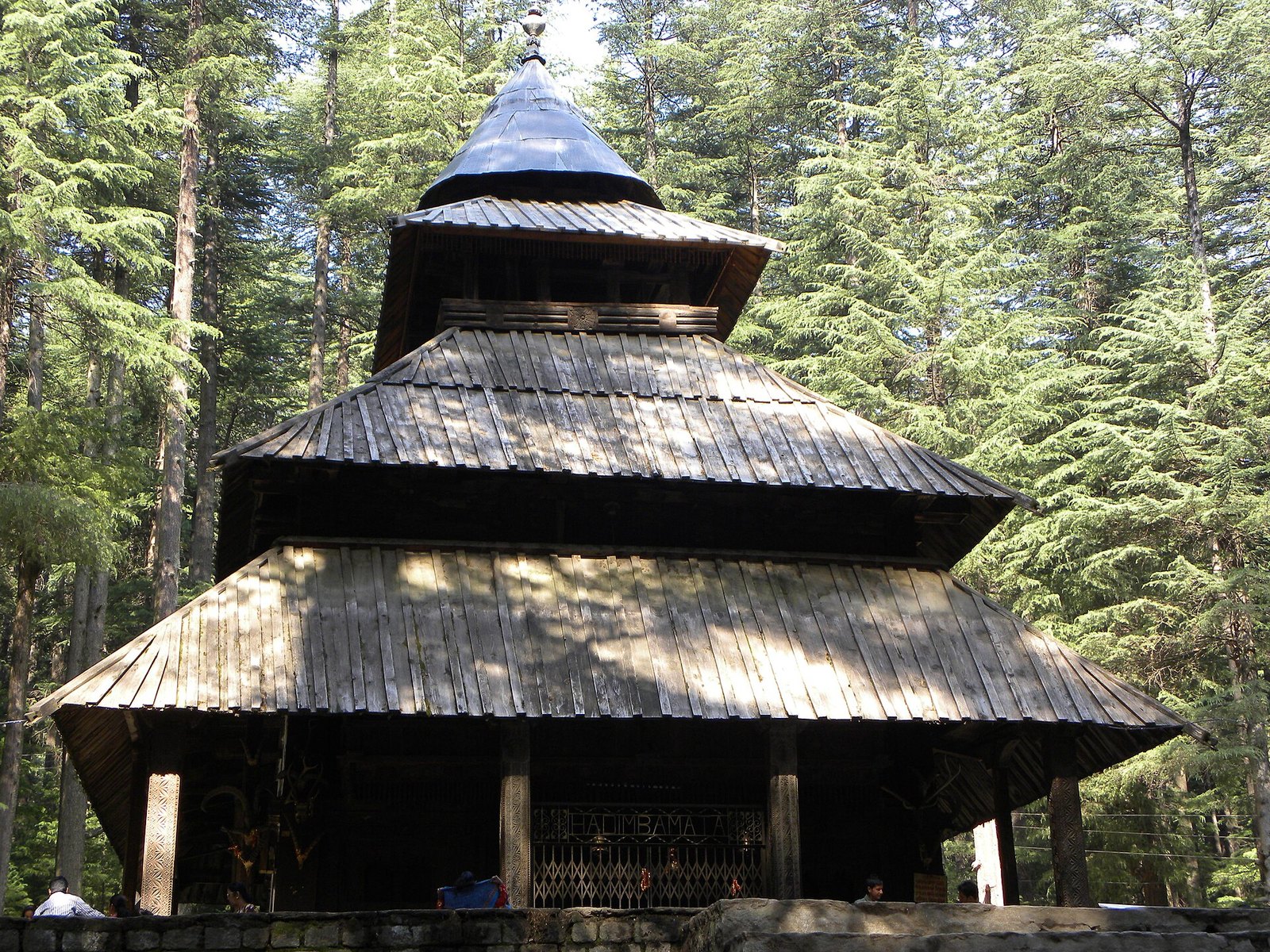
Nothing starts without Hadimba Devi. The goddess of the Dhungri cedar forest in Manali, 40 km up the valley, is considered the grandmother of the Kullu royal family, since legend says she gave the first raja his kingdom.
Her palanquin halts at Ramshila, at the head of Akhara Bazaar, and waits until a messenger from the raja arrives carrying a silver staff. Only then does she proceed to the Raghunath temple and the palace, where her priest, possessed, calls out to the raja as “grandson” and the gates open.
After that, Kullu Dussehra moves quickly. The idol of Raghunath is dressed, placed in a palanquin and carried down from Sultanpur to Dhalpur behind the decorated horse of Narsingh, with Bijli Mahadev and the other senior devtas in attendance. At the northern end of the ground stands a tall wooden chariot hung with coloured cloth and bells. The chharibardar walks around it five or seven times and touches the rope.
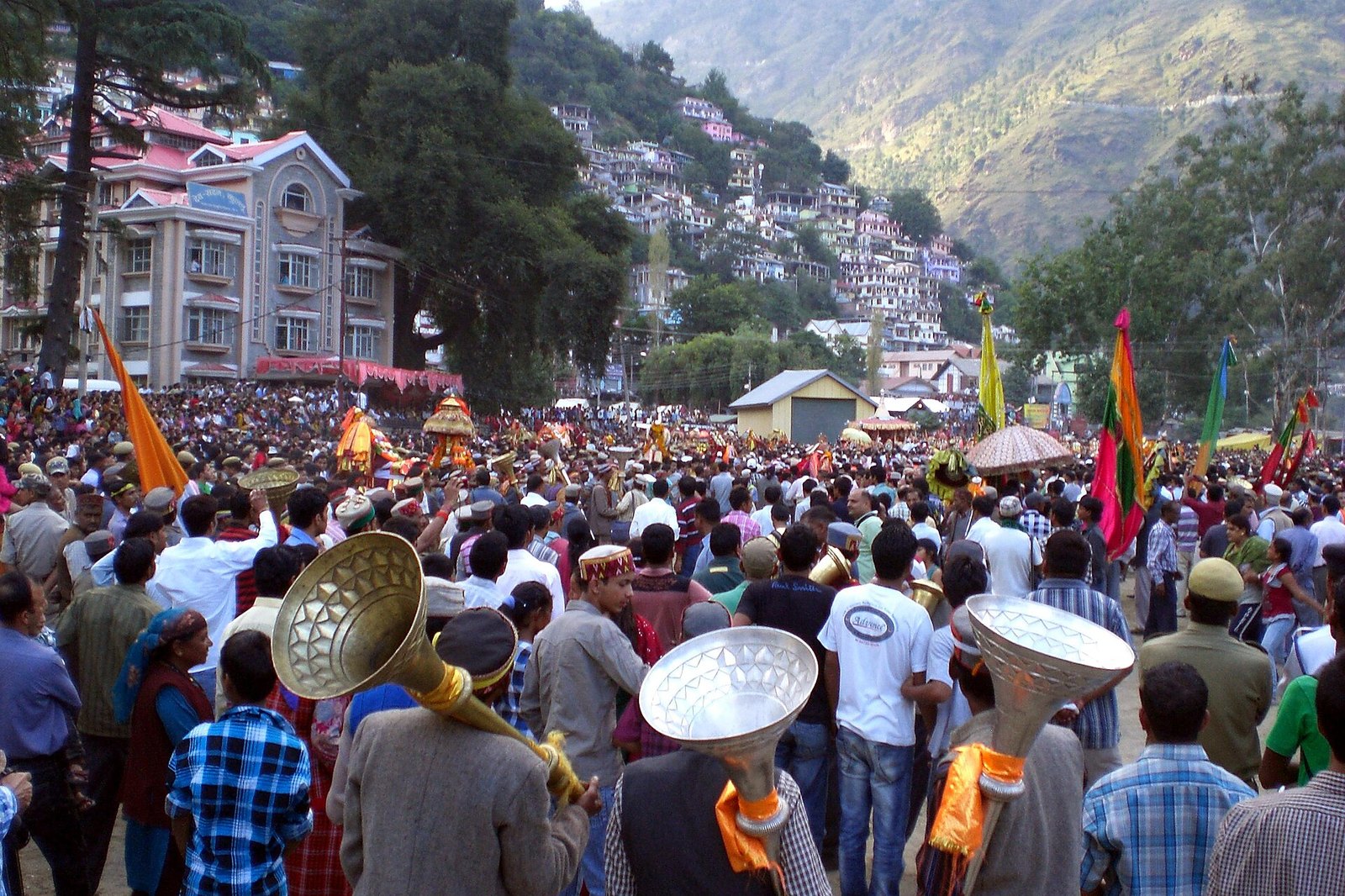
Then thousands of people grab the ropes and drag it to the middle of the maidan with shouts of Jai Siya Ram, every palanquin on the ground surging alongside. This Rath Yatra happens in the late afternoon and lasts maybe half an hour. Reach Dhalpur by 2 pm if you want a spot on the raised edges of the ground, because inside the crowd you will see only the backs of heads.
Days Two to Five: The Raja’s Rounds and Long Afternoons
The middle days are slower, and they are my favourite. Every day the chharibardar goes round the ground in a palanquin procession called the jaleb, led again by Narsingh’s horse, with three or four devtas and their bands for company. Each camp greets him with a blast of narsingha and karnal, the curved and straight brass trumpets you heard on day one.
The rest of the time you simply wander between the camps. Villagers cook on wood fires beside their god. Devtas pay social calls on each other, palanquins bowing in greeting like old uncles at a wedding. Ask which village a devta has come from and you will get its whole biography.
Day Six: Mohalla
On the sixth day every devta on the ground goes up to Raghunath’s camp temple to mark attendance, flags and instruments and all. Five devtas stay away on the far bank of the Beas at Angu Dobhi and send representatives instead. One of them is Jamlu of Malana, the famously independent god of that famously independent village.
Day Seven: Lanka Dahan on the Beas Bank
The last day is where Kullu Dussehra differs most from the plains. The chariot is pulled down to a patch of lower ground on the riverbed, on the Bhuntar side, which stands in for Lanka. There is no effigy.
A heap of dry grass and brushwood is set alight, and young men from the villages of Saari and Khanipandh pull clay masks out of the fire and present them to the raja. Locals call the masks Ravana and Kumbhkaran. The festival’s own history suggests they may be rival chiefs the Kullu rajas once defeated.
Traditionally the burning ended with five sacrifices to the goddess: a buffalo, a ram, a cock, a fish and a crab, standing for anger, intoxication, lust, attachment and greed. The Himachal Pradesh High Court banned animal sacrifice at religious gatherings in 2014. A Supreme Court interim order in 2017 softened the blanket ban, but said clearly that nothing of the sort may happen in public. Since then local papers report coconuts and symbolic offerings at the riverbank. You will not see an animal killed at Kullu Dussehra, and please do not go looking for it.
Then it ends fast. Raghunath returns to Sultanpur, Hadimba leaves first and the devtas start their long walks home. By next morning half the camps are gone.
Evenings at Kala Kendra and the Fair Around It
Kullu Dussehra has carried the “international” label since the 1970s because of the International Folk Festival that runs alongside it. Every evening the open air auditorium at Lal Chand Prarthi Kala Kendra, beside the maidan, hosts troupes from abroad (Russia, Indonesia, Uzbekistan and Kyrgyzstan have sent groups in recent years) along with Himachali artists and a playback singer or two. Front blocks are by pass. The general stone steps have been free in the years I know of, but they fill early and it gets properly cold after nine.
The best thing on that stage is still the local nati. When a few hundred dancers in Kullu caps link arms, slow and swaying, the foreign troupes look like the warm up act.
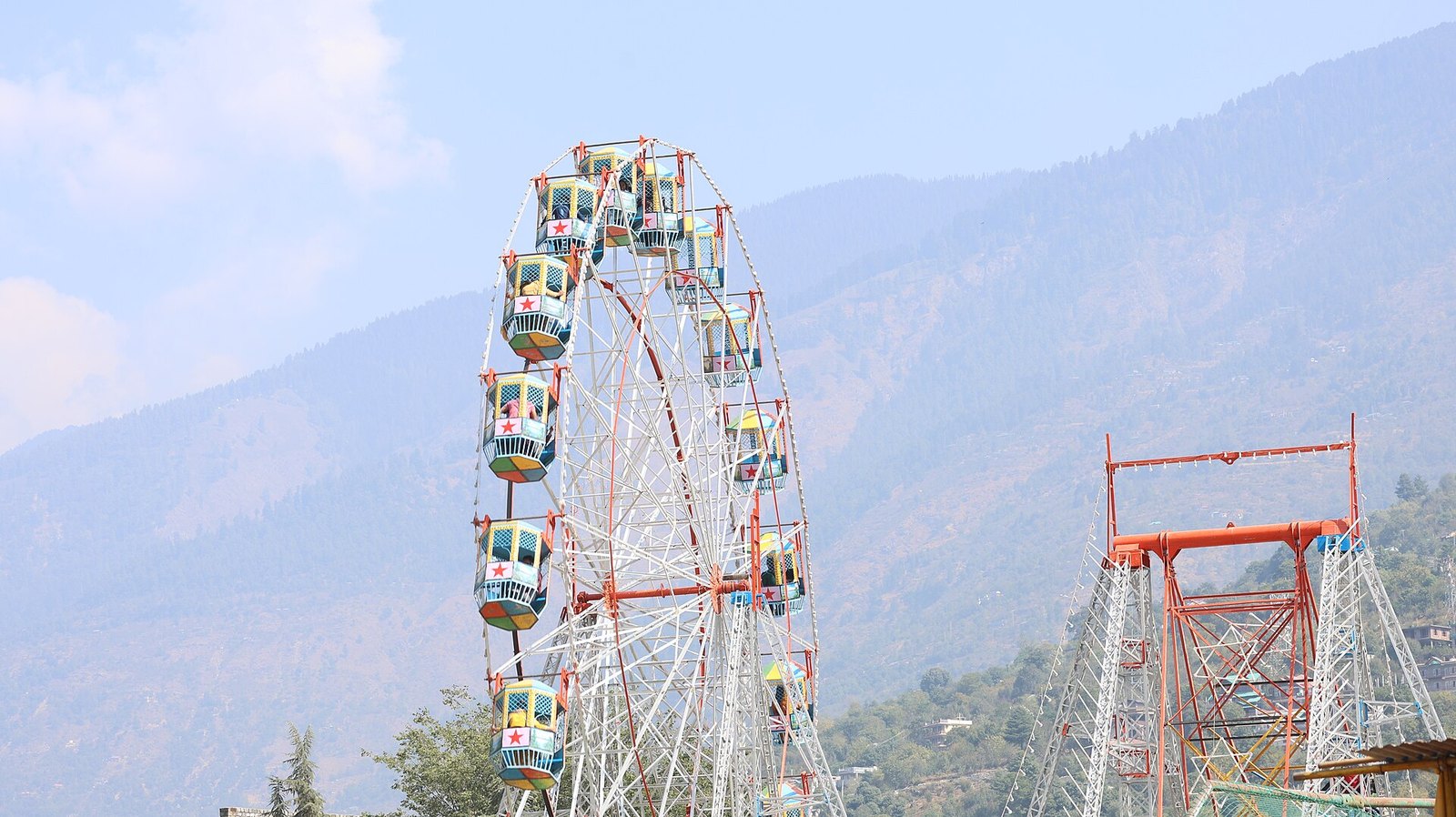
Around all this sprawls the Kullu Dussehra fair, hundreds of stalls selling blankets, steel utensils and dry fruit, plus a giant wheel and a well of death. The market usually lingers for weeks after the devtas leave, because this is where valley families do their winter shopping.
Buy Kullu shawls and caps. The Kullu shawl carries a GI tag, so only handloom pieces woven in the district can legally use the name, yet plenty of stalls sell machine made Ludhiana copies with the same geometric borders. Look for the handloom mark and the GI label, or go to Bhuttico, the weavers’ cooperative that has run since 1944, where prices are fixed.
Roughly, a wool cap costs Rs 250 to 600, a plain wool shawl with a patterned border Rs 1,200 to 3,000, and fine pashmina or angora blends go past Rs 6,000.
Eat siddu, the steamed stuffed bread that comes swimming in ghee, for Rs 60 to 100 a plate at the food stalls. Carry cash, because the mobile network struggles when a few lakh people share it.
Where to Stay: Kullu, Naggar or Manali
Kullu town puts you within walking distance of Dhalpur, which matters because traffic and parking around the ground are restricted all through Kullu Dussehra. The hotels are plain and they sell out first. Expect Rs 2,000 to 3,500 for a basic double and Rs 4,000 to 7,000 for the better ones in festival week. Book a month ahead.
Naggar, about 22 km north on the quieter left bank road, is my pick. Homestays and small hotels among apple orchards run Rs 2,000 to 5,000, and the drive to Kullu takes 45 minutes or so. The HPTDC hotel inside Naggar Castle is the splurge, if you can get a room.
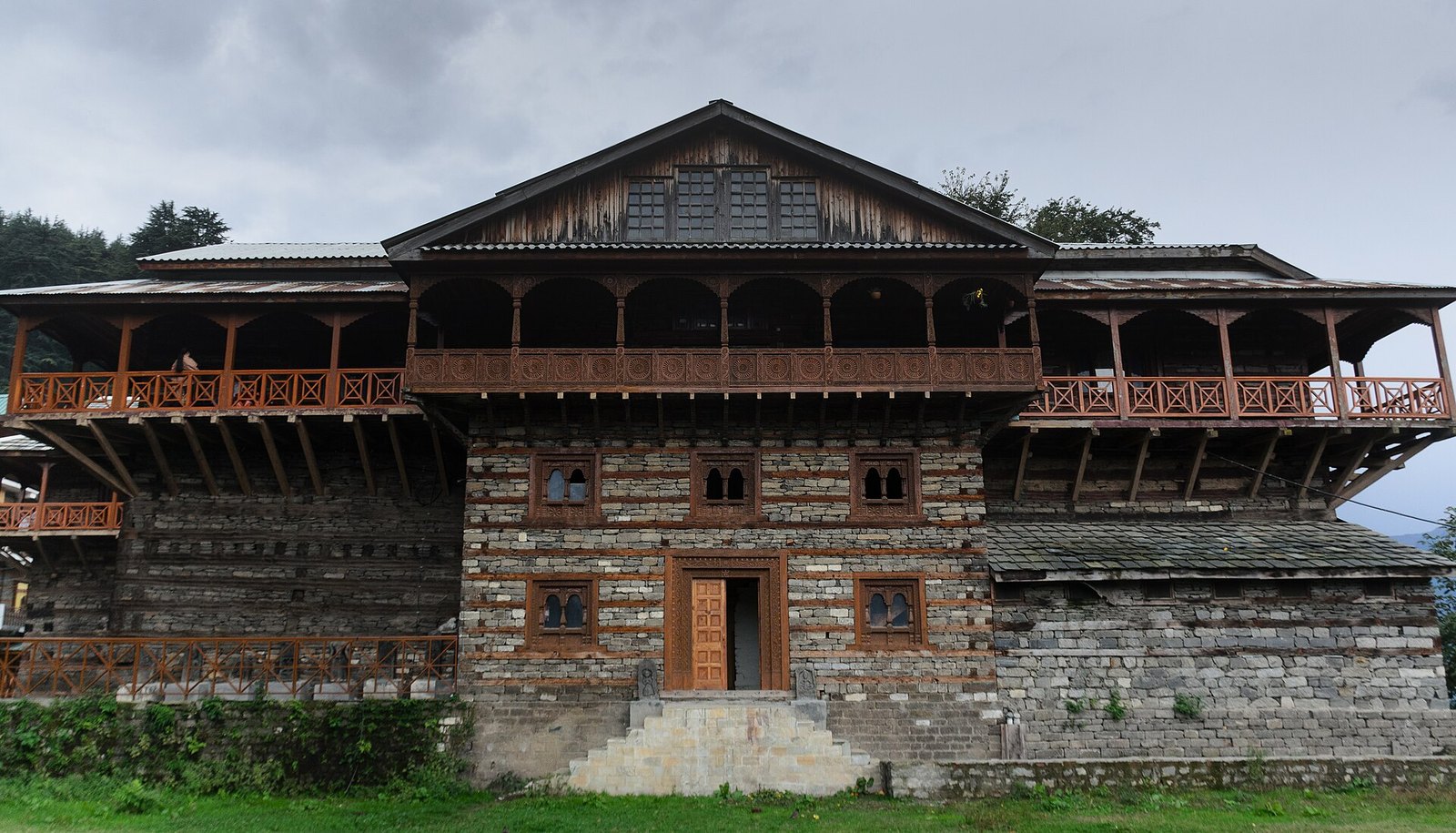
Manali has the widest choice at every budget and late October is shoulder season there, so deals exist. But it is 40 km away, and what is a 75 minute drive on paper can become two hours each way on Rath Yatra day. Fine for one day. Tiring for three.
Reaching Kullu in Late October
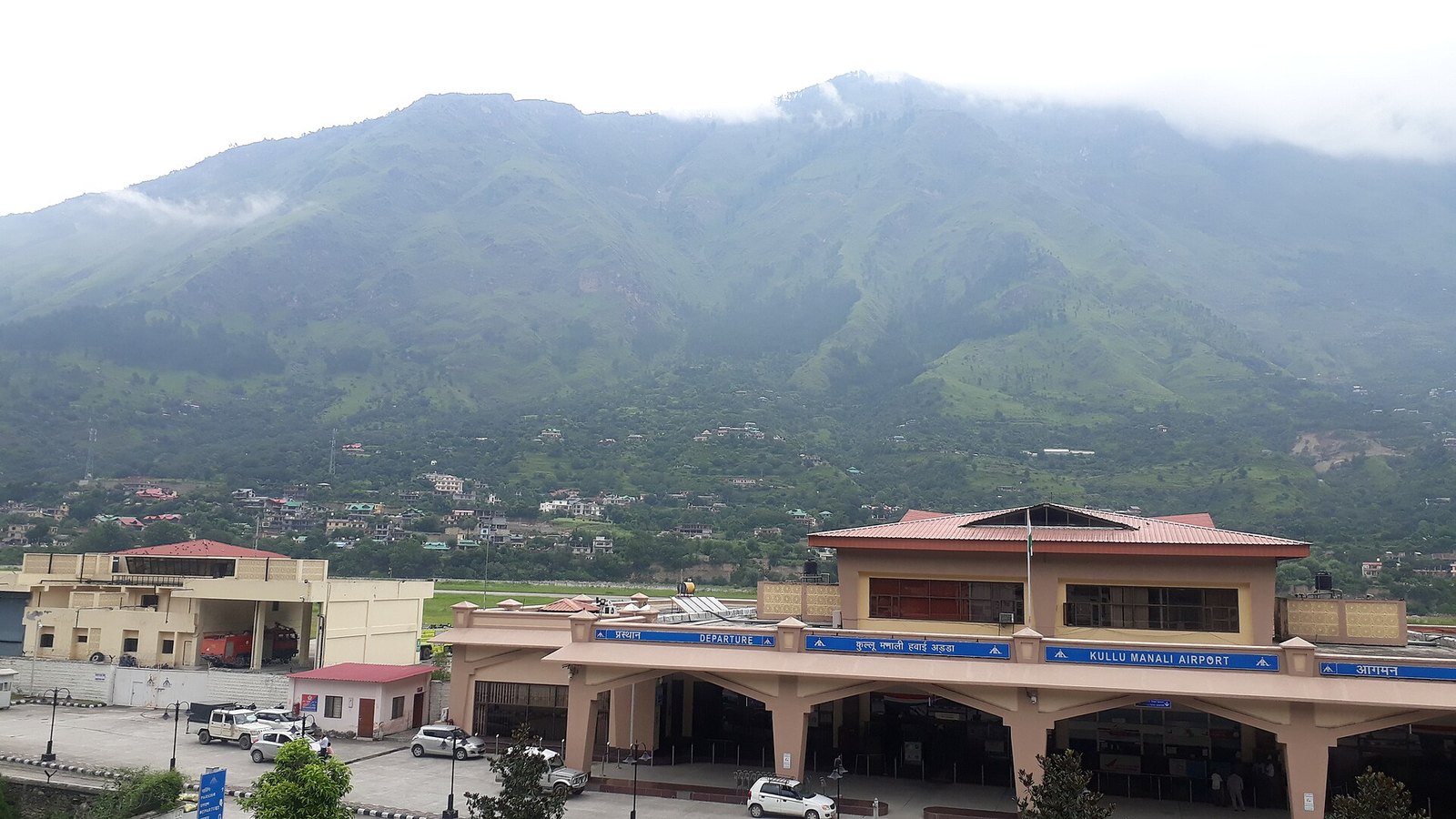
The nearest airport is Bhuntar, officially Kullu Manali Airport, just 10 km south of Dhalpur. Alliance Air, the only airline on the route, flies a small ATR from Delhi in about 80 minutes. Fares have swung between Rs 8,000 and Rs 15,000 one way, and mountain weather cancels flights without apology. Never plan to land on the morning of the Rath Yatra. Chandigarh is the sensible backup.
Most people come by overnight bus. HRTC’s Himsuta Volvos leave Delhi’s Kashmere Gate ISBT in the evening and reach Kullu in 11 to 13 hours, with a fare of roughly Rs 1,400 to 1,600. Private sleepers cost Rs 1,000 to 2,500 depending on the date. From Chandigarh’s Sector 43 it is 6 to 7 hours.
By car, the Kiratpur to Manali four lane highway has changed this drive. The tunnels after Kiratpur skip the old Swarghat climb, and the newer ones past Pandoh have cut the slow, landslide prone gorge between Mandi and Kullu to about an hour. Chandigarh to Kullu is now a realistic 5 to 6 hours. Stretches get damaged after a bad monsoon, so check the status before you leave.
Late October is the valley at its best. Days are clear at 20 to 24 degrees, nights drop to 5 or 6, and the first snow usually shows on the high ridges. Pack layers and a proper jacket for the evenings.
What to Add Before or After
Three nights covers Kullu Dussehra if you time it for day one or the last two days. With more time, Naggar Castle deserves half a day. It was the seat of the Kullu rajas before Sultanpur, and the Roerich gallery is a short walk uphill.
Manikaran, 45 km away up the Parvati valley, is where Jagat Singh was headed when the trouble began. Its hot springs and gurudwara pair well with a night in Kasol. For quiet after a week of trumpets, go south instead to the Tirthan Valley, about two and a half hours from Kullu, for trout streams and the Great Himalayan National Park.
Walkers should see our October and November treks. If you are driving back via Chandigarh, Kasauli makes a gentle last night.
My Take on Kullu Dussehra
The downsides first. It is crowded, dusty and loud. Nobody explains the rituals, there are no signboards, and half of what matters happens inside a knot of people you cannot see past. Hotels overcharge. If you want a neat spectacle with seats and a schedule, Mysore does that far better.
But I have not seen anything else in India where a living belief system simply turns up and camps on a town ground for a week, indifferent to whether tourists are watching. Go for day one, stay in Naggar, spend one slow afternoon among the devta camps, and buy a shawl from the people who wove it. You will not miss the fireworks at all.