

For the last twenty minutes you have been walking through a crack in the earth, a canyon so narrow that the sky is a blue ribbon three storeys above your head. Then the walls part, and through the gap appears a carved pink facade taller than a ten storey building. That first glimpse of the Treasury is the reason Petra sits on the list of the New Seven Wonders of the World, and no photograph prepares you for it.
I have wanted to write a proper Petra guide for a long time, because most of what Indian travellers find online is either a cruise-brochure summary or a hundred identical Instagram reels. The real place is a full day of walking through an ancient city carved by the Nabataeans over 2,000 years ago, lost to the outside world for centuries and shown to the West only in 1812 by a Swiss explorer disguised as an Arab pilgrim.
This guide covers the walk itself, what the tickets and the Jordan Pass actually cost, whether Petra by Night deserves your evening, and the flight and visa mechanics from India. Fair warning before you read further: Petra involves 8 to 15 km of walking in desert heat. Plan for it honestly and the place will reward every step.
The Walk In: 1.2 km Through the Siq
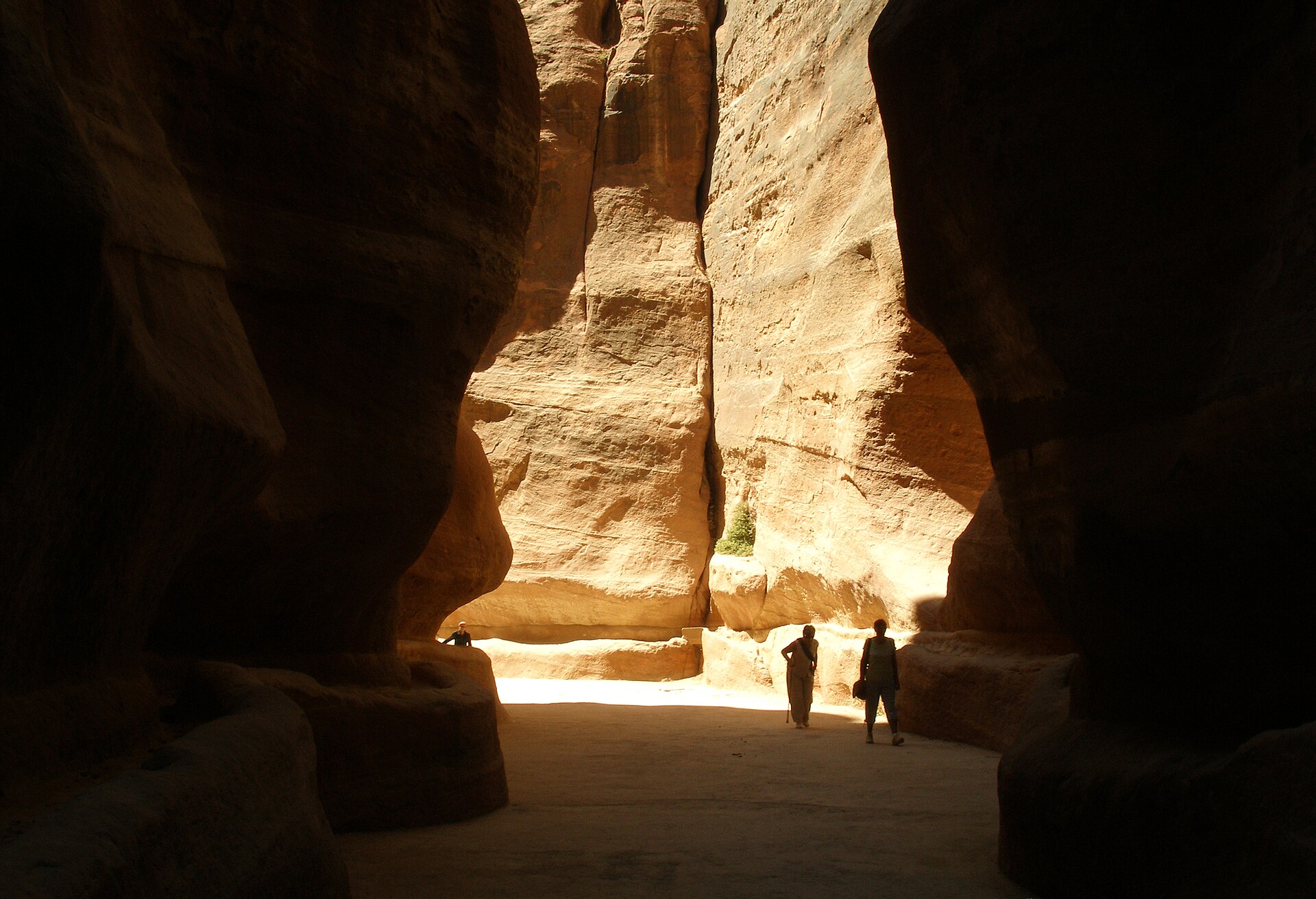
Petra does not reveal itself at the gate. From the visitor centre you first walk about 800 metres past tombs and the Djinn blocks, and then enter the Siq, a 1.2 km natural gorge that was the city’s ceremonial entrance. Look for the remains of 2,000 year old water channels cut into both walls. The Nabataeans grew rich because they could move and store water in a desert, and the plumbing is still visible.
Walk it slowly. The temptation is to rush toward the Treasury, but the Siq is half the experience, and the crowds thin out if you enter before 7.30 am. The site opens at 6 am, and that first hour is the single best decision you can make in Petra. You get soft light, cool air, and the Treasury with only a handful of people in front of it.
Al-Khazneh: The Treasury That Was Never a Treasury
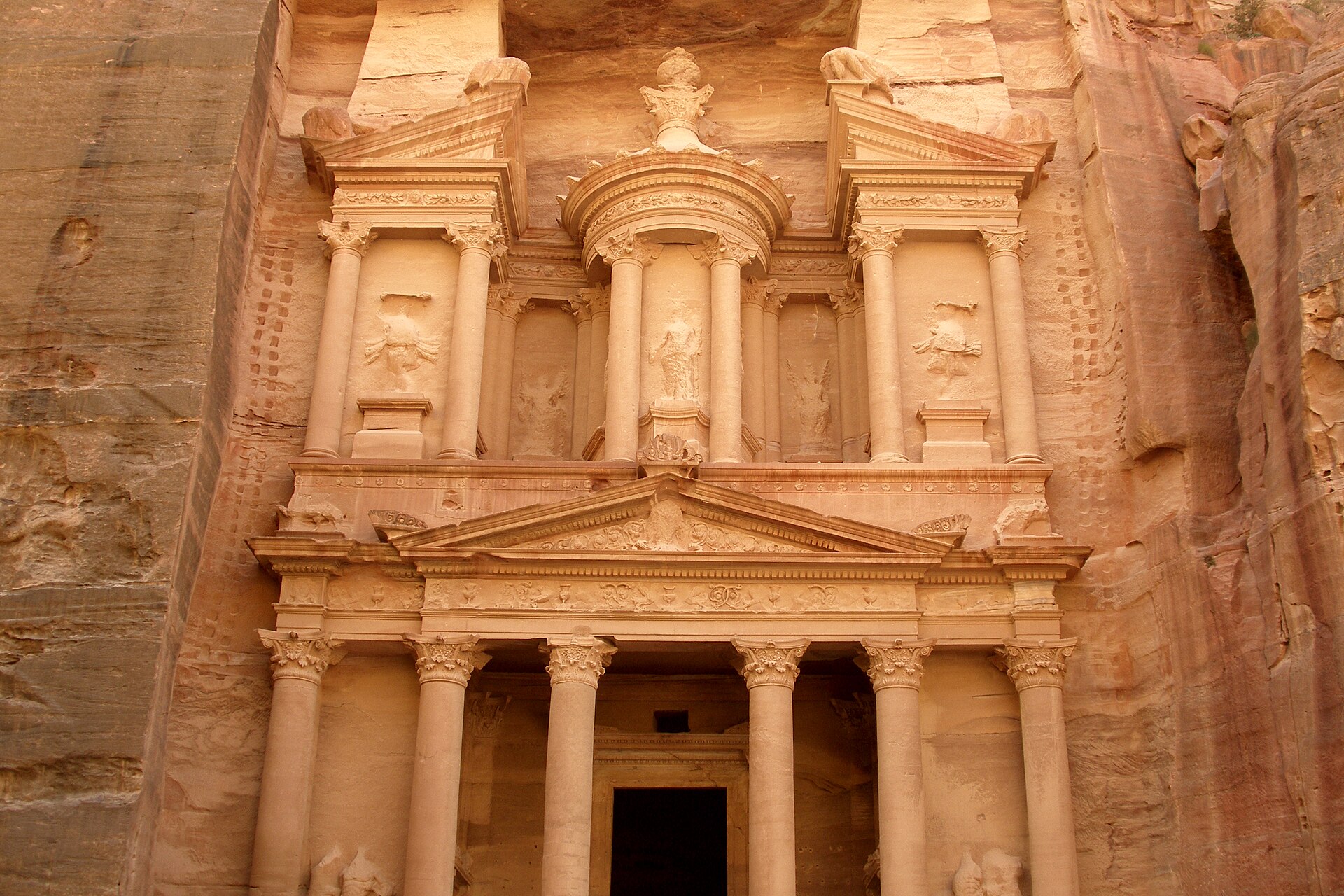
The 40 metre facade you emerge in front of is Al-Khazneh, almost certainly the tomb of a Nabataean king from around the first century. The name means Treasury because local legend held that the stone urn at the top hid a pharaoh’s gold. You can still see bullet marks on the urn where hopeful raiders shot at solid sandstone. Nothing was ever inside. The interior is a plain square chamber, and entry is not allowed anyway, so the facade is the show.
Give it time at two different hours if you can. The Treasury glows its famous rose pink in mid morning, roughly 9 to 11 am, when the sun reaches down into the canyon. If you have seen it at dawn, come back past it after the Monastery climb and it will look like a different building.
Past the Treasury: A Whole City in the Rock
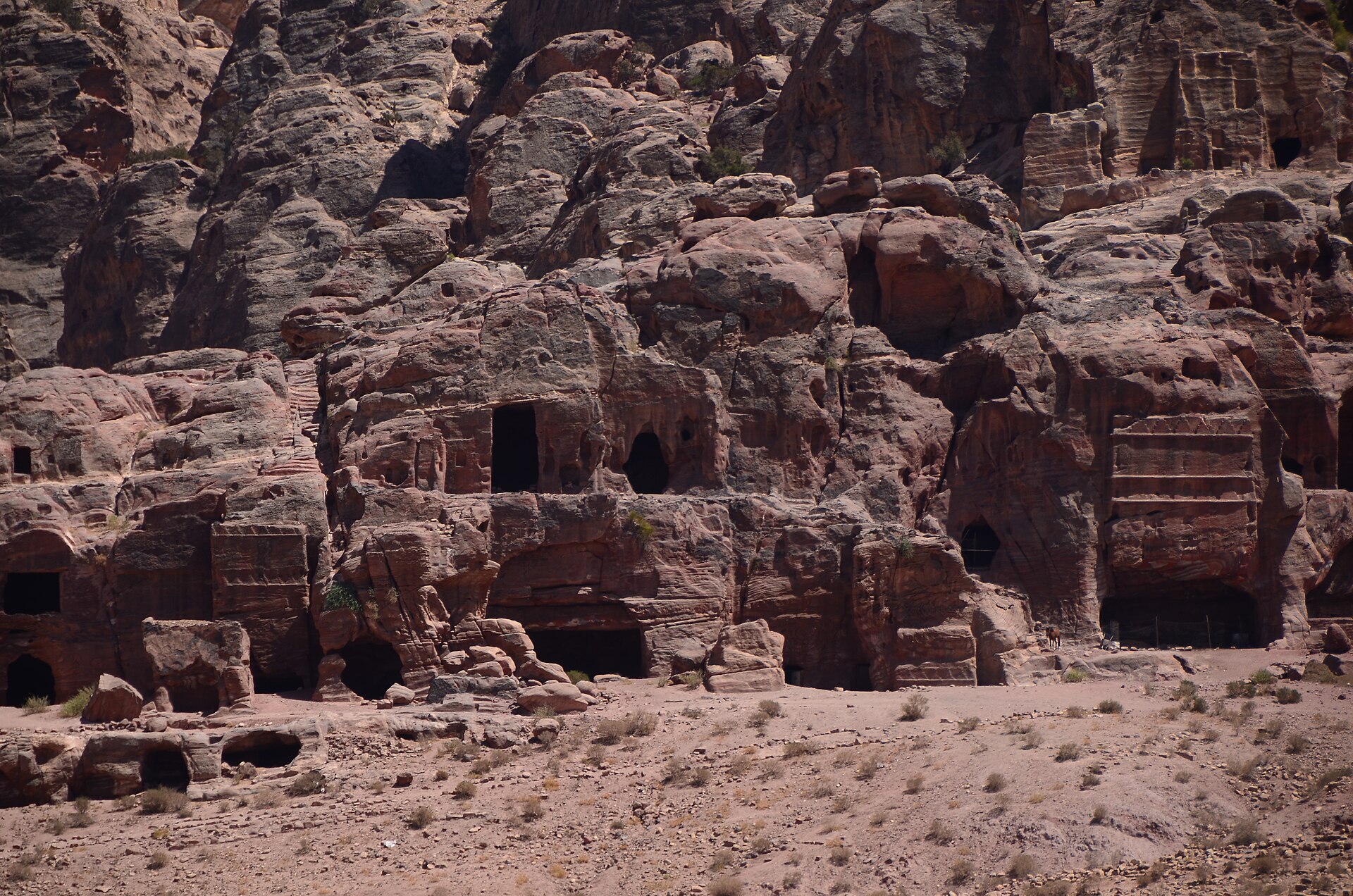
Most day trippers turn around at the Treasury, which is like leaving the Taj Mahal after seeing the entrance gate. The path continues into the Street of Facades, rows of tombs stacked into the cliffs, then a 4,000 seat theatre carved entirely out of the mountainside by the Nabataeans and enlarged by the Romans. Further on, the four Royal Tombs rise on your right, and climbing up to them gives you the best wide view of the city centre for zero extra effort.
Beyond that lies the Colonnaded Street, the Great Temple and the museum. At its peak this city held perhaps 20,000 people, controlled the incense trade between Arabia and the Mediterranean, and fell quiet only after earthquakes and shifting trade routes emptied it around the eighth century. I covered how such cities disappear and resurface in my piece on cities that thrived, were lost and rediscovered, and Petra is the star of that story.
The Monastery: 850 Steps That Earn Their View
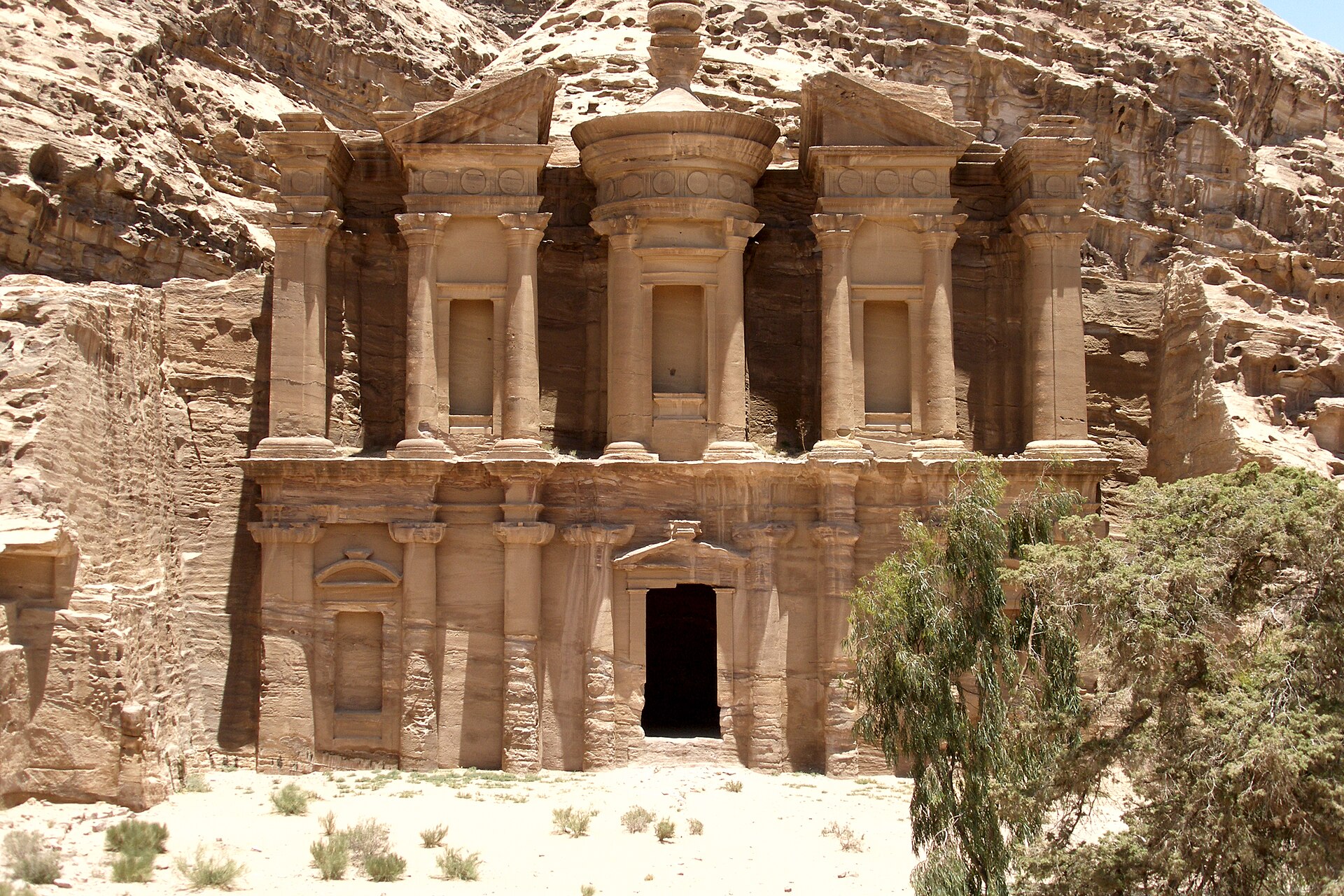
At the far end of the city a rock-cut staircase of roughly 850 steps climbs to Ad-Deir, the Monastery. It is bigger than the Treasury, less crowded, and my personal favourite thing in Petra. The climb takes 40 minutes to an hour at a normal pace, with Bedouin tea stalls along the way. Start it before 3 pm so you are not descending in the dark.
One honest note. You will be offered donkey rides up the steps constantly. The animals’ condition varies from decent to distressing, and animal welfare groups have documented real problems here, so my suggestion is to walk if your knees allow it. There is a small cafe opposite the Monastery at the top. A mint tea there, facing that facade, is one of the great sit-downs in world travel.
Petra by Night: Book It or Skip It?
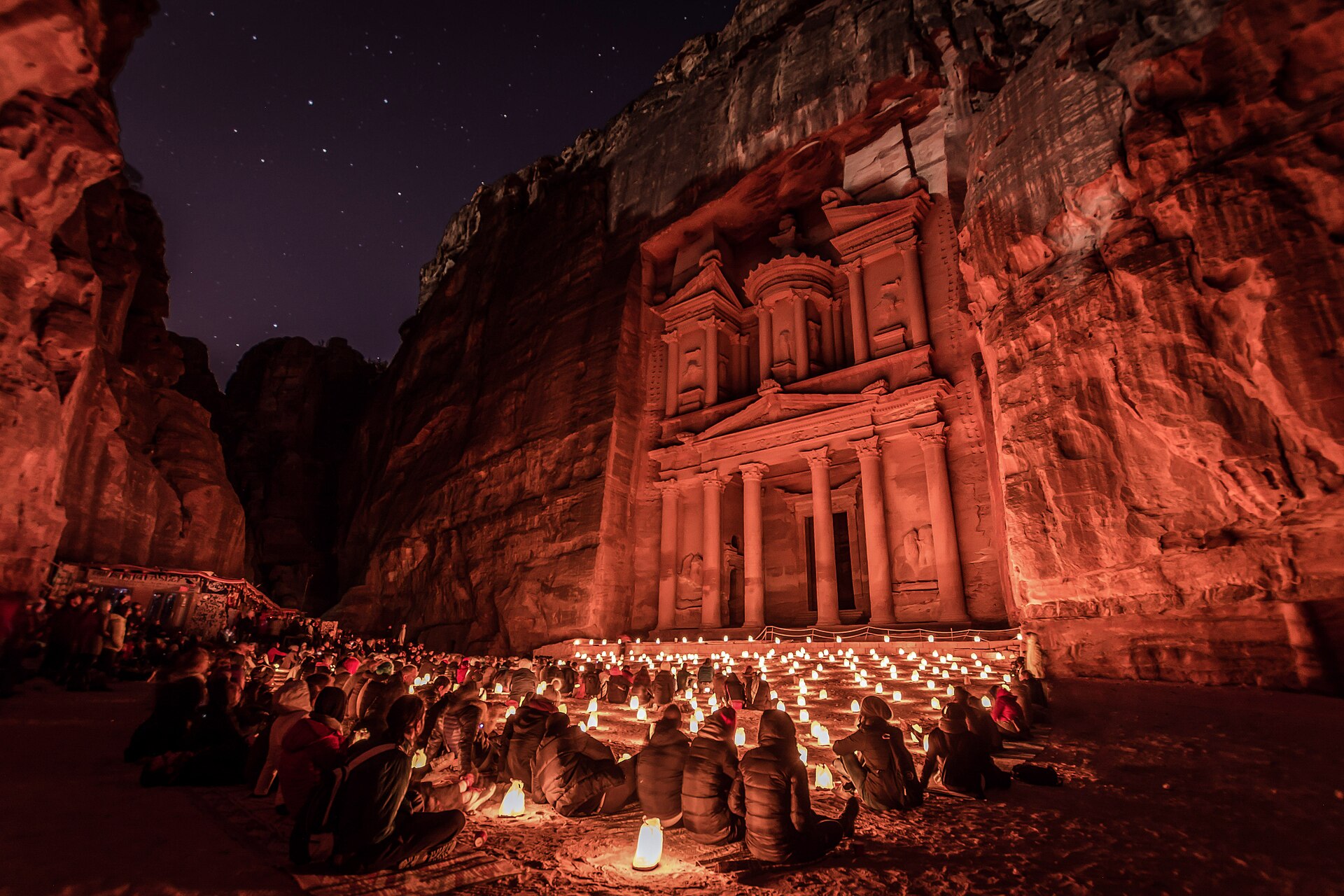
Three evenings a week, on Monday, Wednesday and Thursday, the Siq and the Treasury forecourt are lit by more than a thousand candles for a 8.30 to 10.30 pm show with Bedouin music and storytelling. The ticket is 17 JD, about Rs 2,100, on top of a valid day ticket, and children under 10 go free.
Should you spend it? If your trip lines up with a show night, yes, with expectations set. The candlelit walk through the dark Siq is genuinely magical. The show at the end is slow, the crowd is large, and the photographs need a steady surface and patience. Treat it as an atmosphere, not a performance, and you will leave happy.
Tickets and the Jordan Pass Maths
Petra pricing punishes day trippers and rewards anyone who sleeps in Jordan. If you stay at least one night in the country, a one day Petra ticket costs 50 JD, two consecutive days 55 JD, three days 60 JD. Arrive on a day trip from Israel or a cruise and the same entry costs 90 JD. One Jordanian dinar is roughly Rs 125, so a one day ticket alone is about Rs 6,200.
This is where the Jordan Pass becomes the obvious answer. It starts at 70 JD including one day at Petra, adds 40 plus other sites like Jerash and Wadi Rum, and waives your 40 JD visa fee entirely if you stay at least three days in Jordan. Do the sums: 40 JD visa plus 50 JD Petra already exceeds the pass price before you count anything else. Buy it online before you fly, not after you land. It cannot be bought retroactively.
One Day or Two?
One full day covers the Siq, Treasury, theatre, Royal Tombs and the Monastery if you start at 6 am and accept 12 to 15 km of walking. That is the realistic minimum, not the comfortable one. With two days, do the main axis on day one, then use day two for the back trails: the Al-Khubtha viewpoint that looks down on the Treasury from above, or the quieter route in through Little Petra, which itself is free to visit. The two day ticket costs only 5 JD more, which makes it the best value upgrade in Jordan.
Reaching Petra from India
There are no nonstop flights from India to Jordan, but one stop connections through the Gulf reach Amman in 7 to 9 hours. Return fares from Delhi or Mumbai usually sit between Rs 30,000 and 45,000. Indians get a visa on arrival at Amman airport for 40 JD in cash, or fee-free with the Jordan Pass as above. Carry your hotel booking and return ticket for the counter.
From Amman it is a 230 km, roughly three hour drive south to Wadi Musa, the town at Petra’s gate. The JETT bus runs a cheap daily morning service, taxis cost around 75 to 90 JD, and self drive is easy by Indian standards. Most travellers pair Petra with a night in a Wadi Rum desert camp two hours further south and a float in the Dead Sea on the way back. My Jordan holiday guide covers that full loop, and the wider region is in my Middle East travel roundup.
When to Go, and What the Desert Does
March to May and September to November are the sweet spots, with daytime temperatures of 20 to 30 degrees. June to August crosses 35 degrees with zero shade on the main trail, and I would not suggest a summer visit with children or older parents. December to February is pleasant by day and near freezing at night, with occasional rain that can briefly close the Siq due to flash flood risk. Whatever the month, carry two litres of water per person, a hat, and sunscreen. Inside the site, water costs triple.
Stay in Wadi Musa itself rather than commuting. Decent guesthouses run Rs 3,000 to 5,000 a night, mid range hotels with pools around Rs 8,000 to 12,000, and several have rooftops facing the Petra mountains. Eat mansaf, Jordan’s national lamb and rice dish, or maqluba, the famous upside down rice pot, at the family restaurants uphill from the gate where prices halve.
Small Things Nobody Tells You
A few details that save money and arguments. The horse ride from the gate to the Siq entrance is advertised as included in your ticket, but a tip of several dinars is aggressively expected, so walking is simpler. Official guides at the visitor centre charge around 50 JD for the main trail and are worth it for history lovers, while everyone offering guiding inside the site is unofficial. Cash rules once you pass the gate. Stalls inside rarely take cards, and there is no ATM past the visitor centre, so carry small notes.
Mobile network is patchy inside the valley, so download offline maps before you enter. Toilets exist at the visitor centre, near the theatre and by the museum, and nowhere on the Monastery climb. Drones are banned across the site. And keep your ticket on you all day, because checkpoints do ask for it on the back trails.
My Take on the Rose City
Petra is that rare famous place that is better in person than in pictures. The scale does not compress into a camera frame, and the walk in through the Siq gives it a sense of arrival that no ticket gate anywhere else can match. It costs real money and real legs, and it earns both. Among the Seven Wonders of the World, I would put the Petra experience second only to our own Taj Mahal, and I do not say that lightly. Go before the crowds grow further, stay two days, and climb those 850 steps.