

Rs 690. That is what one hot dog costs at Baejarins Beztu, the most famous food stand in Reykjavik, and it is about the cheapest hot meal you will find anywhere in Iceland. Add a Coke and you cross Rs 1,000. Every Indian traveller I know who has done this trip says two things. It was the most unreal landscape of their life, and nobody warned them properly about the bills.
This guide follows the Ring Road, Route 1, the 1,322 km highway that circles the island. I am taking it anticlockwise from Reykjavik, so the famous south coast comes first and the quieter north is your reward. Then come the rupee sums, the visa and the flights. Prices are in Icelandic krona (ISK), converted at roughly Rs 0.78 per krona.
Reykjavik: One Day Is Enough
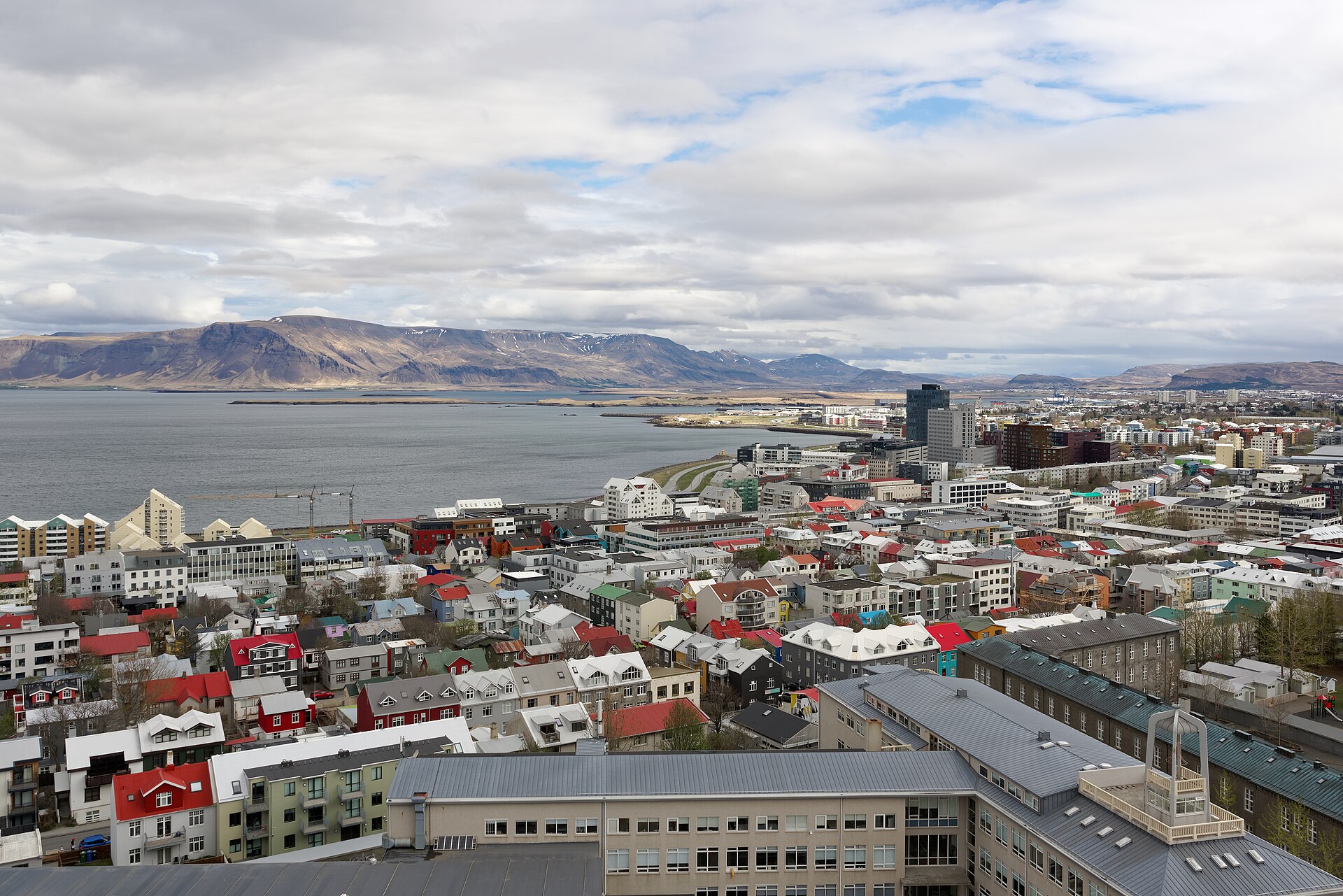
Reykjavik is small. Around 1.4 lakh people live here and you can walk the centre end to end in 25 minutes. Start at Hallgrimskirkja, the concrete church designed to look like basalt columns. The lift up its 74.5 m tower costs 1,500 ISK (about Rs 1,170), and the view over the coloured tin roofs is the best thing that money buys in this city. Then walk down the rainbow painted Skolavordustigur to the Harpa concert hall and the Sun Voyager sculpture on the waterfront. Both free.
If you are planning a wider Nordic trip, our piece on the Scandinavian countries will help you decide what to club with Iceland.
The Golden Circle, Before the Ring Road Proper
The Golden Circle is a 230 km loop east of Reykjavik that fits into one long day. Thingvellir is where the Althing, the Icelandic parliament, first met in the year 930, inside a rift valley where the North American and Eurasian plates are pulling apart. Parking is 1,000 ISK. At the Geysir field, Strokkur shoots 15 to 20 metres up every five to ten minutes.
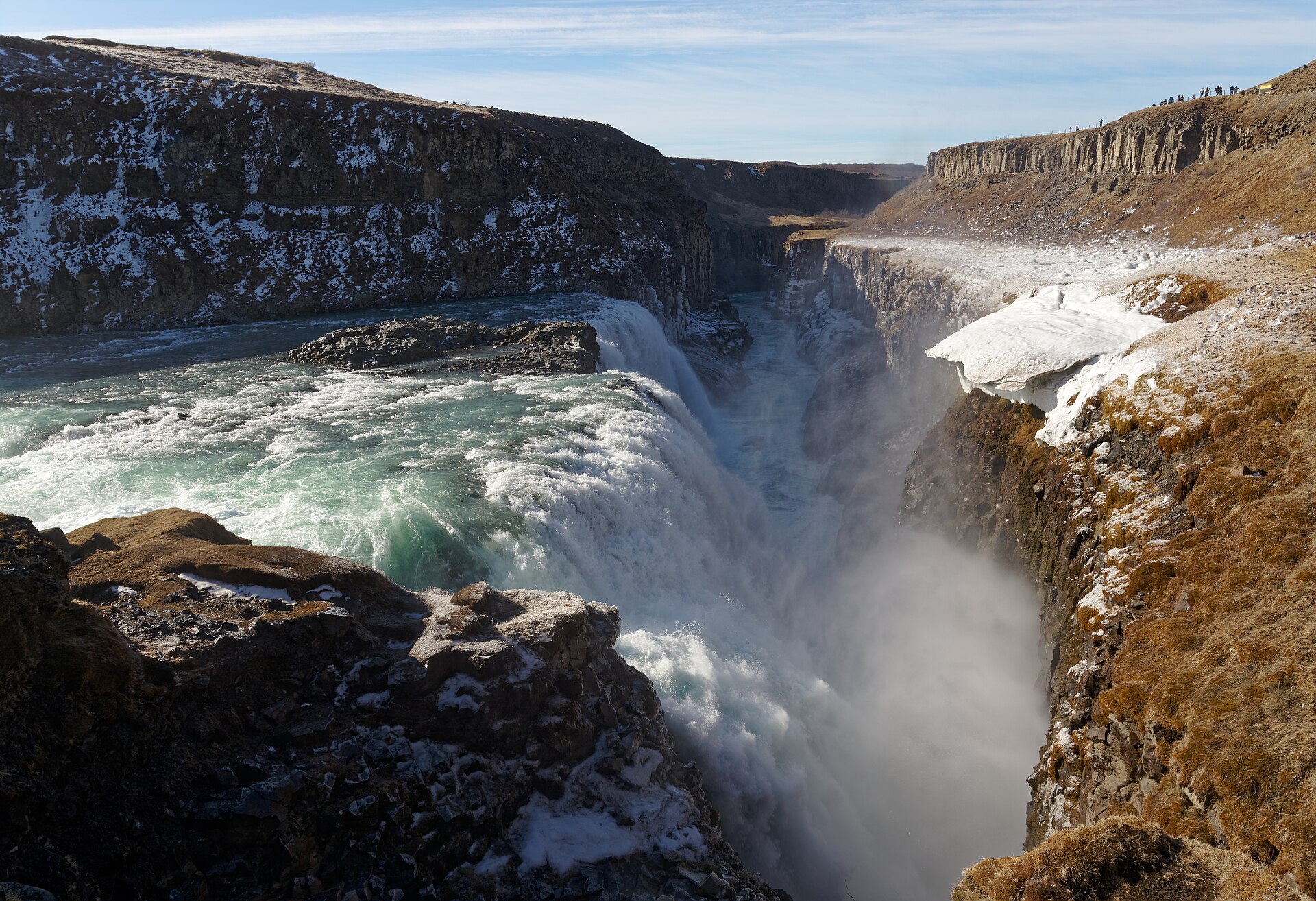
Gullfoss, the third stop, drops 32 metres in two steps into a canyon. Look for the memorial to Sigridur Tomasdottir near the top. In the early 1900s this farmer’s daughter fought a plan to dam the falls and threatened to throw herself in if it went ahead. Gullfoss also features in our list of romantic waterfalls of the world.
South Coast: Waterfalls, Black Sand and a Beach That Kills
From Selfoss, Route 1 runs east with glaciers on your left and the Atlantic on your right. This is the most photographed stretch of Iceland and the most crowded, since day tours come as far as Vik, 187 km out.
Seljalandsfoss and Skogafoss
Seljalandsfoss falls 60 metres and has a path that goes behind the curtain of water. You will get soaked, so wear a proper waterproof jacket and trousers, not a poncho. Parking is 1,000 ISK, and from the same lot a ten minute walk reaches Gljufrabui, a second waterfall tucked inside a slot in the cliff that half the visitors miss.
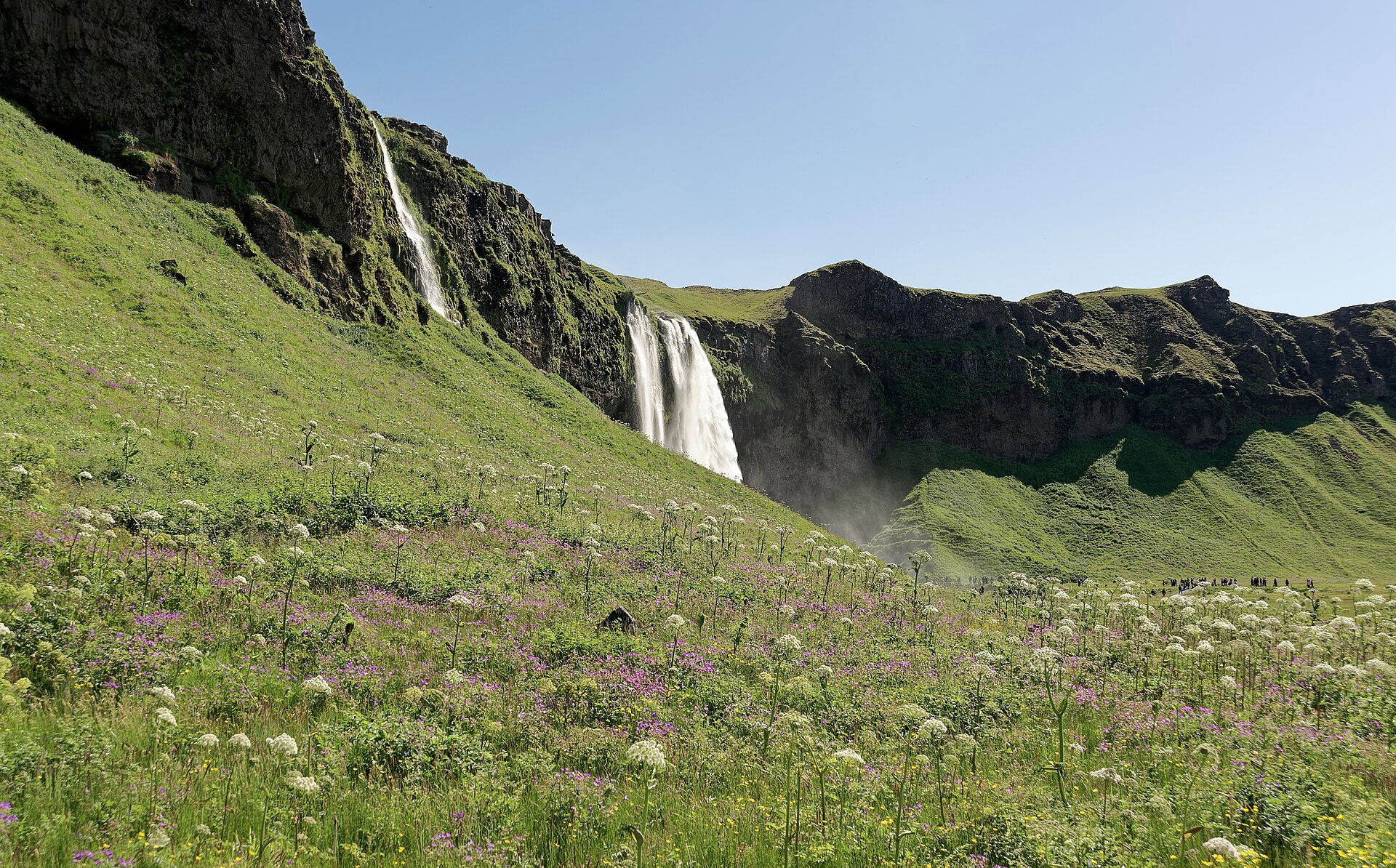
Skogafoss, about 30 km further, is the same height but 25 metres wide, and you can walk right up to its base on flat ground. Skip the 527 steps to the top. The view from below is better.
Reynisfjara: Read This Part Twice
Reynisfjara near Vik has black sand, a wall of basalt columns and the Reynisdrangar sea stacks offshore. It is also where six people died between 2007 and 2025, every one of them pulled in by sneaker waves. The most recent was a nine year old girl in August 2025, on a day when the warning light showed only yellow. A sneaker wave is a much larger wave that arrives without pattern between small ones and runs far higher up the beach than you expect.
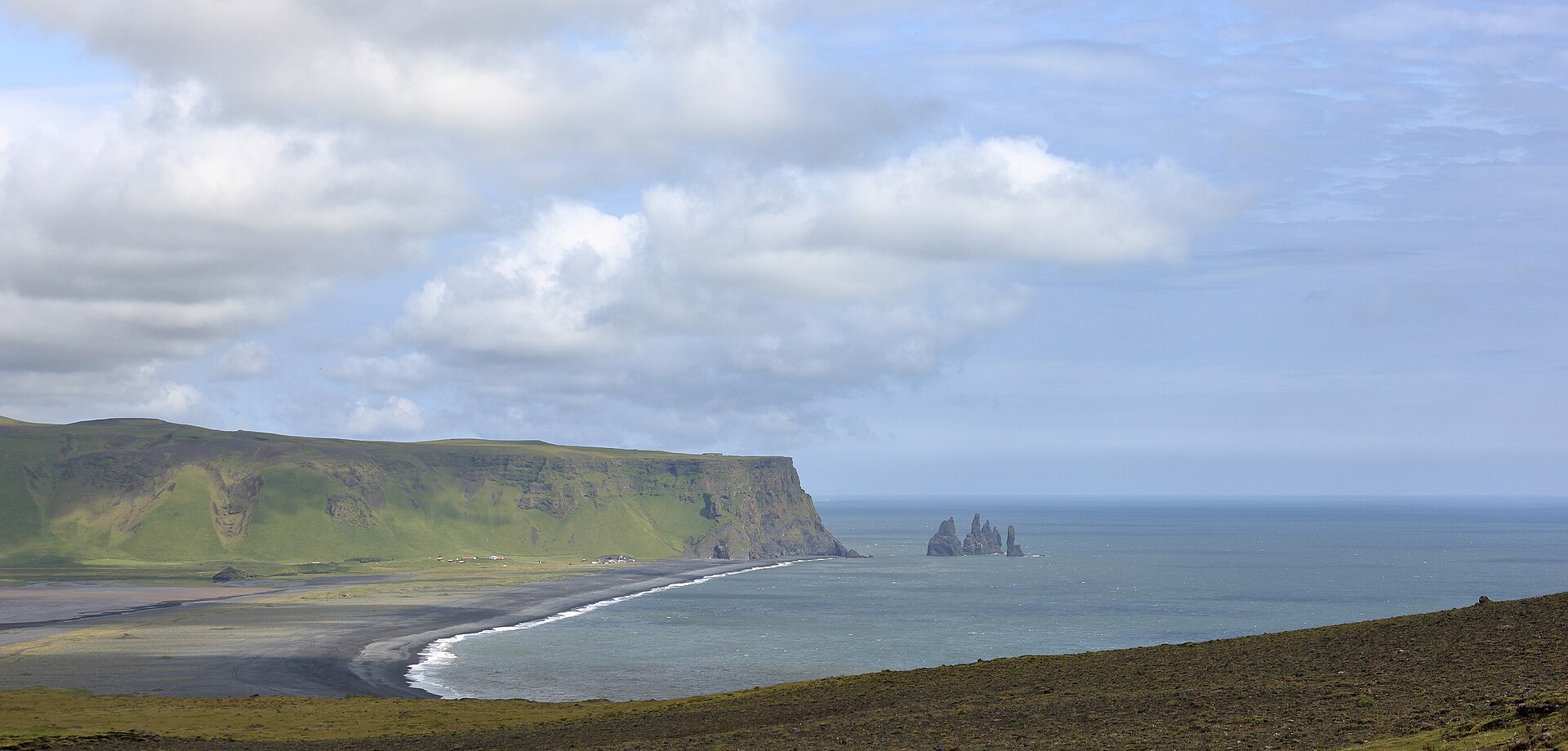
A light system at the entrance now shows the risk. Yellow means stay well back. Red means the area near the columns and the Halsanefshellir cave is closed, and since that death the red light is triggered more easily. Never turn your back on the sea for a selfie, keep a good 30 metres from the wet sand, and hold children by the hand throughout. For calmer options, see our round-up of black sand beaches across the world.
Jokulsarlon and Diamond Beach
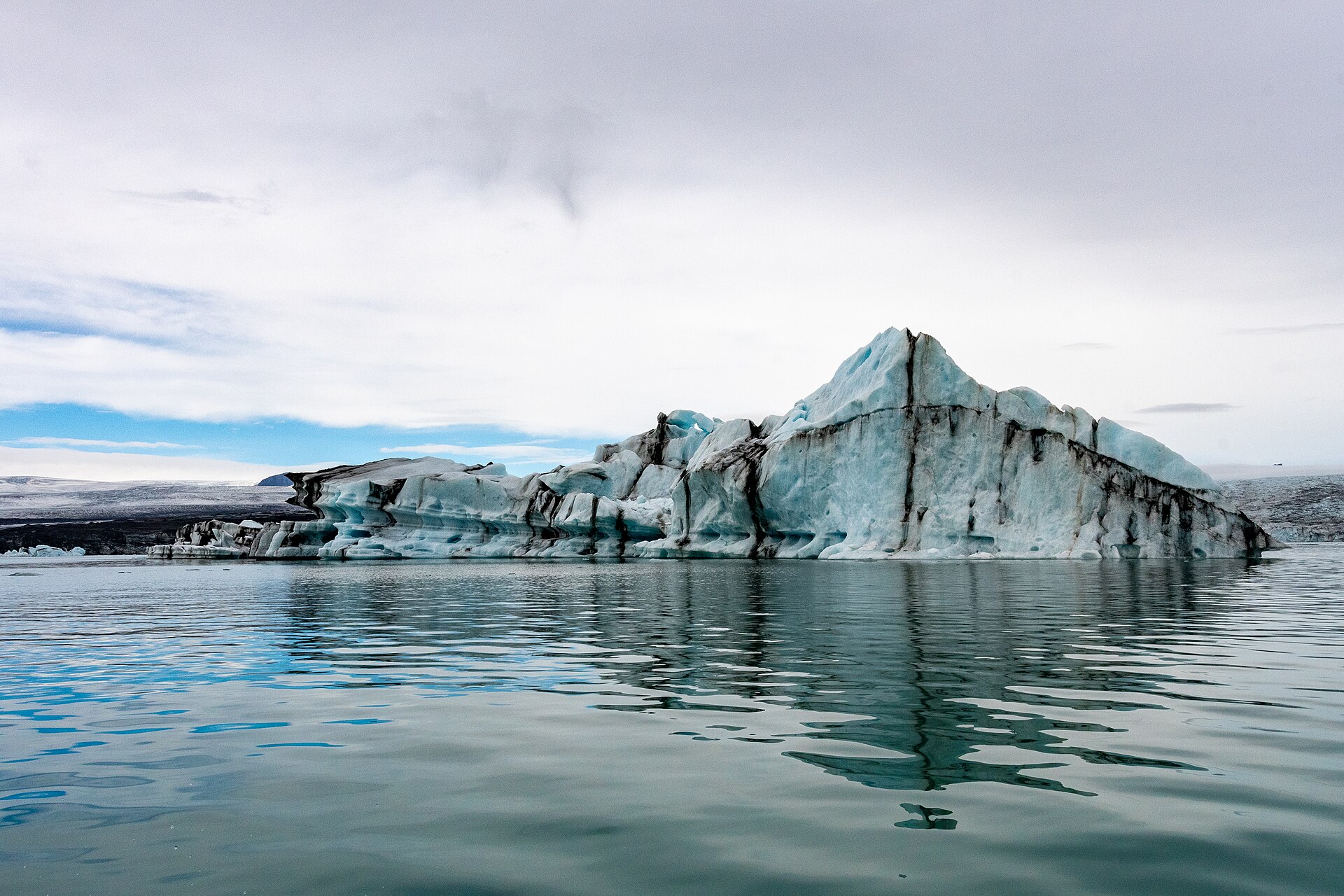
Beyond Vik the tour buses thin out. At Jokulsarlon, about 190 km further, icebergs break off the Breidamerkurjokull glacier and drift slowly out to sea, with seals swimming between them. Parking costs 1,110 ISK and the 30 to 40 minute amphibian boat ride is 7,100 ISK (about Rs 5,500), running in the warmer months. Then cross the road to Diamond Beach, where chunks of ice wash back onto black sand. Sleep at Hofn, 80 km ahead.
The East Fjords, Where the Tour Buses Turn Back
Hofn to Egilsstadir is roughly 250 km, but the road goes in and out of every fjord, so keep four to five hours. Wild reindeer live only in this corner of Iceland. Google Maps loves the Oxi pass (Route 939), a steep gravel shortcut. In fog or rain, stay on the coast.
The best detour is Seydisfjordur, 27 km from Egilsstadir, a fjord village with a pale blue church at the end of a rainbow painted path. The honest downside of the east is very few restaurants and long gaps between fuel pumps. Most pumps are unmanned, so carry a card with a PIN and choose a fixed amount instead of “full tank”. Otherwise a large hold sits on your forex card for days.
Myvatn, Godafoss and Akureyri
The 165 km from Egilsstadir to Lake Myvatn cross an empty highland desert. At Myvatn, stop at the Hverir mud pots beside the highway (the rotten egg smell stays in your jacket). Myvatn means “midge lake”. From June to August carry a head net, which the local fuel stations sell.
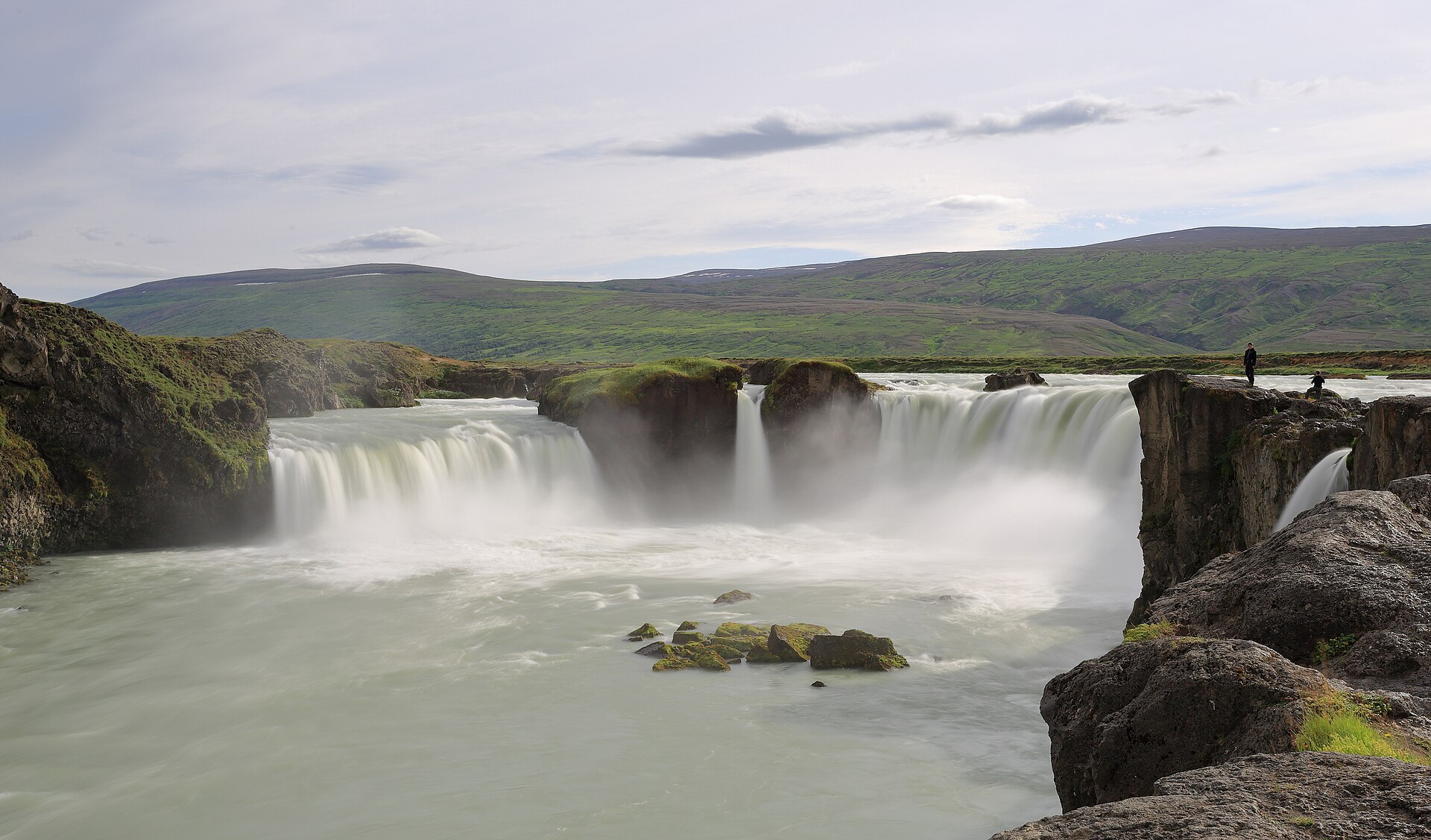
The old Myvatn Nature Baths reopened in July 2026 after a rebuild as Earth Lagoon Myvatn, with entry from 7,900 ISK (about Rs 6,200), the cheapest of the big lagoons. More such soaks are in our natural hot springs list. About 50 km west, beside Route 1, is Godafoss, the waterfall of the gods. In the year 1000 the lawspeaker Thorgeir decided Iceland would turn Christian and, the saga says, threw his idols of the Norse gods into these falls.
Akureyri, the capital of the north, has about 20,000 people and red traffic lights shaped like hearts, put up to cheer the town after the 2008 banking crash. Just before it is the 7.4 km Vadlaheidi tunnel, the only toll on the Ring Road. There is no booth. You pay 2,216 ISK online at veggjald.is, and if you forget, the rental company adds its own fee.
Snaefellsnes and the Run Back South
Akureyri to Borgarnes, about 315 km, is the plainest stretch of the loop, so make it a driving day. Snaefellsnes is not on the Ring Road. You turn off at Borgarnes onto Road 54 and need one full day, better two.
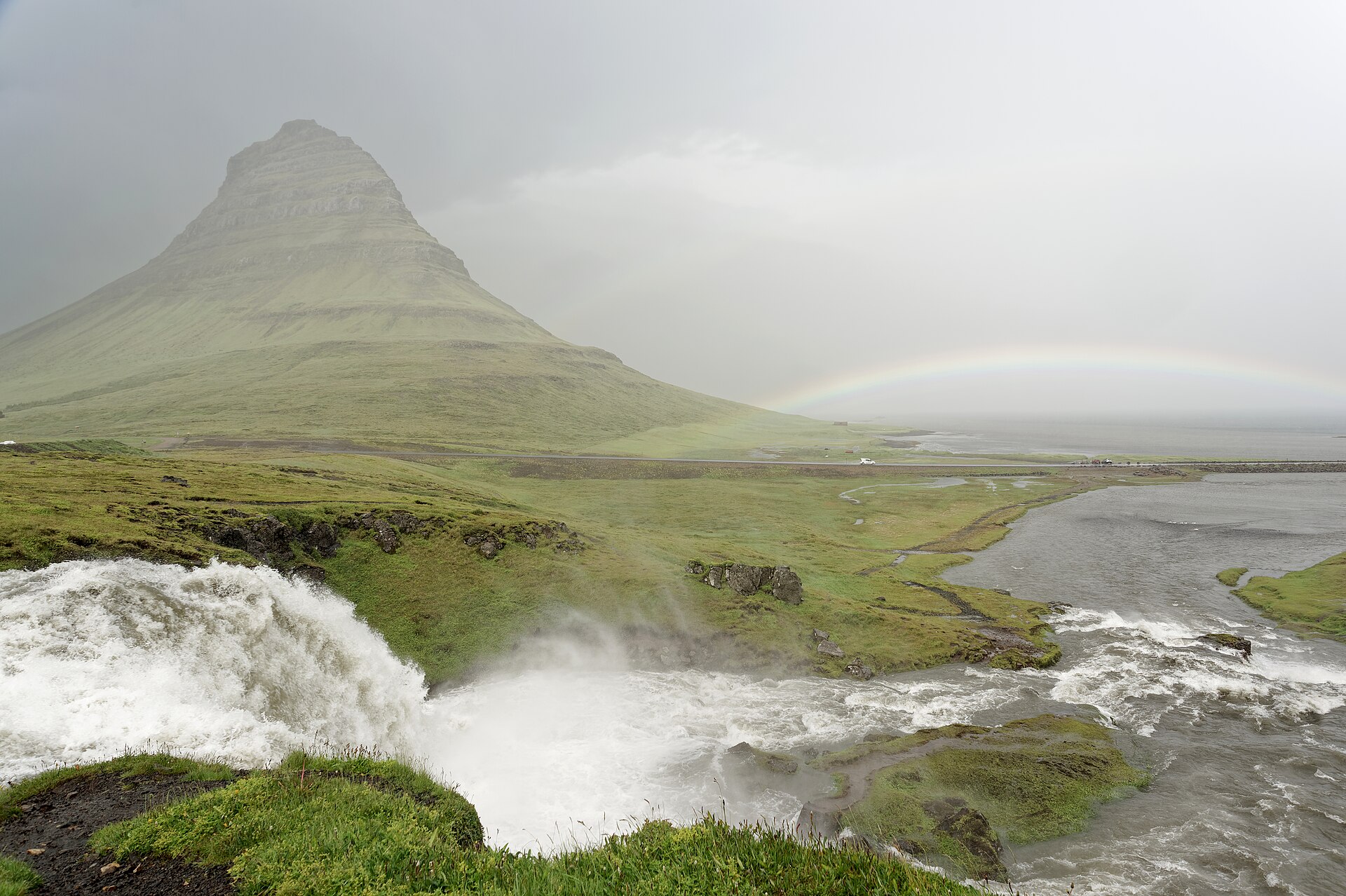
Kirkjufell, the 463 m arrowhead mountain near Grundarfjordur, is the famous photo. I liked the south side more. The 2.5 km cliff walk from Arnarstapi to Hellnar is easy, and at Djupalonssandur beach four lifting stones still lie on the pebbles. Fishermen had to lift the 54 kg one to earn a place on a boat. Above everything sits Snaefellsjokull, the glacier where Jules Verne began his Journey to the Centre of the Earth.
Reykjanes: Blue Lagoon, Sky Lagoon and the Volcano
Keep Reykjanes for the last day, as the Blue Lagoon is 20 minutes from the airport. The Sundhnukur crater row near Grindavik produced nine eruptions between December 2023 and August 2025. The town was evacuated, the lagoon shut several times, and the last eruption ended on 5 August 2025. As of September 2026 both Grindavik and the lagoon are open, but the Icelandic Met Office says magma is still collecting under Svartsengi and another eruption is likely. Flights were never affected. Check safetravel.is before you drive out.
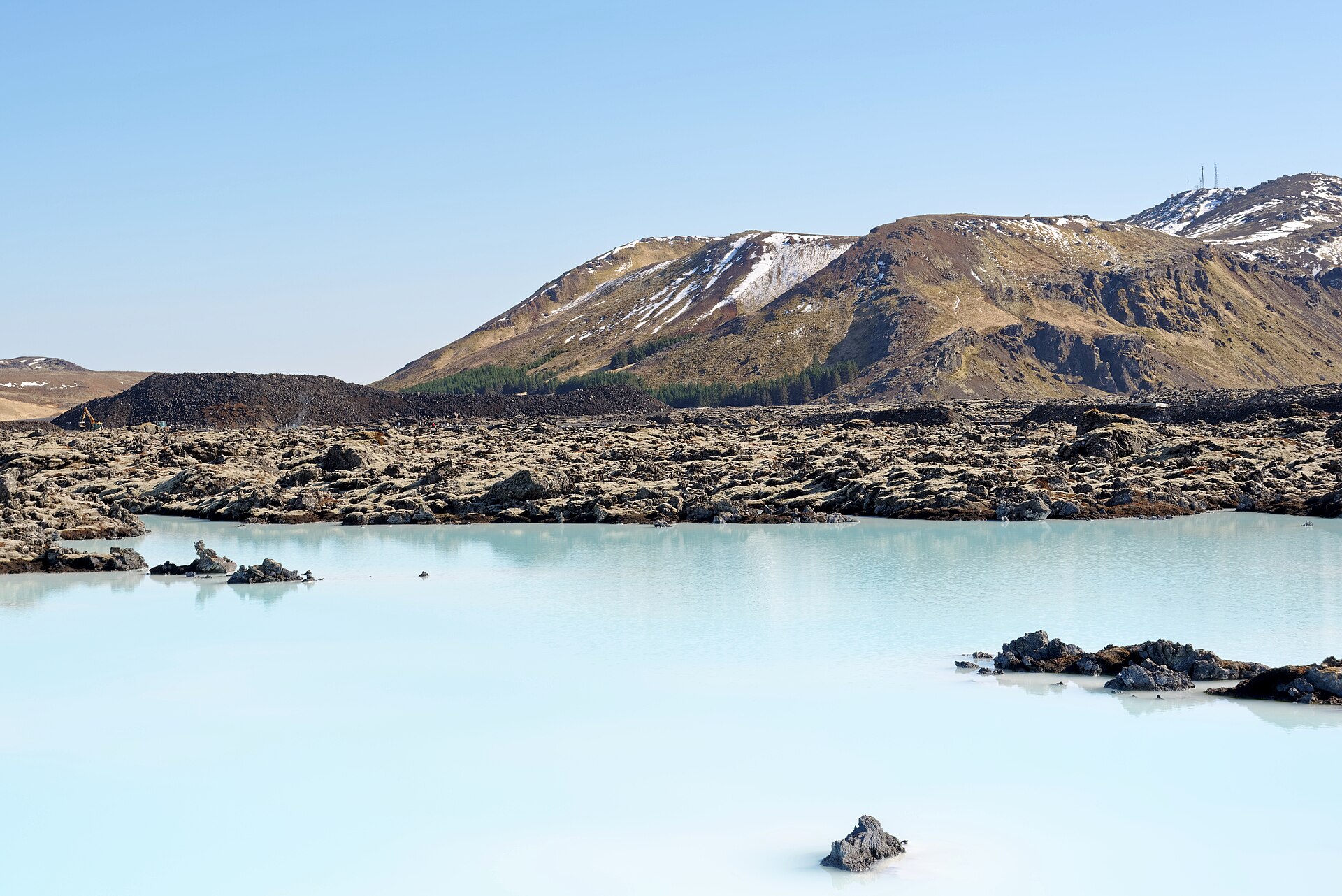
Both lagoons use dynamic pricing. Blue Lagoon Comfort entry starts at 11,990 ISK (about Rs 9,350). Sky Lagoon’s Saman pass runs from about 9,990 to 13,990 ISK (Rs 7,800 to 10,900) depending on the slot. Blue Lagoon is bigger, with the milky silica water you know from photos. Sky Lagoon is 15 minutes from downtown Reykjavik, with an infinity edge over the ocean. It does not allow children under 12, so families go to Blue Lagoon.
How Many Days Does Iceland’s Ring Road Need?
Seven days is the bare minimum in summer, and it means 200 to 300 km of driving most days. Ten is comfortable. With Snaefellsnes and one spare day for bad weather, plan twelve. With less than six days, do not attempt the circle. Do the Golden Circle, the south coast up to Jokulsarlon and back, then Snaefellsnes.
Driving Iceland in Summer vs Winter
June to August gives you near 24 hour daylight, clear roads and puffins on the cliffs. A normal two wheel drive car is fine for the whole Ring Road. The F-roads are different. These highland gravel tracks open in stages from mid June and close by late September. A 4×4 is legally required on them, and river crossing damage is not covered by any insurance.
Winter means four to five hours of daylight in December, studded tyres (rental companies fit them) and sudden closures in the east and north. I would not suggest the full circle between November and March for a first visit to Iceland. Every morning, check umferdin.is, the road authority’s live map (the old road.is now redirects there), and vedur.is for wind and weather.
A few things nobody tells Indian drivers. Traffic is on the right. On two lane roundabouts the inner lane has priority. The limit is 90 km/h on tarmac and 80 on gravel. Open car doors with two hands, because wind can rip a door backwards and no insurance covers it. An Indian licence in English is accepted, though I would still carry an IDP.
The northern lights season runs from late August to mid April, since summer nights never get dark. September, October and March balance darkness with drivable roads. Our northern lights guide covers forecasts and where to stand, and Tromso in Norway is the usual alternative.
Car vs Campervan: The Rupee Maths
A small rental car runs from about Rs 4,300 a day in winter to Rs 12,000 and more in peak August. A basic two person campervan starts near Rs 11,000 a day in summer. The van replaces your hotel, and a plain guesthouse double in summer commonly costs Rs 18,000 to 30,000 a night. Campsites charge about 1,400 to 2,800 ISK per person. The Camping Card, 179 euros for up to 28 nights, pays for itself within a week.
The downsides are real. Nights drop to 5 to 8 degrees even in July, you cook in the wind, and sleeping in a van outside a campsite is illegal.
On 1 January 2026 the government removed the fuel tax and brought in a kilometre fee of 6.95 ISK per km for cars. Pump prices fell by about 90 ISK overnight, then rose 20 to 31 ISK on 1 September 2026, and now sit at roughly 220 to 260 ISK (Rs 170 to 200) a litre.
Rental companies pass on the fee per km or as a flat 1,400 to 1,550 ISK a day. A full lap with detours is about 2,000 km, so budget around Rs 26,000 for petrol and Rs 11,000 for the kilometre fee.
Vegetarian Food and the Cost Shock
A restaurant main course costs 3,500 to 7,000 ISK, which is Rs 2,700 to 5,500 for one plate. Most places in Iceland have one vegetarian option, usually a veggie burger, pizza or soup. That famous hot dog is a mix of lamb, pork and beef, so it is out for vegetarians and for many others too. Reykjavik has good Indian restaurants, including Austur-Indiafjelagid, running since 1994, and Fridheimar on the Golden Circle serves unlimited tomato soup inside a greenhouse. After Selfoss you are cooking for yourself.
So do what every sensible Indian family does. Pack ready to eat packets, theplas and a small kettle, book guesthouses with shared kitchens, and shop at Bonus, the supermarket with the pink pig logo, which shuts early in the evening. Tap water is excellent and free, so never buy bottles. Cards work everywhere, even for a paid toilet.
My rough sum for a couple in peak summer: car Rs 10,000, room Rs 22,000, fuel and road fee Rs 4,500, food Rs 8,000 with one self cooked meal, parking and entries Rs 3,000. That is Rs 45,000 to 50,000 a day before flights. May and September cut it by about a third.
Schengen Visa and Flights from India
Iceland is not in the EU but it is a Schengen member, so Indians need a regular short stay Schengen visa. Applications go to the Embassy of Iceland in New Delhi through VFS Global centres in the major cities, including Delhi, Mumbai, Bengaluru, Chennai, Kolkata and Hyderabad. The fee is 90 euros for adults and 45 euros for children aged 6 to 11, plus the VFS charge, so keep Rs 12,000 to 13,000 per adult.
Processing officially takes 15 days but can stretch past 30 before summer, and you can apply up to six months ahead.
Apply to Iceland only if you spend the most nights there. If a week in Germany is attached, as with our Oktoberfest guide, the application goes to the other country. Show travel insurance of at least 30,000 euros, refundable bookings for every night, and the car rental voucher.
There are no direct flights from India to Iceland. The cleanest routing from Delhi is Finnair via Helsinki, while Copenhagen, Amsterdam, Frankfurt and Paris connect onward on Icelandair. Return fares usually fall between Rs 64,000 and 94,000, with October the cheapest month. Routings through London can need a separate UK transit visa, so I avoid them. Immigration, with the new fingerprint and photo registration, happens at your first Schengen airport, not at Keflavik, so keep at least two and a half hours for that connection.
Book the flights and the car first, since those two prices move the most, then fit your nights around the route above. This will probably be the most expensive trip per day that most of us ever take. I still think one slow lap of Route 1 with a kettle, a bag of theplas and a full tank is worth more than two rushed weeks across five European capitals. Just carry the numbers in your head from day one, so they never arrive as a surprise at the counter.