

The solar maximum is not coming in 2026. It already happened. The Sun’s Cycle 25 peaked in October 2024, when the smoothed sunspot number touched about 161, and every article still selling this winter as “the solar maximum year” for the Northern Lights is two years out of date. I am saying this first because the trip costs Rs 2 to 3.5 lakh per person from India, and you deserve correct science before you pay for it.
The good news is that the 2026-27 season is still a strong one, for reasons most brochures never explain. The bad news is that the Sun was never your main problem. Clouds are.
The Sun Peaked in 2024, and That Is Fine for the Northern Lights
Solar activity rises and falls over roughly 11 years. The SIDC in Belgium, which keeps the official sunspot record, has confirmed October 2024 as the Cycle 25 peak. At 161, it landed near the top of NOAA’s forecast range of 137 to 164, far above what the expert panel predicted in 2019. We are now in the declining phase.
Declining does not mean dead. As a cycle winds down, large dark patches called coronal holes drift towards the Sun’s equator and spray fast solar wind at Earth. These streams are steady. And because the Sun rotates about once in 27 days, the same hole often swings back a month later and lights up the sky again. Many aurora guides prefer this phase, since displays become more regular even as the giant storms get rarer.
History supports them. The previous strong cycle peaked in late 2001, yet its most famous displays, the Halloween storms, arrived in October 2003. So this season is a good one. It is simply not “the peak”, and anybody telling you it is now or never is selling something. The Northern Lights appear every single year at high latitudes, even at solar minimum.
What Really Decides Your Night
Darkness, and the moon calendar for this season
The Northern Lights season runs from late August to mid April for one simple reason: the Arctic summer sky never gets dark. Within those months I plan around the new moon. A bright moon will not kill a strong display, and moonlit snow looks lovely in photos. But faint auroras get washed out, and faint is what you get on most nights.
New moon dates for this season are 10 October, 9 November, 9 December, 7 January (early hours of 8 January in India), 6 February and 8 March. Try to be on the ground within five days either side of one. The full moon falls about two weeks after each, so the 22nd to 26th of every month is the stretch I would avoid if my dates were flexible.
The equinox bump
In 1973 two geophysicists, Christopher Russell and Robert McPherron, explained why geomagnetic activity bunches around the equinoxes. Near 23 September and 20 March, Earth’s magnetic field sits at the angle that lets the solar wind connect with it most easily. British Geological Survey records show big magnetic storms on nearly twice as many days in March as in June or July. It tilts the odds and guarantees nothing. But it is free, so use it.
Kp index versus cloud cover
Kp is a 0 to 9 scale of how disturbed Earth’s magnetic field is. Apps send excited alerts at Kp 5 and above, and those alerts matter if you live in Scotland or Germany. Standing in Tromso, Abisko or Yellowknife, you are already under the auroral oval, and Kp 1 or 2 is enough to put a green band overhead.
What you cannot beat is cloud. A Kp 7 storm above thick overcast is just a grey night. So the forecast I open first is the local cloud map, and only then the aurora one. For the aurora side, the NOAA 30-minute aurora forecast is free and more honest than most paid apps. Any prediction beyond three days out is guesswork.
Why you need four or five nights
Fairbanks tourism says visitors who stay three nights, and actually go out every night, have about a 90 per cent chance. The Sky Station in Abisko reports lights on roughly 70 per cent of the nights it opens. The two-night Northern Lights packages sold in India are a gamble. Four or five nights, at one base or split across two, turn the trip into a reasonable bet.
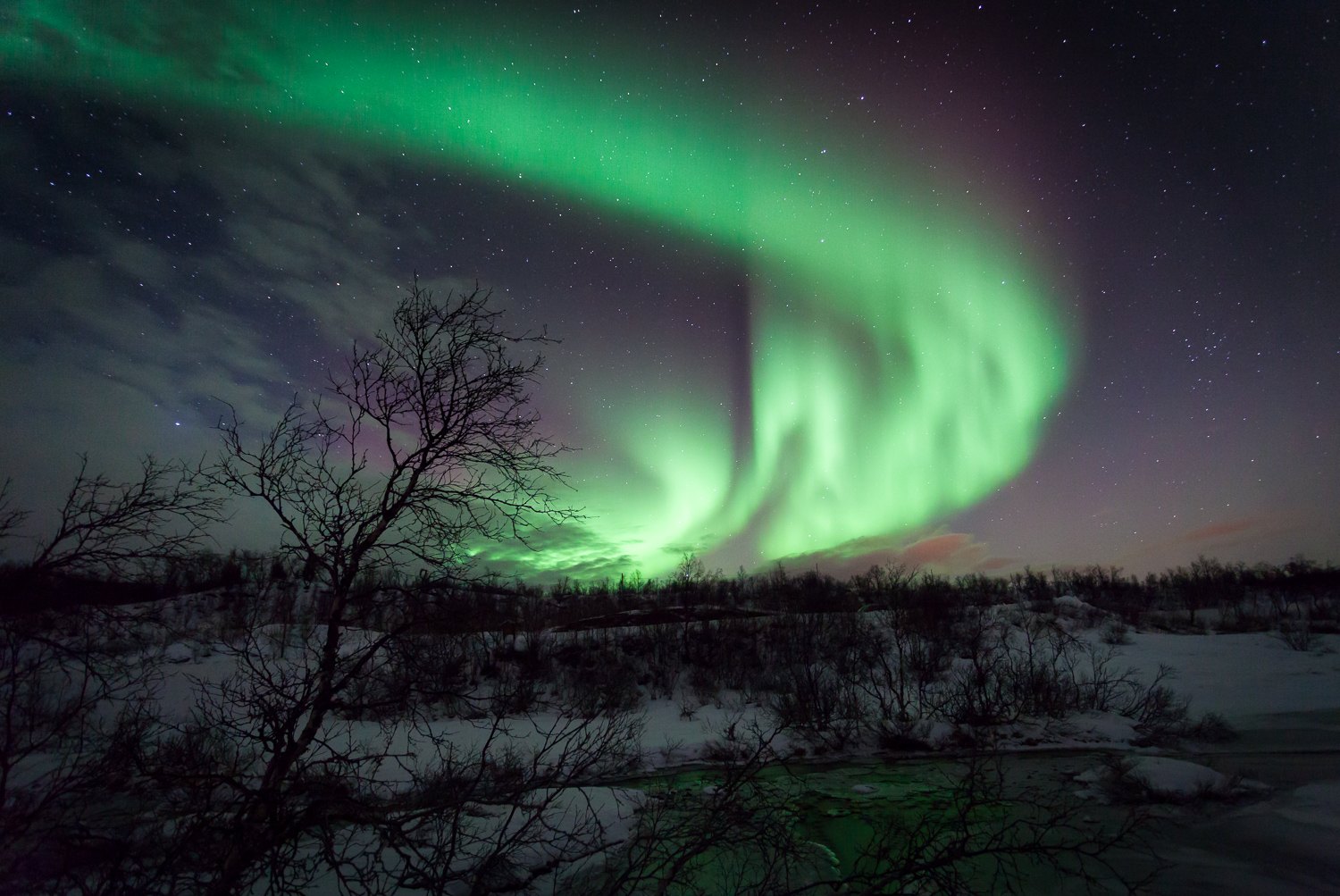
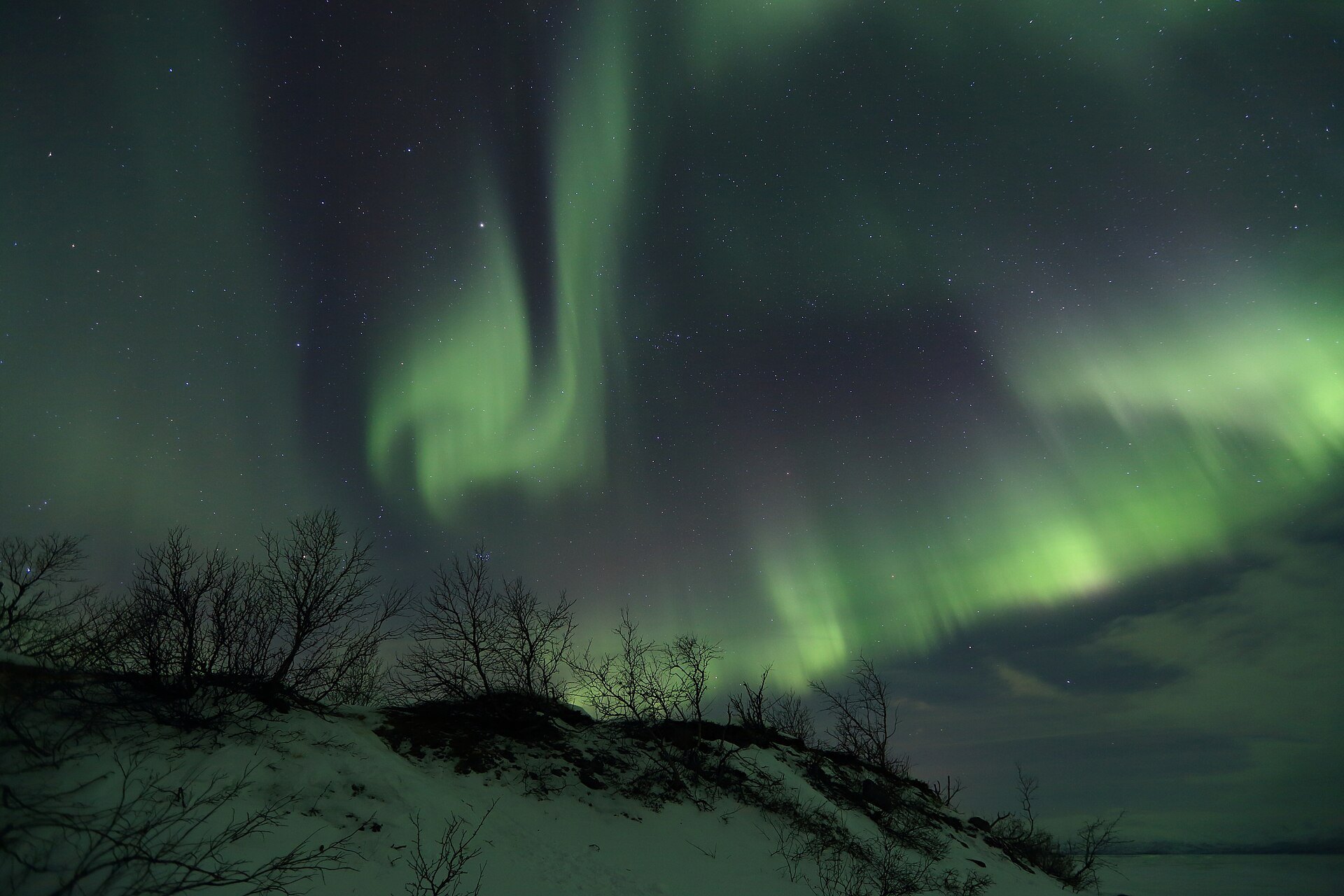
One more honest thing. To the naked eye, a weak Northern Lights display is a pale grey-green smear, like thin cloud that moves. Your phone, on a 3 to 10 second night mode exposure, records far more green than you can see. Strong displays are different. They ripple, they turn pink at the lower edge, and you will not need a camera to believe them. Set your expectations for the ordinary night.
Six Northern Lights Bases Compared on Cost
All totals below are per person for 5 nights from Delhi or Mumbai on twin sharing: economy flights, mid-range rooms, three guided aurora nights, food, visa and insurance. I converted at roughly Rs 110 to the euro, Rs 10 to the Nordic kronas, Rs 69 to the Canadian dollar and Rs 96 to the US dollar. Recheck the rates before you budget.
| Base | Visa for Indians | Usual routing | Guided tour, per night | 5-night total |
|---|---|---|---|---|
| Tromso, Norway | Schengen | One stop to Oslo or Helsinki, then a flight of about 2 hours north | Rs 16,000 to 25,000 | Rs 2.4 to 3.3 lakh |
| Abisko, Sweden | Schengen | Stockholm, then fly to Kiruna and take the train (1 hr 15 min) | Rs 7,000 to 15,000 | Rs 1.9 to 2.7 lakh |
| Rovaniemi, Finland | Schengen | Finnair nonstop Delhi to Helsinki, then a short domestic hop | Rs 8,000 to 16,000 | Rs 2.0 to 3.0 lakh |
| Reykjavik, Iceland | Schengen | Via Helsinki, Copenhagen or Amsterdam to Keflavik | Rs 7,000 to 15,000 | Rs 2.1 to 3.0 lakh |
| Yellowknife, Canada | Canada visitor visa | Vancouver or Calgary, then 2 to 2.5 hours north | Rs 8,000 to 10,000 | Rs 2.5 to 3.3 lakh |
| Fairbanks, Alaska | US B1/B2 | Via Seattle on Alaska Airlines | Rs 10,000 to 24,000 | Rs 2.7 to 3.7 lakh |
Tromso, Norway
Tromso sits at 69.6 degrees north, about 350 km inside the Arctic Circle, and it is the easiest Northern Lights base for a first timer, a proper town with dozens of tour operators. The sun does not rise at all from late November to mid January. The coast stays mild for the latitude, around minus 4 degrees in midwinter, but the same sea that warms it also sends cloud.
That is why Tromso tours are chases. A minibus drives two or three hours inland, sometimes across the Finnish border near Kilpisjarvi, hunting for a gap in the cloud. Carry your passport on the bus for that reason. Expect a 2 am return. Small group chases cost NOK 1,550 to 2,500 per night with thermal suits and a campfire meal.
Mid-range rooms run NOK 2,400 to 3,800 in February, the priciest month. For the wider region, see my Scandinavian countries guide.
Abisko, Sweden: the blue hole
Abisko is a village of under 200 people beside Lake Tornetrask, inside a national park in Swedish Lapland. The mountains to the west squeeze the moisture out of Atlantic weather before it arrives, which often leaves a patch of clear sky over the lake while Kiruna and Narvik sit under cloud. Locals call it the blue hole.
The famous Aurora Sky Station is a 2 km open chairlift ride up to 900 metres, open 8:30 pm to 1 am, from 19 October to 27 March this season. Only 40 spots a night, and no refund if wind stops the lift. I would not build the trip around it.
The lakeshore is a ten minute walk from the STF Turiststation and costs nothing. Since you do not need chase tours here, Abisko works out cheapest of the European bases. The downside is size: one small supermarket and very few beds, so book four to six months ahead.
Fly Stockholm to Kiruna, or take the SJ night train, which leaves around 6 pm and reaches Abisko about 16.5 hours later. The original Icehotel at Jukkasjarvi is close to Kiruna, if you fancy one night from my ice hotels list.
Rovaniemi and Finnish Lapland
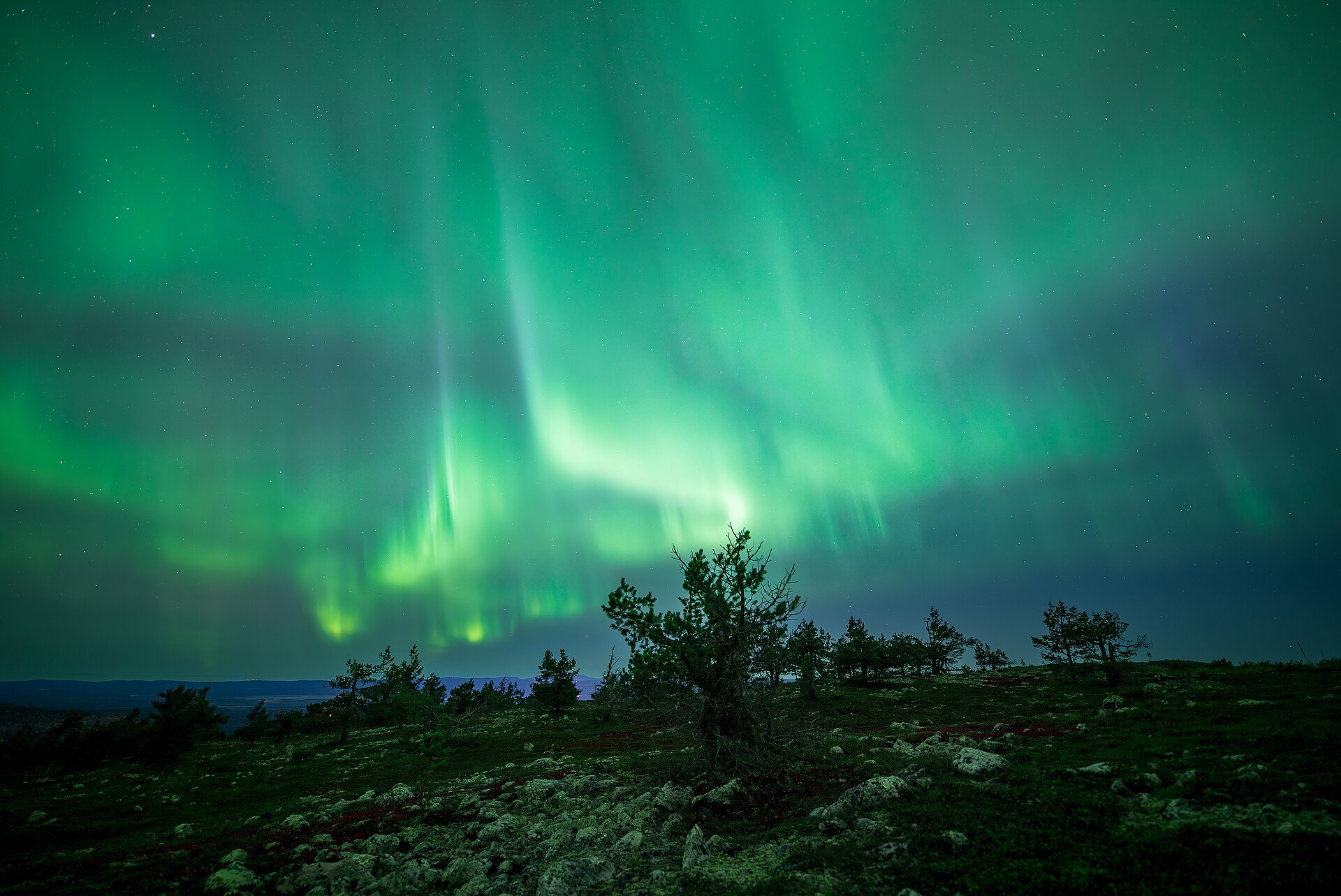
Rovaniemi sits right on the Arctic Circle at 66.5 degrees, further south than Tromso or Abisko. So it needs slightly more solar activity, and you must drive 30 to 40 minutes out of town to escape the city glow. Its strength is families. Santa Claus Village, husky rides, reindeer farms, everything runs like clockwork, and budget aurora tours start near EUR 75. Finnair’s nonstop Delhi to Helsinki flight, roughly 10 hours, also makes Finland the quickest of the European bases to reach.
December prices here are wild. Glass igloos cost EUR 300 to 500 a night for a basic one, and EUR 700 to 900 with a private sauna. My view: an igloo is a one night treat, not a Northern Lights strategy. The glass frosts over, and you will be asleep anyway. For better odds go further north to Saariselka, Inari or Levi. A useful trick this winter is Finnair’s daily Rovaniemi to Tromso flight, running 26 October to 28 March, which makes a Finland plus Norway split easy.
Iceland
Iceland has the most unstable weather of the six, with Atlantic lows arriving back to back. What saves it is pricing and scenery. The big Northern Lights bus tours from Reykjavik start at ISK 8,990, about Rs 7,000, and most come with a free retry if nothing shows. Book it for your first night. I would not suggest winter self-drive to anyone who has never driven on ice, since wind on those single lane bridges is no joke.
The real argument for Iceland is that the trip survives a cloudy week. Waterfalls, the glacier lagoon and the geothermal pools are reason enough. I have covered the full circuit and its costs in the Iceland Ring Road guide.
Yellowknife, Canada
Yellowknife is at 62.5 degrees, south of every European base on this list, and still sits directly under the auroral oval because Earth’s magnetic pole leans towards Canada. It is flat, dry and far from any ocean, so clear nights are common. The territory’s tourism board claims the Northern Lights show up on as many as 240 nights a year. That is marketing, but the geography behind it is sound.
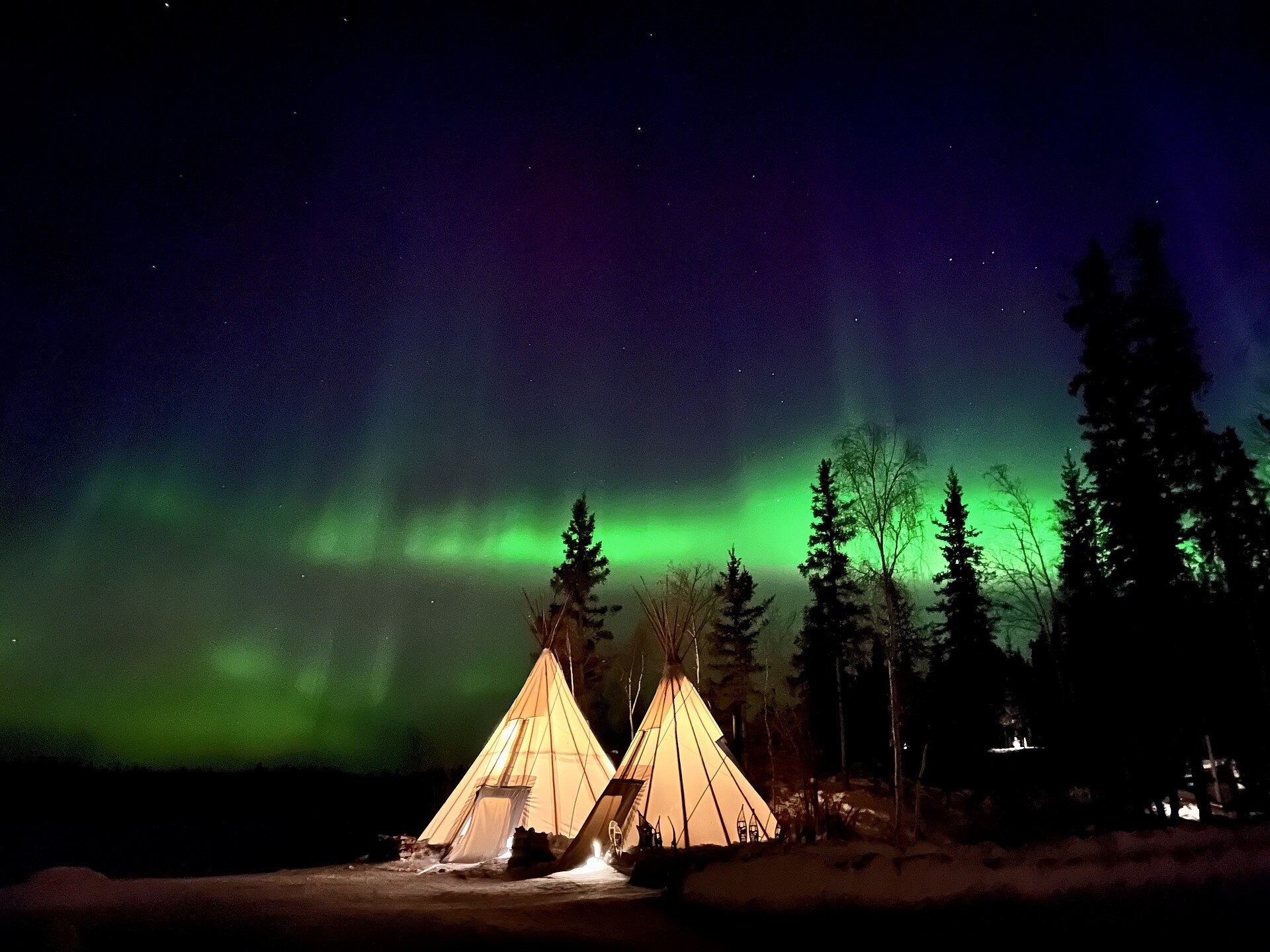
The price you pay is cold. January nights hit minus 30 to minus 40, so rent the full parka kit from your operator. Aurora Village, with its heated teepees on the Ingraham Trail, charges about CAD 145 a night, and three night hotel plus viewing packages run CAD 950 to 1,600 per person. Flights are what hurt, at Rs 1.4 to 2 lakh return from Delhi.
Fairbanks, Alaska
Fairbanks has the same dry inland cold as Yellowknife and a long season, 21 August to 21 April. Its special card is Chena Hot Springs, about 100 km out, where you sit in a steaming outdoor rock pool at minus 25 and watch the sky. Tours run USD 100 to 250 a night.
The trouble is paperwork. First time B1/B2 interview waits in India have been running 4 to 11 months depending on the city, and the fee is now USD 185 plus a USD 250 visa integrity fee. Fairbanks only makes sense if you already hold a US visa.
Visas and Booking: The Order That Protects Your Money
Norway and Iceland are outside the EU but inside Schengen, so one visa covers all four Nordic bases. The fee is EUR 90 plus the VFS service charge, and with insurance you should budget Rs 11,000 to 15,000. Decisions usually take about 15 working days, longer in December. You can apply up to six months ahead, to the country where you will spend the most nights. Canada charges CAD 100 plus CAD 85 for biometrics, and processing from India has swung between one and three months, so apply early.
The order I follow:
- Pick the new moon window first, then the base.
- Hold rooms on free cancellation. Small places like Abisko sell out long before flights do.
- File the visa with those bookings. Buy flights only after it is stamped, or pay extra for refundable fares.
- Prebook guided Northern Lights tours for the first two nights only. Keep later nights open so you can rebook around the weather.
- In Tromso, choose a minibus of 8 to 15 people over a 50 seater coach. Small groups can change direction quickly.
- Read the cancellation line. Most operators refund if they cancel for weather, but not if the tour runs and the sky stays empty.
On clothing, do not overbuy. Most Tromso and Abisko tours hand you a thermal suit and boots, so from India you only need merino base layers, liner gloves under thick mittens and chemical hand warmers. Phone batteries die quickly at minus 20. Keep the phone in an inner pocket, and carry a Rs 1,000 mini tripod.
So Is a Northern Lights Trip Worth Rs 3 Lakh This Season?
Here is the honest downside. You can do everything right, pick the March new moon, stay five nights, hire the best guide in Tromso, and still fly home having seen only cloud. Nobody refunds that. It happens more than Instagram suggests.
So my answer is yes, on two conditions. Choose a base where the trip is worth it without the sky show: Iceland for landscapes, Rovaniemi for children, Tromso for fjords and the whale safaris that run from November to January.
And spend on nights, not upgrades. If I had Rs 3 lakh and one shot, I would combine Abisko and Tromso, a day apart by train and bus through Narvik, for six nights around the 8 March new moon. Forget the panic about the solar cycle. Plan for the clouds.