
About Rs 1,200. That is what your first Glühwein on Vienna’s Rathausplatz takes out of your wallet: roughly 6 euros for the hot spiced wine and 5 euros as a deposit on the ceramic mug, refunded only if you hand the mug back. I am using 1 euro = Rs 106.5 through this guide, the rate in the first week of November 2026. I keep converting because the Christmas markets of Europe are sold to Indian travellers as a fairy tale and almost never as a bill.
This is the bill, with the 2026 dates, a ten-day train route, the visa clock and the one calendar trap that catches most first-timers.
2026 Dates for the Big Christmas Markets
These dates are from the official market or city tourism pages as of early November 2026. Where an organiser has not confirmed yet, I have said so. Search engines still serve last year’s dates under this year’s label.
| City and market | 2026 dates | Status |
|---|---|---|
| Vienna, Christkindlmarkt, Rathausplatz | 13 November to 26 December | Confirmed |
| Vienna, Schönbrunn Palace | 6 November to 6 January 2027 | Confirmed |
| Nuremberg, Christkindlesmarkt | 27 November to 24 December; opening 27 November, 5.30 pm | Confirmed |
| Strasbourg, Christkindelsmärik | 27 November to 24 December | Confirmed |
| Prague, Old Town Square | 28 November to 6 January 2027 | Expected, not yet confirmed |
| Budapest, Advent Bazilika | 13 November to 1 January 2027 | Reported from organiser |
| Budapest, Vörösmarty Classic Xmas | 13 November to 31 December | Reported |
| Cologne, cathedral market, Roncalliplatz | 16 November to 23 December; closed 22 November | Confirmed |
| Munich, Christkindlmarkt, Marienplatz | 20 November to 24 December | Confirmed |
The 24 December Trap
Here is what nobody tells you when you book leave for Christmas week. German and Austrian Christmas markets are Advent markets. They exist for the four weeks before the festival and pack up on the afternoon of 24 December or earlier. Nuremberg trades 10 am to 2 pm on Christmas Eve and then it is gone. Cologne shuts on 23 December. Land in Frankfurt on 25 December and you get empty squares, shut shops and holiday train timetables.
Think of Advent the way our Diwali bazaars work: busy for weeks before the festival, dismantled the day after. If you have done Diwali outside India you know the pattern.
The Christmas markets that run past the 25th are mostly to the east. Prague’s Old Town Square is expected to stay open until 6 January. Budapest’s Advent Bazilika runs to 1 January and Vörösmarty to New Year’s Eve. In Vienna, Rathausplatz closes on 26 December but Schönbrunn and the Winter Market at Riesenradplatz continue to 6 January, and so does the Vienna Ice World rink on Rathausplatz.
So the rule is simple. Leave from 25 December onwards means an eastern trip: Prague, Vienna, Budapest. If Nuremberg, Strasbourg or Cologne are the point, travel between 27 November and 20 December, and skip the Saturdays of Advent if crowds bother you.
Nuremberg: The Christkindlesmarkt Everyone Measures Against
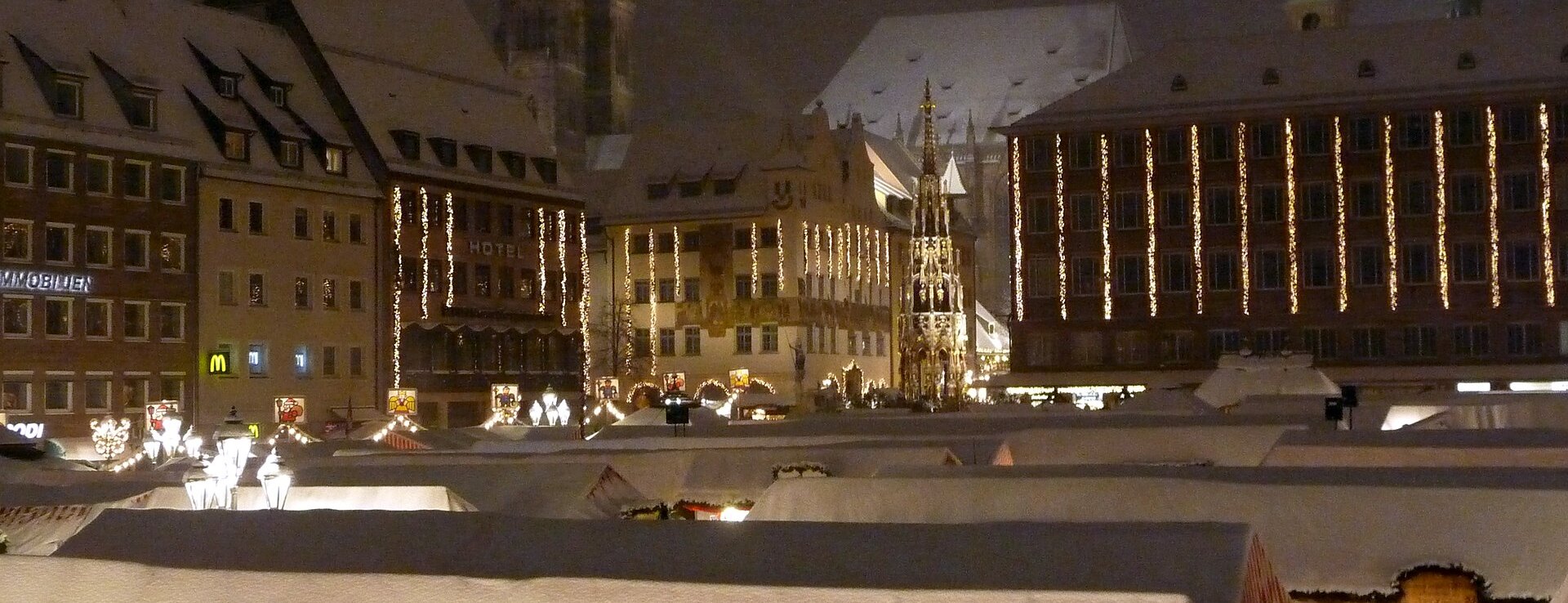
Nuremberg’s market on the Hauptmarkt opens on Friday 27 November 2026 at 5.30 pm, when the Christkind, a young woman elected every two years, reads the prologue from the gallery of the Frauenkirche. Stalls run 10 am to 9 pm daily until Christmas Eve, entry is free, and the city vets what is sold: red and white cloth roofs, no plastic, no piped pop music. Look for Zwetschgenmännle, little figures made of prunes and walnuts, and the Markt der Partnerstädte on the next square, where Nuremberg’s sister cities sell their own food.
Two honest cautions. Weekend evenings in mid-December are shoulder to shoulder on a small square; come on a weekday at 11 am or after 8 pm. And the market gives you two hours; the castle and the Dürer house justify the second night. The official programme is on christkindlesmarkt.de.
Vienna: One City, Nine Markets and a Skating Rink
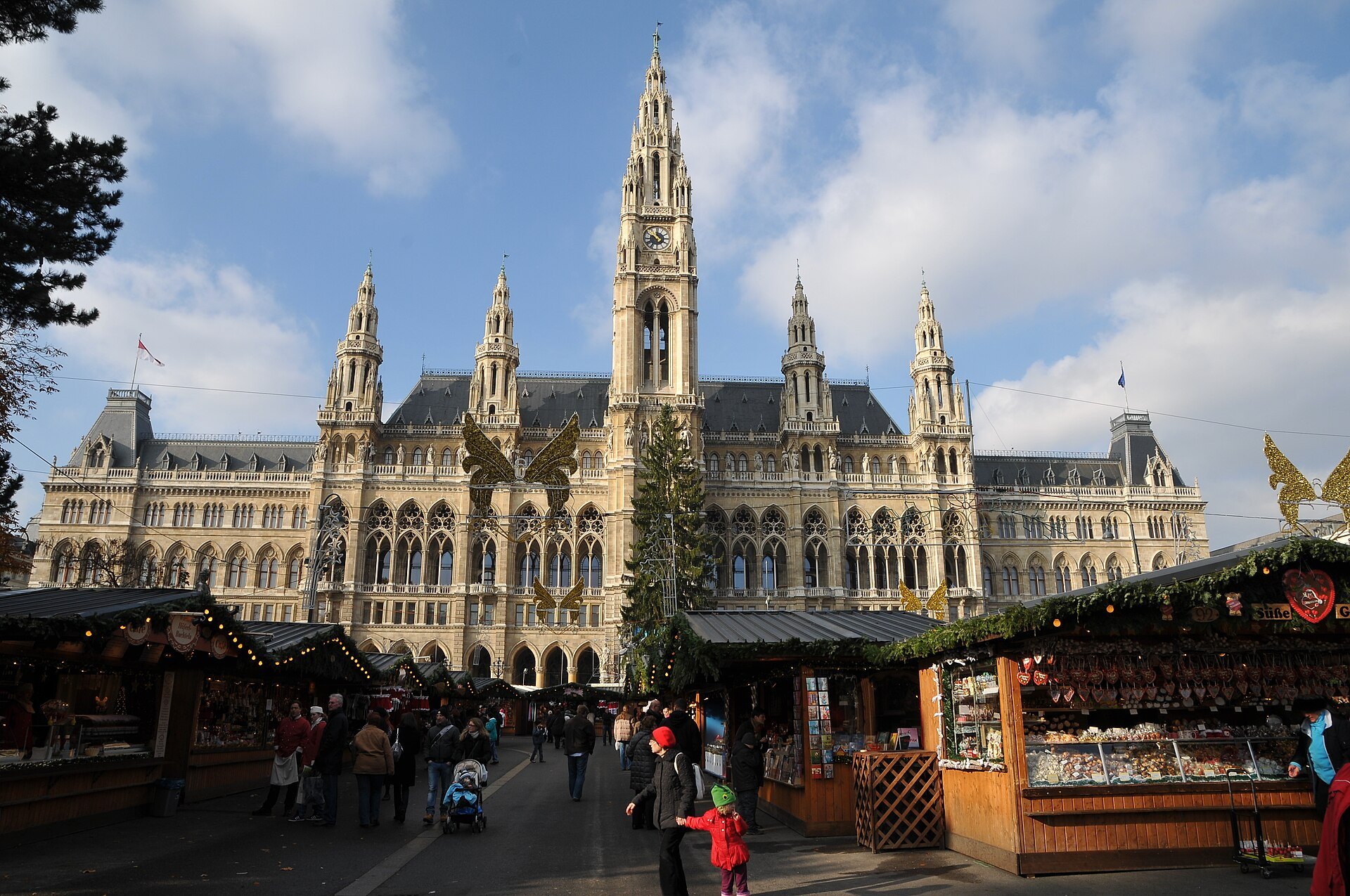
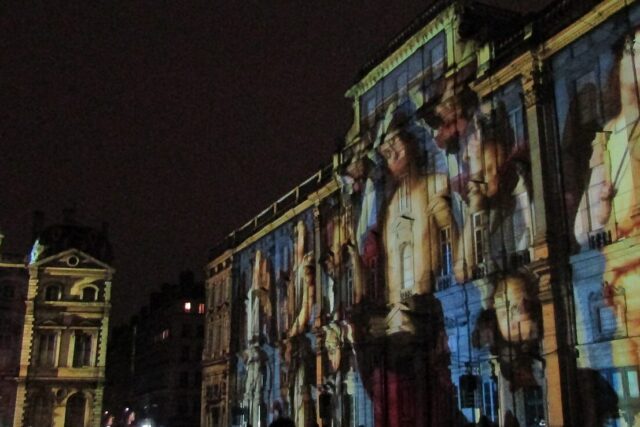
Vienna spreads its Christmas markets across the city and they do not feel the same. Rathausplatz is the big one: a huge tree, a light show on the Rathaus façade, children’s rides and, from 13 November, the Vienna Ice World rink alongside. It is also the most touristy and the most expensive. Schönbrunn, in front of the palace, opens earliest on 6 November and turns into a New Year market after Christmas.
A Punsch or Glühwein at Rathausplatz is 6 to 6.5 euros, with a 5 euro mug deposit on top and a 10 cent washing charge the stall keeps. If you are doing the palace anyway, read our piece on the Schönbrunn palace and gardens.
Budapest: The Cheapest Mulled Wine on This Route
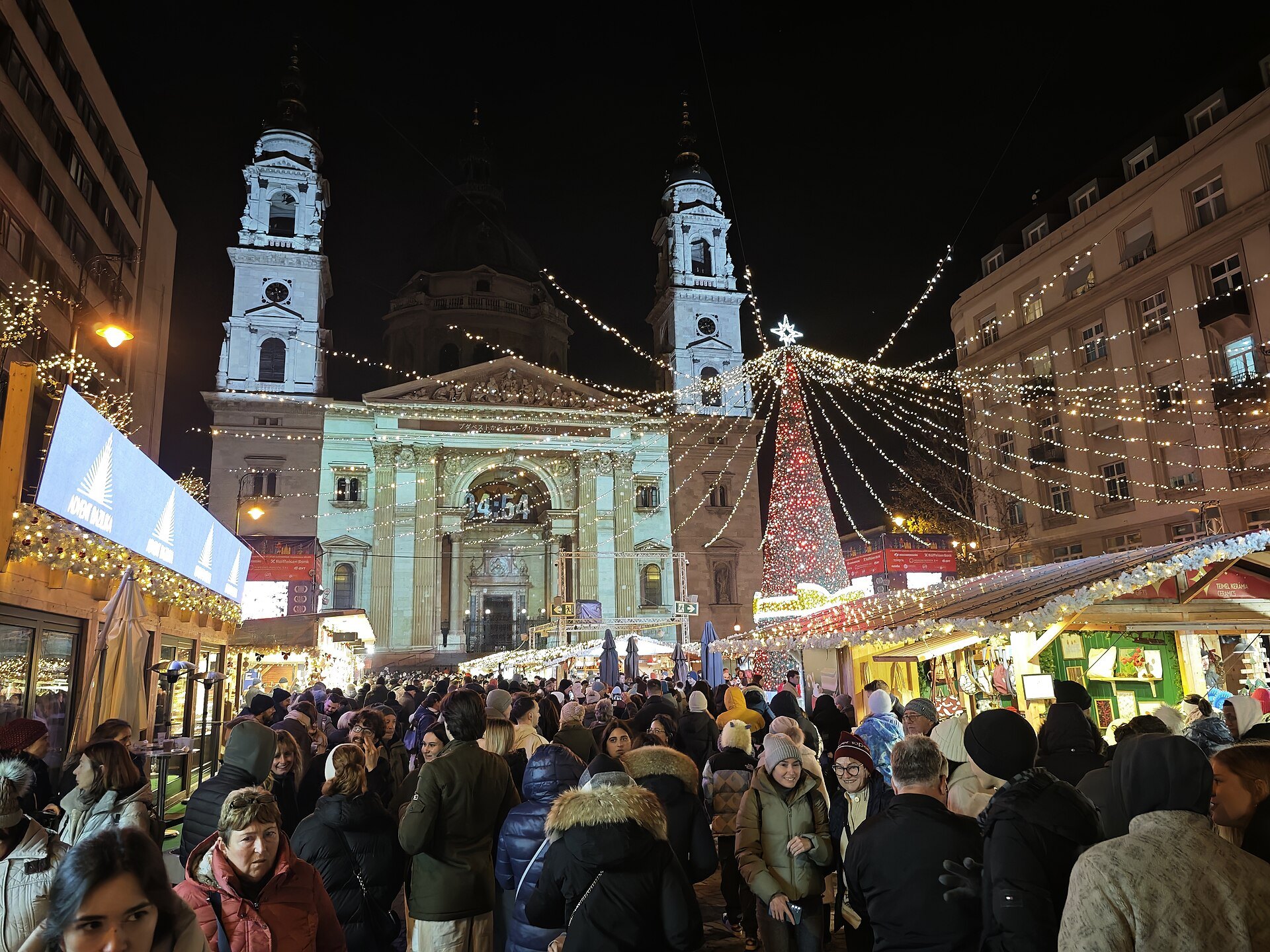
Budapest is the value stop among Europe’s Christmas markets. Advent Bazilika, on the square in front of St Stephen’s Basilica, has been voted Europe’s best more than once, and the light show projected onto the basilica front is worth standing in the cold for. Vörösmarty Classic Xmas, ten minutes away, is the older market with a free miniature train for children. Both are reported to open on 13 November 2026.
Prices are in forints; 1,000 forints is roughly Rs 270. Mulled wine, forralt bor, is about 1,500 forints for a 3 dl cup, under Rs 400. A plain lángos, deep-fried dough that any Indian will recognise as a bhatura’s cousin, is 2,000 to 2,400 forints; with sour cream and cheese, 3,000 to 3,200. Our Hungary attractions guide covers the rest.
Prague: Open Until Three Kings’ Day
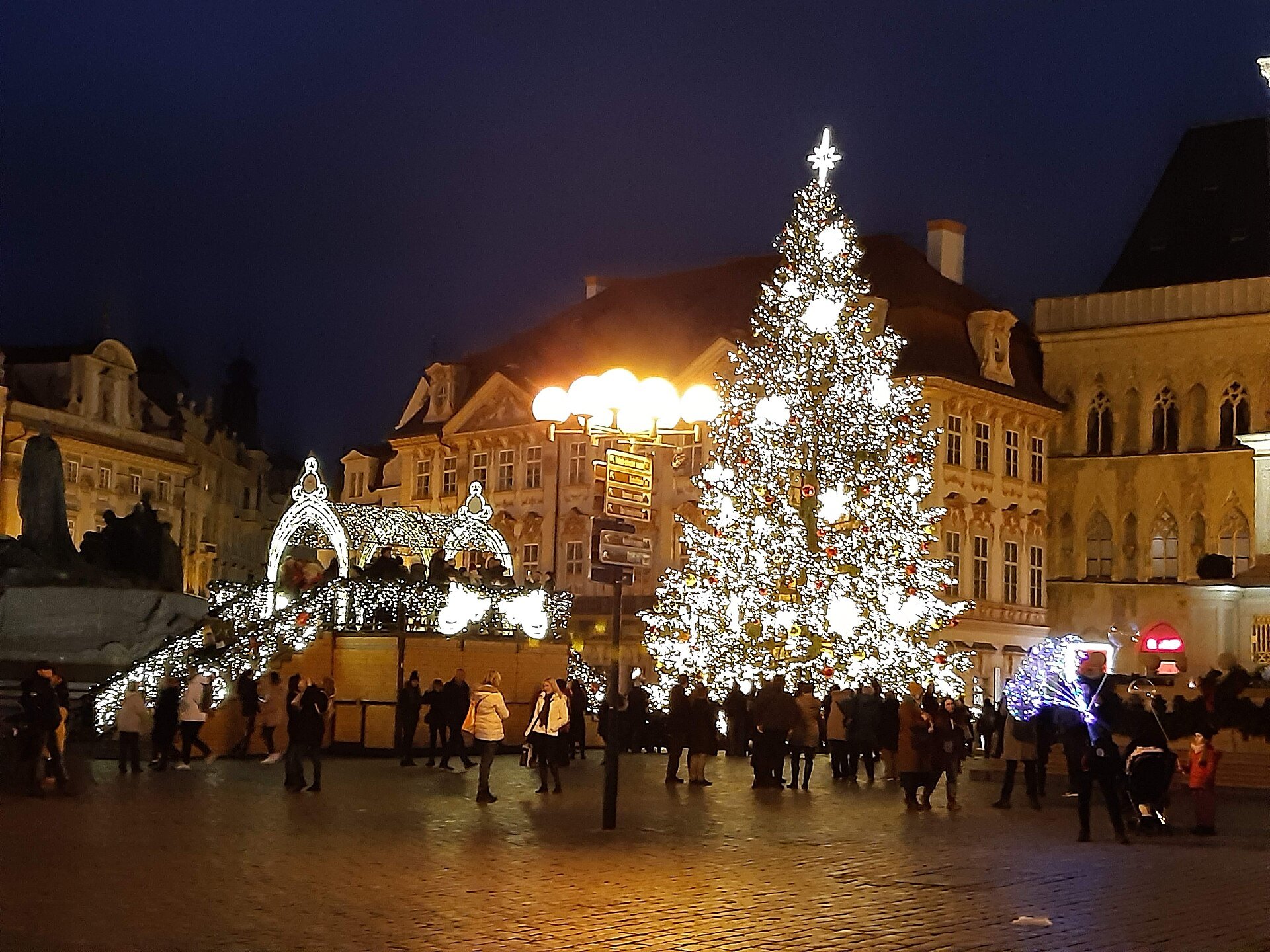
Prague’s main market on Old Town Square is expected to open on Saturday 28 November 2026, tree lit at 4.30 pm, and run until 6 January 2027. The dates were still marked expected rather than confirmed when I checked, so verify on prague.eu before you lock flights.
Svařák, the Czech mulled wine, is about 100 koruna on Old Town Square, around Rs 430, with a cup deposit of 40 to 50 koruna. Trdelník, the sugared chimney cake every stall sells, is 100 to 180 koruna. Our Prague architecture guide is still a decent primer.
Strasbourg or Cologne for the Western End
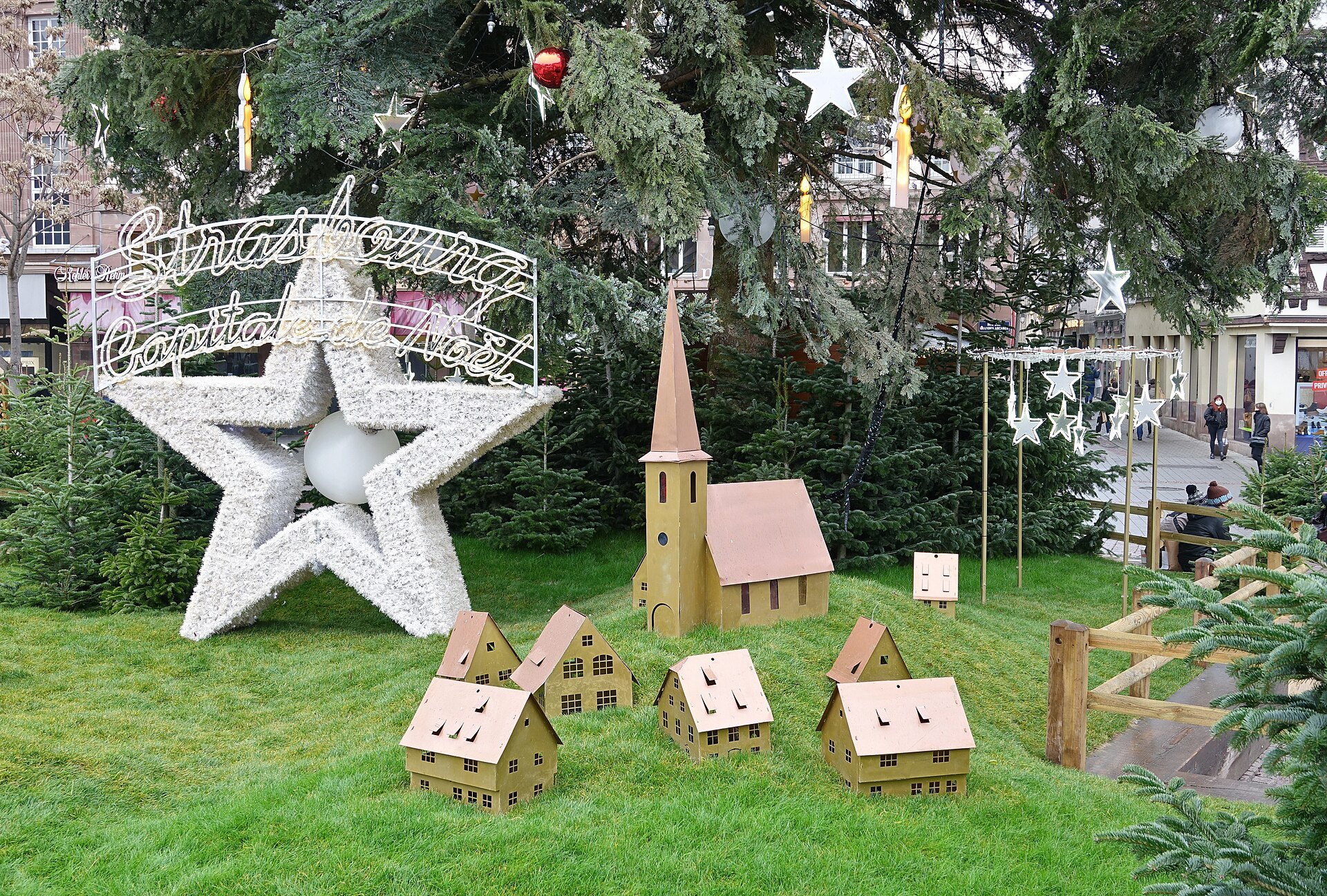
Strasbourg calls itself Capitale de Noël and has held a Christmas market since 1570, the oldest in France. The 2026 edition runs 27 November to 24 December. The Christkindelsmärik proper is on Place Broglie, a second cluster surrounds the cathedral, and the Great Christmas Tree, around 30 metres tall, stands on Place Kléber. Pair it with our Strasbourg architecture walk.
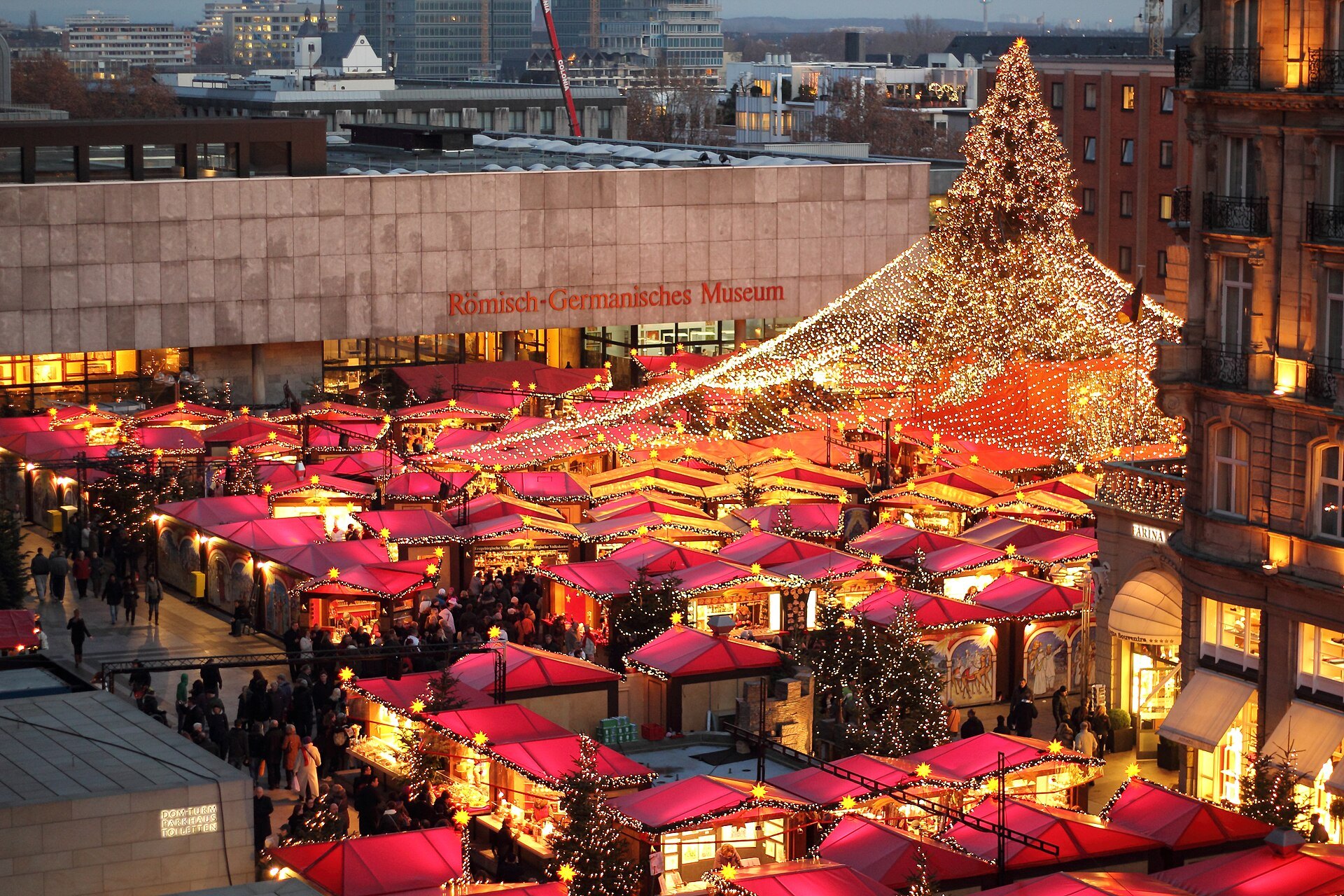
Cologne’s cathedral market on Roncalliplatz has more than 120 stalls under a canopy of lights. It runs 16 November to 23 December 2026, closed on 22 November for Totensonntag, the German Sunday of the Dead, when markets nationwide stay shut. Since mid 2026 the cathedral interior reportedly charges around 12 euros; our Cologne churches guide covers the Romanesque dozen that are still free.
Pick one, not both, on a ten-day trip. Strasbourg is prettier and milder; Cologne is an hour from Frankfurt airport by ICE. Munich’s Marienplatz market, 20 November to 24 December, is a two-hour detour from Nuremberg; the beer-hall advice in our Oktoberfest guide holds in December too.
What a Mug, a Sausage and a Lebkuchen Really Cost
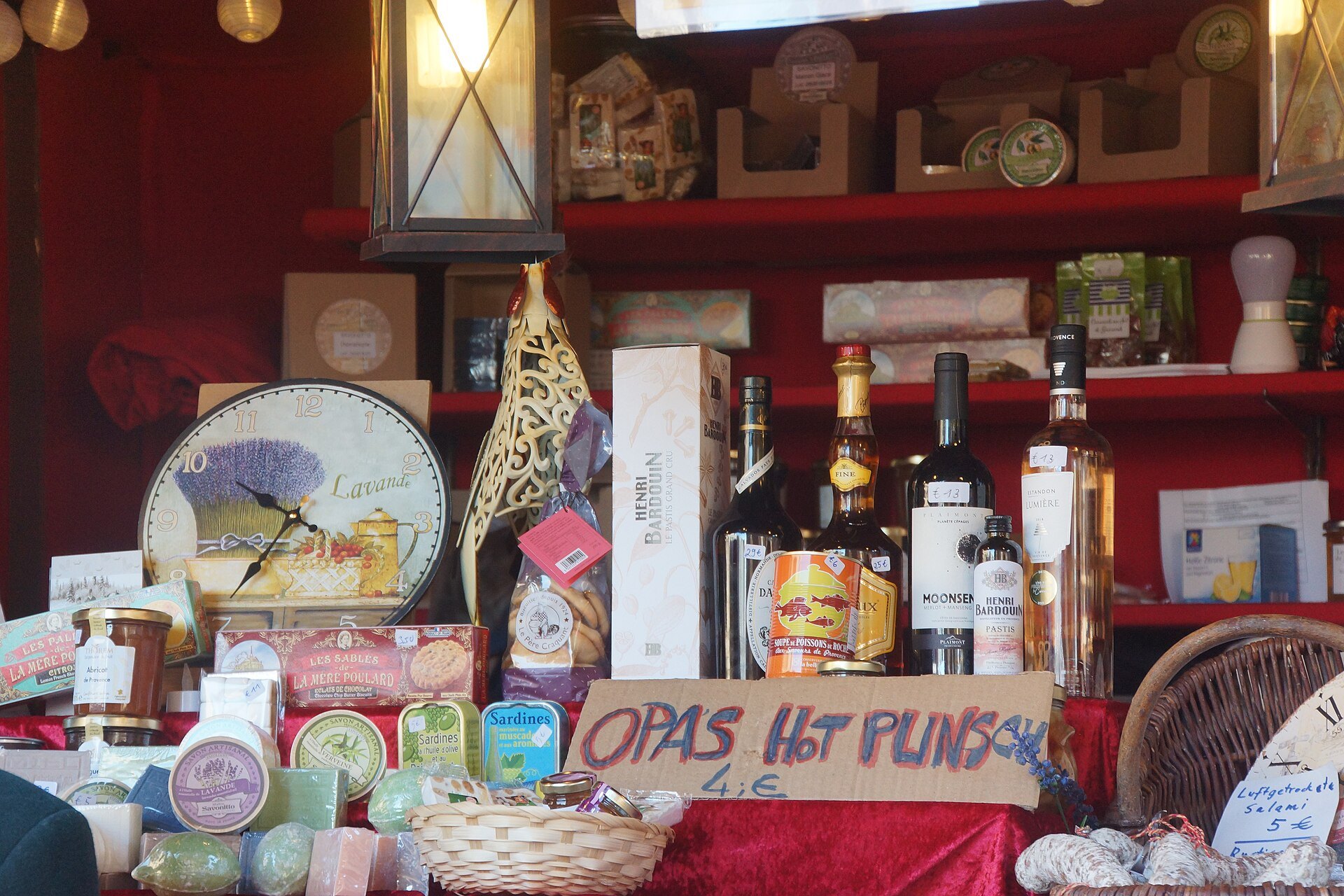
Every stall sets its own prices, so these are 2025 ranges from Nuremberg and Vienna, converted at Rs 106.5 to the euro. Expect 2026 to be the same or a little higher.
| Item | Euros | Rupees |
|---|---|---|
| Glühwein or Punsch, about 0.2 litre | 4.50 to 6.50 | Rs 480 to 690 |
| Mug deposit, refunded on return | 3 to 5 | Rs 320 to 530 |
| Three Nuremberg Rostbratwurst in a bun, “Drei im Weckla” | 4.50 to 5 | Rs 480 to 530 |
| Elisenlebkuchen, one large piece | 3 to 5 | Rs 320 to 530 |
| Kartoffelpuffer, three with apple sauce | 5 to 7 | Rs 530 to 750 |
The deposit is the sneaky cost: a family of four buying a round at four Christmas markets has 80 euros tied up in crockery unless someone walks back to the stall each time. Cards work at most stalls in Vienna and the big German cities, but carry 40 to 50 euros in coins and small notes.
Eating Vegetarian at the Christmas Markets
I will be straight: vegetarian choice at German and Austrian Christmas markets is thin, and anyone who says otherwise has not stood in front of forty metres of sausage. What exists is good. Kartoffelpuffer, potato rösti with apple sauce (Reibekuchen in Cologne), is the staple. Käsespätzle, egg noodles baked with cheese and fried onions, is the one filling hot meal, 8 to 11 euros a bowl. Then roasted chestnuts, pretzels and, in Austria, Kiachl, fried dough with cranberry jam.
Three traps. Spätzle sometimes comes with bacon; ask for “ohne Speck”. Flammkuchen in Strasbourg is bacon by default, so ask for the onion-only version. Soups are nearly always on meat stock. Budapest is easier, with lángos everywhere, and Prague has potato pancakes and trdelník. Jain travellers avoiding onion and garlic should assume pretzels, chestnuts and fruit, and pack theplas.
Vienna to the Rhine by Train: A Ten-Day Route
This is the route I would book for a first trip, west-bound so the German Christmas markets, which close earliest, come last but still before 24 December. Fly into Vienna, out of Frankfurt, which has nonstop flights from Delhi, Mumbai and Bengaluru.
- Days 1 and 2, Vienna. Rathausplatz the first evening, Schönbrunn and Spittelberg on day two.
- Days 3 and 4, Budapest. Railjet from Wien Hauptbahnhof to Budapest Keleti, about 2 hours 40 minutes, hourly, from around 20 euros booked early, 40 to 60 walk-up.
- Days 5 and 6, Prague. EuroCity via Bratislava and Brno, about 6 hours 40 minutes, 25 to 50 euros.
- Days 7 and 8, Nuremberg. Train with a change at Schwandorf, roughly 4 hours 30 minutes, or the DB and FlixBus coaches in 3.5 to 4 hours, 20 to 40 euros either way.
- Days 9 and 10, Strasbourg or Cologne. Nuremberg to Strasbourg is 4 to 5 hours via Karlsruhe or Stuttgart, 40 to 80 euros. Nuremberg to Cologne by ICE via Frankfurt is around 3 to 3.5 hours, 30 to 90 euros.
Budget per person, two sharing, December fares: flights Rs 60,000 to 95,000; nine hotel nights at 90 to 150 euros a room, Rs 43,000 to 72,000; trains 150 to 250 euros booked six to eight weeks ahead, Rs 16,000 to 27,000; food and market spending 45 to 60 euros a day, Rs 43,000 to 64,000; visa, VFS and insurance Rs 13,000 to 16,000. Call it Rs 1.9 to 2.9 lakh per person.
Visa, EES and Why December Punishes Late Applicants
Indian passport holders need a Schengen short-stay visa for the Christmas markets, applied for at the consulate of the country where you spend the most nights, Austria or Germany on the route above. The fee is 90 euros, about Rs 9,800, plus a VFS service charge of roughly Rs 1,500 to 3,700. You can apply up to six months before travel.
For December treat eight weeks as the minimum: VFS slots in Delhi, Mumbai and Bengaluru often run out by late September, and consulates do not expedite tourist applications. Official processing is 15 days; in peak season budget three to six weeks.
Two newer things. The EU’s Entry/Exit System has been fully live at every Schengen border since 10 April 2026. On first entry your fingerprints and photo go into the system, which adds 30 to 60 minutes at Vienna or Frankfurt on busy mornings; later entries are faster. And ETIAS, the online authorisation you keep reading about, does not apply to Indian passport holders at all.
Hotels: The Advent Surge and the Next-Town Trick
Nuremberg has fewer hotel rooms than its Christmas markets crowd needs, and an Advent Friday or Saturday can cost two to three times an October night for the same room. The fix is the next town. Fürth is on the U1 metro, 10 to 15 minutes from Nuremberg Hauptbahnhof, with its own small market; Erlangen is 15 to 20 minutes by S-Bahn.
The same trick works elsewhere. Kehl, across the Rhine in Germany, is 20 minutes from central Strasbourg on tram D and usually noticeably cheaper. Bonn is 25 minutes from Cologne. In Vienna, anything within three stops of a U-Bahn line outside the Ring is fine.
Packing for Minus Two
Through the Christmas markets season, daytime highs in Vienna, Prague and Nuremberg sit around 0 to 5 degrees, nights at minus 2 to minus 5. Strasbourg and Cologne are milder, 2 to 7 degrees, but wetter; expect drizzle more than snow. The problem is not the number, it is standing on cobblestones for three hours after dark. Shoes matter more than the jacket: waterproof, with grip, over wool socks. Then a thermal base layer, a fleece, a down jacket, a beanie that covers the ears, touchscreen gloves and a scarf.
Add lip balm, a power bank, since phone batteries die below zero, and a tote bag for the mugs. The layering logic is the same as in our Northern Lights guide, minus the minus twenty.
Taking Children Along
Christmas markets are built for children, with two caveats: weekend crowds after 5 pm are no place for a pram, and most hot drinks are alcoholic, so ask for Kinderpunsch. Nuremberg’s Kinderweihnacht on Hans-Sachs-Platz, five minutes from the Hauptmarkt, has a nostalgic two-storey carousel, a mini Ferris wheel, a bakery where children decorate biscuits and a candle workshop; last year the Christkind visited Tuesday to Friday at 2.30 pm. In Vienna, the Ice World on Rathausplatz rents skates; go at 11 am on a weekday.
I will not pretend the Christmas markets are a cheap holiday. They are cold, the weekend crowds are real and the vegetarian menu is short. But a weekday evening on the Hauptmarkt in the first week of December, a hot mug in your gloves and the Frauenkirche lit above the stalls, is one of the few European scenes that looks like its photograph. Apply for the visa before the end of September, aim for the fortnight between 1 and 20 December, and leave the eastern cities for Christmas week itself.