

If you want to explore Lachung properly, this guide covers everything I wish someone had told me before my own trip. This small mountain village sits at around 8,600 feet in the Mangan district of North Sikkim, roughly 110 km from Gangtok. Its name means small pass in the local dialect, and the village has grown along the banks of the Lachung Chu, a noisy glacial river that you can hear from almost every homestay here.
Way back in 1855, the British botanist Joseph Dalton Hooker wrote in his Himalayan Journals that Lachung was the most picturesque village of Sikkim. Honestly, not much has changed since then. Wooden houses with small kitchen gardens, apple orchards on the slopes, yaks grazing beside the road, prayer flags stretched over the river, and a wall of snow peaks in every direction. Most travellers treat Lachung as a night halt before Yumthang Valley and Zero Point, but I would say give the village a few hours of its own. It deserves that much.
One more thing makes Lachung genuinely special. Along with Lachen, it is one of the very few places in India still governed by the Dzumsa, a traditional village council headed by two elected Pipons. The Dzumsa settles local disputes, fixes rates for homestays and porters, and manages the grazing lands. You will not find this system anywhere else in the country, and locals are quite proud of it.
Also Read: Top 5 Places To Visit In Sikkim
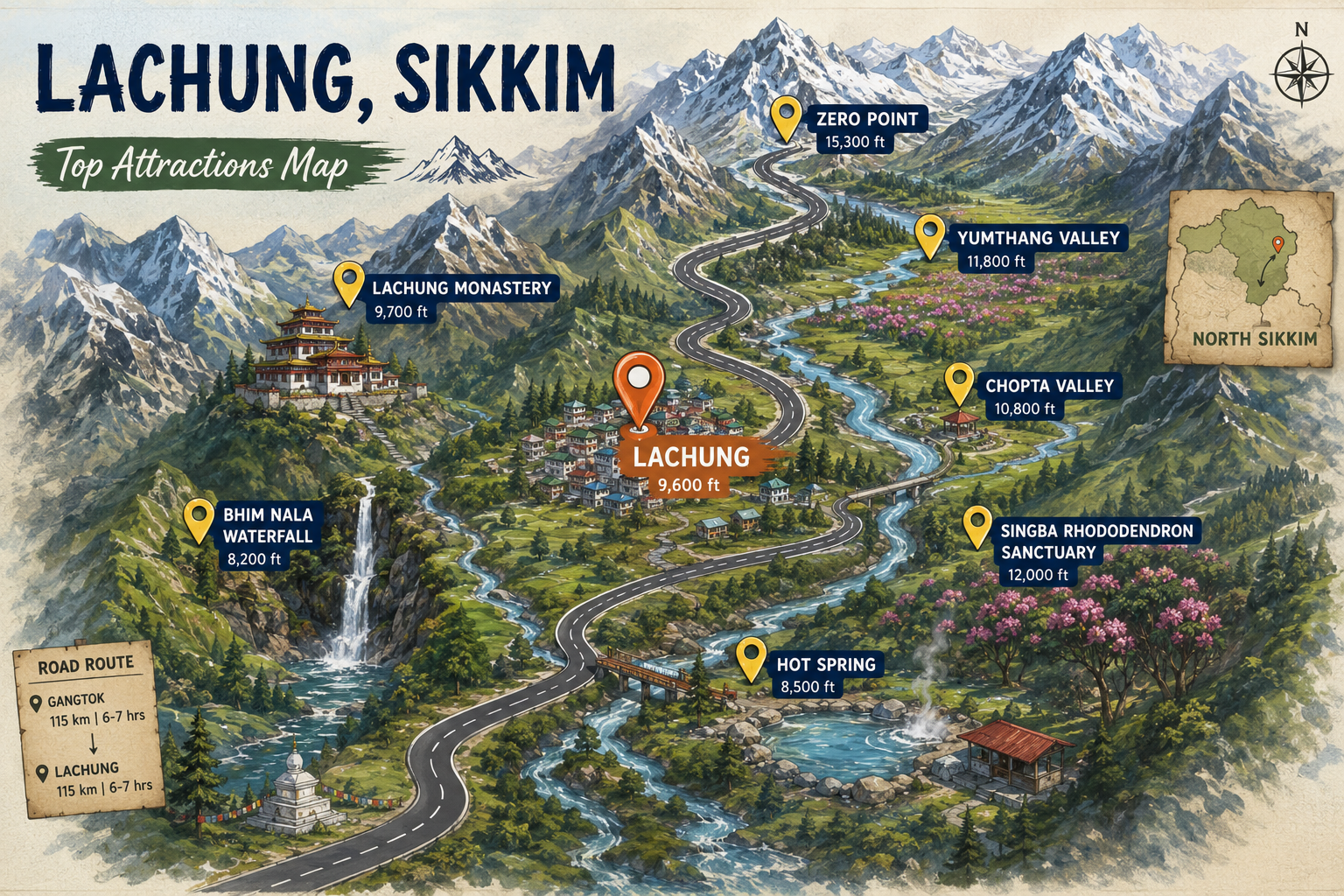
Top Places You Should Visit in Lachung
Yumthang Valley
Yumthang is the main reason most people come this far. The valley sits at about 11,800 feet, around 25 km from Lachung, and the drive takes a little over an hour. Locals call it the Valley of Flowers, and from late April to early June the meadows actually live up to the name, with rhododendrons, primulas and dozens of other alpine flowers spread across both banks of the Yumthang Chu.
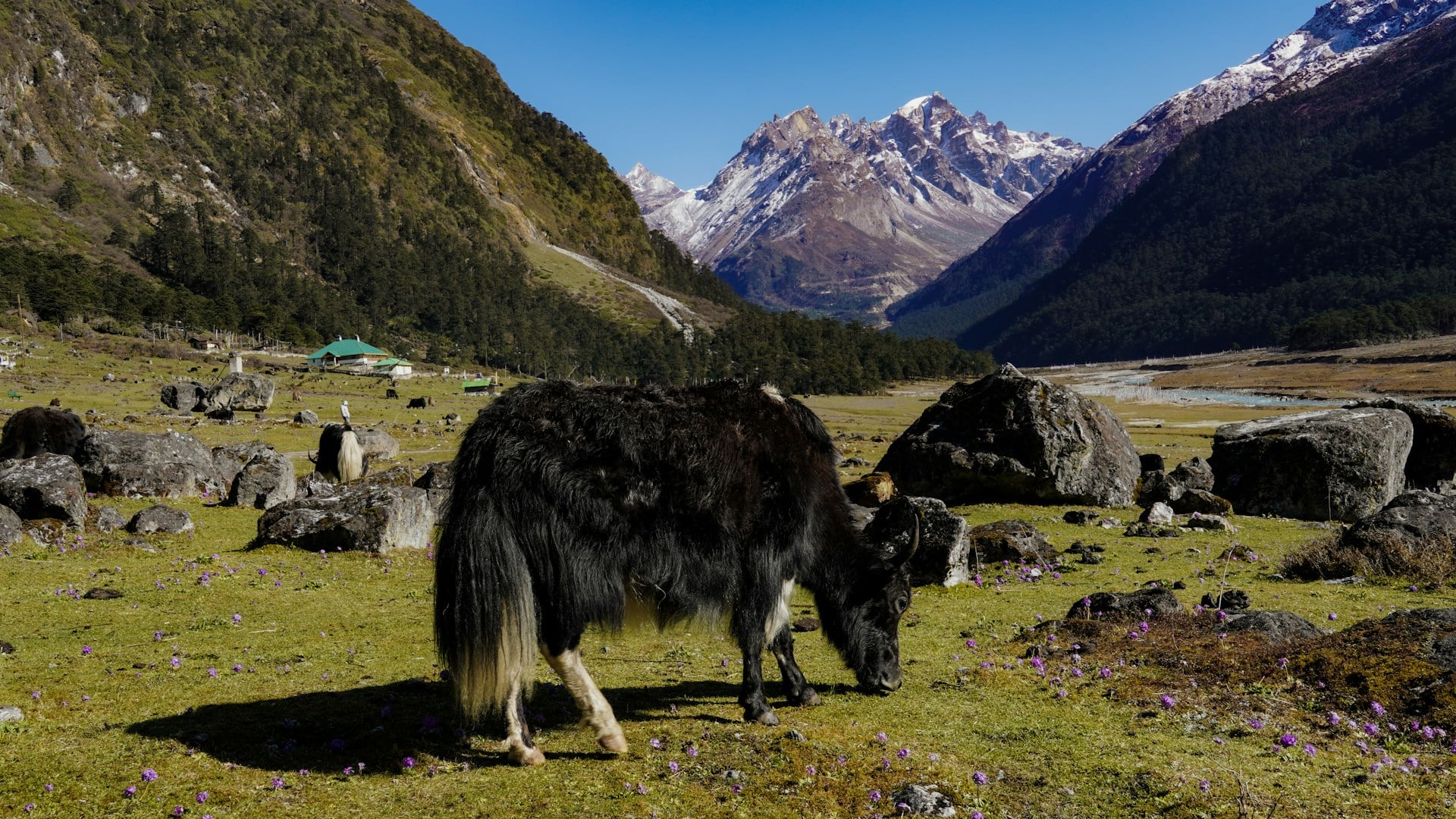
Vehicles usually leave Lachung by 6 in the morning so that you get the valley in clear light, because clouds tend to roll in after noon. Keep your permit handy, it gets checked on the way. And do not skip the small hot spring across the wooden footbridge on the far bank of the river. The water is rich in sulphur and stays warm even when the valley is under snow. Carry a towel if you plan to dip your feet, the facilities there are very basic.
Zero Point
The road continues another 23 km beyond Yumthang and simply ends at Yumesamdong, which everyone calls Zero Point. At about 15,300 feet, this is where civilian roads stop, as the Tibet border is not far from here. Snow stays on the ground for most of the year, and even in May there is usually enough for a proper snow fight.
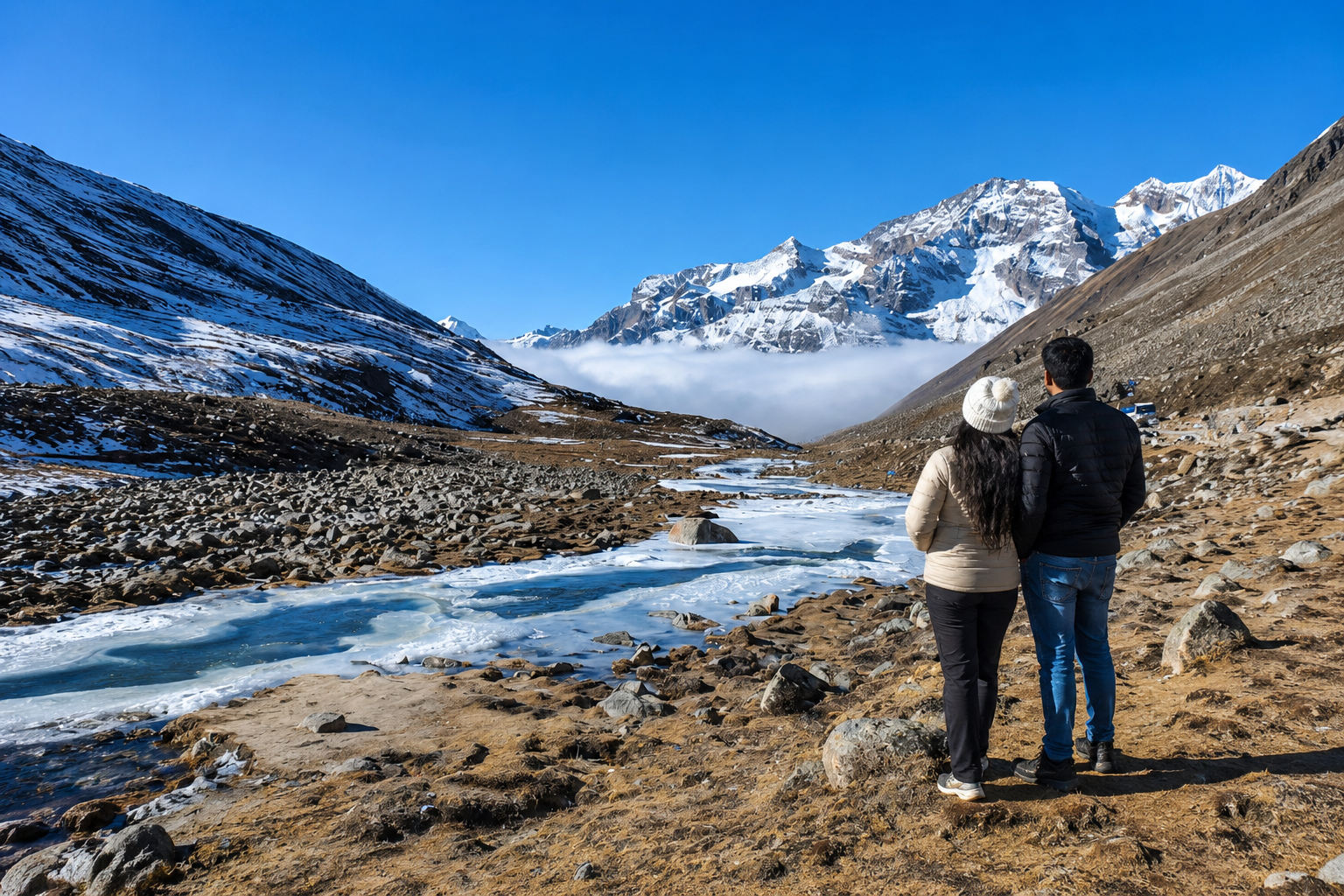
Two honest warnings from my side. First, the air is thin up there. Skip Zero Point if you have breathing or heart trouble, keep the visit short, and do not run around too much. The small stalls at the top sell tea, Maggi and even oxygen cans, which tells you something about the altitude. Second, Zero Point is open only to Indian citizens. Foreign travellers are permitted up to Yumthang Valley only. Also note that Zero Point is usually not included in the standard package, drivers charge an extra amount of roughly Rs 3,000 to 3,500 per vehicle for this stretch, so settle it clearly before you leave Lachung.
Lachung Monastery
Before you rush towards the valleys, spend a quiet hour at Samten Cheling Monastery, which most people simply call Lachung Monastery. It was built around 1880 on a small rise above the village and belongs to the Nyingma school of Tibetan Buddhism. The prayer hall has beautifully painted murals, old wooden pillars and a large prayer wheel near the entrance.
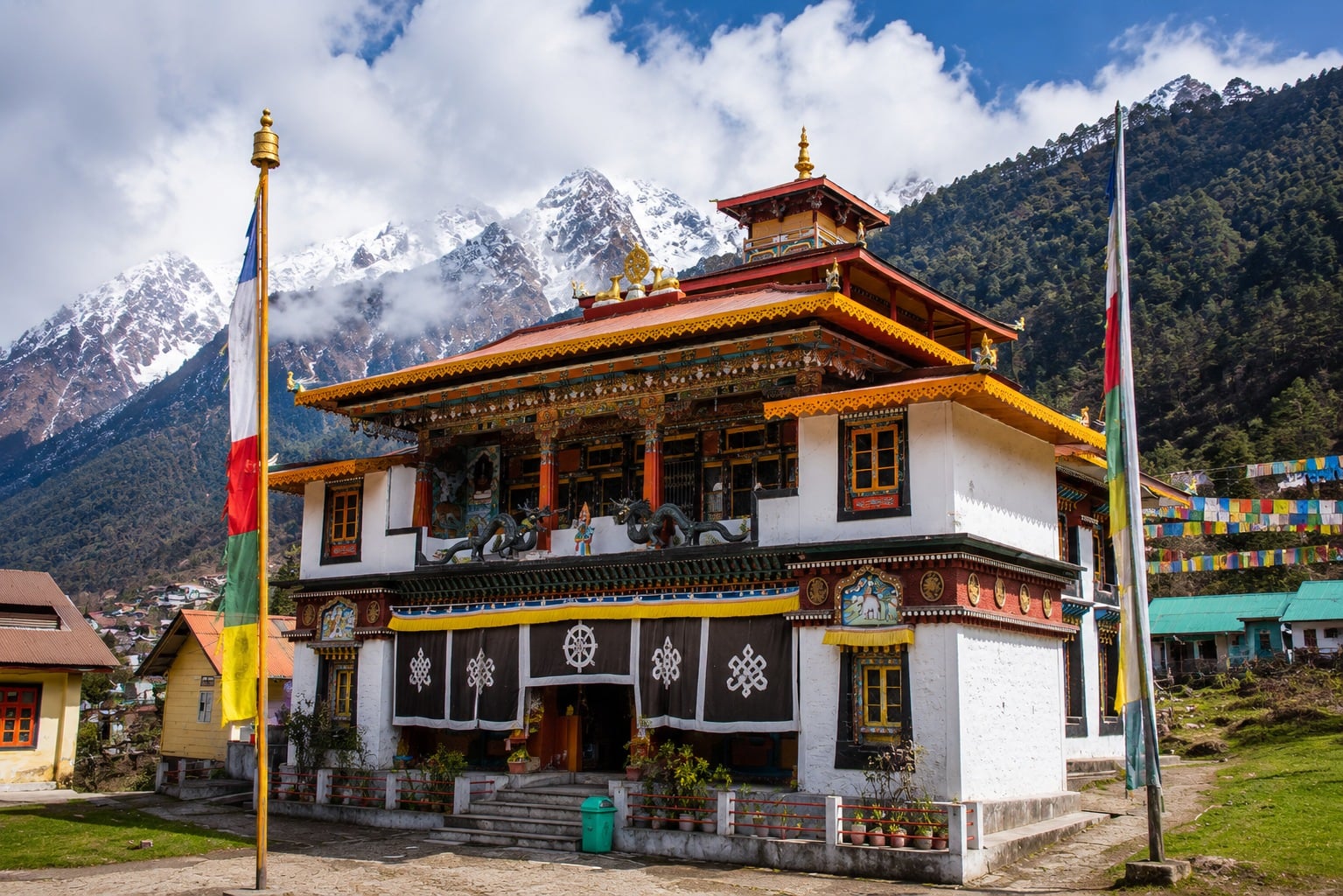
Mornings are the best time to visit, when the monks are doing their prayers and the village below is still waking up. If your trip falls around Losar, the Tibetan New Year that usually comes in December or January, you may get to watch the masked chaam dance in the courtyard, which is easily one of the most colourful things you can see in North Sikkim.
Also Read: Explore Incredible Views of Nature at Namchi, Sikkim
Bhim Nala Waterfall
You will meet Bhim Nala on the drive itself, between Chungthang and Lachung, so there is no way to miss it. It is a tall, three tiered fall that crashes down right beside the road, and locals fondly call it the Amitabh Bachchan waterfall because of its height. There is a small viewing gallery and a couple of tea stalls, and the entry costs just a few rupees.
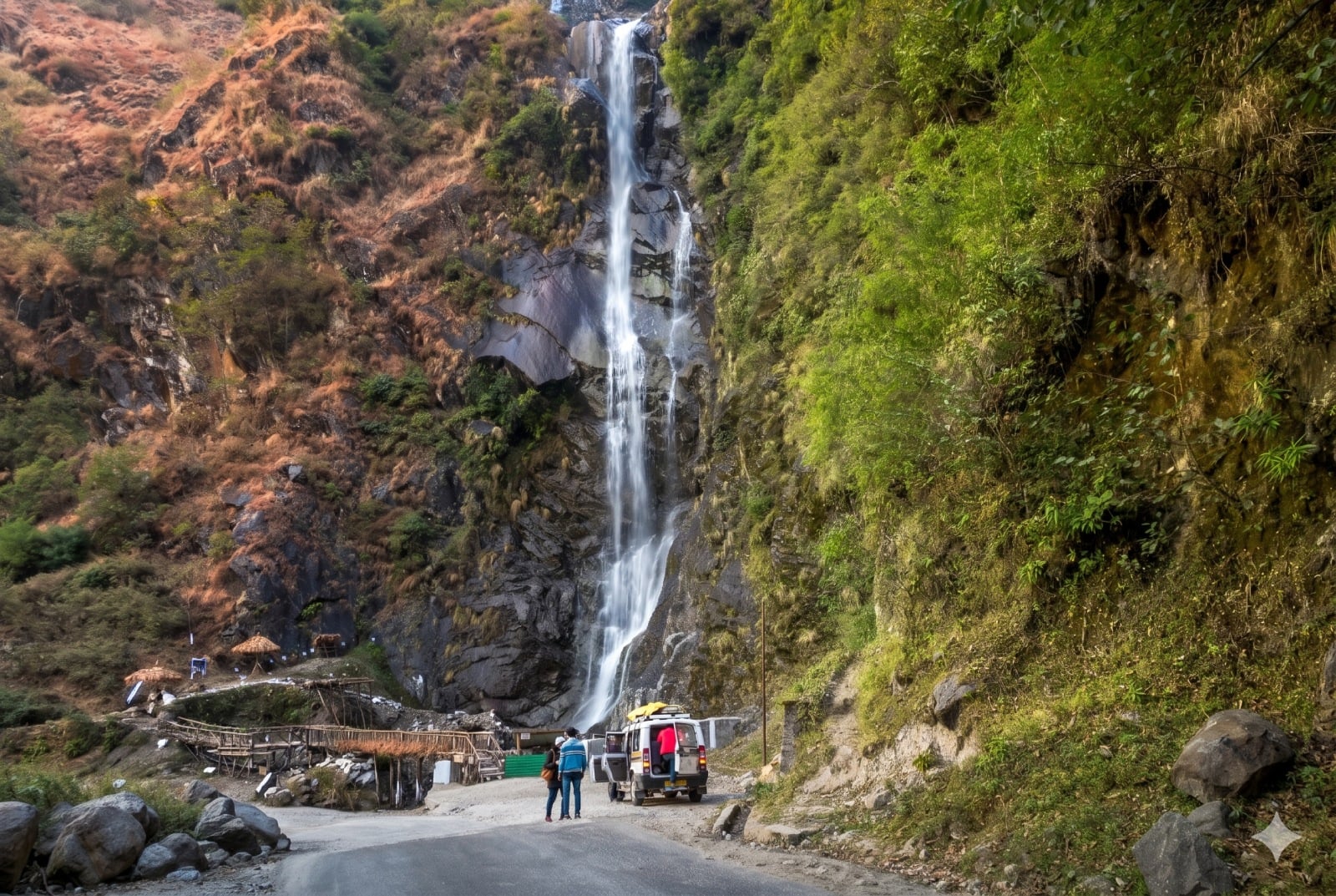
Most drivers stop here for ten to fifteen minutes. In the monsoon and just after it, the fall is at its loudest and the spray reaches all the way to the road.
Shingba Rhododendron Sanctuary
Between Lachung and Yumthang, the road passes through the Shingba Rhododendron Sanctuary, spread over about 43 sq km. The sanctuary protects more than 40 species of rhododendron, including the state flower of Sikkim, along with junipers and high altitude birds.
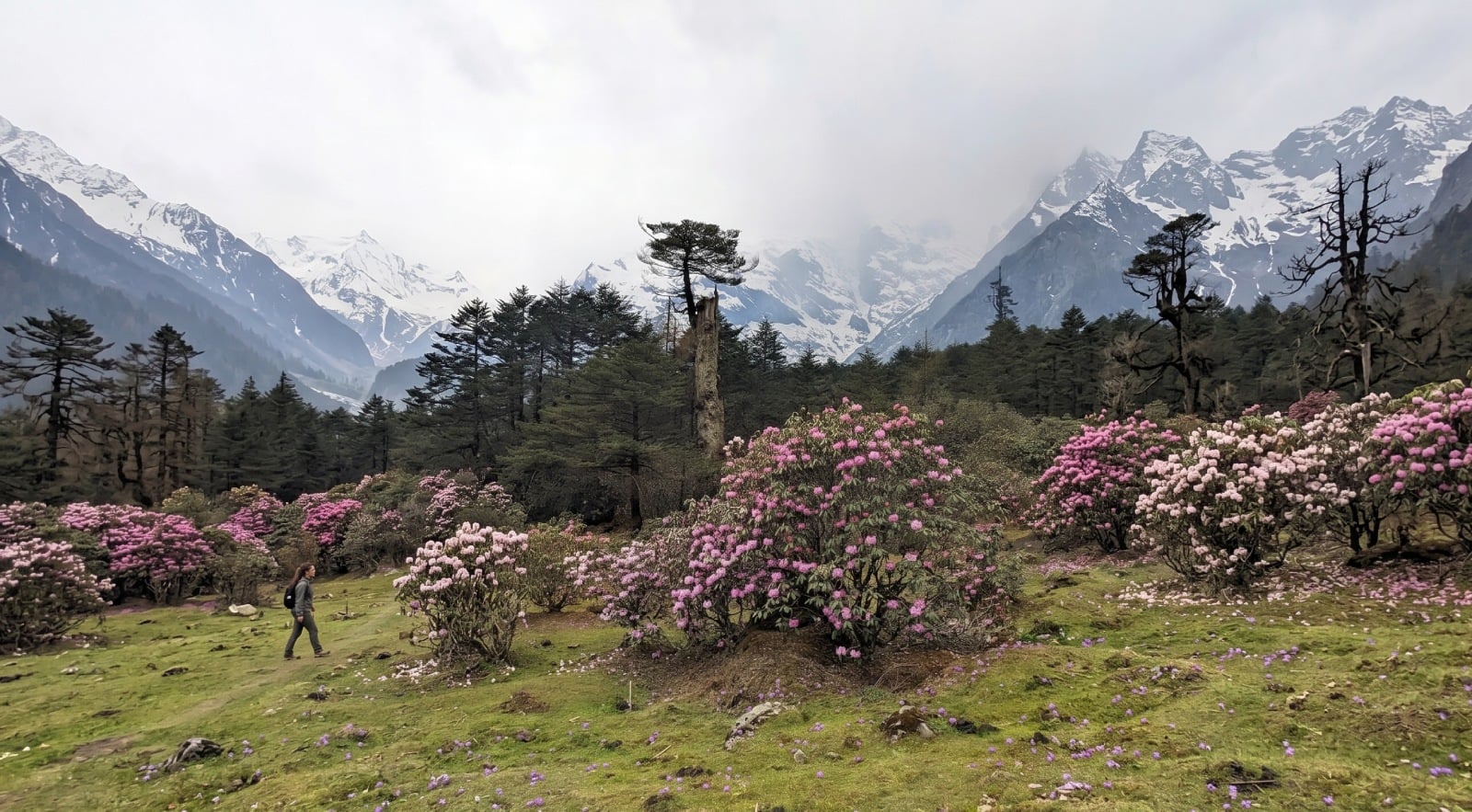
If flowers are your main reason for visiting, plan between late April and mid May. During those three weeks the hillsides turn red, pink and white, and even the laziest photographer will fill up a memory card here.
Other Things You Can Do In Lachung
Experience Snowfall
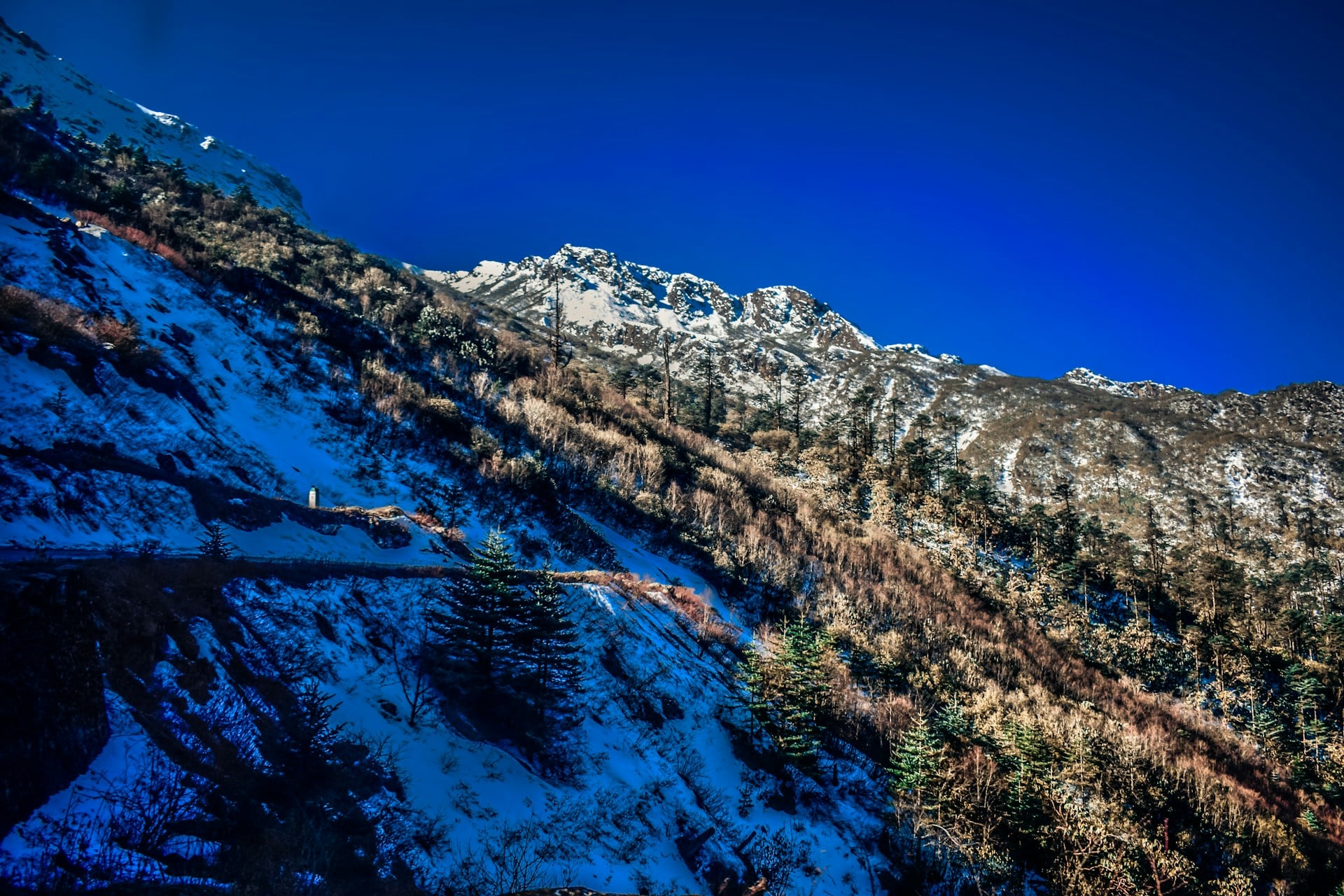
If you travel between late December and February, there is a good chance you will see live snowfall in the village itself. Waking up to white rooftops, white orchards and a half frozen river is an experience that stays with you. Do keep in mind that heavy snow sometimes closes the road to Yumthang for a day or two, so keep one buffer day in your plan during winter.
Walk Through the Village and Apple Orchards
Lachung is an apple growing village, and if you come in autumn you can buy crisp local apples straight from the orchards. Take an hour to simply walk through the lanes, past the wooden houses and the small shops, and talk to the Lachungpa families. Many of them run homestays and they are happy to share stories about the Dzumsa system, the winters and life on the border. This slow hour often ends up being people’s favourite memory of the trip.
Enjoy the Scenic Road Journey
The drive from Gangtok is an event in itself. The road follows the Teesta river through deep gorges, crosses the confluence at Chungthang where the Lachen Chu and Lachung Chu meet, and passes a string of waterfalls including the Naga falls and the Twin falls. There are army checkpoints on the way where your permits get verified, and small roadside shacks where you can grab tea and momos.
If you have an extra day in hand, ask your driver about Katao, a snow point about 28 km from Lachung that sees far fewer tourists than Yumthang. It needs a separate army permission, which your hotel or driver can arrange a day in advance. And if quiet mountain roads are your thing, save Zuluk in East Sikkim for your next trip, it has the same raw beauty with even fewer crowds.
Also Read: Tawang Hill Station – Tourism In Northeast India
Best Time to Explore Lachung
Lachung is open through the year, but every season gives you a completely different village.
March to May: Spring Season
This is the most rewarding window for most travellers. The rhododendrons bloom in Shingba and Yumthang, the roads are in decent shape and the days are pleasant, with temperatures moving between 10°C and 20°C. Families and photographers should aim for this period.
June to September: Monsoon Season
North Sikkim gets heavy rain, and landslides on the Chungthang road are common. The waterfalls look their absolute best, but road blocks can eat up an entire day. I would not suggest the monsoon for first time visitors.
October to December: Autumn and Early Winter
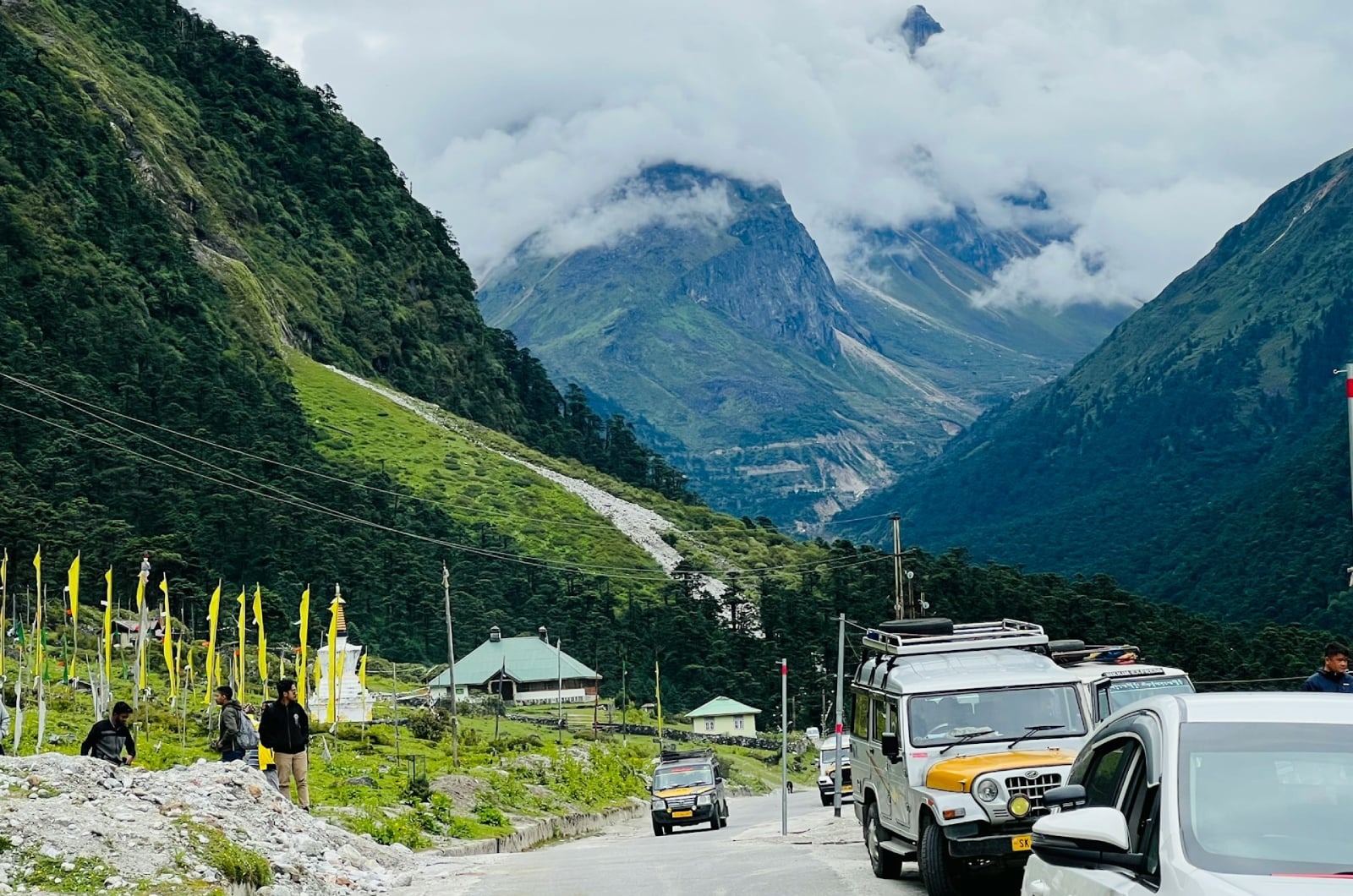
Clear skies, sharp mountain views and crisp cold mornings. This is my personal favourite time, especially October and November, when you get the best visibility of the season and the crowds are thinner than in May.
January to February: Snowfall Season
Peak winter turns Lachung white. Temperatures drop below freezing at night, and Zero Point becomes a full snow desert. Couples and snow lovers enjoy this period the most, just travel with buffer days and proper layered clothing.
Permits Required for Lachung Trip
Lachung falls in a protected area close to the border, so every visitor needs a permit, including Indians. Do not worry, the process is simple because you cannot go to North Sikkim in your own vehicle anyway. Only Sikkim registered tourist vehicles are allowed, so everyone books through a registered tour operator in Gangtok, and the operator arranges the permit along with the trip.
For Indian travellers:
- A government photo ID is needed. Passport, voter card, driving licence and Aadhaar all work. PAN card is not accepted.
- Two passport size photographs.
- The permit application goes in a day before travel, so book your package at least one day in advance.
Foreign travellers can visit Lachung and Yumthang on a Protected Area Permit, issued only for groups of two or more travelling through a registered agency. Zero Point stays off limits for foreign nationals. For the latest rules, check the Sikkim government website before you plan.
Local Food You Must Try in Lachung
Do not expect fancy cafes in Lachung. What you get instead is honest Himalayan comfort food, cooked fresh in homestay kitchens and small family run shops, with flavours borrowed from Sikkimese and Tibetan homes. After a freezing morning at Zero Point, this food tastes better than anything a city restaurant can serve. Here is what you should try:
- Momos: steamed fresh in front of you and filled with vegetables, chicken or cheese. Order them with the fiery red chutney that every shop makes in its own style.
- Thukpa: a hot noodle soup with vegetables or meat. This is the standard lunch here, and honestly the best thing to eat after coming down from Yumthang.
- Tingmo: a soft, steamed Tibetan bread that soaks up curry and stew beautifully.

- Sha Phaley: fried bread pockets stuffed with meat or vegetables, crisp outside and juicy inside.
- Gundruk soup: made from fermented leafy greens, slightly sour and completely local. You will rarely find this outside the hills.
- Butter tea: salty, creamy and a little strange on the first sip, but it grows on you, and it genuinely helps in the cold. Locals drink it through the day.
Also Read: Dribbling Cuisines from North-East India
How to Reach Lachung
Whichever way you come, the last leg is always a road journey from Gangtok, so plan your trip with Gangtok as the base.
By Air
Pakyong Airport near Gangtok is the closest, about 30 km from the city, but flights are limited and weather cancellations are common. Most travellers still prefer Bagdogra Airport in West Bengal, which has far better connectivity. From Bagdogra, Gangtok is around 124 km, a four to five hour drive by taxi or shared cab.
By Train
The nearest major railhead is New Jalpaiguri, better known as NJP, in Siliguri. From NJP, take a taxi or shared vehicle to Gangtok, which takes around five hours, and continue to Lachung the next day.
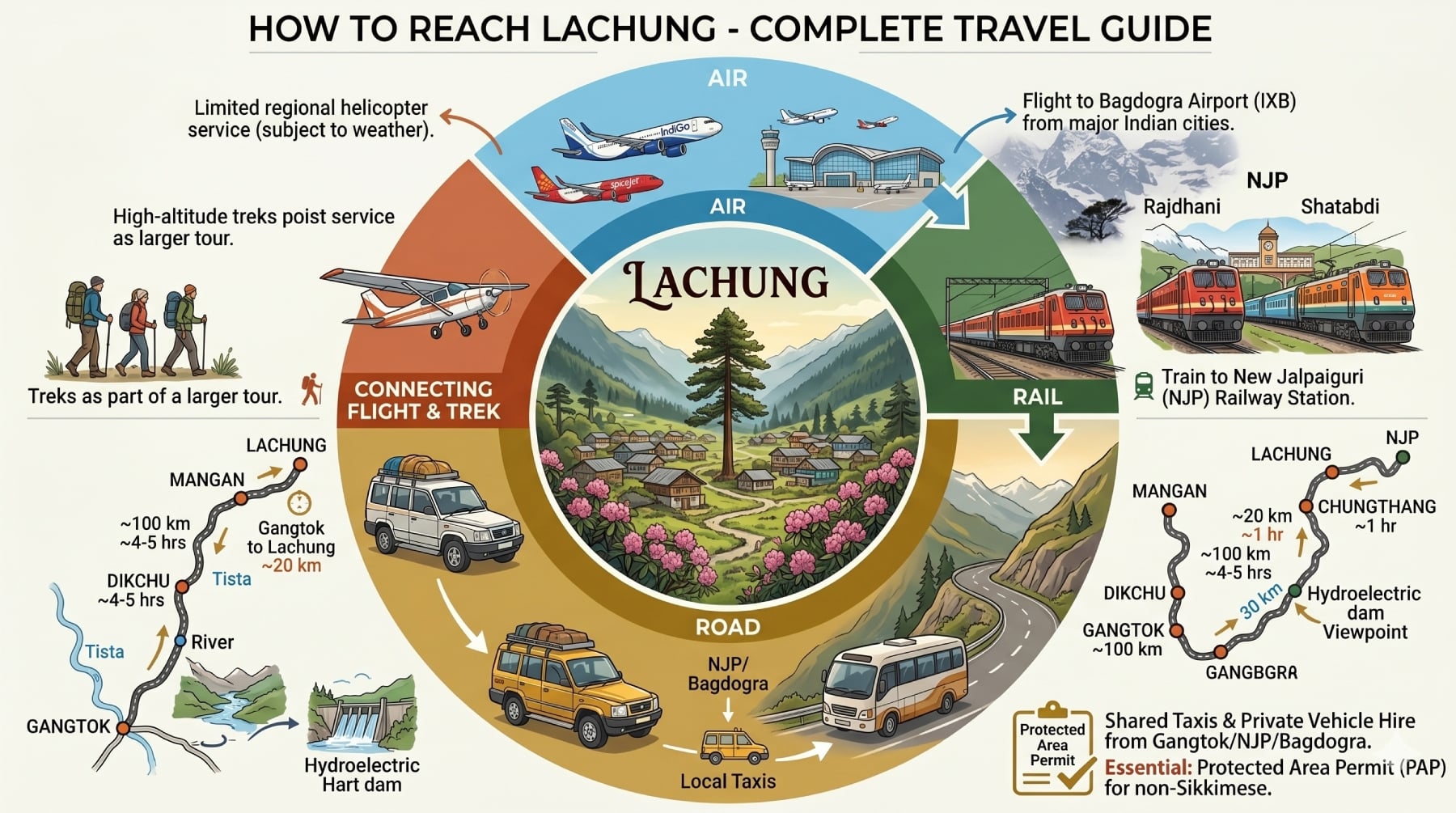
By Road
Gangtok to Lachung is roughly 110 km, but the mountain road takes six to seven hours with stops. Vehicles usually leave Gangtok by noon and reach Lachung by evening. The most economical option is a shared North Sikkim package, which bundles the vehicle, permits, hotel and meals, typically as a two night trip covering Lachung, Yumthang and Zero Point. Private vehicles cost more but let you stop at every waterfall on the way, which honestly is half the fun.
Where to Stay and How to Plan
Hotels in Lachung are simple. Expect clean rooms, thick blankets, hot water in buckets at fixed hours and occasional power cuts. Riverside cottages are popular with couples, while homestays give you home cooked food and better conversations. Since almost everyone comes on a package, your stay is usually pre decided, but you can ask your Gangtok operator for a riverside property or a homestay specifically.
The standard plan looks like this. Day one, leave Gangtok by noon and reach Lachung by evening. Day two, start at 6 am for Yumthang and Zero Point, come back for lunch, then either return to Gangtok or stay one more night. If you can spare the extra night, do it, the village is at its best after the day tourists leave.
Travel Tips for Lachung
- Carry proper woollens in layers, even in summer the mornings are cold.
- Keep enough cash from Gangtok itself. ATMs beyond Mangan are unreliable and card payment is rare.
- Mobile networks are weak. BSNL and Airtel work in patches, and there is little to no data. Tell your family in advance and enjoy the digital detox.
- Keep a power bank charged, electricity can play hide and seek.
- If you get motion sickness, take a tablet before the drive, the road has endless curves.
- Carry sunglasses, the glare from snow at Zero Point is harsh on the eyes.
- Sikkim has a strict plastic ban, so carry a refillable water bottle.
- Do not photograph army camps or checkpoints, and keep your ID handy at every barrier.
Concluding Here
Lachung does not compete with Shimla or Manali, and that is exactly its charm. There are no malls, no cafes and no nightlife, just a river, a monastery, apple orchards and some of the biggest mountains you will ever see from a bedroom window. Go for the flowers in May or the snow in January, eat hot thukpa in a wooden kitchen, and spend one evening doing nothing beside the Lachung Chu. That is the trip. If this guide helped you plan yours, share it with the friend who keeps postponing that Sikkim trip every year. And if you are still building your travel wishlist, our guide to the top 20 Indian tourist destinations is a good place to start.